Some U.S. coins have become enduring collector favorites because they combine distinctive designs, important periods of American history, and rewarding collecting challenges. From the Lincoln cent and Buffalo nickel to the Morgan dollar and Walking Liberty half dollar, these coins remain popular subjects for collectors who want to study more than just dates and denominations.
Quick Answer
Collector favorites include the Lincoln cent, Indian Head cent, Buffalo nickel, Mercury dime, Standing Liberty quarter, Walking Liberty half dollar, Morgan dollar, Peace dollar, and American Silver Eagle. Each attracts collectors for different reasons, including design, historical significance, series depth, condition, varieties, and the opportunity to build complete or specialized collections. The U.S. Mint itself notes that collectors choose coins according to personal interests and collecting goals rather than following one universal definition of the “best” coin to collect.
Why Some U.S. Coins Become Collector Favorites
A coin does not need to be extremely rare to become important to collectors. Strong designs, recognizable history, an interesting series, and enough variations to make collecting challenging can all contribute to long-term interest.
The U.S. Mint’s history of circulating coins shows how American coin designs evolved from early Liberty motifs to later portraits of presidents and other figures. Liberty appeared on circulating U.S. coins for more than 150 years, making many of the classic Liberty designs especially recognizable to collectors today.
Collectors also approach these coins differently. Some try to assemble complete date-and-mintmark sets, while others concentrate on high-grade examples, particular varieties, or historically important issues. The U.S. Mint recommends establishing a collecting goal before deciding what type of coins to pursue.
Lincoln Cent
The Lincoln cent is one of the most recognizable coins in American numismatics. Abraham Lincoln first appeared on the cent in 1909, replacing the Liberty design that had previously been used on the denomination. Lincoln’s appearance marked an important change in U.S. circulating coinage because presidential portraits began replacing Liberty on several denominations during the 20th century.
Collectors who want a deeper look at the long-running series can use Lincoln Wheat Penny Value Guide (1909–1958): Prices, Errors & Rare Coins to study the dates, errors, varieties, and other details that make these cents such a broad collecting field.
Collectors can approach the Lincoln cent as a long-running series rather than as a single type of coin. Earlier issues, including the Wheat reverse design, are particularly interesting for collectors studying the development of American cents.
Those beginning with the earliest Lincoln cents can also explore 1909-S VDB Lincoln Wheat Penny Value Guide: Why This Rare Cent Is So Important to Collectors to understand why the first-year San Francisco issue has such a prominent place in the series.
The series also provides opportunities to examine dates, mintmarks, varieties, condition, and surface quality. That combination makes the Lincoln cent accessible to beginners while still providing considerable depth for experienced collectors.
Indian Head Cent
The Indian Head cent is another classic series that attracts collectors because of its distinctive design and place in 19th-century American coinage.
Its appeal is not based solely on age. Collectors examine individual dates, mintmarks, condition, and the quality of the design details that remain on each surviving coin. As with other early U.S. series, worn examples can look dramatically different from well-preserved pieces.
Collectors focusing on the scarce issues within the series can use Indian Head Penny Key Dates: Rare Years and Mint Varieties Collectors Look For to narrow their attention to dates and mint varieties that deserve closer study.
For collectors interested in building a historical U.S. cent collection, the Indian Head cent provides a direct connection between earlier Liberty-themed coinage and the later Lincoln cent.
Buffalo Nickel
The Buffalo nickel is especially recognizable because of its Native American portrait on the obverse and American bison on the reverse.
The design is one of the most distinctive in U.S. circulating coinage, and that visual identity has helped make the series an enduring subject for collectors. The U.S. Mint’s historical overview shows how American coinage repeatedly used Liberty, national symbols, and other imagery to represent American ideals and identity.
For a more detailed examination of the series, Buffalo Nickel Value Guide: Rare Dates, Mint Errors & Collector Tips is useful for studying the dates, errors, and collecting factors that can make individual Buffalo nickels more interesting.
Condition is particularly important when examining older Buffalo nickels. Wear can remove significant portions of the design, making clear dates and strong details valuable for identification and grading.
Collectors may also study the series by date and mintmark, while more advanced collectors can focus on recognized varieties and higher-grade examples.
Collectors who want to move from general Buffalo Nickel collecting into variety study can examine 1937-D 3-Legged Buffalo Nickel Value Guide: How to Identify This Rare Error Coin for a focused look at one of the series’ most recognized varieties.
Mercury Dime
The Mercury dime is another classic design that remains highly recognizable. Although commonly called the “Mercury” dime, the obverse actually depicts Liberty wearing a winged cap. The U.S. Mint identifies the winged cap as a symbol associated with freedom of thought.
The reverse features a fasces alongside an olive branch, imagery that carries symbolic meanings associated with strength through unity and peace.
Collectors appreciate the series for its design as well as its silver composition during its original circulating era. Individual coins can differ substantially in appearance depending on circulation, preservation, strike quality, and surface condition.
Those studying the series in greater depth can turn to Mercury Dime Value Guide: The Rare Coins Every Collector Wants to Find for additional context on the dates and individual issues that attract collector attention.
Standing Liberty Quarter
The Standing Liberty quarter represents another major chapter in American coin design. It replaced the earlier Barber quarter and gave collectors a highly distinctive Liberty figure.
The design makes the series visually interesting, while its dates and mintmarks provide a structured collecting challenge. Collectors examining Standing Liberty quarters often pay close attention to the amount of detail remaining on the coin because circulation can significantly affect the appearance of the design.
Collectors concentrating on the scarcer issues can use Standing Liberty Quarter Key Dates: The Rare Issues Collectors Want Most to identify the dates that require particular attention when building the series.
The series is also useful for demonstrating why a coin’s date alone does not determine its desirability. Grade, preservation, and the characteristics of the individual issue all matter when comparing examples.
Walking Liberty Half Dollar
The Walking Liberty half dollar is widely admired for its artistic design. Liberty is shown walking toward the rising sun while carrying symbols associated with liberty and peace.
The design belongs to the period when American coinage underwent a notable artistic transformation. The U.S. Mint’s history of circulating coins identifies the Walking Liberty half dollar as the final circulating U.S. coin on which Liberty appeared, with its last year of circulation in 1947.
That historical position gives the series additional significance for collectors interested in the development of American coin designs.
Collectors can pursue Walking Liberty half dollars by date and mintmark, by grade, or as part of a broader collection of classic U.S. silver coins.
For collectors interested in the more valuable examples of the series, Top 10 Walking Liberty Half Dollars Worth Big Money provides a useful starting point for studying dates and issues that have attracted significant collector interest.
Morgan Dollar
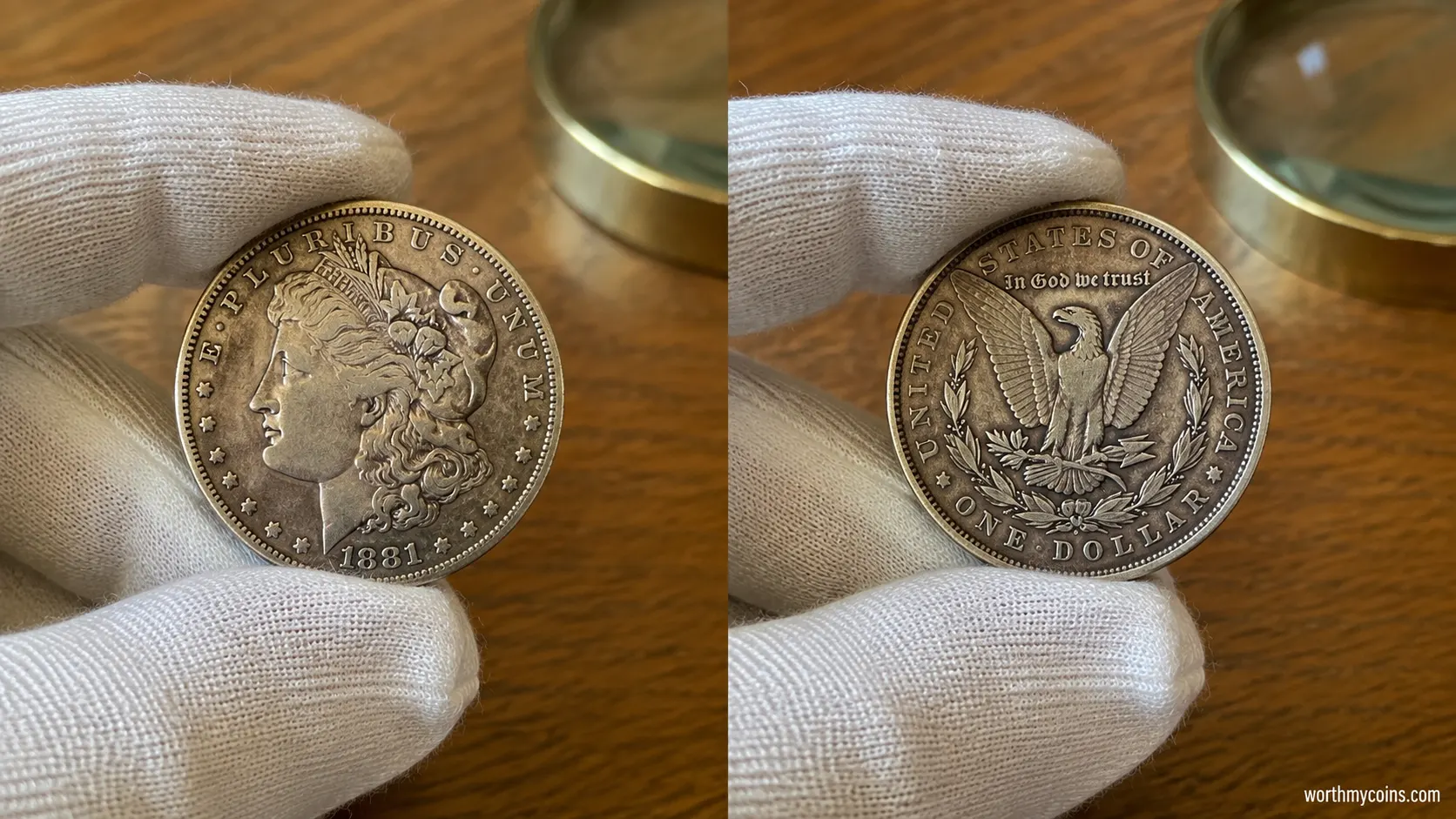
The Morgan dollar is one of the best-known classic U.S. silver dollar designs. Its large format, Liberty portrait, and eagle reverse give it a strong visual presence that makes individual pieces easy to recognize.
The Morgan dollar also has a particularly broad collecting landscape. Collectors can study dates, mintmarks, condition, varieties, and the history of the different mints that produced the series.
Collectors beginning a more systematic study of the series can use Morgan Dollar Value Guide: Rare Dates, Mint Errors & Collector Tips to explore the dates, mintmarks, varieties, and other characteristics that shape Morgan dollar collecting.
Its continuing relevance is also visible in modern U.S. Mint collecting. The Mint currently offers modern Morgan dollar products, including a 2026 Morgan Silver Dollar reverse proof, demonstrating that the design continues to have a place in the modern collector market.
A collector should still evaluate each Morgan dollar individually. Age and silver content do not automatically make every example rare or valuable.
Peace Dollar
The Peace dollar followed the Morgan dollar and introduced a distinctly different artistic style to the U.S. silver dollar.
Collectors interested in continuing through the major U.S. silver dollar series can compare the Peace dollar with the Morgan tradition through Top 10 Peace Silver Dollars Worth Money That Sold for Record Prices, which focuses on notable Peace dollar issues and their collector interest.
Its design reflects the period in which it was created, while maintaining the Liberty imagery that had been central to earlier American coinage. For collectors, the series offers another opportunity to study early 20th-century U.S. silver dollars through dates, mintmarks, condition, and design details.
Like the Morgan dollar, the Peace dollar remains relevant to modern collectors. The U.S. Mint currently lists a 2026 Peace Silver Dollar reverse proof among its dollar best sellers.
The modern versions should not be confused with original historical issues. Collectors should identify the date and production type before comparing coins.
American Silver Eagle
The American Silver Eagle represents a different kind of collector favorite. Unlike the classic circulating series above, it is a modern U.S. bullion and collector coin.
The series has become an important part of the modern U.S. Mint’s collector offerings. Current Mint listings include American Eagle silver proof coins, and the Mint describes its best-selling products as appealing to both new collectors and experienced numismatists.
The American Silver Eagle can appeal to collectors interested in modern U.S. coinage, proof issues, bullion-related collecting, or American Eagle designs. Its place in a collection therefore depends heavily on the collector’s particular goals.
What These Collector Favorites Have in Common
Although these series are very different, several characteristics help explain their lasting appeal.
Distinctive Designs
A strong design makes a coin immediately recognizable. The Buffalo nickel, Mercury dime, Walking Liberty half dollar, Morgan dollar, and Peace dollar all have visual identities that distinguish them from ordinary modern circulation coins.
The U.S. Mint notes that American coins can function as miniature works of art and that many were designed or sculpted by celebrated American artists.
Historical Importance
Coins can also become favorites because they represent particular periods in American history. Early Liberty designs, the transition to presidential portraits, and the development of modern commemorative and bullion coinage all provide different collecting themes.
The history of U.S. circulating coins demonstrates that designs changed as the country, its technology, and its coinage needs changed.
Collecting Depth
A series becomes more interesting when collectors have multiple ways to approach it. Dates, mintmarks, grades, varieties, and design subtypes can turn a simple group of coins into a detailed collecting project.
Collectors looking for specific examples within individual series can use focused references such as 1921 Morgan Silver Dollar Value Guide: Rare Mint Marks, Errors & Current Prices to see how a particular date can create a more specialized collecting challenge.
This is one reason experienced collectors may continue studying a familiar series even after they have acquired many examples.
What Makes One Example More Desirable Than Another?
Not every coin from a popular series is equally collectible.
The most important factors depend on the particular series, but collectors commonly examine the date, mintmark, condition, surface preservation, strike quality, recognized varieties, and authenticity.
Condition can make a major difference. Two coins with the same date and mintmark can have very different collector appeal if one has heavy circulation and the other retains sharp details and attractive surfaces.
For valuable or scarce coins, authentication is also important. A collector should not rely solely on photographs or an unsupported online claim when determining what an unusual coin may be worth.
Why Condition Matters
Condition is especially important with older U.S. coins because decades of circulation can remove fine design details and leave scratches, dents, or other damage.
A coin’s grade attempts to describe its condition using established numismatic standards. For beginners, the practical lesson is simple: compare coins with similar grades and avoid assuming that a rare-looking date automatically represents a high-grade example.
Certified coins can also provide an established grade and authentication from a professional grading service, although certification does not eliminate the need to understand the coin itself.
Avoid Confusing Damage With Rarity
An unusual-looking coin is not automatically a valuable error.
Scratches, dents, corrosion, environmental damage, cleaning, and other post-mint alterations can change a coin’s appearance without making it a genuine Mint error. Genuine errors and recognized varieties require careful identification rather than speculation based on a photograph.
The same principle applies to rarity. An old coin is not necessarily rare, and a low mintage does not by itself establish how many examples survive today.
Collectors learning to separate genuine mint-made varieties from ordinary damage can also consult Top 10 Rare Coin Errors Worth Money Found in Circulation for examples of the types of unusual characteristics that can warrant closer examination.
How to Collect These Favorites
There is no single correct way to collect them. A beginner might choose one series and work through dates and mintmarks, while another collector might focus on a single design, denomination, historical period, or grade range.
The U.S. Mint specifically recommends choosing a collecting goal based on personal interests. Those goals can include completing a set, collecting coins connected to a particular theme, building a collection for future generations, or simply learning more about American numismatics.
Starting with a clear goal helps prevent a collection from becoming an unrelated accumulation of coins.
Final Thoughts
Coins become collector favorites for different reasons. Some stand out because of their artwork, others because of their historical setting, and others because their series offers years of dates, mintmarks, varieties, and grading challenges to study.
The Lincoln cent, Indian Head cent, Buffalo nickel, Mercury dime, Standing Liberty quarter, Walking Liberty half dollar, Morgan dollar, Peace dollar, and American Silver Eagle each offer a different collecting experience. The best choice is ultimately the series that gives you the most interesting questions to research and the most satisfying coins to find.
References
- United States Mint — History of U.S. Circulating Coins
- United States Mint — Coin Collecting 101
- United States Mint — Collecting Basics
- United States Mint — Best Sellers
- Professional Coin Grading Service — PCGS Ultra Rarities Index

Narayan Kumar is the Founder and Author of Worth My Coins. She specializes in U.S. coin collecting, with a focus on coin identification, mint errors, grading, rare varieties, and collector education. Her goal is to publish accurate, well-researched, and easy-to-understand guides that help both new and experienced collectors make informed decisions. Every article is created using trusted numismatic references and is written with a commitment to accuracy, transparency, and long-term educational value.