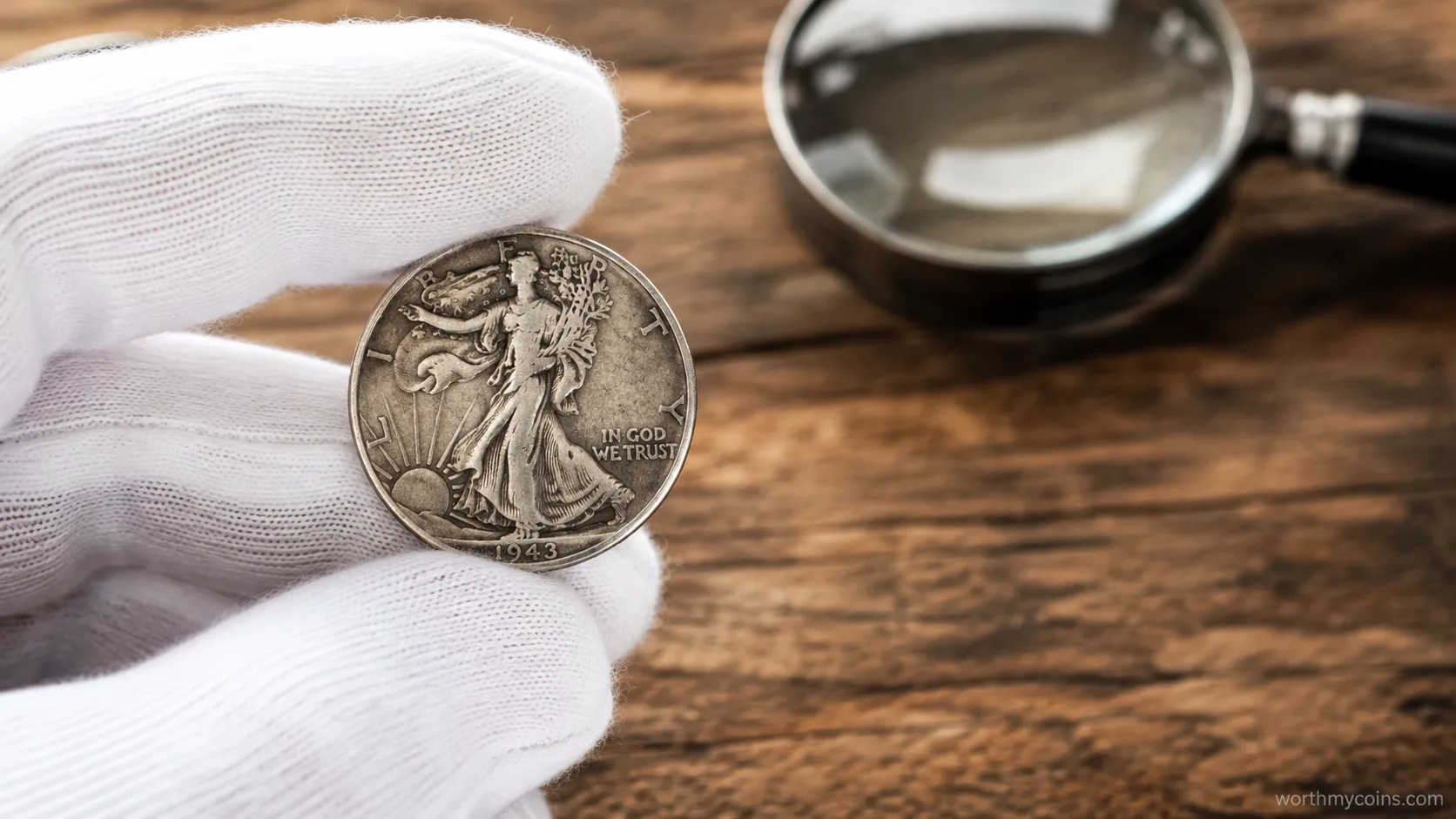
Some U.S. coins have become permanent targets for collectors because they combine scarcity, historical importance, recognizable designs, or famous varieties. From the 1909-S V.D.B. Lincoln cent to the 1916-D Mercury dime and rare early silver dollars, these are the coins that collectors continue to watch for in collections, auctions, dealer inventories, and sometimes old accumulations.
Quick Answer
The U.S. coins collectors consistently search for tend to fall into a few categories: famous key dates, major varieties, genuine Mint errors, early federal issues, and coins that are exceptionally rare in high grades.
Some of the best-known examples include the 1909-S V.D.B. Lincoln cent, 1914-D Lincoln cent, 1916-D Mercury dime, 1932-D and 1932-S Washington quarters, 1955 Doubled Die Obverse cent, 1943 bronze cents, 1913 Liberty Head nickel, 1894-S Barber dime, and rare early silver dollars. The exact value of any example depends heavily on authenticity, condition, variety, and market demand.
What Makes These Coins So Sought After?
There is no single definition of a coin that collectors never stop searching for. A coin can become a major collecting target for very different reasons.
A key date may have had a relatively small mintage or a particularly low number of surviving examples. A major variety can be desirable because of a distinctive die characteristic. A Mint error may be collectible because something unusual happened during planchet preparation, die production, or striking.
Condition also matters. A coin that is relatively obtainable in circulated grades can become extremely difficult when collectors want an exceptional Mint State example. PCGS CoinFacts, for example, provides collectors with information on varieties, population data, auction results, and other coin-specific details that help put rarity and condition into perspective.
Lincoln Cents That Remain Major Targets
Lincoln cents are among the most widely collected U.S. coins, and several issues have achieved legendary status.
1909-S V.D.B. Lincoln Cent
The 1909-S V.D.B. is one of the most recognizable key dates in American coin collecting. It was produced at the San Francisco Mint during the first year of the Lincoln cent, and the initials V.D.B. of designer Victor David Brenner appear on the reverse at the bottom.
Collectors who want to study this famous first-year issue in greater detail can use 1909-S VDB Lincoln Wheat Penny Value Guide: Why This Rare Cent Is So Important to Collectors for a closer look at its identification, history, and collecting significance.
The coin’s popularity is not simply based on age. Its combination of first-year status, San Francisco mintmark, and the prominent V.D.B. initials made it an enduring collector target. PCGS has specifically described the 1909-S V.D.B. as possibly the most famous U.S. coin.
1914-D Lincoln Cent
The 1914-D is another classic Lincoln cent key date. Collectors assembling Lincoln cent sets by date and mintmark have long considered it an important issue.
For collectors researching this important Denver issue, 1914-D Lincoln Wheat Penny Value Guide: Key Date, Mint Marks & Current Prices provides a focused reference for understanding its date, mintmark, condition, and market importance.
Finding an authentic example is only the beginning. Grade, color, surface quality, and signs of alteration can make a substantial difference when evaluating one.
1955 Doubled Die Obverse
The 1955 Doubled Die Obverse is sought for a completely different reason. It is a recognized doubled-die variety with strong, visible doubling on the obverse lettering and date.
Because genuine doubling must be distinguished from ordinary damage or machine doubling, 1955 Doubled Die Lincoln Penny Value Guide: How to Identify This Famous Error Coin is a useful reference for collectors examining a suspected example.
The Philadelphia issue had a reported mintage of 33,058,000 regular cents, but the doubled-die variety is a distinct collectible issue rather than simply a common 1955 cent with damage. PCGS catalogs the variety separately and identifies it as FS-101.
This distinction is important for beginners. Not every coin with apparent doubling is a valuable doubled die. Genuine die varieties need to match recognized characteristics rather than simply looking unusual.
The 1943 Bronze Cent: A Famous Search
Few U.S. coin stories are as well known as the 1943 bronze cent.
Collectors investigating this unusual wartime issue can learn more from 1943 Bronze Lincoln Wheat Penny Value Guide: Identification, Rarity & Collector’s Guide, which provides a focused resource for identifying and understanding the rarity of genuine bronze examples.
During 1943, the regular Lincoln cent was struck on zinc-coated steel planchets rather than the bronze composition used previously. PCGS catalogs documented 1943 bronze cents as major varieties distinct from the normal steel cents.
These coins are especially interesting because they represent an unusual combination of a wartime production change and an extremely scarce wrong-metal occurrence.
The 1943-D bronze cent is particularly notable: PCGS records a single known example and documents its long auction and collection history.
A supposed 1943 bronze cent should never be judged by color alone. Copper-colored surfaces can result from many causes, and authentication is essential before treating an unusual 1943 cent as a genuine Mint-made rarity.
1916-D Mercury Dime
The 1916-D Mercury dime is one of the defining key dates of 20th-century U.S. coin collecting.
Anyone examining a possible 1916-D should consult 1916-D Mercury Dime Value Guide: Rare Key Date, Errors, Mint Marks & Current Value for additional information on the key date, mintmark, authentication concerns, and collector value factors.
Only 264,000 were struck at Denver, far fewer than the Philadelphia and San Francisco Mercury dimes of the same year. PCGS identifies the 1916-D as an iconic key date and notes that it is heavily counterfeited, including attempts to add a D mintmark to ordinary 1916 Philadelphia coins.
That makes authentication especially important.
Collectors also pay close attention to condition. In the Mercury dime series, exceptionally well-preserved coins with Full Bands can command strong premiums because the relevant design details are difficult to find sharply struck and well preserved.
1932-D and 1932-S Washington Quarters
The first year of the Washington quarter series produced two famous key dates: the 1932-D and 1932-S.
These coins are perennial targets for collectors building Washington quarter sets by date and mintmark. Their importance comes from their scarcity within the early series, not simply because they are old.
When evaluating one, the mintmark matters. So does the condition of the coin. A heavily circulated example and a high-grade example should not be treated as equivalent collectibles.
The Washington quarter series also contains important varieties. For example, PCGS catalogs a 1943 Doubled Die Obverse variety and describes the FS-103 variety as the scarcest major doubled die in the Washington quarter series.
1913 Liberty Head Nickel
The 1913 Liberty Head nickel is one of the most famous rarities in American numismatics.
It stands apart from ordinary Liberty Head nickels because the 1913 date is associated with an extremely small number of known examples. It has become a landmark rarity rather than an ordinary date-and-mintmark collecting target.
Coins at this level also demonstrate why authentication and provenance matter. A famous rarity should never be evaluated simply from photographs or an unsupported claim that a coin is genuine.
1894-S Barber Dime
The 1894-S Barber dime is another legendary U.S. rarity and one of the coins that routinely appears in discussions of the most famous American numismatic treasures.
Unlike a common date that can be collected casually, the 1894-S Barber dime occupies the ultra-rare end of the market. Its fame has been reinforced by its scarcity, long collecting history, and appearances in major auctions.
This is an important distinction for collectors: some coins are searched for because they can realistically appear in an old collection, while others are searched for primarily through the professional rare-coin market.
Early U.S. Silver Dollars
Collectors also continue searching for early U.S. silver dollars, particularly important issues from the formative years of federal coinage.
The U.S. Mint’s history of circulating coinage begins with the establishment of the Mint in 1792, and early federal coins provide a direct connection to the country’s first national coinage system.
Early dollar series such as the Flowing Hair Dollar and Draped Bust Dollar are particularly important to type collectors and specialists. Some individual dates and varieties are exceptionally scarce.
The famous 1794 Flowing Hair Dollar is an especially significant example because of its early place in U.S. federal coinage and its extraordinary status in the rare-coin market.
Famous Coins Are Not Always the Best Coins to Search For
A common mistake is assuming that the most famous U.S. coins are the only worthwhile targets.
They are not.
Collectors pursue coins across many levels. Some search for affordable early dates. Others build complete sets. Some specialize in Mint errors, while others focus on proof coins, silver issues, or high-grade examples of otherwise obtainable dates.
The U.S. Mint itself notes that collectors can organize collections around denomination, time period, mintmark, design theme, finish, or other interests.
That is why a coin does not have to be an ultra-rarity to remain highly desirable.
What Collectors Actually Look For
When a potentially important coin turns up, experienced collectors generally examine several characteristics rather than focusing on the date alone.
Date and Mintmark
The date establishes the issue, while the mintmark can completely change its rarity. A common date from Philadelphia may have a much different collecting profile from the same date struck at a branch mint.
Major Varieties
A recognized variety can transform an otherwise ordinary-looking coin into a significant collectible. The key is knowing the diagnostic characteristics of the variety.
Genuine Mint Errors
Major errors can be desirable, but they must be genuine Mint-made errors. Damage that occurs after a coin leaves the Mint does not automatically become collectible simply because it looks unusual.
The U.S. Mint explains that genuine errors can involve the planchet, dies, or striking process, while also noting that most erroneous pieces are removed before leaving Mint facilities.
Condition
Condition can dramatically affect desirability. Two examples of the same date and mintmark may have very different market positions because one has heavy circulation while the other has unusually strong preservation.
For scarce coins, grading can also help establish a common language between buyers and sellers. The organized U.S. rare-coin market developed grading terminology long before modern third-party certification became standard.
Why Authentication Matters
The more desirable the coin, the greater the incentive for counterfeiting and alteration.
The 1916-D Mercury dime is a good example. PCGS specifically warns that counterfeiters have added D mintmarks to common 1916 Philadelphia dimes because of the value and reputation of the genuine key date.
Collectors should therefore be cautious with major rarities offered without convincing provenance or professional authentication.
For expensive or historically important coins, independent certification from a respected grading service can provide useful protection, although certification itself should not replace careful research.
Don’t Confuse an Interesting Coin With a Rare Coin
A coin can be old, attractive, unusual, or historically interesting without being rare.
This is one of the most important lessons for anyone searching through inherited collections, dealer inventories, or accumulated coins.
Mintage is also not the same thing as surviving population. A coin may have had a large original production but relatively few surviving examples in high grades. Conversely, a coin with a low mintage may have more survivors than its original production figure suggests.
PCGS CoinFacts incorporates population, survival, variety, and auction information precisely because rarity cannot always be understood from mintage alone.
How to Search Without Making Costly Mistakes
The best approach is systematic.
Start by identifying the denomination and date. Then check the mintmark, compare the design with a trusted reference, and look for recognized varieties or documented errors.
Do not clean a potentially valuable coin. Cleaning can permanently damage original surfaces and reduce collector appeal.
If a coin appears to be a major rarity, slow down before selling it. Compare documented examples, study the diagnostics, and seek professional authentication when appropriate.
Auction databases can also help establish what comparable certified examples have actually sold for. PCGS CoinFacts includes public auction results and population information, while major auction firms continue to offer extensive U.S. coin sales.
Why These Coins Remain Perennial Collector Targets
The U.S. coins collectors never stop searching for are not all valuable for the same reason.
The 1909-S V.D.B. is a famous Lincoln cent key date. The 1916-D Mercury dime is a classic low-mintage rarity. The 1955 Doubled Die represents a major collectible variety. The 1943 bronze cent is famous for its unusual composition. Early silver dollars connect collectors with the beginning of federal coinage, while coins such as the 1913 Liberty Head nickel and 1894-S Barber dime represent the extreme upper end of American numismatics.
What they share is a combination of scarcity, historical significance, distinctive characteristics, and sustained collector interest.
For most collectors, the real opportunity is not expecting to discover an ultra-rarity in ordinary change. It is learning how to recognize the dates, mintmarks, varieties, and genuine errors that make a coin worth investigating.
FAQ
What U.S. coin is one of the most famous collector targets?
The 1909-S V.D.B. Lincoln cent is one of the best-known U.S. collector targets. Its first-year status, San Francisco mintmark, and V.D.B. initials have made it an enduring key date.
Are old U.S. coins automatically rare?
No. Age alone does not establish rarity. Collectors also consider surviving population, condition, date, mintmark, varieties, and demand.
What should I check first on an old U.S. coin?
Start with the date and mintmark. Those two details can quickly identify whether a coin deserves closer research.
Are unusual-looking coins always Mint errors?
No. Scratches, dents, environmental damage, and other post-Mint alterations can make coins look unusual. Genuine Mint errors have specific characteristics tied to the production process.
Should valuable U.S. coins be professionally authenticated?
For major rarities and expensive key dates, professional authentication is strongly advisable. This is particularly important for coins known to have counterfeit or altered examples, such as the 1916-D Mercury dime.
References
- United States Mint — Coin Collecting 101
- United States Mint — Collecting Basics
- United States Mint — History of U.S. Circulating Coins
- PCGS CoinFacts
- PCGS — Ultra Rarities Index: The 10 Most Famous U.S. Coins
- PCGS — 1916-D Mercury Dime

Narayan Kumar is the Founder and Author of Worth My Coins. She specializes in U.S. coin collecting, with a focus on coin identification, mint errors, grading, rare varieties, and collector education. Her goal is to publish accurate, well-researched, and easy-to-understand guides that help both new and experienced collectors make informed decisions. Every article is created using trusted numismatic references and is written with a commitment to accuracy, transparency, and long-term educational value.