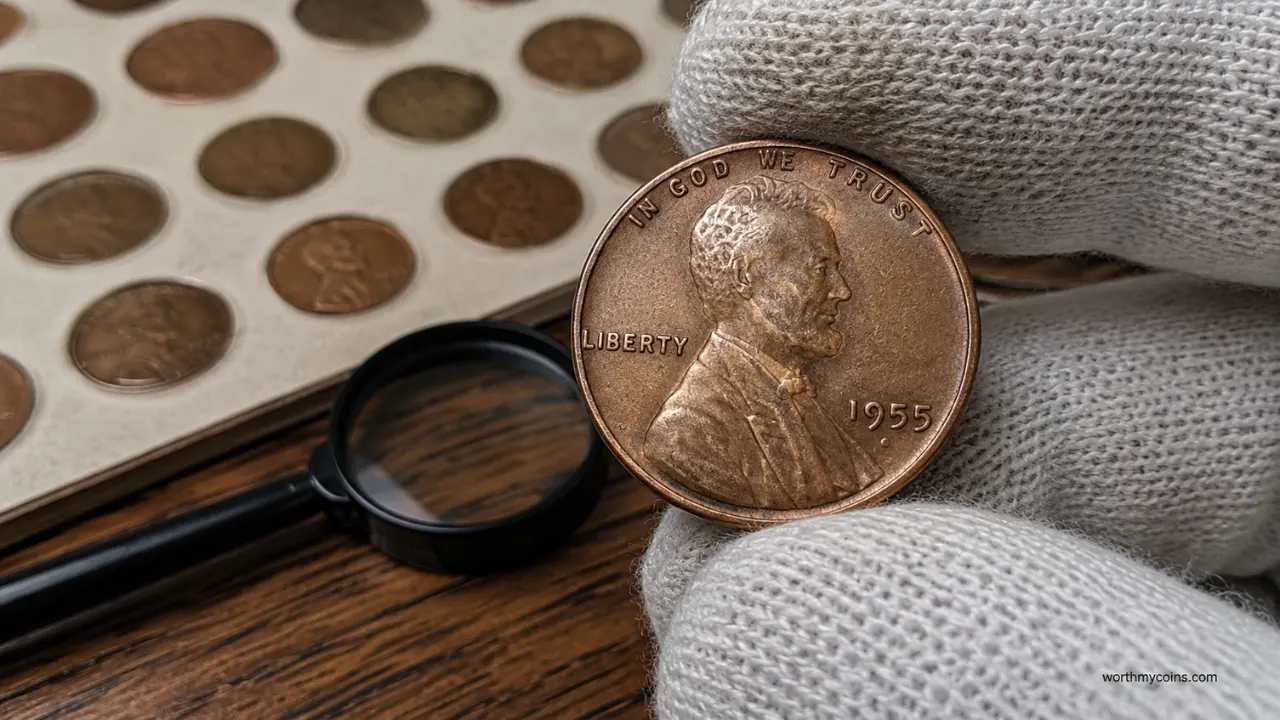
Few U.S. coins have captured collectors’ attention quite like the 1955 Doubled Die Lincoln Penny. Even people with little experience in coin collecting have heard stories about this famous error cent turning up in old jars, pocket change, or inherited collections. While many doubled dies exist across different coin series, the 1955 Doubled Die Obverse remains one of the best-known and most desirable error coins ever produced by the United States Mint.
If you think you’ve found one, correctly identifying the genuine variety is far more important than immediately estimating its value. Many ordinary 1955 Lincoln cents are mistaken for the famous doubled die, and countless counterfeits have appeared over the years.
Quick Answer
The 1955 Doubled Die Lincoln Penny is one of the most famous error coins in American numismatics. Its dramatic doubling on the obverse lettering and date is visible without magnification, making it one of the easiest major doubled dies for beginners to recognize. The coin’s market value depends on authenticity, grade, eye appeal, and certification rather than a single fixed price.
Readers who want to learn more about Lincoln cents should also read our Lincoln Wheat Penny Value Guide (1909–1958): Prices, Errors & Rare Coins, where we explain the complete series, important dates, and what makes certain pennies especially collectible.
Because the 1955 Doubled Die Lincoln Penny is one of the best-known U.S. error coins, it is also one of the most frequently misidentified. Before assuming you’ve found a genuine example, compare the coin’s diagnostics carefully or consider professional authentication.
What Is a Doubled Die?
A doubled die is a manufacturing variety created during the die-making process, not during the striking of individual coins.
When the working die receives a slightly misaligned impression during production, every coin struck from that die can display noticeable doubling. This is very different from machine doubling, which occurs during the striking process and usually adds little or no collector premium.
The 1955 Doubled Die Lincoln Penny became famous because the doubling is unusually strong and can easily be seen with the naked eye.
Why Is the 1955 Doubled Die So Famous?
Several factors have contributed to its legendary status.
First, the doubling is extremely bold. Unlike many doubled dies that require magnification, the 1955 variety displays obvious separation in the inscriptions on the front of the coin.
Second, a number of these coins entered circulation before the error was discovered. Instead of being destroyed immediately, many reached banks and the public, allowing collectors to find genuine examples in circulation during the late 1950s.
Finally, decades of collector demand have made the coin one of the most recognizable error varieties ever produced by the U.S. Mint.
How to Identify a Genuine 1955 Doubled Die Lincoln Penny
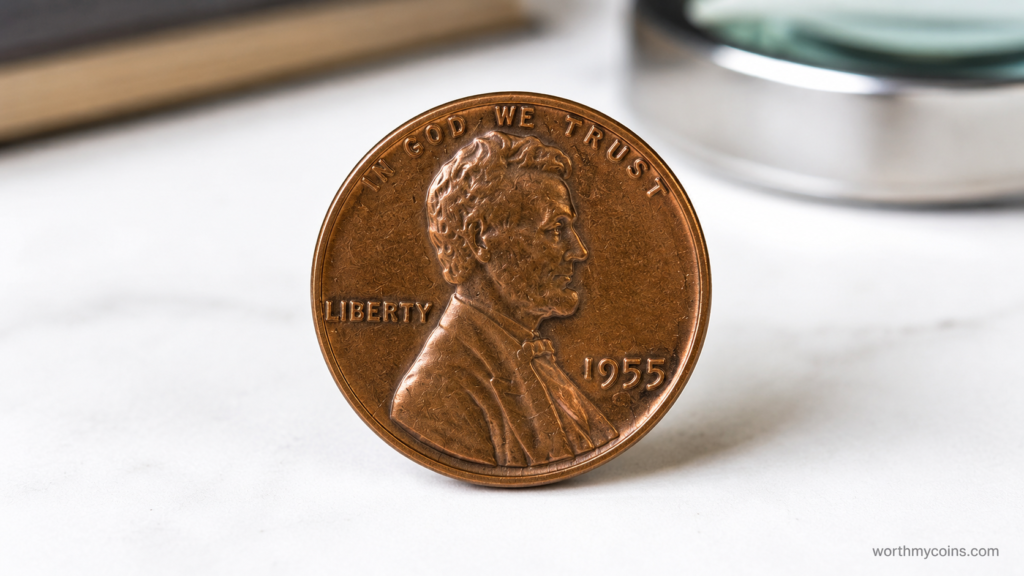
Before assuming you’ve found this famous variety, carefully examine the coin’s most important diagnostic features.
Date
The numerals in 1955 should display strong, unmistakable doubling. Each number shows clear separation rather than a blurred or shadow-like appearance.
Obverse Lettering
The words:
- LIBERTY
- IN GOD WE TRUST
also exhibit dramatic doubling. These inscriptions are usually the first features experienced collectors examine because the doubling is bold and easily visible.
Reverse
Unlike the obverse, the reverse design does not display the same dramatic doubling. This difference helps specialists distinguish the genuine variety from damaged or altered coins.
Specifications
| Feature | Details |
|---|---|
| Country | United States |
| Denomination | One Cent |
| Year | 1955 |
| Mint | Philadelphia (No Mint Mark) |
| Composition | 95% Copper, 5% Tin and Zinc |
| Weight | 3.11 grams |
| Diameter | 19.05 mm |
| Edge | Plain |
| Designer | Victor David Brenner |
Common Coins That Are Mistaken for the 1955 Doubled Die
One of the biggest mistakes beginners make is confusing the famous doubled die with ordinary strike-related issues.
Common look-alikes include:
- Machine doubling
- Die deterioration
- Worn coins with distorted lettering
- Damage caused after the coin left the Mint
Machine doubling often appears flat and shelf-like, while the genuine 1955 Doubled Die shows clear, rounded separation on the letters and date.
Because of the coin’s popularity, counterfeit examples and altered coins are also common. Professional authentication is strongly recommended before buying or selling any suspected example.
Readers interested in another legendary Lincoln cent should also read our 1909-S VDB Lincoln Wheat Penny Value Guide: Why This Rare Cent Is So Important to Collectors, which explores another iconic key-date coin that remains one of the cornerstones of U.S. coin collecting.
Why Authentication Matters
The 1955 Doubled Die Lincoln Penny is among the most frequently counterfeited U.S. coins because genuine examples are highly sought after.
Before assigning any value, collectors should verify:
- The doubling matches known diagnostics.
- The coin has not been altered.
- The surfaces appear original.
- The weight and dimensions are correct.
- A respected third-party grading service has confirmed authenticity, when appropriate.
Certification by organizations such as PCGS or NGC provides added confidence and helps buyers distinguish genuine examples from altered or misleading pieces.
What Determines the Value of a 1955 Doubled Die Lincoln Penny?
There is no single price that applies to every genuine 1955 Doubled Die Lincoln Penny. Its market value depends on several factors that experienced collectors and professional grading services consider before assigning a value.
The most important factors include:
- Authenticity
- Overall grade
- Original mint luster
- Surface preservation
- Eye appeal
- Color designation (Brown, Red-Brown, or Red)
- Certification
- Current collector demand
- Recent auction results
Completed auction sales generally provide a better indication of current market demand than unsold asking prices because they reflect actual transactions between buyers and sellers.
Because collector demand and auction activity change over time, market prices can also fluctuate. Rather than relying on asking prices found online, collectors should compare recent certified auction sales for coins in similar grades.
How Grading Affects Value
Condition plays a significant role in the desirability of the 1955 Doubled Die.
Although circulated examples remain highly collectible, coins with minimal wear and original surfaces are generally more sought after.
Professional grading services evaluate several characteristics that influence both collector appeal and market value.
| Grading Factor | Why It Matters |
|---|---|
| Wear | Less circulation wear usually increases collector appeal. |
| Strike Quality | Strong design details improve desirability. |
| Original Luster | Uncirculated coins retaining mint luster are preferred. |
| Surface Preservation | Scratches, cleaning, and corrosion can reduce value. |
| Eye Appeal | Attractive natural color and surfaces often increase demand. |
| Color Designation | Red (RD), Red-Brown (RB), and Brown (BN) designations can significantly influence collector interest. |
For Lincoln cents, original Red (RD) examples are generally scarcer than Brown examples because copper naturally darkens over time if not carefully preserved.
Genuine Doubled Die vs. Machine Doubling
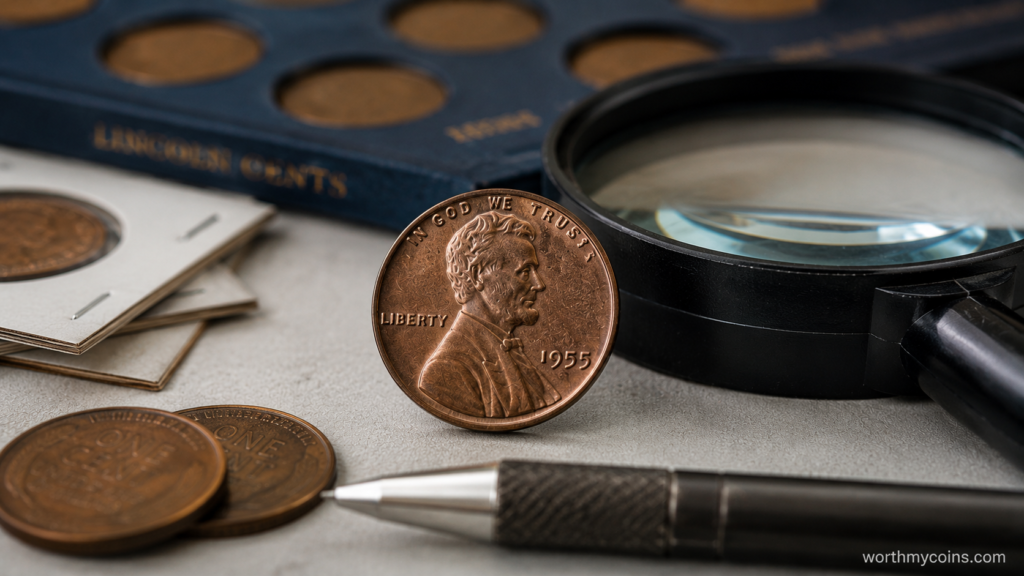
One of the most common mistakes beginners make is confusing machine doubling with a true doubled die.
The differences are important.
| Genuine Doubled Die | Machine Doubling |
|---|---|
| Created during die manufacturing | Occurs during the striking process |
| Appears on every coin struck from that die | Random and not a true variety |
| Strong, rounded separation | Flat, shelf-like appearance |
| Highly collectible | Usually carries little or no premium |
The famous 1955 variety shows bold, rounded doubling on the obverse lettering and date that is easily visible without magnification. Machine doubling typically looks flat and lacks the distinct separation seen on a genuine doubled die.
Buying Tips for Collectors
If you’re planning to add a 1955 Doubled Die Lincoln Penny to your collection, a careful approach can help you avoid costly mistakes.
Consider these best practices:
- Purchase certified examples whenever possible.
- Buy from established coin dealers or reputable auction firms.
- Compare several authenticated examples before making a decision.
- Learn the known diagnostics before purchasing a raw coin.
- Be cautious of unusually low prices for supposedly genuine examples.
Because this variety is widely recognized, counterfeit and altered examples continue to appear in the marketplace, making careful authentication especially important.
Collectors interested in another legendary Lincoln cent should also read our 1943 Bronze Lincoln Wheat Penny Value Guide: Identification, Rarity & Collector’s Guide, which explains another famous rarity that is frequently counterfeited and requires careful authentication.
Practical Buying Checklist
Before purchasing a 1955 Doubled Die Lincoln Penny, take a moment to check the following:
- The coin has been authenticated by a respected third-party grading service whenever possible.
- The doubling matches the well-known diagnostics of the genuine variety.
- The certification number can be verified through the grading service.
- The seller has a solid reputation within the numismatic community.
- Recent certified auction results support the asking price.
A careful review can help reduce the risk of purchasing an altered, counterfeit, or misidentified coin.
Selling Tips
If you own what appears to be a genuine 1955 Doubled Die Lincoln Penny, avoid cleaning or polishing it before seeking an expert opinion.
Instead, consider the following:
- Handle the coin only by its edges.
- Store it in a protective holder.
- Consider professional authentication before offering it for sale.
- Compare recent certified auction results.
- Obtain offers from multiple reputable buyers.
Certified examples generally inspire greater buyer confidence because both authenticity and grade have already been independently verified.
Other 1955 Lincoln Cents
It’s worth noting that not every 1955 Lincoln cent is the famous doubled die.
Collectors may also encounter:
- Regular 1955 Philadelphia cents
- 1955-D Lincoln cents
- 1955-S Lincoln cents
While these coins can certainly be collectible depending on condition, they do not display the dramatic doubled obverse that made the Philadelphia doubled die famous.
Carefully identifying the variety before estimating value is essential.
Common Mistakes Collectors Make
Even experienced collectors occasionally misidentify doubled dies.
Some of the most common mistakes include:
- Mistaking machine doubling for the famous doubled die.
- Assuming every 1955 Lincoln cent is rare.
- Cleaning the coin before authentication.
- Trusting online asking prices instead of verified auction records.
- Buying uncertified examples without understanding the diagnostics.
Taking time to study the diagnostics and purchasing certified coins from reputable sources can help collectors avoid many of these pitfalls.
Collectors interested in classic silver coinage should also read our Mercury Dime Value Guide: The Rare Coins Every Collector Wants to Find, where we explain another iconic U.S. coin series and discuss how rarity, grading, and collector demand influence long-term value.
Why the 1955 Doubled Die Remains So Popular
More than seventy years after it was struck, the 1955 Doubled Die Lincoln Penny remains one of the defining coins of American error collecting.
Its combination of dramatic visual doubling, historical significance, and widespread recognition has made it a centerpiece in countless collections. Even collectors who specialize in other denominations often recognize it immediately because few U.S. mint varieties are as distinctive or as well known.
Frequently Asked Questions
Is every 1955 Lincoln Penny a Doubled Die?
No. Most 1955 Lincoln cents are normal circulation coins. The famous 1955 Doubled Die Obverse is a specific variety produced from a misaligned working die. Before assuming a coin is valuable, carefully compare its diagnostics with authenticated examples or have it examined by a professional grading service.
Does the 1955 Doubled Die have a mint mark?
No. Genuine 1955 Doubled Die Lincoln Pennies were struck at the Philadelphia Mint, so they do not have a mint mark. If a 1955 penny has a “D” or “S” mint mark, it is not the famous doubled die variety.
Can the doubling be seen without magnification?
Yes. One reason this variety became so famous is that the doubling is extremely bold. On genuine examples, the date, LIBERTY, and IN GOD WE TRUST show clear, rounded separation that is usually visible to the naked eye.
Should I clean my 1955 Doubled Die Penny?
No. Cleaning almost always reduces a collectible coin’s desirability and may lower its market value. Collectors generally prefer coins with original surfaces, even when they show honest circulation wear.
How can I confirm whether my coin is genuine?
The safest option is to have the coin authenticated by a respected third-party grading service such as PCGS or NGC. Professional authentication helps confirm that the coin is a genuine doubled die rather than machine doubling, damage, or an altered piece.
Is machine doubling the same as a doubled die?
No. Machine doubling occurs during the striking process and usually carries little or no collector premium. A true doubled die is created during die manufacturing and affects every coin struck from that die. The famous 1955 variety is a true doubled die and remains one of the best-known error coins in U.S. numismatics.
Conclusion
The 1955 Doubled Die Lincoln Penny remains one of the most iconic error coins ever produced by the United States Mint. Its dramatic doubling, fascinating production history, and enduring collector demand have secured its place among the most celebrated Lincoln cents in American numismatics.
If you believe you’ve found one, focus first on accurate identification rather than estimating its value. Confirm that the coin displays the well-known doubled obverse diagnostics, avoid cleaning it, and consider professional authentication before buying, selling, or adding it to your collection. Careful research and proper verification are the best ways to appreciate—and protect—the value of this remarkable coin.
Collectors who want a broader understanding of rare Lincoln cents should also read our Lincoln Wheat Penny Value Guide (1909–1958): Prices, Errors & Rare Coins, which covers the complete series, important key dates, and the grading principles that influence collector demand.
References
The information in this guide is based on recognized numismatic references and industry resources, including:
- United States Mint
- Professional Coin Grading Service (PCGS) CoinFacts
- Numismatic Guaranty Company (NGC) Coin Explorer
- American Numismatic Association (ANA)
- Heritage Auctions
- Stack’s Bowers Galleries
- Newman Numismatic Portal

Narayan Kumar is the Founder and Author of Worth My Coins. She specializes in U.S. coin collecting, with a focus on coin identification, mint errors, grading, rare varieties, and collector education. Her goal is to publish accurate, well-researched, and easy-to-understand guides that help both new and experienced collectors make informed decisions. Every article is created using trusted numismatic references and is written with a commitment to accuracy, transparency, and long-term educational value.