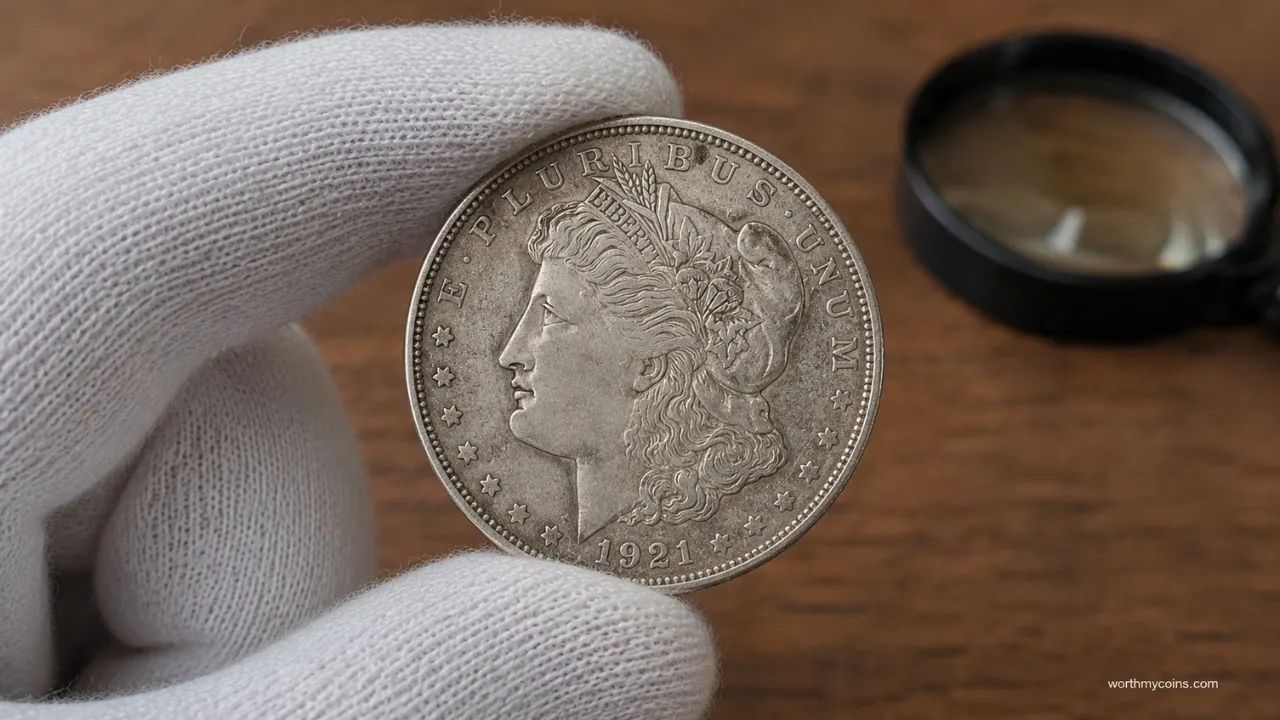
The 1921 Morgan Silver Dollar is one of the most interesting coins in American numismatics because it represents the final year of the original Morgan Dollar series. While millions were struck in 1921, not every coin is equally desirable. Mint mark, condition, strike quality, and authenticity all play major roles in determining collector interest and market value.
If you’ve inherited a 1921 Morgan Dollar or found one in an old collection, identifying its mint mark and evaluating its condition are the first steps toward understanding its collector appeal and potential market value. This guide explains everything beginners need to know using reliable numismatic sources and practical collecting advice.
Quick Answer
The 1921 Morgan Silver Dollar was produced at the Philadelphia, Denver, and San Francisco Mints. Although it is the most common date in the Morgan Dollar series due to its high mintage, certain mint marks, well-preserved examples, and certified high-grade coins are significantly more desirable than ordinary circulated pieces.
Collectors who are new to the Morgan Dollar series should also read our Morgan Dollar Value Guide: Rare Dates, Mint Errors & Collector Tips, where we explain the complete series, important key dates, grading basics, and collecting strategies.
Although the 1921 Morgan Dollar is one of the most common dates in the series, collectors should still confirm authenticity before purchasing higher-grade examples or coins advertised as rare varieties. Professional authentication can help verify originality, condition, and any recognized die varieties.
Why Is the 1921 Morgan Dollar Important?
The Morgan Dollar was first introduced in 1878 and remained in production until 1904. Coinage then paused for several years before Congress authorized a final production run in 1921 under the requirements of the Pittman Act.
That makes the 1921 Morgan Dollar historically significant because it marks the end of the original Morgan Dollar series before the Peace Dollar replaced it later the same year.
Although millions of 1921 Morgan Dollars were struck, they remain popular with collectors because they represent the final chapter of one of America’s most iconic silver coin series.
1921 Morgan Dollar Specifications
| Feature | Details |
|---|---|
| Country | United States |
| Denomination | One Dollar |
| Year | 1921 |
| Composition | 90% Silver, 10% Copper |
| Weight | 26.73 grams |
| Diameter | 38.1 mm |
| Edge | Reeded |
| Designer | George T. Morgan |
| Mints | Philadelphia, Denver, San Francisco |
Mint Marks Explained
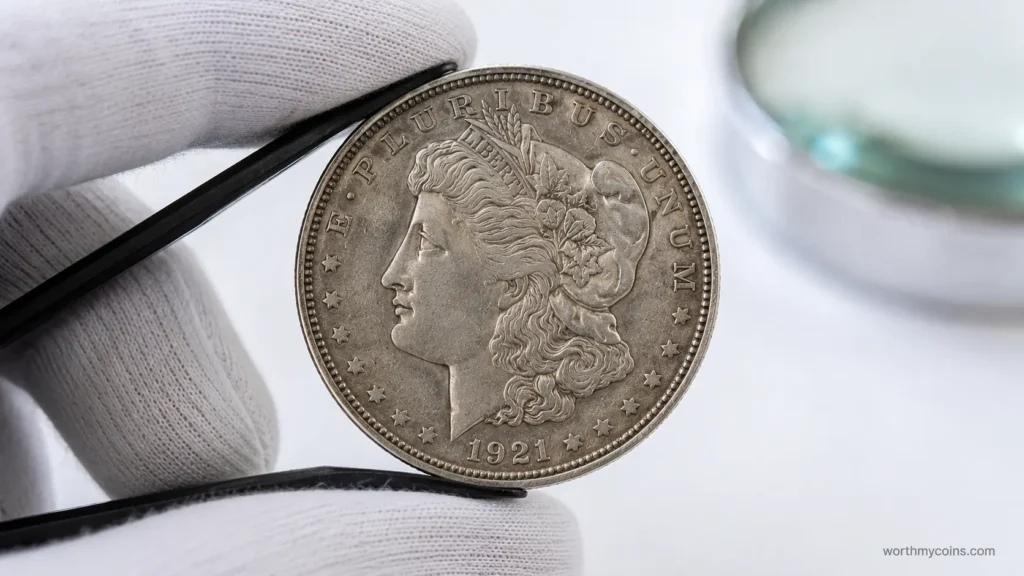
One of the first things collectors should check is the mint mark.
The mint mark is located on the reverse below the wreath and above the letters “DO” in “DOLLAR.”
No Mint Mark (Philadelphia)
Coins struck in Philadelphia do not carry a mint mark. Because Philadelphia produced the largest number of Morgan Dollars throughout the series, many collectors encounter these first.
D Mint Mark (Denver)
The Denver Mint struck Morgan Dollars for only one year—1921. This makes the 1921-D an important issue for collectors who want one example from every Morgan Dollar mint.
S Mint Mark (San Francisco)
The San Francisco Mint also produced Morgan Dollars in 1921. Many examples are known for attractive strikes, although quality can vary from coin to coin.
Understanding the mint mark helps collectors identify the coin correctly before researching rarity, grading, and market demand.
How to Identify a Genuine 1921 Morgan Dollar
Most genuine 1921 Morgan Dollars share several easily recognized characteristics.
Look for:
- The date 1921 beneath Liberty’s portrait.
- The designer’s initials M on the truncation of Liberty’s neck.
- A reeded edge.
- A weight close to 26.73 grams.
- A diameter of approximately 38.1 millimeters.
- A properly positioned mint mark, if present.
Collectors should also examine the coin for signs of alteration, artificial toning, tooling, or cleaning. While counterfeit 1921 Morgan Dollars are less common than counterfeit examples of many famous key-date coins, they do exist, particularly in online marketplaces.
Why Condition Matters
Since millions of 1921 Morgan Dollars entered circulation, worn examples are relatively common today.
However, original coins with minimal wear, strong luster, and attractive eye appeal remain highly sought after.
Professional grading considers several characteristics that influence both collector appeal and market value, including:
- Amount of wear
- Strike quality
- Surface preservation
- Original mint luster
- Contact marks
- Eye appeal
Certified examples often inspire greater buyer confidence because their authenticity and grade have already been independently verified.
Readers interested in another legendary silver coin series should also read our Mercury Dime Value Guide: The Rare Coins Every Collector Wants to Find, which explains how grading, rarity, and collector demand influence the value of classic U.S. silver dimes.
Common Mistakes New Collectors Make
Many beginners assume every 1921 Morgan Dollar is rare simply because it is more than a century old. In reality, rarity depends on much more than age.
Some common mistakes include:
- Confusing bullion value with collector value.
- Ignoring the importance of mint marks.
- Cleaning the coin before selling it.
- Assuming online asking prices reflect actual market value.
- Purchasing expensive coins without professional certification.
Collectors who understand these basics are much better prepared to make informed buying and selling decisions.
In the next section, we’ll explore the most important value factors, discuss recognized varieties and mint errors, explain how grading affects collector demand, and share practical buying and selling tips for the 1921 Morgan Silver Dollar.
What Determines the Value of a 1921 Morgan Silver Dollar?
A 1921 Morgan Dollar does not have one universal value. Two coins with the same date can sell for dramatically different prices depending on several important factors.
Experienced collectors typically evaluate:
- Mint mark
- Overall condition
- Strike quality
- Original mint luster
- Surface preservation
- Eye appeal
- Professional certification
- Collector demand
- Recent auction results
Completed auction sales generally provide a better indication of current market demand than unsold asking prices because they reflect actual transactions between buyers and sellers.
Even though the 1921 issue is one of the most available Morgan Dollars, exceptional examples remain highly desirable because truly original, high-grade coins are much scarcer than circulated pieces.
How Grading Affects Collector Value
Grading is one of the biggest factors influencing market value.
Professional grading services evaluate far more than simple wear. They also examine how well the coin was struck, whether its surfaces remain original, and whether any damage or cleaning has occurred.
| Grading Factor | Why It Matters |
|---|---|
| Wear | Less wear generally means stronger collector demand. |
| Strike | Sharply struck details are preferred by collectors. |
| Original Luster | Original mint luster increases desirability. |
| Surface Preservation | Cleaning, scratches, and damage can reduce value. |
| Eye Appeal | Attractive natural toning may improve marketability. |
| Certification | Independent grading increases buyer confidence. |
Because grading is subjective, many collectors prefer coins certified by recognized services such as PCGS or NGC before making significant purchases.
Mint Marks and Their Importance
Unlike many Morgan Dollar dates, the 1921 issue was struck at three different mints:
- Philadelphia (no mint mark)
- Denver (D)
- San Francisco (S)
Each mint produced coins with slightly different striking characteristics, and collector demand can vary depending on grade and overall quality.
The 1921-D is especially notable because 1921 was the only year Morgan Dollars were struck at the Denver Mint, making it an important issue for series collectors.
Readers interested in learning more about the complete Morgan Dollar series should also read our 1921 Peace Dollar Value Guide, where we explain important key dates, mint marks, and collecting strategies in greater detail.
Are There Valuable 1921 Morgan Dollar Errors?
Although the 1921 Morgan Dollar is best known as the final year of the original Morgan Dollar series rather than for dramatic mint errors, legitimate mint-made errors and recognized die varieties do exist.
Collectors may encounter examples with:
- Doubled dies
- Off-center strikes
- Die cracks
- Die clashes
- Lamination errors
- Broadstrikes
Another area of interest is VAM varieties. “VAM” refers to cataloged die varieties identified by Leroy Van Allen and A. George Mallis. These are not mint errors in the traditional sense but are recognized die variations that many Morgan Dollar specialists actively collect.
Not every unusual-looking coin is valuable, however. Damage that occurs after a coin leaves the Mint should not be confused with a genuine mint error.
Should You Have Your 1921 Morgan Dollar Certified?
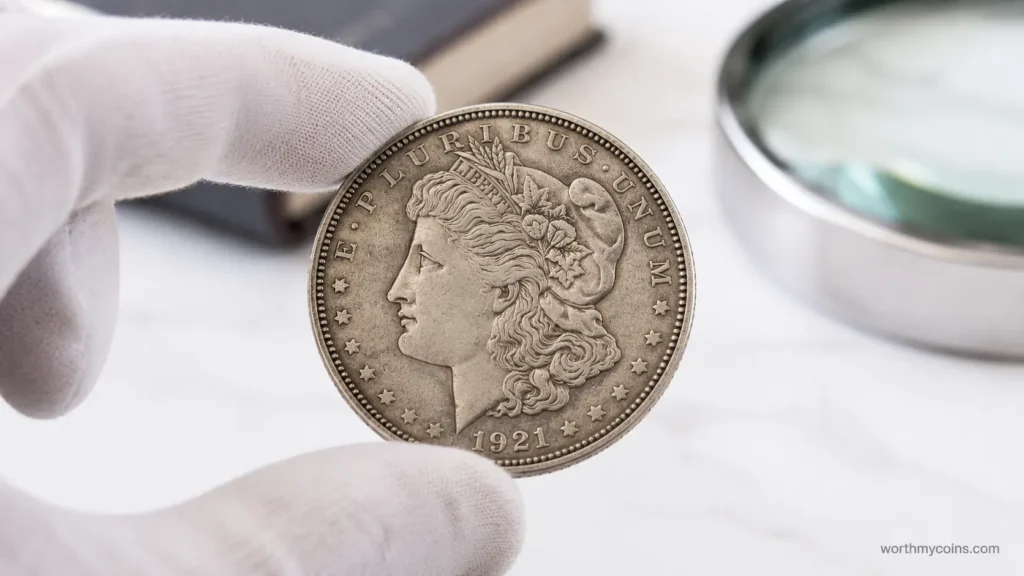
If your 1921 Morgan Dollar appears to have:
- Exceptional preservation
- An unusual variety
- A possible mint error
- Strong original luster
- Little or no circulation wear
professional authentication is generally worthwhile.
Certification helps:
- Confirm authenticity.
- Assign an independent grade.
- Identify recognized varieties.
- Increase buyer confidence.
- Improve liquidity when selling.
For higher-value examples, certification is often considered standard practice within the numismatic community.
Buying Tips
Whether you’re purchasing your first Morgan Dollar or adding to an existing collection, these practical tips can help you make informed decisions.
- Buy certified coins when spending significant amounts.
- Purchase from reputable dealers or established auction firms.
- Compare several examples before making a decision.
- Learn basic grading before buying expensive coins.
- Avoid cleaned or heavily polished examples whenever possible.
Collectors who understand grading, originality, and eye appeal often make more informed long-term purchasing decisions than those who focus only on price.
If you enjoy collecting classic American silver coins, you may also want to read our 1916-D Mercury Dime Value Guide: Rare Key Date, Errors, Mint Marks & Current Value, which explains another famous key-date coin and the importance of authentication and professional grading.
Practical Buying Checklist
Before purchasing a 1921 Morgan Silver Dollar, take a moment to check the following:
- Confirm the correct mint mark, if present.
- Look for original surfaces instead of cleaned or polished finishes.
- Verify the certification number when buying a certified coin.
- Compare recent certified auction results with the asking price.
- Purchase from a reputable dealer or established auction firm whenever possible.
A few extra minutes of research can help you avoid overpaying or purchasing a cleaned, altered, or misrepresented coin.
Selling Tips
If you’re planning to sell a 1921 Morgan Dollar, avoid accepting the first offer without doing a little research.
Before accepting an offer, consider:
- Comparing recent certified auction sales.
- Understanding the coin’s approximate grade.
- Knowing whether it has an important variety.
- Getting multiple opinions if the coin appears exceptional.
Collectors generally place greater trust in certified coins because grading removes much of the uncertainty from the transaction.
In the final part, we’ll answer common beginner questions, provide trusted numismatic references, and summarize what collectors should know before buying or selling a 1921 Morgan Silver Dollar.
Frequently Asked Questions
Is every 1921 Morgan Silver Dollar valuable?
No. Although every genuine 1921 Morgan Dollar contains 90% silver and is collectible, not every example is considered rare. Most surviving coins are common in circulated grades because the Philadelphia Mint alone produced more than 44 million pieces in 1921. Higher-grade, original, or certified examples generally attract stronger collector demand.
Which 1921 Morgan Dollar mint mark is the rarest?
The Philadelphia (no mint mark), Denver (D), and San Francisco (S) issues are all collected. The 1921-D is especially popular because it represents the only Morgan Dollar ever struck at the Denver Mint, making it an important coin for collectors building a complete Morgan Dollar set.
Where is the mint mark located?
On 1921 Morgan Dollars, the mint mark appears on the reverse beneath the wreath and directly above the letters “DO” in the word DOLLAR.
If there is no mint mark, the coin was struck at the Philadelphia Mint.
Should I clean my 1921 Morgan Dollar?
No.
Cleaning can permanently damage the coin’s original surfaces and often reduces collector value. Most experienced collectors and professional grading services prefer coins that retain their natural appearance, even if they show honest circulation wear.
Are all 1921 Morgan Dollar errors valuable?
Not necessarily.
Some genuine mint errors and VAM die varieties are collectible, but ordinary scratches, dents, environmental damage, polishing, or post-mint alterations should not be mistaken for mint-made errors. Authentication is recommended if you believe your coin has an unusual variety.
Is professional grading worth it?
If your coin appears uncirculated, has exceptional eye appeal, or may be a recognized variety, professional grading is often worthwhile.
Certification by respected grading services such as PCGS or NGC can:
- Confirm authenticity.
- Assign an independent grade.
- Identify recognized varieties.
- Increase buyer confidence.
- Make future resale easier.
Conclusion
The 1921 Morgan Silver Dollar marks the final year of one of America’s most celebrated coin series. While it is more common than many earlier Morgan Dollar dates, collector interest remains strong because of its historical importance, silver content, and status as the last regular-issue Morgan Dollar before the introduction of the Peace Dollar.
If you own a 1921 Morgan Dollar, start by identifying the mint mark and evaluating its overall condition. Original surfaces, strong luster, attractive eye appeal, and professional certification can all have a significant impact on collector demand. Rather than relying on advertised asking prices, compare recent certified auction results and consult trusted numismatic references before buying or selling.
Collectors who are expanding beyond silver dollars should also read our Lincoln Wheat Penny Value Guide (1909–1958), where we explain grading, mint marks, key dates, and the collecting principles that apply across many classic U.S. coin series.
References
The information in this guide is based on recognized numismatic references and industry resources, including:
- United States Mint
- Professional Coin Grading Service (PCGS) CoinFacts & Price Guide
- Numismatic Guaranty Company (NGC) Coin Explorer & Price Guide
- American Numismatic Association (ANA)
- Heritage Auctions
- Stack’s Bowers Galleries
- Newman Numismatic Portal

Narayan Kumar is the Founder and Author of Worth My Coins. She specializes in U.S. coin collecting, with a focus on coin identification, mint errors, grading, rare varieties, and collector education. Her goal is to publish accurate, well-researched, and easy-to-understand guides that help both new and experienced collectors make informed decisions. Every article is created using trusted numismatic references and is written with a commitment to accuracy, transparency, and long-term educational value.