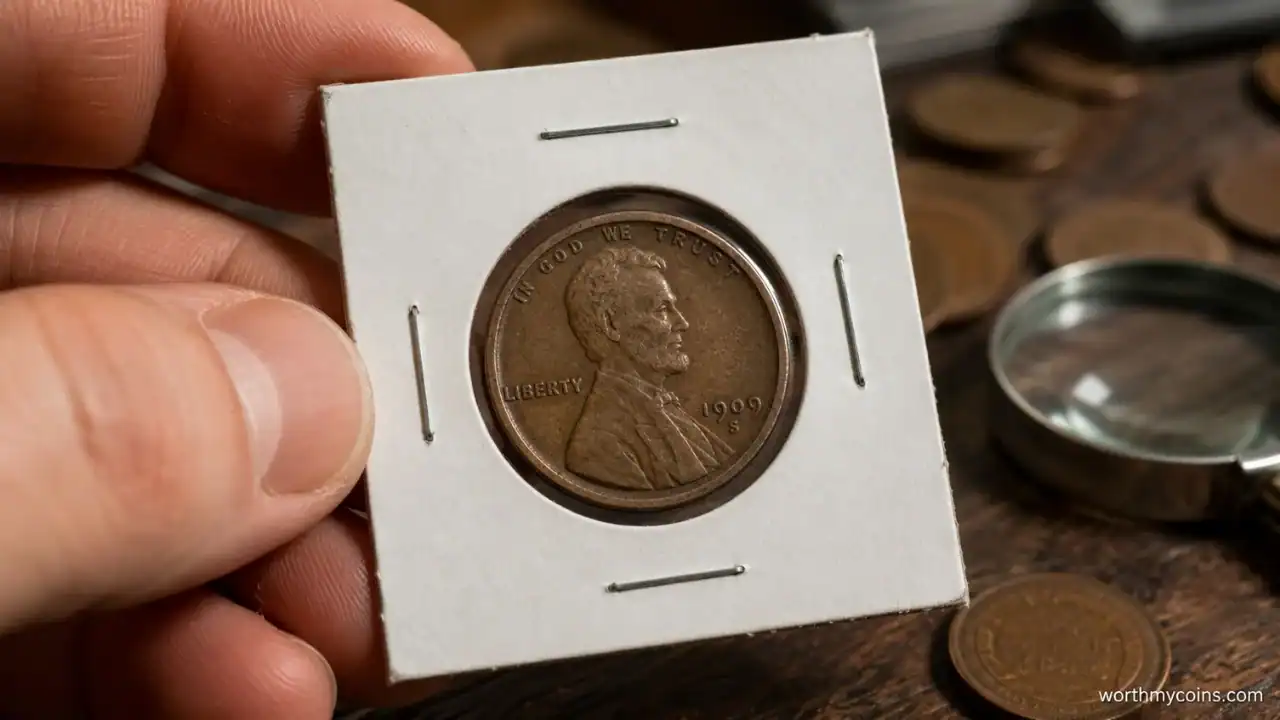
The 1909-S VDB Lincoln Wheat Penny is widely considered one of the most famous and desirable coins in American numismatics. Even people who are new to coin collecting have likely heard about this legendary cent. Although it was produced for only a short time, its fascinating history, low mintage, and lasting demand have made it one of the key dates in the Lincoln Wheat Cent series.
Unlike many coins that become valuable because of a rare mint error, the 1909-S VDB cent owes much of its popularity to a combination of historical circumstances and limited production. Today, authentic examples remain highly sought after by collectors, and properly certified pieces often become highlights of serious Lincoln cent collections.
Whether you recently found a 1909-S VDB penny or you’re thinking about buying one, this guide explains what makes it so special. We’ll cover its history, how to identify a genuine example, what collectors look for, and a few mistakes worth avoiding.
The History Behind the 1909-S VDB Lincoln Wheat Penny
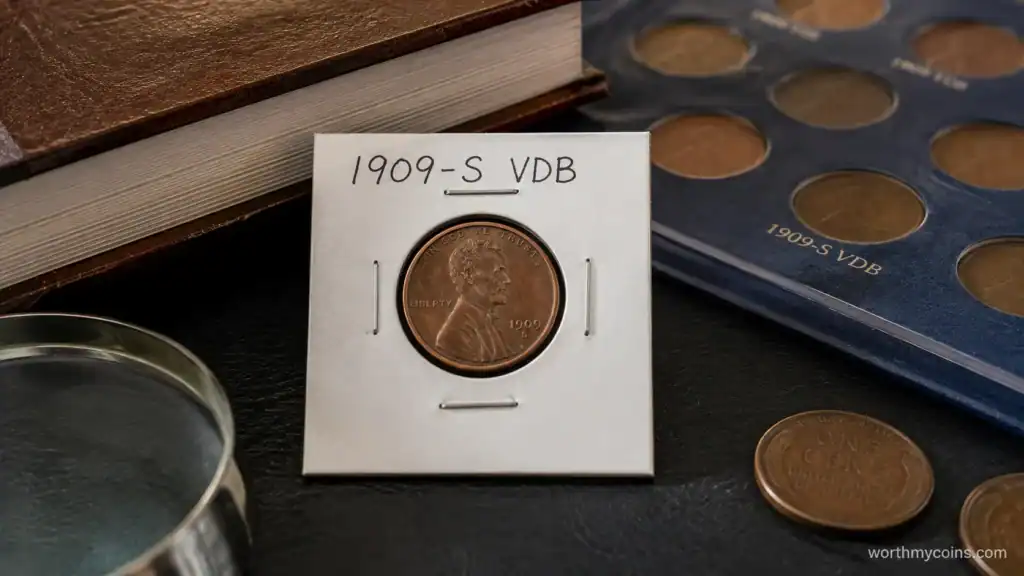
Although millions of Lincoln cents were produced during the first year of the series, only a small fraction carried both the San Francisco mint mark and Brenner’s original VDB initials. That unique combination is what separates the famous 1909-S VDB from other 1909 issues.
The Lincoln cent debuted in 1909 to celebrate the 100th anniversary of President Abraham Lincoln’s birth. It replaced the Indian Head cent and became the first regularly circulating U.S. coin to feature a real historical person.
The coin was designed by sculptor Victor David Brenner. He placed his initials, “VDB,” prominently at the bottom of the reverse. While many admired the new design, some officials believed the initials were too noticeable. Shortly after production began, the decision was made to remove them.
Before the initials disappeared, the San Francisco Mint had already produced a relatively small number of cents with the VDB initials. Production stopped after only 484,000 pieces were struck, making the 1909-S VDB one of the lowest-mintage regular-issue Lincoln Wheat cents ever released.
News of the coin’s limited production spread quickly among early collectors. As a result, many examples were set aside soon after release instead of entering long-term circulation, helping preserve more high-grade pieces than might otherwise have survived.
Despite that, demand has remained so strong for more than a century that the coin continues to be one of the most important Lincoln cents to own.
1909-S VDB Lincoln Wheat Penny Specifications
| Specification | Details |
|---|---|
| Year | 1909 |
| Mint | San Francisco |
| Designer | Victor David Brenner |
| Composition | 95% Copper, 5% Tin and Zinc |
| Weight | 3.11 grams |
| Diameter | 19.05 mm |
| Edge | Plain |
| Reverse Design | Wheat Ears |
| Mintage | 484,000 |
How to Identify a Genuine 1909-S VDB Lincoln Wheat Penny
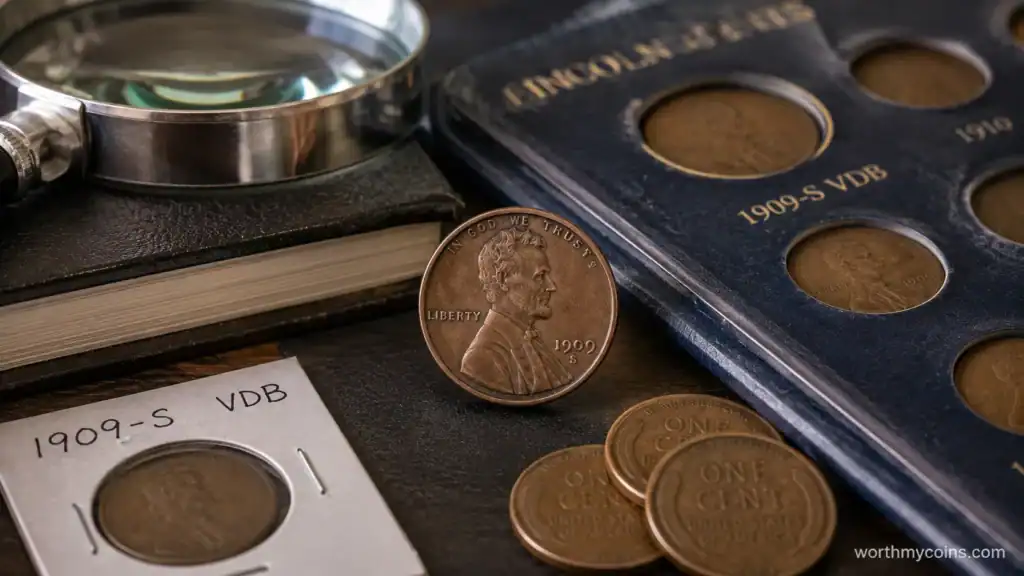
Never rely on a single feature when identifying this coin. The date, mint mark, VDB initials, weight, and overall appearance should all match genuine examples before assuming the coin is authentic.
Correct identification is extremely important because this coin is frequently counterfeited or altered.
Look for the following features:
| Feature | What to Look For |
| Date | 1909 |
| Mint Mark | Small “S” below the date on the obverse |
| Initials | “VDB” at the bottom center of the reverse |
| Metal | Bronze composition used in 1909 |
| Weight | Approximately 3.11 grams |
The mint mark should appear natural and match the surface of the coin. Many counterfeit coins are created by adding an “S” mint mark to a common Philadelphia issue or by altering other Lincoln cents.
Because altered mint marks and counterfeit examples are common, authentication by a trusted grading service is one of the safest ways to confirm that a 1909-S VDB penny is genuine.
If you’d like a broader understanding of how rarity, grading, mint marks, and other value factors apply across the entire series, see our Lincoln Wheat Penny Value Guide (1909–1958): Prices, Errors & Rare Coins.
Understanding the Mint Marks
Only two versions of the VDB Lincoln cent were produced in 1909 before the initials were removed.
| Coin | Mint Mark | Mintage |
| 1909 VDB | None (Philadelphia) | 27,995,000 |
| 1909-S VDB | S | 484,000 |
The Philadelphia issue is much more common despite having the same VDB initials. The San Francisco version is the truly scarce coin that collectors actively seek.
Why Is the 1909-S VDB Penny So Valuable?
Several factors contribute to the coin’s lasting popularity.
Low Original Mintage
Only 484,000 coins were struck before production ended. Compared to millions of cents produced in other years, this was an exceptionally small number.
Historic Importance
The coin represents the first year of the Lincoln cent series and the brief appearance of Brenner’s original initials.
Collector Demand
The 1909-S VDB is one of the most important key dates in the Lincoln Wheat Cent series. Many collectors spend years searching for a nice example, and demand has remained strong for generations.
Authentication Matters
Because counterfeit examples exist, authenticated coins generally receive greater confidence from buyers.
Certified examples also make it easier to compare market prices because their authenticity and grade have already been verified by an independent professional grading service.
Coin Grading Overview
Condition has a significant influence on collector appeal and market value.
Common grading categories include:
| Grade | General Description |
| Good (G) | Heavy wear with major details visible |
| Very Good (VG) | Strong outline but considerable wear |
| Fine (F) | Moderate wear with clearer details |
| Very Fine (VF) | Moderate to light wear with visible wheat lines |
| Extremely Fine (XF) | Light wear on high points |
| About Uncirculated (AU) | Slight friction with nearly full detail |
| Mint State (MS) | No circulation wear |
Higher Mint State grades become increasingly scarce and are typically much more desirable among collectors.
Does the 1909-S VDB Penny Have Verified Error Varieties?
Unlike some Lincoln cents that are famous for dramatic die errors, the 1909-S VDB is primarily collected as a key-date coin rather than an error coin.
Collectors may occasionally encounter legitimate mint-produced varieties or minor die-related characteristics, but there are no major universally recognized error varieties that define this issue in the same way as famous doubled dies from later years.
Always be cautious of internet claims advertising “rare error” versions without verification from trusted numismatic authorities.
| Variety | Status |
| Normal 1909-S VDB | Standard collectible issue |
| Minor die characteristics | May exist but require specialist evaluation |
| Altered mint marks | Common counterfeit method |
| Added VDB initials | Frequently seen on fake coins |
No two 1909-S VDB pennies are worth exactly the same amount. Differences in preservation, color, eye appeal, certification, and collector demand can create significant price differences between otherwise similar coins.
How Much Is a 1909-S VDB Lincoln Wheat Penny Worth?
Because the market changes continuously, there is no single fixed value for every example.
The value depends on several important factors:
- Overall grade and amount of wear
- Original surfaces
- Presence of cleaning or damage
- Authentication by PCGS or NGC
- Current collector demand
- Eye appeal
- Color designation for uncirculated examples
For a more realistic estimate, compare recent auction sales and updated pricing guides instead of relying on old online price lists.
Collecting Tips for Beginners
Buying a 1909-S VDB cent is often one of the biggest purchases in a Lincoln cent collection. Taking a careful approach can help avoid expensive mistakes.
Buy Certified Examples
Certification from leading grading companies provides confidence that the coin has been authenticated and professionally graded.
Examine the Mint Mark Carefully
Added mint marks remain one of the most common forms of alteration. Compare placement, shape, and surface characteristics before making a purchase.
Avoid Cleaned Coins
Cleaning can permanently reduce collector value, even if the coin appears shiny.
Learn Before Buying
Studying genuine examples through trusted references makes it much easier to recognize authentic coins.
Common Mistakes Collectors Make
Many new collectors unknowingly make avoidable errors.
Assuming Every 1909 Penny Is Rare
Only the San Francisco VDB version is the famous key-date coin. Most 1909 cents are considerably more common.
Buying Without Authentication
High-value coins should always be authenticated whenever possible.
Believing Social Media Value Claims
Videos and posts sometimes exaggerate rarity or prices. Reliable pricing comes from respected grading services and reputable auction records.
Ignoring Surface Problems
Cleaning, scratches, corrosion, and environmental damage can significantly reduce collector interest.
Confusing the Mint Mark
A genuine San Francisco mint mark has specific characteristics. Altered coins are common enough that careful inspection is essential.
How to Store a 1909-S VDB Penny
Proper storage helps preserve both condition and long-term collector value.
Consider these best practices:
- Handle coins only by the edges.
- Store them in inert holders or archival-quality capsules.
- Keep coins in a cool, dry environment.
- Avoid PVC-containing plastic holders.
- Never polish or clean the coin.
- Minimize unnecessary handling.
Collectors who invest in proper storage often preserve original surfaces that are highly valued in the numismatic marketplace.
Maintaining original surfaces is especially important for key-date coins like the 1909-S VDB, where even minor damage or improper storage can noticeably reduce collector appeal.
Conclusion
The 1909-S VDB Lincoln Wheat Penny remains one of the most respected key dates in American coin collecting. Its low mintage, historical importance, and lasting collector demand continue to make it one of the most desirable Lincoln cents. If you ever come across one, take the time to verify its authenticity before estimating its value. Whether you’re just starting out or adding to an established collection, understanding this iconic coin will help you make more informed collecting decisions.
Frequently Asked Questions
Why is the 1909-S VDB penny so famous?
It combines a very low mintage, first-year Lincoln cent status, and the brief use of Victor David Brenner’s initials before they were removed from the design.
How many 1909-S VDB pennies were made?
The San Francisco Mint produced 484,000 examples.
Does every 1909 penny have VDB initials?
No. Only early 1909 Philadelphia coins and the 1909-S issue were struck with the VDB initials before they were removed.
How can I tell if my 1909-S VDB penny is genuine?
Check the date, the San Francisco mint mark below the date, and the VDB initials on the reverse. Because counterfeit examples are common, professional authentication is recommended for valuable coins.
Should I clean a 1909-S VDB penny?
No. Cleaning can permanently damage the coin’s surface and reduce its desirability among collectors.
References
- United States Mint
- PCGS (Professional Coin Grading Service)
- NGC (Numismatic Guaranty Company)
- American Numismatic Association (ANA)
- Heritage Auctions
- Stack’s Bowers Galleries
- Newman Numismatic Portal

Narayan Kumar is the Founder and Author of Worth My Coins. She specializes in U.S. coin collecting, with a focus on coin identification, mint errors, grading, rare varieties, and collector education. Her goal is to publish accurate, well-researched, and easy-to-understand guides that help both new and experienced collectors make informed decisions. Every article is created using trusted numismatic references and is written with a commitment to accuracy, transparency, and long-term educational value.