
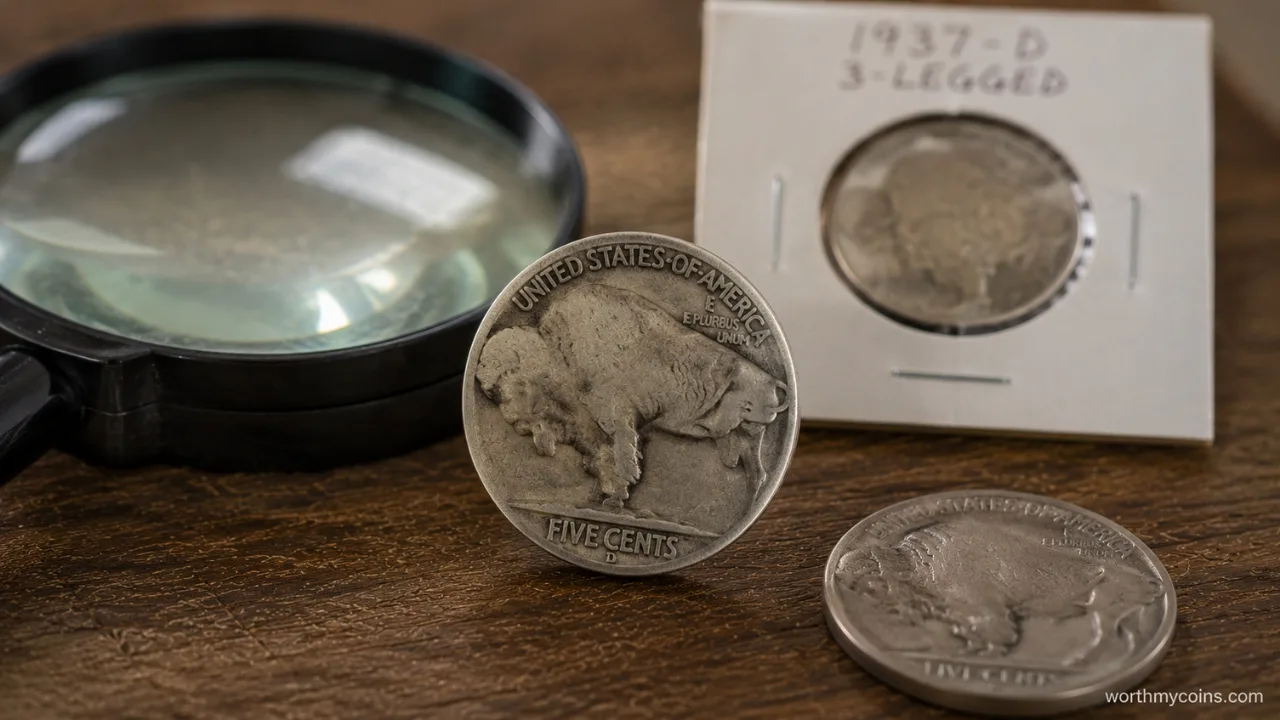
Few U.S. coins have captured collectors’ attention quite like the 1937-D 3-Legged Buffalo Nickel. At first glance, it may look like an ordinary Buffalo Nickel, but a closer inspection reveals one of the most famous mint errors in American coin history. Instead of four visible legs, the buffalo appears to be standing on only three, creating a dramatic variety that has fascinated collectors for decades.
If you think you’ve found one, proper identification is essential. Genuine examples are scarce, highly sought after by collectors, and frequently counterfeited or altered, making careful authentication especially important. Understanding the diagnostics can help you avoid costly mistakes and determine whether your coin deserves professional authentication.
Quick Answer
The 1937-D 3-Legged Buffalo Nickel is a well-known die variety produced at the Denver Mint. The missing front leg was not caused by circulation wear but by excessive polishing of a damaged reverse die before additional coins were struck. Today, authenticated examples are among the most desirable Buffalo Nickels, with value depending on authenticity, grade, eye appeal, and current collector demand.
Collectors who are new to the Buffalo Nickel series should also read our Buffalo Nickel Value Guide: Rare Dates, Mint Errors & Collector Tips, where we explain the history of the series, important dates, and what makes certain nickels especially collectible.
Because this variety is one of the most frequently altered Buffalo Nickels, collectors should never rely on the missing leg alone when identifying a genuine example. Professional authentication remains the safest way to confirm authenticity before buying, selling, or assigning value.
Why Is the 1937-D 3-Legged Buffalo Nickel So Famous?
Unlike many collectible coins that owe their rarity to low mintages, the 1937-D 3-Legged Buffalo Nickel became famous because of an error that occurred during the minting process.
During production at the Denver Mint, a reverse die developed clash marks and damage. To prepare it for continued use, mint employees aggressively polished the die. Unfortunately, too much metal was removed from the die surface, eliminating much of the buffalo’s front right leg. Coins struck afterward displayed the now-famous “three-legged” appearance.
Because the error was quickly corrected after it was discovered, relatively few examples entered circulation compared with normal 1937-D Buffalo Nickels.
How to Identify a Genuine 1937-D 3-Legged Buffalo Nickel
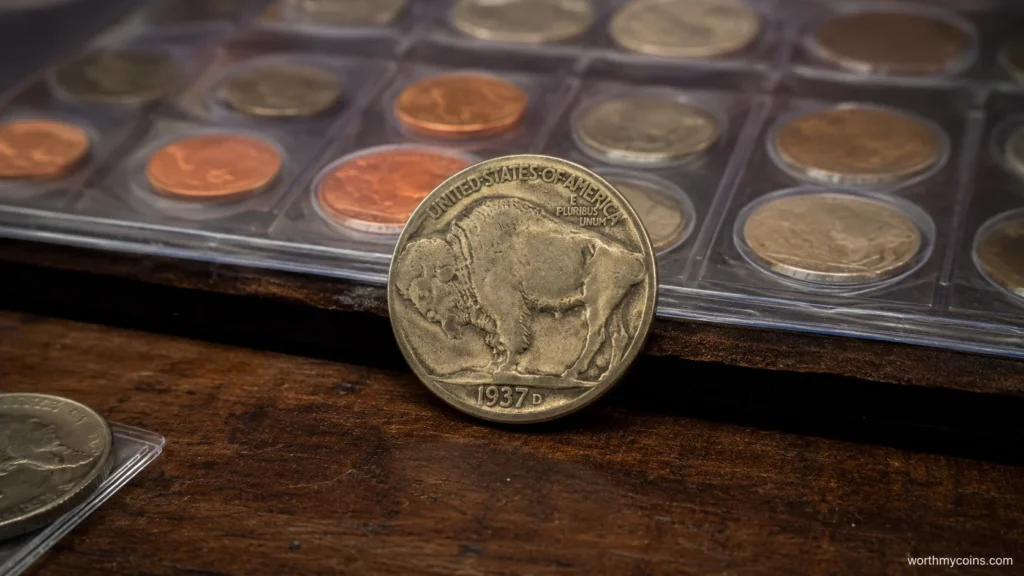
Correct identification is essential because altered Buffalo Nickels are commonly modified to imitate this famous die variety.
Check the Date
The obverse should display the date 1937.
Many ordinary Buffalo Nickels from other years have been altered by removing part of a leg, but only the genuine 1937-D variety has the correct combination of diagnostics.
Verify the Mint Mark
Turn the coin over and look beneath the words FIVE CENTS.
A genuine example carries a D mint mark indicating production at the Denver Mint.
Examine the Buffalo Carefully
The most obvious feature is the missing front right leg.
However, experienced collectors never rely on this characteristic alone.
Authentic coins also display:
- A smooth transition where the missing leg should appear
- Distinct polishing lines in the area beneath the buffalo
- Remaining hoof detail on the ground
- Other reverse characteristics consistent with the known die variety
These diagnostics help distinguish genuine examples from damaged or altered coins.
Specifications
| Feature | Details |
|---|---|
| Country | United States |
| Denomination | Five Cents |
| Year | 1937 |
| Mint | Denver (D) |
| Composition | 75% Copper, 25% Nickel |
| Weight | 5.00 grams |
| Diameter | 21.2 mm |
| Edge | Plain |
| Designer | James Earle Fraser |
Is It Really Missing a Leg?
Not exactly.
One of the biggest misconceptions among beginners is that the buffalo somehow lost its leg during circulation.
In reality, the leg disappeared because the die itself was over-polished before striking additional coins. Since every coin struck from that damaged die inherited the same missing design element, the variety is classified as a genuine mint-made die variety rather than post-mint damage.
This distinction is extremely important because coins with legs that have simply worn away through circulation are not the famous 3-Legged variety.
Common Misidentification Mistakes
Collectors frequently mistake damaged Buffalo Nickels for the genuine error.
Some of the most common mistakes include:
- Assuming any worn Buffalo Nickel is the 3-Legged variety.
- Confusing heavy circulation wear with a mint-made die variety.
- Buying altered coins without professional authentication.
- Ignoring other diagnostic features besides the missing leg.
A genuine 1937-D 3-Legged Buffalo Nickel shows multiple identifying characteristics that specialists use together rather than relying on a single feature.
Collectors interested in learning more about important dates throughout the series should also read our Buffalo Nickel Key Dates and Values: The Coins Every Collector Should Know, which explains the most desirable Buffalo Nickels and why certain issues command much stronger collector interest than others.
Why Authentication Matters
The popularity of the 1937-D 3-Legged Buffalo Nickel has led to countless altered coins entering the marketplace.
Some individuals intentionally grind away part of the buffalo’s leg to imitate the famous variety. While these alterations may fool inexperienced collectors, they usually lack the correct die markers and polishing characteristics seen on authentic examples.
Professional authentication by respected grading services such as PCGS or NGC provides independent confirmation of authenticity and helps reduce uncertainty when buying or selling.
In the next section, we’ll look at the specific die diagnostics experts use, how grading affects desirability, what influences market value, and practical buying and selling tips for collectors.
How Experts Authenticate a Genuine 1937-D 3-Legged Buffalo Nickel
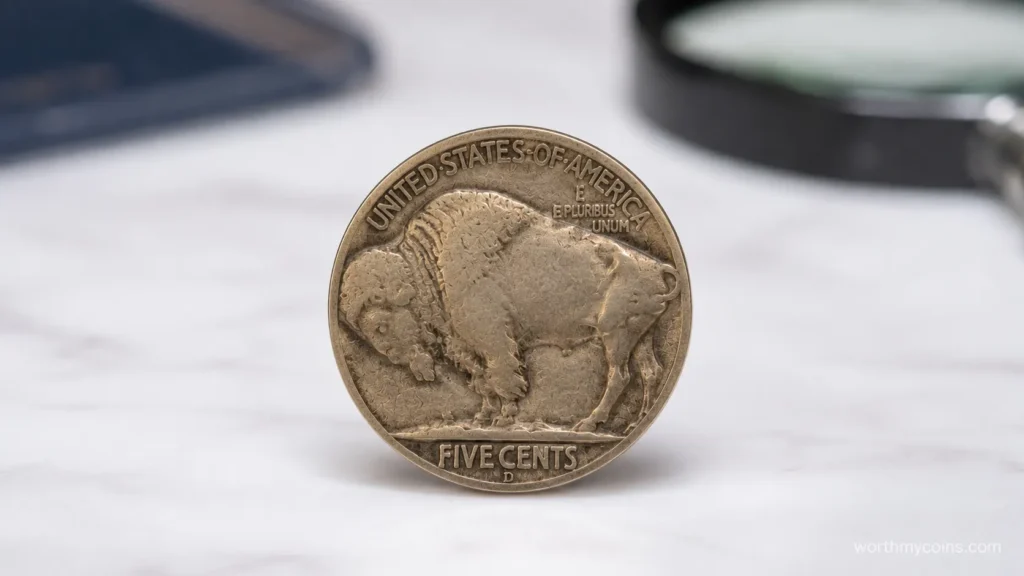
Professional graders never identify this famous variety by looking only at the missing leg. Instead, they examine a combination of well-known diagnostics that have been documented for decades.
A genuine example should display several of these characteristics together.
1. The Missing Front Right Leg
The buffalo’s front right leg is almost entirely absent. Instead of appearing broken or worn away, the area looks smooth because metal was removed from the working die before the coin was struck.
2. Remaining Hoof Detail
Although the leg is missing, a portion of the hoof can often still be seen resting on the ground beneath the buffalo. This is one of the classic diagnostics that helps distinguish authentic coins from altered examples.
3. Polishing Lines
Heavy die polishing left visible polishing marks beneath the buffalo’s belly and around the missing leg area. These lines are part of the die itself and appear on genuine examples regardless of grade, although they may become harder to see on heavily worn coins.
4. Reverse Die Markers
Specialists also examine other reverse features that match the known die variety. These diagnostics are difficult for counterfeiters to reproduce consistently, which is why professional authentication remains so important.
Common Counterfeits and Altered Coins
Because authentic 1937-D 3-Legged Buffalo Nickels are valuable, counterfeit and altered examples appear regularly in the marketplace.
Some altered coins are created by:
- Grinding away one of the buffalo’s legs.
- Filing the design to imitate the missing leg.
- Modifying an ordinary 1937-D Buffalo Nickel.
- Altering coins from different dates.
These pieces usually lack the proper die polishing characteristics and other known diagnostics used by grading experts.
If there’s any uncertainty about a coin’s authenticity, professional certification is the safest course of action.
Does Condition Affect Value?
Absolutely.
Although every genuine 1937-D 3-Legged Buffalo Nickel is considered desirable, condition plays a major role in determining collector demand.
Professional grading considers several characteristics that influence both collector appeal and market value, including:
| Grading Factor | Why It Matters |
|---|---|
| Wear | Less circulation wear generally increases collector appeal. |
| Strike Quality | Sharper design details are preferred. |
| Surface Preservation | Original, undamaged surfaces are highly desirable. |
| Luster | Mint luster adds value on uncirculated examples. |
| Eye Appeal | Attractive color and overall appearance can influence demand. |
| Certification | Authenticated coins are generally easier to buy and sell. |
Because this variety circulated extensively before collectors recognized its significance, high-grade survivors are much less common than worn examples.
What Determines Its Market Value?
There is no universal price for a 1937-D 3-Legged Buffalo Nickel.
Instead, collectors evaluate several factors together:
- Authenticity
- Professional certification
- Grade
- Surface originality
- Eye appeal
- Current collector demand
- Recent auction results
Completed auction sales generally provide a more accurate picture of market demand than unsold asking prices because they reflect actual transactions between buyers and sellers.
Two coins assigned the same numerical grade may still bring different prices depending on strike quality, toning, and overall appearance.
For this reason, experienced collectors often review recent certified auction records rather than relying on asking prices from online listings.
Buying Tips for Collectors
If you’re hoping to add this famous variety to your collection, patience and careful research are essential.
Keep these guidelines in mind:
- Buy certified examples whenever possible.
- Purchase from reputable coin dealers or established auction houses.
- Compare multiple certified coins before making a decision.
- Learn the major diagnostics before shopping.
- Be cautious of bargains that seem too good to be true.
Many experienced collectors prefer waiting for a properly authenticated example rather than taking unnecessary risks with uncertified coins.
Collectors interested in another legendary key-date American coin should also read our 1916-D Mercury Dime Value Guide: Rare Key Date, Errors, Mint Marks & Current Value, where we explain how rarity, authentication, and grading influence one of the most famous U.S. silver coins ever produced.
Before You Buy: Quick Checklist
Before purchasing a 1937-D 3-Legged Buffalo Nickel, review this quick checklist:
- The coin has been authenticated by a respected third-party grading service.
- The known diagnostics match genuine examples, not just the missing leg.
- The certification number can be verified through the grading service.
- The seller has a solid reputation within the numismatic community.
- Recent certified auction results support the asking price.
A careful review can help reduce the risk of purchasing an altered or counterfeit coin.
Selling Tips
If you already own a certified 1937-D 3-Legged Buffalo Nickel, taking time to evaluate your selling options can make a meaningful difference.
Collectors commonly consider several selling options, including:
- Reputable coin dealers
- National coin shows
- Major numismatic auction companies
- Certified online marketplaces
Before accepting an offer, compare recent auction results for certified coins with similar grades and eye appeal. This provides a more realistic picture of current market demand than relying solely on advertised prices.
Collectors expanding beyond nickels may also enjoy our Lincoln Wheat Penny Value Guide (1909–1958), which explains key dates, grading principles, and collecting strategies that apply across many classic U.S. coin series.
Why This Variety Remains So Popular
The 1937-D 3-Legged Buffalo Nickel has remained one of the hobby’s most recognizable error varieties for generations. Unlike many modern mint errors that are discovered immediately, this classic variety became famous through decades of research, collector interest, and marketplace demand.
Its unusual appearance makes it instantly recognizable, while its documented minting history gives it lasting credibility among collectors. Combined with limited surviving examples and widespread recognition, these qualities have secured its place as one of the most desirable Buffalo Nickels ever produced.
In the final part, we’ll answer the most common collector questions, summarize the key identification points, and provide trusted numismatic references used to prepare this guide.
Frequently Asked Questions
Is the 1937-D 3-Legged Buffalo Nickel a real U.S. Mint error?
Yes. The 1937-D 3-Legged Buffalo Nickel is a genuine and well-documented U.S. Mint die variety. The missing front leg resulted from excessive polishing of a damaged reverse die at the Denver Mint, not from post-mint damage or circulation wear. It is recognized by major grading services, including PCGS and NGC.
How can I tell if my coin is genuine?
The missing leg alone is not enough to confirm authenticity. Genuine examples display several known diagnostics, including the correct Denver mint mark, specific die-polishing characteristics, remaining hoof detail, and other reverse die markers. Because altered coins are common, professional authentication is strongly recommended for any suspected example.
Is every 1937-D Buffalo Nickel valuable?
No. Most 1937-D Buffalo Nickels are normal issues without the famous variety. Only authenticated examples of the 3-Legged die variety command significant collector interest.
Should I clean my Buffalo Nickel?
No. Cleaning can permanently damage a coin’s original surfaces and reduce its desirability to collectors. Even if a coin appears dirty or toned, leaving it in its original condition is generally the best choice.
Does certification matter?
Yes. Certification by recognized grading services such as PCGS or NGC confirms both authenticity and grade. Since the 1937-D 3-Legged Buffalo Nickel is one of the most frequently altered U.S. coins, certification provides confidence for both buyers and sellers.
Why do collectors consider this one of the most famous Buffalo Nickels?
Its popularity comes from several factors working together:
- A dramatic and easily recognized mint-made variety.
- Strong collector demand for decades.
- Recognition by all major grading services.
- Extensive documentation in numismatic literature.
- Limited number of surviving genuine examples compared with ordinary Buffalo Nickels.
These qualities have made it one of the best-known error varieties in American coin collecting.
Conclusion
The 1937-D 3-Legged Buffalo Nickel remains one of the most iconic error coins ever produced by the United States Mint. Rather than being a coin damaged after leaving the Mint, it represents a documented die variety created when excessive polishing removed part of the buffalo’s front leg from the working die.
Because of its popularity, collectors should approach every potential example with caution. Altered coins are common, and accurate identification requires more than simply spotting a missing leg. Examining the complete set of diagnostics and obtaining professional authentication are the best ways to confirm whether a coin is genuine.
Whether you’re building a Buffalo Nickel collection or simply learning about famous U.S. coin varieties, understanding the history and identification of the 1937-D 3-Legged Buffalo Nickel provides valuable insight into one of the hobby’s most celebrated collectible coins.
Collectors who want a broader understanding of classic American coinage should also read our Morgan Dollar Value Guide: Rare Dates, Mint Errors & Collector Tips, which explores another historic U.S. coin series and explains how rarity, condition, and collector demand influence long-term value.
References
The information in this guide is based on recognized numismatic references and industry resources, including:
- United States Mint
- Professional Coin Grading Service (PCGS) CoinFacts
- Numismatic Guaranty Company (NGC) Coin Explorer
- American Numismatic Association (ANA)
- Heritage Auctions
- Stack’s Bowers Galleries
- Newman Numismatic Portal

Narayan Kumar is the Founder and Author of Worth My Coins. She specializes in U.S. coin collecting, with a focus on coin identification, mint errors, grading, rare varieties, and collector education. Her goal is to publish accurate, well-researched, and easy-to-understand guides that help both new and experienced collectors make informed decisions. Every article is created using trusted numismatic references and is written with a commitment to accuracy, transparency, and long-term educational value.