Some U.S. coins have remained popular with collectors for generations because they combine memorable designs, important history, challenging dates, recognized varieties, and the satisfaction of building a complete set. Their popularity does not always depend on rarity or high prices. Often, collectors are drawn to a series because it offers something interesting at every level.
Quick Answer
American coins that became especially popular with collectors include Lincoln cents, Morgan silver dollars, Mercury dimes, Buffalo nickels, Walking Liberty half dollars, Standing Liberty quarters, and Washington quarters.
Each series has a different appeal. Some are easy for beginners to collect, while others contain famous key dates, varieties, or condition rarities that give experienced collectors a much greater challenge.
Why Some American Coins Become Collector Favorites
A coin can become popular for many reasons. Rarity is one factor, but it is far from the only one.
Design is especially important in U.S. coin collecting. Several early 20th-century coins are still admired for their artistic quality, including the Mercury dime, Standing Liberty quarter, and Walking Liberty half dollar. These coins were introduced in 1916 during an important period of redesign in American coinage.
Historical importance can also make a series attractive. Morgan dollars, for example, represent an important period in the history of American silver coinage. Kennedy half dollars became associated with the memory of President John F. Kennedy, while Washington quarters eventually became part of one of the most widely collected modern U.S. coin programs.
Another reason is the challenge of completing a set. A series may contain common coins that are easy to find alongside key dates that require much more effort. That combination gives collectors a reason to keep searching.
Lincoln Cents
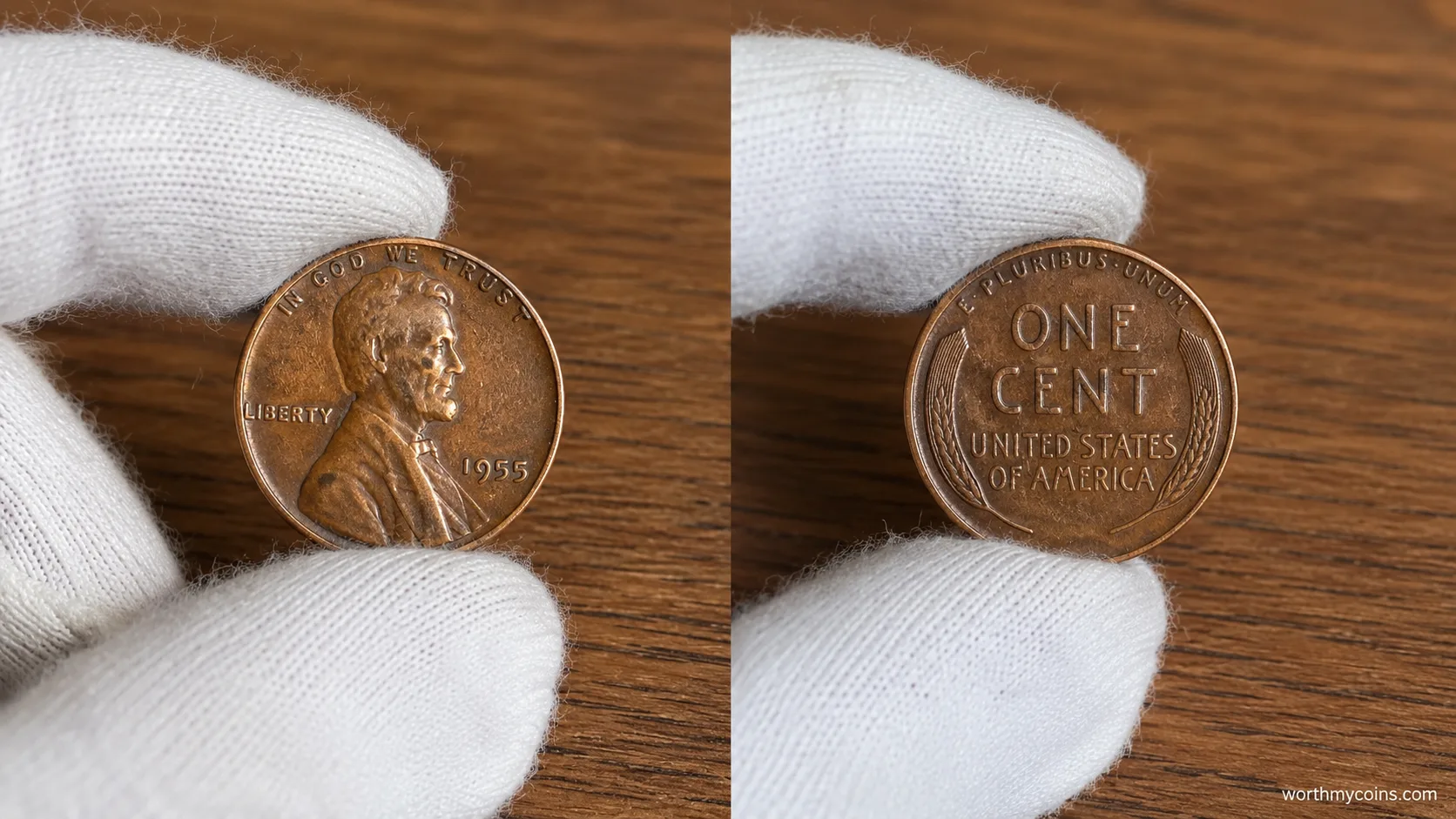
Lincoln cents are among the most familiar and widely collected U.S. coins.
The series began in 1909, when the Lincoln cent replaced the Indian Head cent. Victor David Brenner designed the original Lincoln portrait, while the first reverse featured two wheat ears surrounding the inscriptions. The Wheat reverse remained on the cent through 1958.
The long history of the Lincoln cent gives collectors several different ways to approach the series. A beginner can start with Wheat cents found in collections or older accumulations, while advanced collectors can concentrate on key dates, varieties, mintmarks, and high-grade examples.
Collectors who want to explore the series in greater depth can use Lincoln Wheat Penny Value Guide (1909–1958): Prices, Errors & Rare Coins to examine the dates, errors, and other details that make Wheat cents such an established collecting field.
Several Lincoln cents have become particularly important to collectors. The 1909-S V.D.B., 1914-D, 1922 No D, and 1955 Doubled Die Obverse are among the best-known issues in the series.
Among the most famous early Lincoln cents, the 1909-S VDB Lincoln Wheat Penny Value Guide: Why This Rare Cent Is So Important to Collectors provides a focused look at the issue that helped establish the Lincoln cent as a major collecting series.
The 1909-S V.D.B. is famous because the initials of designer Victor David Brenner appeared prominently on the reverse and were removed after public criticism. The 1914-D is another major key date, while the 1922 No D is an important variety associated with the Denver Mint.
Collectors interested in another major Lincoln cent key date can compare that issue with the 1914-D Lincoln Wheat Penny Value Guide: Key Date, Mint Marks & Current Prices, which focuses specifically on one of the series’ most important Denver Mint dates.
The 1955 Doubled Die Obverse is especially popular because the doubling is clearly visible on major lettering and design elements. It is a recognized doubled-die variety rather than ordinary post-mint damage.
For collectors studying famous Lincoln cent varieties, 1955 Doubled Die Lincoln Penny Value Guide: How to Identify This Famous Error Coin offers a useful focused reference for understanding the characteristics that distinguish this recognized variety.
Lincoln cents remain popular partly because collectors can study the series without needing to begin with its most expensive coins.
Morgan Silver Dollars
Morgan silver dollars have become one of the classic favorites of American coin collectors.
Collectors exploring the series can use the Morgan Dollar Value Guide: Rare Dates, Mint Errors & Collector Tips to investigate the dates, mint errors, and collecting considerations that make Morgan dollars such a broad and enduring series.
The series was introduced in 1878 and was produced through 1904 before returning for one final production year in 1921. The coins are large, heavy, and visually distinctive, which gives them an appeal that smaller denominations do not always have.
George T. Morgan designed the coin. Liberty appears on the obverse, while an eagle with outstretched wings appears on the reverse.
Collectors can build Morgan dollar sets by date and mintmark, focus on specific mints, study varieties, or simply search for attractive examples with strong surfaces and eye appeal.
One reason Morgan dollars remain so popular is the range of collecting possibilities. Many examples are available to collectors, but completing a collection with scarce dates or finding particularly high-quality pieces can become a serious challenge.
Collectors who want to focus on an especially famous Morgan dollar issue can also examine The 1893-S Morgan Dollar That Sold for Over $2 Million: Why It’s the King of Morgan Dollars for a closer look at a date that has attracted exceptional numismatic attention.
The series also demonstrates why mintage alone should not be used to determine a coin’s value. A coin produced in large numbers may still be difficult to find in a particular grade or condition.
Mercury Dimes
The Mercury dime was officially known as the Winged Liberty Head dime and was produced from 1916 through 1945.
Adolph A. Weinman designed the coin. Liberty’s winged cap led to the popular nickname “Mercury dime,” even though the figure on the coin is Liberty rather than the Roman god Mercury.
The design is one of the main reasons collectors continue to favor the series.
The other major attraction is the group of challenging dates. The 1916-D Mercury dime is the best-known key date, with a mintage of only 264,000 pieces. The 1921 and 1921-D issues are also important dates for collectors.
For a closer examination of the Mercury dime’s most famous scarcity, collectors can turn to 1916-D Mercury Dime Value Guide: Rare Key Date, Errors, Mint Marks & Current Value, which focuses specifically on the key date that makes this series particularly challenging.
Condition becomes increasingly important as collectors move into higher grades. Details on Liberty’s hair and the reverse fasces can help distinguish better-preserved examples from heavily worn coins.
Collectors interested in quality can also examine the horizontal bands on the fasces. Well-defined examples are particularly desirable in the upper grades.
The Mercury dime therefore offers more than a beautiful design. It provides collectors with opportunities to study key dates, mintmarks, strike quality, and condition.
Collectors wanting a broader view of the series can pair that key-date research with the Mercury Dime Value Guide: The Rare Coins Every Collector Wants to Find, which provides a wider collecting perspective on rare Mercury dimes and the factors that make individual issues stand out.
Buffalo Nickels
The Buffalo nickel was produced from 1913 through 1938 and is one of the most recognizable classic American coin designs.
The obverse carries a Native American portrait, while the reverse features an American bison. The strong imagery gives the series an identity that remains immediately recognizable more than a century after its introduction.
Buffalo nickels are particularly interesting because circulation often caused important details to wear away. Dates can become difficult to read, and the highest areas of the design may show substantial wear even on otherwise attractive coins.
The series also contains famous varieties.
Collectors studying those varieties can use the Buffalo Nickel Value Guide: Rare Dates, Mint Errors & Collector Tips as a broader reference for identifying important dates, varieties, and errors within the series.
The 1918/7-D Buffalo nickel is an important overdate variety created when a 1918 date was punched over a 1917 date. The 1937-D three-legged Buffalo nickel is another famous variety that collectors actively recognize.
For collectors specifically interested in this famous variety, the 1937-D 3-Legged Buffalo Nickel Value Guide: How to Identify This Rare Error Coin provides a focused reference for examining the characteristics associated with the issue.
These coins demonstrate an important principle for beginners: an unusual-looking coin should not automatically be assumed to be a rare error or variety. Genuine varieties have specific characteristics that can be compared with reliable references.
Walking Liberty Half Dollars
The Walking Liberty half dollar is widely admired for its design and historical character.
It was introduced in 1916 and remained in production through 1947. Adolph A. Weinman designed the obverse, which shows Liberty walking toward the sunrise while carrying branches and wearing the American flag.
The reverse features an eagle.
The design is a major reason the series became a collector favorite, but its silver composition and challenging dates add further appeal.
Collectors interested in building a Walking Liberty half dollar collection can also explore Top 10 Walking Liberty Half Dollars Worth Big Money for another look at notable examples from this historically important half dollar series.
The 1921-D Walking Liberty half dollar is one of the key dates of the series. Collectors seeking complete sets often have to pay particular attention to the 1921 issues because of their scarcity compared with many other dates.
Condition can also make a major difference. Collectors pursuing high-grade Walking Liberty half dollars look closely at strike quality, surface preservation, luster, and the amount of original detail remaining on the coin.
For collectors who appreciate classic American artwork, few half dollars offer the same combination of design and history.
Standing Liberty Quarters
Standing Liberty quarters were produced from 1916 through 1930 and are another major favorite among collectors of classic U.S. coinage.
The series is relatively short, but several dates and varieties make completing a collection challenging.
The 1916 Standing Liberty quarter is one of the most famous. Only 52,000 were struck, making it a major rarity within the series.
Collectors who want to investigate the series’ difficult dates in greater detail can consult Standing Liberty Quarter Key Dates: The Rare Issues Collectors Want Most for a focused guide to the issues that make this short series challenging to complete.
Another important issue is the 1918/7-S Standing Liberty quarter, an overdate variety that attracts collectors because of its identifiable design characteristics.
Condition is especially important when examining Standing Liberty quarters. The design contains areas that can wear heavily, and the amount of detail remaining can significantly affect the appearance and desirability of an example.
The series appeals to collectors who want a combination of artistic design, history, key dates, and a manageable number of issues to study.
What Makes These Coins Different From Ordinary Collectible Coins?
The coins discussed above did not all become favorites for the same reason.
Lincoln cents became widely collected partly because they were accessible and because the series contains several famous key dates and varieties. Morgan dollars attracted collectors through their size, silver composition, history, and distinctive design.
Mercury dimes and Walking Liberty half dollars are strongly associated with early 20th-century American coin design. Buffalo nickels stand out because of their unusual imagery, while Standing Liberty quarters provide a relatively short series containing several important issues.
That variety is one of the strongest features of U.S. coin collecting.
A collector does not have to focus only on rarity. Design, history, condition, varieties, denomination, and the challenge of completing a set can all provide a reason to collect.
Washington Quarters
Washington quarters became one of the most familiar and widely collected U.S. coin series of the 20th century. The first Washington quarter was issued in 1932 to commemorate the 200th anniversary of George Washington’s birth.
Collectors interested in the modern side of the series can explore Top 25 Modern Quarters Worth Money: Rare Coins Every Collector Should Know to see how later Washington quarters can provide additional collecting opportunities beyond the classic silver issues.
The series is particularly interesting because it spans major changes in American coinage. Early Washington quarters were struck in silver, while later circulating issues were made from copper-nickel compositions.
Washington quarters also became a major gateway into modern coin collecting through the 50 State Quarters Program. Beginning in 1999, the U.S. Mint issued five different state reverses each year, creating a clear collecting goal for millions of Americans.
The program demonstrated that collector popularity does not always depend on scarcity. Familiarity, accessibility, and a simple collecting structure can be enough to make a coin series extremely popular.
Collectors today can approach Washington quarters in several ways. Some concentrate on early silver issues, while others collect State Quarters, modern varieties, proof coins, or particularly high-grade examples.
Franklin Half Dollars
Franklin half dollars were produced from 1948 through 1963 and feature Benjamin Franklin on the obverse.
The coin was designed by John R. Sinnock, with the reverse showing the Liberty Bell. That combination gives the series a distinctly American theme and makes the coins easy to recognize.
Franklin half dollars are appealing to collectors who prefer shorter series. A complete date-and-mintmark collection requires fewer coins than many longer-running U.S. series, although some dates become more difficult in high grades.
Strike quality is another important collecting consideration. Collectors often examine the horizontal lines on the Liberty Bell when evaluating particularly well-struck examples.
The series also represents an important period in U.S. silver coinage. Franklin half dollars were among the final regular-issue silver half dollars before the Kennedy half dollar was introduced in 1964.
Kennedy Half Dollars
The Kennedy half dollar was introduced in 1964 following the assassination of President John F. Kennedy.
Its release generated extraordinary public interest. The first Kennedy half dollars were struck in 90% silver, and later composition changes reflected the broader transition away from silver in U.S. circulating coinage.
The series quickly became one of the most recognizable modern U.S. coins. PCGS has described the 1964 Kennedy half dollar as possibly the most popular U.S. coin of all time because of the public response surrounding its introduction.
Kennedy halves can be collected by date, mintmark, composition, proof issue, or special finish. Some collectors also concentrate on particular varieties and high-grade pieces.
The series illustrates how historical significance can create lasting collector interest. Kennedy half dollars do not need to be ancient to have an important place in American numismatics.
Indian Head Cents
Indian Head cents remain popular among collectors interested in earlier American copper coinage.
The series was produced from 1859 through 1909, making it the immediate predecessor to the Lincoln cent. Its long production period provides collectors with numerous dates and opportunities to study differences in scarcity and condition.
The design features Liberty wearing a Native American-inspired headdress on the obverse and a wreath surrounding the denomination on the reverse.
Indian Head cents are often attractive to beginners because they are small, historic, and visually distinctive. More advanced collectors can pursue difficult dates and high-grade examples.
As with other older U.S. coins, however, age should not be confused with rarity. The specific date, condition, and overall preservation are much more useful when determining collector interest.
Copper color can also matter when comparing better-preserved examples. Collectors generally pay close attention to whether a coin retains original surfaces or has been altered through cleaning or other treatment.
Peace Silver Dollars
Peace dollars became another major favorite among collectors of classic American silver coins.
The series was introduced in 1921 and continued through 1935. It was created during the post-World War I period and carries a design associated with the idea of peace.
The coin is large and substantial, making it appealing to collectors who enjoy classic silver dollars. Its design also differs significantly from the Morgan dollar, giving collectors an opportunity to study two important U.S. dollar series from different periods.
Peace dollars can be collected as a complete date-and-mintmark series, as a shorter type collection, or simply as individual examples.
Condition remains important. A common-date Peace dollar in circulated condition is very different from a sharply struck, well-preserved example. Collectors should therefore compare coins based on similar grades and characteristics rather than treating every example of a particular date as equivalent.
Why Collectors Keep Returning to These Series
The strongest collector favorites usually provide several different reasons to remain interested.
A beginner may appreciate a coin because it is affordable and easy to recognize. After gaining experience, the same collector may become interested in varieties, scarce dates, mintmarks, grading, or condition rarities within that series.
Lincoln cents provide an excellent example of this progression. A collector can begin with common Wheat cents and eventually learn about key dates and major varieties.
Morgan dollars offer a similar progression. A collector can start with one attractive silver dollar and later become interested in different mints, dates, varieties, strike characteristics, and grades.
This layered structure helps explain why some series remain popular for decades. There is always another aspect to study.
Popular Does Not Always Mean Rare
One of the most important distinctions for new collectors is the difference between popularity and rarity.
A coin can be collected by millions of people and still be relatively common. Washington quarters and many Lincoln cents demonstrate this clearly.
At the same time, a genuinely scarce coin may have a much smaller audience because it requires specialized knowledge or a larger budget.
Rarity can involve several different factors. A coin may have a low original mintage, few surviving examples, very few pieces in a particular grade, or a recognized variety that is difficult to locate.
These characteristics should be considered separately rather than simply labeling every old or popular coin as rare.
What Collectors Should Examine
When looking at a coin from one of these popular series, several basic details can help determine exactly what it is.
Date
The date identifies the year of production and can immediately narrow down the coin’s place within a series.
A single year can sometimes contain multiple issues with very different levels of collector interest.
Mintmark
The mintmark can identify the facility where the coin was struck when a mintmark was used.
This can be particularly important because production levels and availability can differ between mints. A collector should therefore check the mintmark before deciding that a coin is a common example.
Variety
Recognized varieties can make otherwise similar coins significantly different from one another.
Examples include the 1955 Doubled Die Obverse Lincoln cent, the 1918/7-D Buffalo nickel, and the 1918/17-S Standing Liberty quarter.
Collectors should use reliable references when identifying varieties. Random doubling, scratches, dents, or other damage should not automatically be treated as valuable mint varieties.
Condition
Condition is another major factor.
A coin that is common in circulated grades may be much harder to find in exceptional condition. This is why collectors should compare coins at similar grades rather than assuming that a date has one universal value.
Surface Quality
Original surfaces are important in classic U.S. coins.
Cleaning, polishing, harsh chemicals, and other post-mint alterations can negatively affect collector appeal. A coin that looks unusually bright may actually be less desirable if its original surface has been damaged.
Common Mistakes Collectors Should Avoid
Assuming Every Old Coin Is Rare
Age is only one characteristic.
Millions of old U.S. coins survive today, and some dates are much more available than their age might suggest.
Calling Damage a Mint Error
A scratch, dent, environmental stain, corrosion, or other post-mint damage does not make a coin a mint error.
Genuine mint errors occur during production, while recognized varieties have specific characteristics documented by specialists.
Using a Record Auction Price as a Normal Value
A spectacular auction result may involve an unusually rare coin in exceptional condition.
That price should not be applied to every example of the same date. Comparable coins should be evaluated using their own grade, variety, condition, and market circumstances.
Cleaning a Potentially Valuable Coin
Cleaning can permanently change a coin’s surface.
Collectors who discover an old or potentially important coin should generally avoid polishing it or using chemicals before its condition has been properly evaluated.
Ignoring the Mintmark
The mintmark can be one of the most important details on a collectible U.S. coin.
Before setting a coin aside as ordinary, check the date and mintmark carefully and compare the issue with a reliable numismatic reference.
How to Choose a Favorite U.S. Coin Series
There is no single best series for every collector.
Someone interested in American history might prefer Indian Head cents, Lincoln cents, or classic silver coins. A collector who enjoys large coins may prefer Morgan or Peace dollars.
Collectors interested in artistic designs might gravitate toward Mercury dimes, Standing Liberty quarters, or Walking Liberty half dollars.
Those who enjoy modern U.S. coinage may prefer Washington quarters or Kennedy half dollars.
Budget should also be considered. There is no need to begin with a famous key date. A collector can start with common examples, learn the series, and gradually decide whether to pursue more difficult coins.
The most rewarding series is often the one that encourages the collector to keep learning.
Why These Coins Became Lasting Favorites
The American coins that became collector favorites share an important characteristic: they offer more than one reason to collect them.
Lincoln cents combine accessibility, history, key dates, and famous varieties. Morgan and Peace dollars offer large silver coins with distinctive designs. Mercury dimes, Standing Liberty quarters, and Walking Liberty half dollars combine artistic appeal with challenging dates and condition goals.
Buffalo nickels provide memorable imagery and important varieties, while Washington quarters show how a familiar denomination can become a major collecting field.
Franklin and Kennedy half dollars provide another connection between classic and modern U.S. coinage.
This variety allows collectors to build collections around personal interests rather than following one fixed path.
FAQ
Which American coins are favorites with collectors?
Lincoln cents, Morgan silver dollars, Mercury dimes, Buffalo nickels, Walking Liberty half dollars, Standing Liberty quarters, and Washington quarters are among the U.S. series that have developed particularly strong collector followings.
Does a popular coin have to be rare?
No. Popularity and rarity are different. A coin may be widely collected because it is attractive, affordable, historic, or easy to obtain even if large numbers survive.
What makes a U.S. coin especially collectible?
Collectors may be attracted by design, historical importance, scarcity, a key date, a recognized variety, condition, mintmark, or the challenge of completing a series.
Are old U.S. coins automatically valuable?
No. An old coin can be common. Date, mintmark, variety, condition, preservation, and collector demand are more useful factors when evaluating a coin.
Should beginners collect expensive key dates?
Not necessarily. Beginners can learn the fundamentals using more accessible coins and move toward difficult dates as their knowledge develops.
Which U.S. coin series offers famous varieties?
Lincoln cents, Buffalo nickels, and several classic U.S. series contain recognized varieties that collectors actively study. Reliable references should be used to distinguish genuine varieties from damage.
Final Thoughts
American coins became favorites with collectors for many different reasons. Some are admired for their artwork, some for their historical connections, and others because their dates, mintmarks, varieties, or condition create an ongoing collecting challenge.
Lincoln cents, Morgan dollars, Mercury dimes, Buffalo nickels, Walking Liberty half dollars, Standing Liberty quarters, Washington quarters, and other popular series each offer a different path into U.S. numismatics.
The appeal of these coins is not limited to their potential value. For many collectors, the real attraction is learning to recognize the differences between ordinary and exceptional examples and gradually building a collection around coins that have genuine historical or numismatic interest.
References
- United States Mint — History of U.S. Circulating Coins
- United States Mint — 50 State Quarters Program
- Professional Coin Grading Service (PCGS) — The Top 50 U.S. Coins of All Time
- Professional Coin Grading Service (PCGS) — What Is a Key Coin?
- Professional Coin Grading Service (PCGS) — Mercury Dime Key Dates and Rarities
- Numismatic Guaranty Company (NGC) — How to Get Started Collecting Coins

Narayan Kumar is the Founder and Author of Worth My Coins. She specializes in U.S. coin collecting, with a focus on coin identification, mint errors, grading, rare varieties, and collector education. Her goal is to publish accurate, well-researched, and easy-to-understand guides that help both new and experienced collectors make informed decisions. Every article is created using trusted numismatic references and is written with a commitment to accuracy, transparency, and long-term educational value.