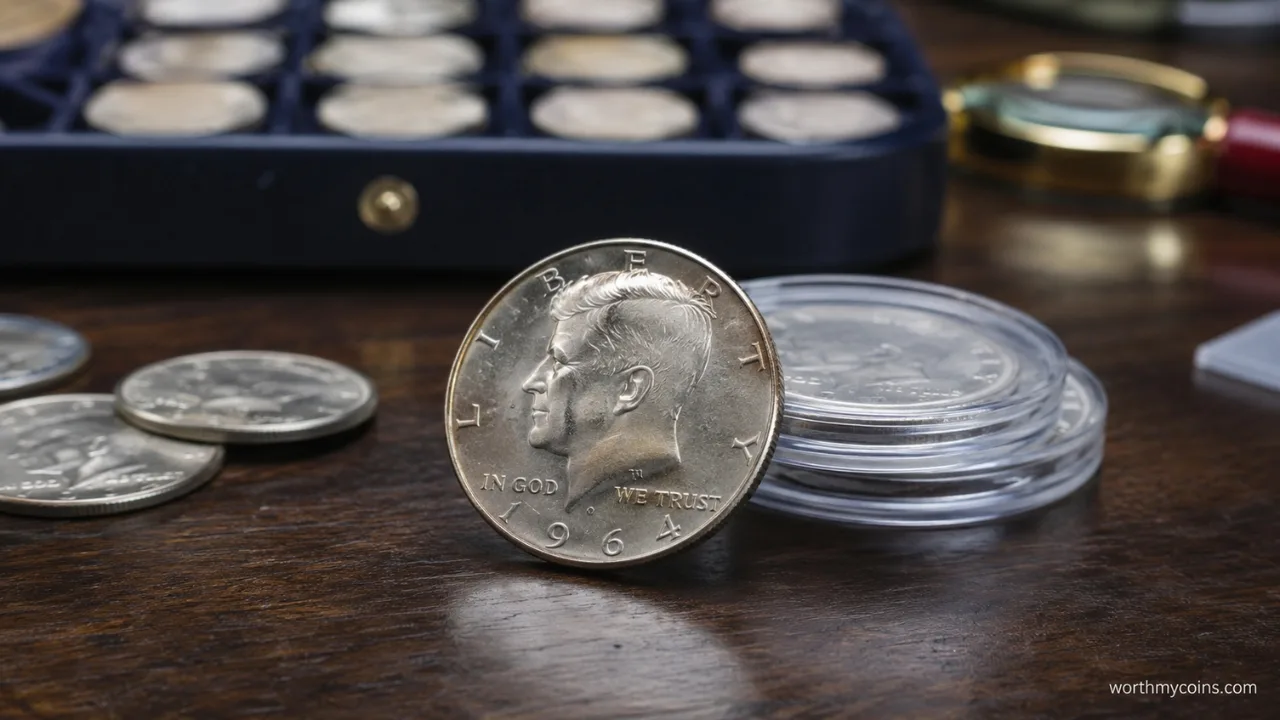
The Kennedy Half Dollar has been a favorite among U.S. coin collectors since it was first released in 1964. Created to honor President John F. Kennedy shortly after his assassination, the coin quickly became both a circulating coin and a cherished keepsake. While millions of Kennedy Half Dollars were produced, a small number of dates, varieties, and special issues have become especially desirable because of their rarity, historical significance, or unique minting characteristics.
Whether a Kennedy Half Dollar is worth more than its face value depends on several factors, including the date, mint mark, silver content, condition, and collector demand. While many examples remain common, certain silver issues, key dates, and recognized varieties have become especially desirable among collectors.
This guide introduces five Kennedy Half Dollars that collectors pay the closest attention to, explains why they’re important, and highlights the details you should check before deciding whether a coin deserves a closer look.
History of the Kennedy Half Dollar
The Kennedy Half Dollar debuted in 1964, only months after President John F. Kennedy’s assassination in November 1963. The United States Mint moved quickly to redesign the Franklin Half Dollar, choosing Kennedy’s portrait as a tribute to the late president.
Chief Engraver Gilroy Roberts designed the obverse featuring Kennedy’s profile, while Frank Gasparro created the reverse displaying the Presidential Seal. The design has remained largely unchanged since its introduction, making it one of the longest-running coin designs in modern American coinage.
The first Kennedy Half Dollars struck in 1964 were composed of 90% silver and 10% copper. Beginning in 1965, the Mint reduced the silver content to a 40% silver-clad composition due to rising silver prices and nationwide coin shortages. By 1971, regular circulation Kennedy Half Dollars transitioned to a copper-nickel clad composition, although certain collector and bullion issues containing silver have continued to be produced.
Because 1964 was the only regular circulation year struck in 90% silver, many collectors also enjoy comparing it with other historically significant U.S. coins, such as the famous 1943 Bronze Lincoln Wheat Penny, to better understand how rarity and historical importance influence collector demand.
Although the coin was intended for everyday circulation, many Americans saved the first issues as souvenirs, resulting in relatively few entering daily commerce.
Kennedy Half Dollar Specifications
| Specification | Details |
|---|---|
| Designer (Obverse) | Gilroy Roberts |
| Designer (Reverse) | Frank Gasparro |
| First Year Issued | 1964 |
| Denomination | Half Dollar |
| Diameter | 30.6 mm |
| Weight (1964) | 12.50 grams |
| Edge | Reeded |
| Mint Authority | United States Mint |
| Thickness | 2.15 mm |
Silver Composition by Year
| Years | Composition |
| 1964 | 90% Silver, 10% Copper |
| 1965–1970 | 40% Silver Clad |
| 1971–Present (Circulation) | Copper-Nickel Clad |
| Selected Collector Issues | Silver compositions depending on issue |
Knowing the year of your Kennedy Half Dollar is one of the quickest ways to determine whether it contains silver.
How to Identify a Kennedy Half Dollar
Correct identification is the first step toward determining whether your coin may have collectible value.
Obverse
The obverse features a left-facing portrait of President John F. Kennedy. The word “LIBERTY” appears around the upper rim, “IN GOD WE TRUST” is split on either side of Kennedy’s neck, and the date appears at the bottom.
Reverse
The reverse displays the Presidential Seal, featuring a heraldic eagle holding arrows and an olive branch beneath a ring of stars.
Mint Mark Location
For coins struck from 1968 onward, the mint mark appears on the obverse above the date.
For 1964 issues, the mint mark appears on the reverse beneath the olive branches near the bottom of the coin.
Kennedy Half Dollar Mint Marks
Several United States Mint facilities have produced Kennedy Half Dollars over the years.
| Mint | Mint Mark |
| Philadelphia | No Mint Mark (1964–1979), P (1980–Present) |
| Denver | D |
| San Francisco | S |
Philadelphia and Denver primarily produced circulation coins, while San Francisco has struck many Proof and special collector issues.
Learning mint marks is an important skill because certain dates become much scarcer depending on where they were struck.
Mint marks play an equally important role across many U.S. coin series. Our Morgan Dollar Value Guide explains how different mint locations can dramatically influence rarity and collector demand.
Before evaluating value, verify the coin’s date, mint mark, and silver composition. Many Kennedy Half Dollars look similar at first glance, but these three details often determine whether a coin is common, silver, or a more desirable collector issue.
Top 5 Kennedy Half Dollars Worth Money
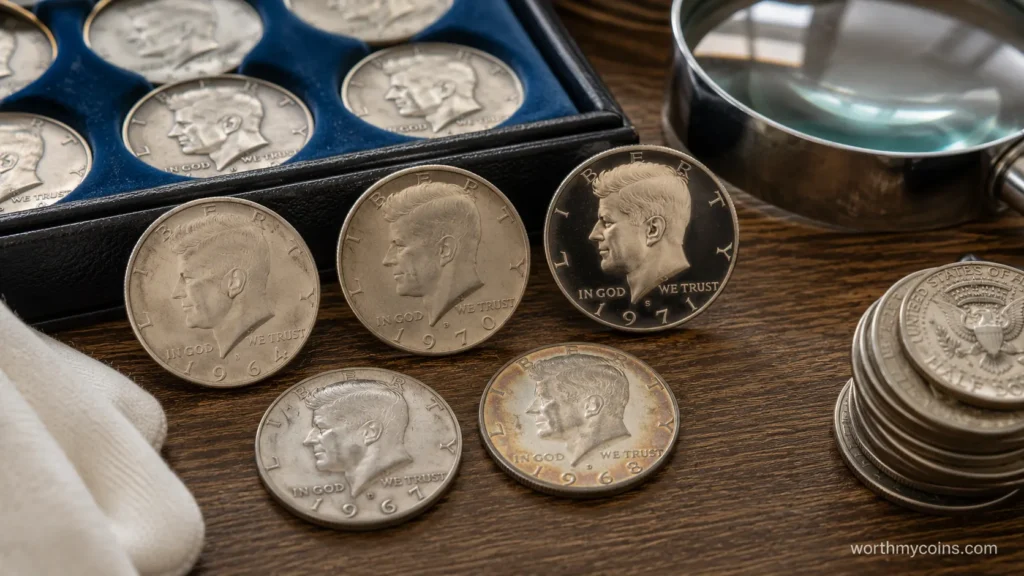
Although thousands of Kennedy Half Dollars survive in collections, a handful of issues consistently receive attention from collectors because of their rarity, historical importance, or recognized varieties.
1. 1964 Kennedy Half Dollar
The first-year Kennedy Half Dollar remains one of the most collected modern U.S. coins.
Besides being the only regular circulation issue struck in 90% silver, it represents the nation’s tribute to President Kennedy following his assassination.
Both Philadelphia and Denver Mint examples are widely collected. While many circulated coins survive, exceptionally well-preserved Mint State examples, attractive toned coins, and certain verified varieties receive stronger collector interest.
Collectors should also be aware of the 1964 Proof issue, which was produced specifically for collectors and differs from circulation strikes in its specially prepared mirrored finish.
2. 1970-D Kennedy Half Dollar
The 1970-D Kennedy Half Dollar occupies a special place in the series because it was not released into general circulation.
Instead, it was included only in official U.S. Mint Uncirculated Coin Sets, making it much less available than many surrounding dates.
The coin also belongs to the final year of the 40% silver-clad composition used for regular Kennedy Half Dollars before circulation coins changed to copper-nickel in 1971.
Because many collectors seek complete date-and-mint collections, the 1970-D has become one of the most desirable regular business-strike issues.
Authentication and condition remain especially important when evaluating examples for potential purchase.
3. 1998-S Matte Finish Kennedy Half Dollar
One of the most distinctive modern Kennedy Half Dollars is the 1998-S Matte Finish issue.
Unlike traditional Proof coins, this special collector coin features a satin-like matte finish and was included exclusively in the Robert F. Kennedy Commemorative Silver Dollar Set issued by the United States Mint.
Its limited distribution and unique finish make it easily recognizable to experienced collectors and a popular addition to modern Kennedy Half Dollar collections.
Collectors should verify that examples retain their original matte surfaces and have not been altered or improperly cleaned.
What Determines a Kennedy Half Dollar’s Value?
Not every old Kennedy Half Dollar is rare, and not every silver example carries the same collector appeal.
Several important factors influence value.
Date
Certain production years are much more popular because of lower mintages, historical significance, or limited distribution.
Mint Mark
The mint where the coin was struck can significantly affect collector demand, especially for lower-production issues or special collector releases.
Silver Content
Coins struck in 1964 contain 90% silver, while those produced from 1965 through 1970 contain 40% silver. For many circulated examples, precious metal content contributes to their minimum market value alongside collector demand.
Condition
Well-preserved coins showing minimal wear, strong luster, and clean surfaces are generally more desirable than heavily circulated examples.
Professional grading provides a standardized way to describe preservation and often increases buyer confidence.
Original Surfaces
Collectors usually prefer coins that have not been cleaned, polished, or artificially altered. Natural toning and original mint luster often enhance collector appeal.
Understanding Kennedy Half Dollar Grades
Coin grading helps collectors evaluate preservation using standardized industry terminology.
| Grade | Description |
| Good (G) | Heavy wear with major design visible |
| Very Good (VG) | Moderate wear with clear outlines |
| Fine (F) | Moderate wear while retaining strong details |
| Very Fine (VF) | Light wear on high points |
| Extremely Fine (XF) | Only slight wear with excellent detail |
| About Uncirculated (AU) | Nearly full mint luster with slight friction |
| Mint State (MS) | No circulation wear; graded from MS60 to MS70 |
Beyond wear, experienced collectors also examine strike quality, contact marks, eye appeal, and luster. These characteristics become increasingly important for higher-grade Kennedy Half Dollars, especially key dates and special collector issues.
4. 1964 Special Mint Set (SMS) Kennedy Half Dollar
Among all Kennedy Half Dollars, the 1964 Special Mint Set (SMS) issue is one of the most mysterious and desirable. Unlike regular circulation strikes or standard Proof coins, these pieces feature exceptionally sharp strikes and distinctive satin-like surfaces.
Only a very small number of authentic 1964 SMS Kennedy Half Dollars are believed to exist, and they are widely recognized by leading grading services. Their exact origin remains the subject of numismatic research, but they are considered legitimate U.S. Mint products.
Because of their rarity and the number of altered coins in the marketplace, any suspected 1964 SMS Kennedy Half Dollar should be authenticated by a reputable third-party grading service before assumptions are made about its significance.
5. 1966 SMS Kennedy Half Dollar With No FG Initials
The 1966 Special Mint Set Kennedy Half Dollar featuring missing or extremely weak “FG” initials is another variety that attracts collector attention.
The initials “FG,” representing reverse designer Frank Gasparro, normally appear near the base of the Presidential Seal on the reverse. On some coins, excessive die polishing removed or nearly eliminated these initials, creating the well-known “No FG” variety.
Collectors should note that worn coins or damaged surfaces can also make the initials difficult to see. Genuine varieties require careful examination and, for valuable examples, professional authentication.
Verified Kennedy Half Dollar Errors and Varieties
Not every unusual-looking Kennedy Half Dollar is a valuable mint error. Many coins become damaged after leaving the Mint through circulation, cleaning, or environmental exposure.
The following are among the best-known Kennedy Half Dollar varieties recognized by major grading services and variety specialists.
| Variety | Description | Notes |
|---|---|---|
| 1964 Accented Hair Proof | Early Proof design with additional hair detail above Kennedy’s ear | Popular first-year variety |
| 1964 Doubled Die Obverse | Doubling visible on selected design elements | Requires authentication |
| 1966 No FG | Missing or weak designer initials caused by die polishing | Found on some SMS coins |
| 1972-D No FG | Missing reverse initials | Recognized variety |
| 1982-P No FG | Missing reverse initials | Popular modern variety |
| 1983-P No FG | Missing reverse initials | Widely collected |
| Off-Center Strikes | Design struck away from the center | Value depends on severity and visibility |
| Broadstrikes | Coin struck without the retaining collar | Verified mint error |
The significance of any error depends on the specific variety, the coin’s condition, and confirmation that the feature originated during the minting process rather than after circulation.
If you’re interested in learning how genuine mint errors differ from post-mint damage, our Washington Quarter Error Guide covers several of the most recognized U.S. Mint error types collectors search for today.
Why Some Kennedy Half Dollars Are Worth More Than Others
Even two coins with the same date and mint mark can differ greatly in value.
Several important factors explain these differences.
Grade
Coins preserved in Mint State condition generally receive stronger collector interest than circulated examples. Tiny differences in preservation can significantly influence demand, particularly for modern issues.
Authentication
If you’re dealing with a key date, an unusual variety, or a potentially valuable coin, professional authentication is one of the safest ways to confirm that it’s genuine before making any buying or selling decisions.
Strike Quality
Sharper strikes reveal more detail in Kennedy’s hair, lettering, and the eagle on the reverse. Strongly struck coins are often preferred by collectors.
Eye Appeal
Natural luster, attractive toning, and clean surfaces contribute to overall desirability. Coins with exceptional visual appeal often attract stronger competition from collectors.
Collector Demand
Popularity changes over time as new collectors enter the hobby. Historic first-year issues, silver compositions, key dates, and recognized varieties consistently remain among the most sought-after Kennedy Half Dollars.
Because the coin market changes continually, prices should always be confirmed using recent auction records and current dealer inventories rather than relying on outdated price lists.
Tips for Collecting Kennedy Half Dollars
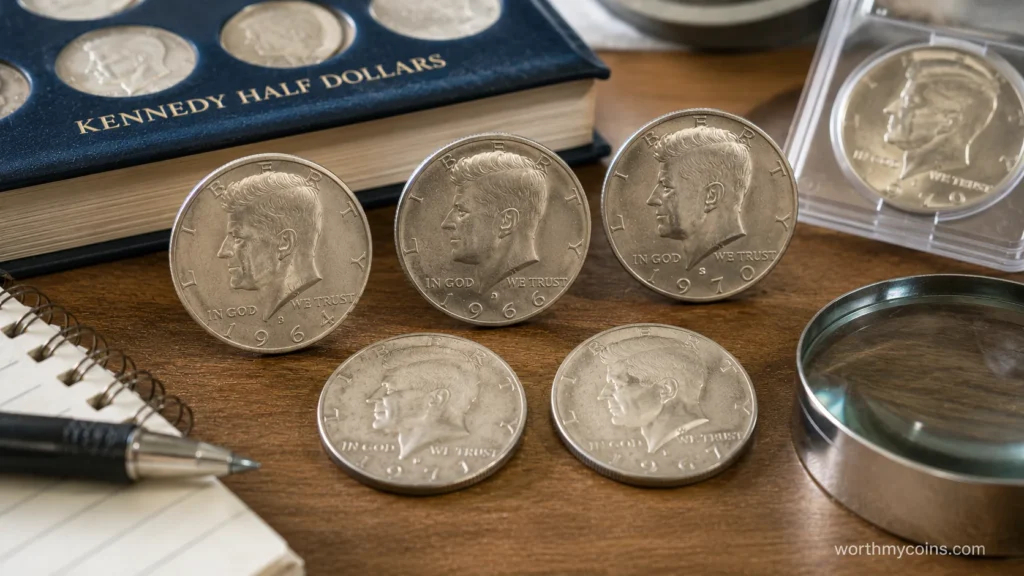
Kennedy Half Dollars offer an excellent balance of history, affordability, and variety, making them a rewarding series for collectors of all experience levels.
Here are several practical tips:
- Learn the silver compositions before purchasing.
- Always check the date and mint mark carefully.
- Compare your coin with verified examples from trusted references.
- Avoid cleaned or polished coins whenever possible.
- Store silver coins in archival-quality holders.
- Purchase key dates from reputable dealers.
- Consider certified examples for expensive varieties.
- Study grading standards before investing in higher-grade coins.
Many collectors eventually branch into other classic U.S. coin series. If you’re exploring silver-era coins, the Mercury Dime Value Guide is another excellent starting point for identifying key dates and collectible varieties.
Many collectors build complete date-and-mint collections, while others focus exclusively on silver issues, Proof coins, or modern varieties.
Keeping a simple record of the coins you already own can also prevent duplicate purchases and make it easier to spot missing dates or mint marks as your collection grows. Many experienced collectors organize their collections by year and mint for quick identification.
Common Mistakes to Avoid
New collectors often make avoidable errors that can lead to disappointment or unnecessary expense.
Assuming Every Kennedy Half Dollar Is Rare
Millions of Kennedy Half Dollars have been produced since 1964. While some dates are highly collectible, many common issues remain readily available.
Cleaning the Coin
Cleaning may make a coin appear brighter, but it often damages the original surfaces and reduces collector appeal.
Ignoring Mint Marks
A small mint mark can make an important difference when researching a coin’s rarity and collectibility.
Confusing Damage With Mint Errors
Scratches, dents, stains, and post-mint alterations are not legitimate mint errors. Always compare suspected varieties with trusted references before drawing conclusions.
Relying on Social Media Price Claims
Online videos and viral posts sometimes exaggerate coin values. The most reliable information comes from professional grading services, respected auction houses, and established numismatic references.
Frequently Asked Questions
Are all Kennedy Half Dollars made of silver?
No. Only the 1964 circulation issue contains 90% silver. Regular circulation coins dated 1965 through 1970 contain 40% silver, while most circulation coins produced from 1971 onward are copper-nickel clad.
Which Kennedy Half Dollar is considered the rarest?
Among regular collectible issues, the 1964 SMS Kennedy Half Dollar is widely regarded as one of the rarest because only a small number of authenticated examples are known.
Where is the mint mark located?
For coins dated 1968 and later, the mint mark appears above the date on the obverse. On 1964 issues, it appears on the reverse beneath the olive branches.
What does “No FG” mean?
“No FG” refers to coins where designer Frank Gasparro’s initials are missing or nearly invisible because of die polishing.
Should I have my Kennedy Half Dollar graded?
Professional grading is often worthwhile for suspected key dates, important varieties, unusually well-preserved coins, or pieces believed to be rare.
Can circulated Kennedy Half Dollars still be valuable?
Yes. Silver issues, key dates, and recognized varieties may still attract collector interest even when circulated, although condition remains an important factor.
How should I store Kennedy Half Dollars?
Store coins in acid-free, archival-quality holders and avoid unnecessary handling. Touching the surfaces with bare fingers can leave oils that affect long-term preservation.
Where can I research current market prices?
Recent auction archives published by major auction houses and grading services provide reliable information about current collector demand and realized prices.
Conclusion
The Kennedy Half Dollar remains one of the most popular modern U.S. coin series thanks to its history, silver issues, and collectible varieties. Whether you’re searching for a 1964 silver coin, a scarce 1970-D, or one of the famous Special Mint Set varieties, learning how to identify the right details will help you make better collecting decisions. With careful research and a little patience, you’ll be better prepared to recognize Kennedy Half Dollars that stand out from ordinary examples.
When evaluating a Kennedy Half Dollar, don’t focus solely on its age. Instead, examine the date, mint mark, composition, condition, originality, and any verified varieties. Careful research and proper authentication can help you identify coins that deserve a closer look while avoiding many of the common mistakes made by new collectors.
As your collection grows, exploring other classic U.S. coin series can help you better understand key dates, mint varieties, and long-term collector demand. If you’d like to expand beyond Kennedy Half Dollars, our Buffalo Nickel Value Guide is another useful resource that explains the history, key dates, and collectible varieties of one of America’s most popular coin series.
Whether you’re searching bank rolls, sorting inherited coins, or building a complete date-and-mint collection, understanding how Kennedy Half Dollars differ by year, composition, and variety will help you make better collecting decisions for years to come.
References
- United States Mint
- Professional Coin Grading Service (PCGS)
- Numismatic Guaranty Company (NGC)
- American Numismatic Association (ANA)
- Heritage Auctions
- Stack’s Bowers Galleries
- Newman Numismatic Portal
- A Guide Book of United States Coins (The Official Red Book)

Narayan Kumar is the Founder and Author of Worth My Coins. She specializes in U.S. coin collecting, with a focus on coin identification, mint errors, grading, rare varieties, and collector education. Her goal is to publish accurate, well-researched, and easy-to-understand guides that help both new and experienced collectors make informed decisions. Every article is created using trusted numismatic references and is written with a commitment to accuracy, transparency, and long-term educational value.