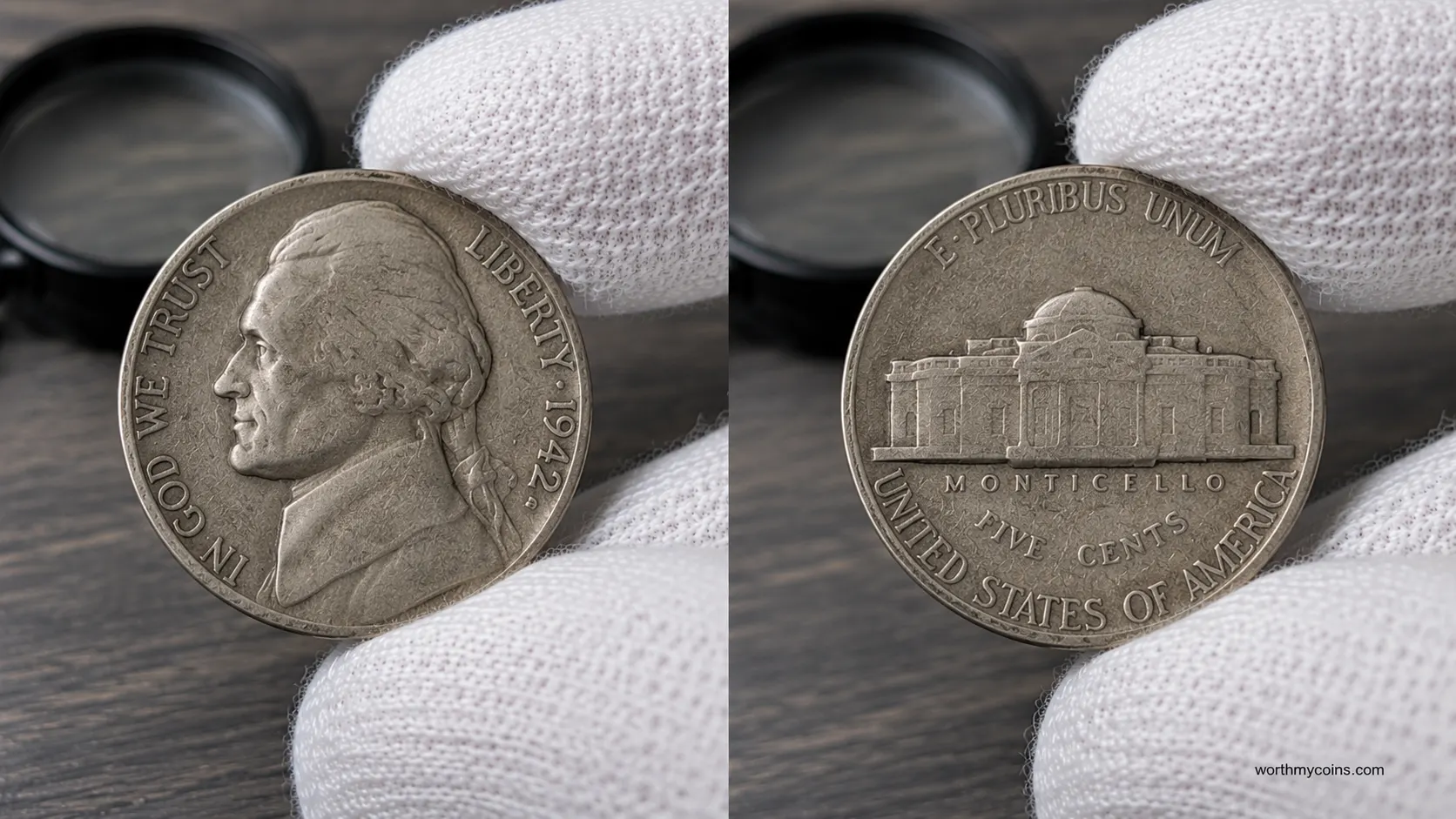
Jefferson nickels are one of the most collected U.S. coin series, and for good reason. Most are worth only face value, but a handful of dates, mint marks, and varieties have become highly desirable among collectors. Some are important because of low mintages, while others are prized for major minting varieties, recognized errors, or exceptional strike quality.
If you’re new to coin collecting, understanding which Jefferson nickels deserve a closer look can save you time, money, and frustration. This guide explains the most important Jefferson nickels collectors actively pursue and what makes them valuable.
Quick Answer
The most important Jefferson nickels typically include:
| Coin | Why Collectors Want It |
|---|---|
| 1939-D | Key-date low-mintage issue |
| 1950-D | Lowest regular-issue mintage in the series |
| 1939-S Reverse of 1940 | Popular transitional variety |
| 1942-D Over Horizontal D | Major mintmark error |
| 1943/2-P | Famous wartime overdate variety |
| 1945-P Doubled Die Reverse | Significant variety |
| 1938-D Full Steps | Extremely scarce in top grades |
| 1949-D/S | Popular overmintmark variety |
| 1954-S/S Over D | Well-known mintmark variety |
| High-Grade Full Steps Nickels | Valuable due to exceptional strike quality |
Actual market value depends heavily on condition, certification, rarity, collector demand, and whether the coin displays the coveted Full Steps designation.
Understanding What Makes a Jefferson Nickel Valuable
Before looking at specific coins, it helps to understand why certain Jefferson nickels command strong premiums.
Low Mintage
Coins produced in relatively small numbers often become key dates. The 1939-D and 1950-D are classic examples that remain essential for collectors building complete sets.
Important Varieties and Errors
Overdates, repunched mintmarks, doubled dies, and overmintmarks can make otherwise ordinary nickels significantly more desirable. Many advanced Jefferson nickel collectors specifically pursue these recognized varieties.
Collectors interested in learning more about major minting mistakes should also see Jefferson Nickel Error Guide: Rare Errors, Valuable Varieties & Collector Tips, which covers some of the most sought-after errors and attribution details in the series.
Full Steps Designation
One of the most important factors in Jefferson nickel collecting is the quality of the strike on Monticello.
A coin may receive a Full Steps (FS) designation when the steps at the base of Monticello appear fully defined and uninterrupted. Because many Jefferson nickels were weakly struck, true Full Steps examples can be much scarcer than regular specimens.
Because strike quality varies significantly throughout the Jefferson nickel series, the Full Steps designation is often one of the most important factors separating ordinary examples from premium-quality collector coins.
High Grades
A common date Jefferson nickel may be worth only a few cents in circulation but can become extremely valuable in certified Mint State grades if few examples survive at that level.
1. 1939-D Jefferson Nickel
The 1939-D is widely recognized as one of the most important regular-issue Jefferson nickels.
With a mintage of just 3,514,000 pieces, it ranks among the lowest-mintage coins in the entire series and has long been considered a key date.
Why It Matters
Many collectors saved relatively few examples when these coins entered circulation. As Jefferson nickel collecting grew in popularity, demand quickly outpaced the available supply of attractive specimens.
PCGS identifies the 1939-D as one of the two primary key dates of the series.
Identification
- Date: 1939
- Mint Mark: D
- Mint Location: Denver
- Mint mark appears on the reverse below Monticello on original-design nickels
Collector Tip
Look carefully at strike quality. Full Steps examples are dramatically scarcer than ordinary examples and are especially sought after by registry-set collectors.
2. 1950-D Jefferson Nickel
No list of valuable Jefferson nickels would be complete without the famous 1950-D.
This coin has the lowest regular-issue mintage of the entire Jefferson nickel series at 2,630,000 pieces.
Why It Became Famous
The 1950-D gained attention almost immediately after release. Dealers and collectors recognized its low mintage and began saving large quantities.
As a result, while the coin is an essential key date, many uncirculated examples survive today. Even so, demand remains strong because every complete collection requires one.
Identification
- Date: 1950
- Mint Mark: D
- Denver Mint issue
Beginner Mistake
Many new collectors assume every 1950-D nickel is highly valuable. Condition matters enormously. Worn examples and certified high-grade examples can have vastly different market values.
3. 1939-S Reverse of 1940
One of the most interesting early Jefferson nickel varieties is the 1939-S Reverse of 1940.
During the early years of the series, the Mint modified the reverse design, particularly the details of Monticello and the steps. This created distinct reverse varieties that specialists actively collect.
Why Collectors Like It
The Reverse of 1940 design generally displays sharper architectural details than the original Reverse of 1938 design.
Collectors assembling advanced Jefferson nickel sets often seek both versions.
Identification Clues
Specialists usually examine:
- Window details
- Step sharpness
- Architectural features of Monticello
Because attribution can be challenging, many collectors rely on certified examples from major grading services.
4. 1942-D Over Horizontal D
Among Jefferson nickel error collectors, the 1942-D Over Horizontal D is one of the most famous varieties in the series.
This variety occurred when the Denver mintmark was punched incorrectly and later corrected, leaving traces of the original horizontal mintmark beneath the final D.
Why It’s Important
Unlike minor varieties that require magnification to detect, this overmintmark is well known and widely recognized by specialists.
The coin remains one of the premier Jefferson nickel varieties.
Identification
Look for:
- A normal D mintmark
- Evidence of a horizontal D beneath it
- Strong magnification for confirmation
Professional authentication is strongly recommended before purchasing expensive examples because altered or misattributed varieties can sometimes resemble genuine pieces.
5. 1943/2-P Jefferson Nickel
The 1943/2-P is one of the most famous wartime Jefferson nickel varieties ever produced.
This coin was created when a die originally dated 1942 was modified for use in 1943, leaving remnants of the earlier digit visible beneath the final date.
Historical Context
The coin was struck during the World War II silver-nickel era.
From late 1942 through 1945, Jefferson nickels were produced using an alloy containing silver because nickel metal was needed for the war effort. These “War Nickels” are easily identified by the large mintmark above Monticello on the reverse.
Identification
Look for:
- Date 1943
- Philadelphia mintmark above Monticello
- Visible traces of the underlying “2” beneath the “3”
This variety remains one of the most desirable coins in the entire Jefferson nickel series.
6. 1945-P Doubled Die Reverse
The 1945-P Doubled Die Reverse is one of the better-known doubled die varieties in the Jefferson nickel series.
Doubled dies occur during the die manufacturing process when the design is impressed onto a die more than once in slightly different positions. The resulting die then strikes coins showing noticeable doubling in specific design elements.
Why Collectors Seek It
Jefferson nickel collectors actively pursue major doubled die varieties because they represent genuine minting anomalies rather than post-mint damage.
Strong examples can display visible doubling in reverse lettering and design details, making them popular among variety specialists.
Identification Tips
Look for:
- Date: 1945
- Large wartime mintmark above Monticello
- Noticeable doubling on reverse inscriptions
- Strong details under magnification
Because several forms of strike doubling can resemble true doubled dies, authentication by a reputable grading service is often worthwhile for significant examples.
7. 1949-D/S Jefferson Nickel
The 1949-D/S is one of the most recognized overmintmark varieties in the series.
An overmintmark occurs when one mintmark is punched over another during die preparation. In this case, evidence of an underlying S mintmark can be found beneath the D mintmark.
Why It Matters
Overmintmarks represent an interesting period in U.S. Mint history before mintmarks became part of the master die production process.
Collectors appreciate them because they provide a visible glimpse into older minting methods.
Identification
Look for:
- Date: 1949
- D mintmark with remnants of an underlying S
- Traces visible around portions of the mintmark
Attribution guides published by major grading services can help confirm genuine examples.
8. 1954-S/S Over D Jefferson Nickel
Another popular overmintmark variety is the 1954-S/S Over D.
This variety resulted from a San Francisco mintmark being punched over an earlier Denver mintmark impression.
Why Collectors Like It
The coin combines:
- Historical minting significance
- Strong collector recognition
- Relative scarcity compared with ordinary issues
Many advanced Jefferson nickel collectors consider it a necessary addition to a complete variety collection.
Identification
Collectors typically examine:
- Shape of the S mintmark
- Remnants of a D beneath the final punch
- Diagnostic markers documented by PCGS and NGC attribution guides
As with other overmintmark varieties, certification can provide additional confidence when buying higher-value examples.
9. 1938-D Full Steps Jefferson Nickel
Not every valuable Jefferson nickel owes its status to a low mintage or mint error.
The 1938-D is a perfect example of how strike quality can create rarity.
Why Full Steps Matter
The Jefferson nickel series is notorious for weak strikes.
On many coins, the steps of Monticello appear incomplete, merged, or poorly defined. Coins displaying fully separated steps are considerably more difficult to find.
The 1938-D is particularly challenging in Full Steps condition, making top-certified examples highly sought after by registry-set competitors.
Condition rarity is not unique to Jefferson nickels. Similar collecting trends can also be seen in Morgan Dollar Value Guide: Rare Dates, Mint Errors & Collector Tips, where grade and preservation often have a major impact on value.
How to Identify Full Steps
Professional grading services use specific criteria, but generally collectors look for:
- Complete separation of the steps
- Minimal interruptions
- Strong overall strike quality
Many beginners mistakenly believe any sharp coin qualifies for Full Steps. In reality, grading services apply strict standards before awarding the designation.
10. High-Grade Full Steps Jefferson Nickels
Some of the most valuable Jefferson nickels are not rare dates at all.
Instead, they are common-date coins preserved in exceptionally high grades with Full Steps details.
Why These Coins Can Be Valuable
Modern registry-set collecting has created strong demand for the finest-known examples of many Jefferson nickel dates.
Even a relatively common issue can become scarce if very few examples survive with:
- Gem Mint State preservation
- Original surfaces
- Exceptional eye appeal
- Full Steps designation
This is one reason collectors should never dismiss a Jefferson nickel solely because it appears to be a common date.
A coin’s condition can be just as important as its mintage.
How to Identify Valuable Jefferson Nickels
If you’re searching through rolls, inherited collections, or old coin jars, focus on these factors first.
Check the Date
Certain years are significantly more desirable than others.
Pay close attention to:
- 1938–1950 issues
- Wartime nickels from 1942–1945
- Known variety dates
Look for Mint Marks
Mint marks help determine rarity.
Depending on the year, they may appear:
- On the reverse near Monticello
- Above Monticello on wartime nickels
- Near Jefferson’s portrait on modern issues
Examine the Coin Under Magnification
Many valuable varieties require close inspection.
Collectors who enjoy searching for varieties and minting mistakes may also find How to Tell If Your Buffalo Nickel Is Valuable: 9 Signs Collectors Look For useful for learning how specialists evaluate another popular five-cent coin series.
A quality 5x to 10x loupe can help reveal:
- Overdates
- Doubled dies
- Overmintmarks
- Repunched mintmarks
Avoid Cleaning Coins
One of the biggest mistakes new collectors make is cleaning old coins.
Cleaning can:
- Damage original surfaces
- Reduce collector demand
- Lower market value significantly
Even coins that appear dirty should generally be left in their original condition.
Factors That Determine Jefferson Nickel Value
No Jefferson nickel has a universal value.
Several factors influence what collectors are willing to pay.
| Factor | Why It Matters |
|---|---|
| Date | Some years are much scarcer |
| Mint Mark | Certain mints produced lower quantities |
| Grade | Better-preserved coins are more desirable |
| Full Steps | Strong strike quality adds demand |
| Variety | Errors and varieties often command premiums |
| Certification | Professional authentication increases buyer confidence |
| Eye Appeal | Attractive coins often sell for more |
The same date and mintmark can sell for dramatically different amounts depending on these characteristics.
Buying and Selling Jefferson Nickels
When Buying
Focus on:
- Reputable dealers
- Certified examples for expensive varieties
- Coins authenticated by PCGS or NGC
- Original, problem-free surfaces
When evaluating important varieties, compare the coin with documented attribution photographs published by recognized grading services or variety specialists. Proper attribution is often essential because minor differences can separate a valuable variety from an ordinary coin.
When Selling
Research recent sales of comparable certified examples whenever possible because completed sales generally provide a more reliable indication of collector demand than asking prices.
Remember that:
- Auction results change over time
- Collector demand fluctuates
- Grade differences can have a major impact on value
Avoid relying on viral social media claims that suggest every old nickel is worth a fortune.
Common Mistakes New Collectors Make
Assuming Every Old Nickel Is Rare
Age alone does not determine value.
Many Jefferson nickels were produced in large numbers and remain common today.
Ignoring Condition
A scarce date in poor condition may be worth less than a common date in exceptional condition.
Misidentifying Damage as an Error
Post-mint damage is frequently mistaken for valuable mint errors.
True mint varieties have established diagnostics recognized by experts.
Buying Uncertified Rarities
Major varieties and expensive key dates are often counterfeited or altered.
Certification provides additional protection by confirming authenticity and documenting the coin’s attributed variety and condition.
Final Thoughts
The Jefferson nickel series offers something for every collector. Key dates such as the 1939-D and 1950-D provide important challenges for complete sets, while famous varieties like the 1943/2-P and 1942-D Over Horizontal D add historical and numismatic interest.
Perhaps the most important lesson for beginners is that rarity is only one factor collectors consider when evaluating a Jefferson nickel. Grade, strike quality, certification, and collector demand all play major roles in determining value.
For collectors exploring the history of U.S. five-cent coins, the legendary 1913 Liberty Head Nickel Value Guide: Why This Rare Coin Is Worth Millions offers insight into one of the most famous rarities in all of numismatics.
Whether you’re searching coin rolls, inheriting a collection, or building a set from scratch, learning how to identify these important Jefferson nickels can help you make more informed collecting decisions and avoid costly mistakes.
Frequently Asked Questions
Are all Jefferson nickels worth more than face value?
No. Most circulated Jefferson nickels remain common and are generally worth only face value unless they contain silver, represent a recognized variety, or have exceptional collector appeal.
What is the key date of the Jefferson nickel series?
Most collectors consider the 1950-D and 1939-D to be the primary key dates because of their relatively low mintages and strong demand among collectors.
What are War Nickels?
War Nickels were produced from late 1942 through 1945 using an alloy that included silver. They can be identified by the large mintmark positioned above Monticello on the reverse.
What does Full Steps mean?
Full Steps refers to clearly defined steps on Monticello. Coins receiving this designation are often scarcer and more desirable than ordinary examples of the same date.
Should I clean an old Jefferson nickel?
Generally, no. Cleaning can damage a coin’s surface and reduce its value to collectors.
How can I tell if I found a valuable variety?
Compare the coin with established diagnostics published by major grading services, attribution guides, and respected numismatic references. For potentially valuable discoveries, professional authentication is recommended.
References
- NGC Jefferson Nickel Series Research & Variety Attribution Resources
- United States Mint
- Professional Coin Grading Service (PCGS)
- Numismatic Guaranty Company (NGC)
- American Numismatic Association (ANA)
- Heritage Auctions
- Stack’s Bowers Galleries
- Newman Numismatic Portal
- A Guide Book of United States Coins (Whitman Publishing)
- PCGS Jefferson Nickel Research Archives

Narayan Kumar is the Founder and Author of Worth My Coins. She specializes in U.S. coin collecting, with a focus on coin identification, mint errors, grading, rare varieties, and collector education. Her goal is to publish accurate, well-researched, and easy-to-understand guides that help both new and experienced collectors make informed decisions. Every article is created using trusted numismatic references and is written with a commitment to accuracy, transparency, and long-term educational value.