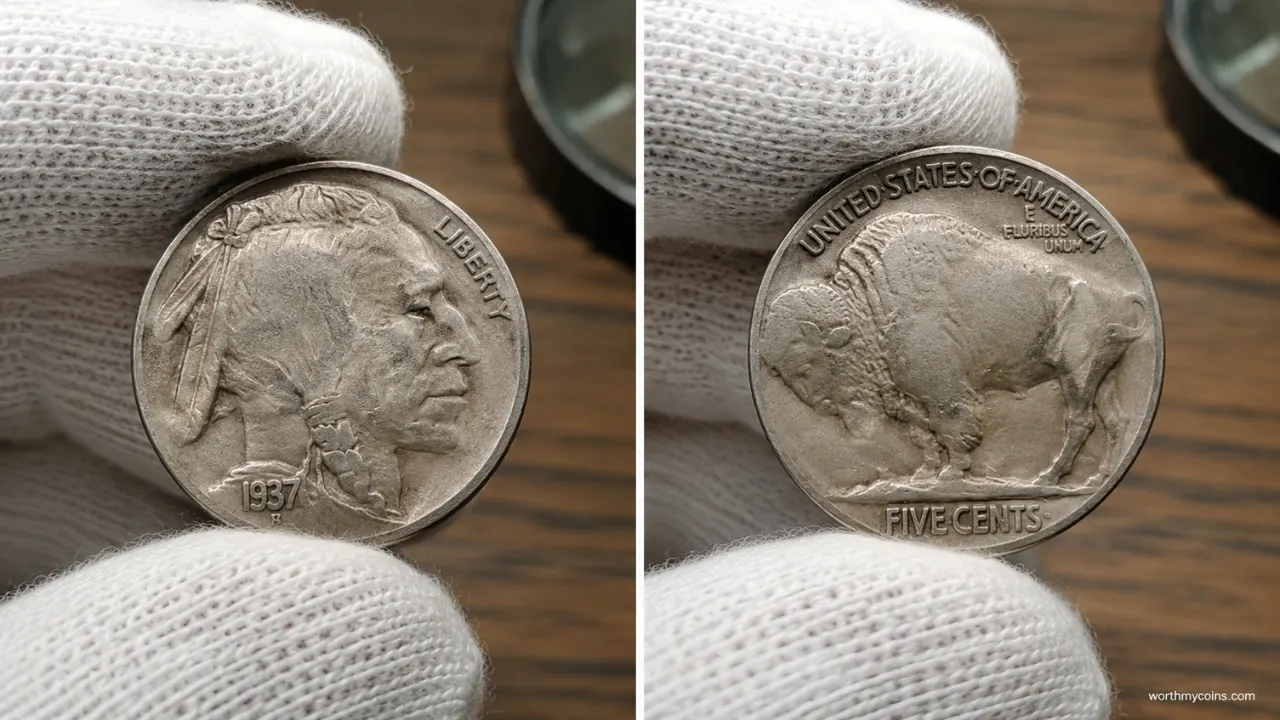
You don’t need to be an experienced coin collector to spot a valuable Buffalo Nickel. While millions were minted between 1913 and 1938, certain dates, mint marks, varieties, and condition factors make some examples far more desirable than others. Learning what to look for can help you avoid overlooking an important coin—or overestimating a common one.
Whether you found a Buffalo Nickel in an old coin jar, inherited a collection, or are just getting started with coin collecting, this guide explains the nine most important signs that collectors use to determine whether a Buffalo Nickel deserves a closer look.
Quick Answer
A Buffalo Nickel is most likely to be valuable if it has a rare date, a scarce mint mark, an important variety, strong remaining details, original surfaces, or has been professionally certified in higher grades. While many circulated Buffalo Nickels are common, certain issues stand out because of their rarity and long-term collector demand.
Readers who want a complete overview of the series should also read our Buffalo Nickel Value Guide: Rare Dates, Mint Errors & Collector Tips, where we explain the history of the series, important dates, and collecting strategies in greater detail.
Because Buffalo Nickels are widely collected, many worn coins are mistakenly believed to be rare. Before assuming a coin is valuable, compare its date, mint mark, and other diagnostics carefully or consider professional authentication if it appears to be an important issue.
Why Some Buffalo Nickels Are Worth More Than Others
No single characteristic determines whether a Buffalo Nickel is valuable. Instead, collectors consider several characteristics together before deciding how desirable a coin is.
Some of the biggest factors include:
| Factor | Why It Matters |
|---|---|
| Date | Certain years had much lower surviving populations. |
| Mint Mark | Coins from Denver or San Francisco can be scarcer than Philadelphia issues. |
| Condition | Better-preserved coins usually attract stronger collector demand. |
| Variety | Some recognized die varieties are significantly more desirable. |
| Certification | Authenticated and graded coins often inspire greater buyer confidence. |
Understanding how these factors work together will help you evaluate Buffalo Nickels more confidently.
Sign #1: It Has a Rare Date
The date is usually the first feature experienced collectors examine.
Although Buffalo Nickels were produced for more than two decades, not every year is equally common today. Certain dates are much harder to locate, especially in higher grades, because fewer examples survived circulation.
This doesn’t automatically mean every coin from a scarce year is highly valuable. Condition still plays a major role, but identifying the date is always the starting point.
If the date is difficult to read because of wear, avoid cleaning the coin. Even a heavily worn example may still interest collectors depending on the issue.
Readers interested in learning which dates are considered the most desirable should also read our Buffalo Nickel Key Dates and Values: The Coins Every Collector Should Know, where we explain the most important dates in the series and why collectors seek them.
Sign #2: It Has a Scarce Mint Mark
After checking the date, look for a mint mark.
Buffalo Nickels were struck at three U.S. Mint facilities:
- No mint mark — Philadelphia
- D — Denver
- S — San Francisco
The mint mark appears on the reverse of the coin below the denomination FIVE CENTS.
While many Philadelphia coins are common, certain Denver and San Francisco issues are considerably scarcer. However, a mint mark alone does not guarantee a high value. Collectors always consider the date and overall condition together.
Sign #3: The Date Is Still Clearly Visible
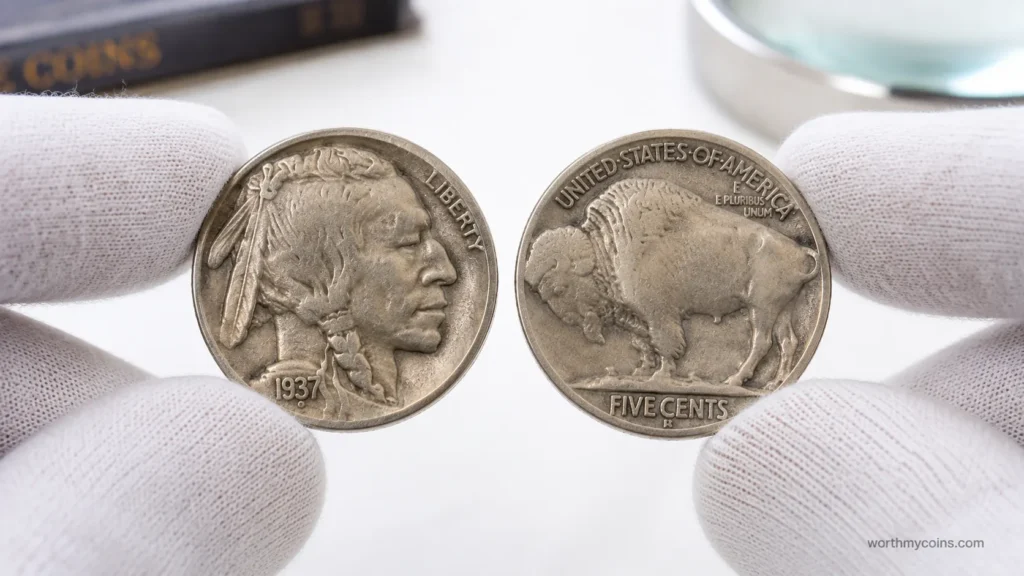
One of the biggest challenges with Buffalo Nickels is wear.
The raised date on the obverse often wears away after years of circulation, making many examples difficult—or even impossible—to identify without special techniques.
Coins with a full, bold date generally receive much more attention from collectors than examples where the date has nearly disappeared.
A clearly visible date also makes authentication and grading much easier.
Sign #4: It Has Strong Remaining Details
Collectors don’t look only at the date.
They also evaluate how much of the original design remains visible across the coin.
Important areas include:
- Liberty’s braid and hair details
- Facial features
- The Native American’s feather
- The buffalo’s horn
- Shoulder detail
- Tail and fur texture
The more original design elements that remain, the more attractive the coin usually is to collectors.
Professional grading services evaluate overall wear across the entire design rather than focusing on just one feature.
Sign #5: It May Be a Recognized Variety
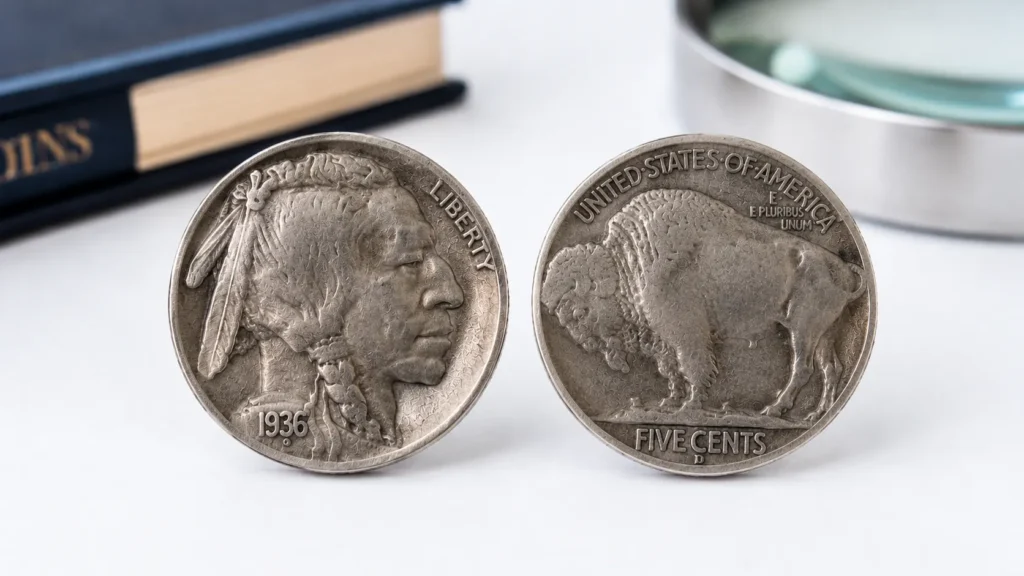
Some Buffalo Nickels are collected because of well-documented die varieties rather than low mintages alone.
Collectors pay close attention to recognized varieties that have been studied and cataloged by numismatic experts. These should not be confused with ordinary circulation damage or post-mint alterations.
When examining a possible variety, compare it with reliable reference images or seek professional authentication rather than relying on online claims.
Collectors who enjoy learning about mint-made varieties across different denominations may also find our Jefferson Nickel Error Guide: Rare Errors, Valuable Varieties & Collector Tips helpful, as it explains how genuine mint errors differ from damage that occurs after a coin leaves the Mint.
Sign #6: It Has Original Surfaces
Collectors generally prefer Buffalo Nickels that retain their original surfaces.
Cleaning, polishing, or other surface alterations can permanently change a coin’s appearance and often reduce collector interest. Even a worn coin with natural surfaces is usually more desirable than one that has been cleaned.
If you’re unsure whether a coin has been cleaned, avoid trying to improve its appearance. Originality is an important factor considered during professional grading.
Sign #7: It Has Strong Eye Appeal
Two Buffalo Nickels with similar wear can still attract different levels of collector interest.
Collectors often consider overall eye appeal, including natural color, balanced wear, and attractive surfaces. Coins that present well are generally more desirable than examples with distracting damage or unattractive surface problems.
Eye appeal does not replace rarity, but it can influence collector demand.
Sign #8: It Has Been Professionally Certified
Professional certification provides independent confirmation of a coin’s authenticity and grade.
For better Buffalo Nickels, certification can help buyers and sellers feel more confident because recognized grading services examine the coin for authenticity, condition, and any important varieties before encapsulating it.
Certification is especially useful when a coin appears to be a key date or a recognized variety.
Sign #9: Multiple Positive Factors Come Together
No single feature automatically makes a Buffalo Nickel valuable.
Experienced collectors evaluate several characteristics together, including the date, mint mark, remaining detail, originality, recognized varieties, certification, and overall eye appeal.
A coin displaying several of these qualities deserves a closer look than one with only a single positive characteristic.
Frequently Asked Questions
Is every Buffalo Nickel worth money?
Not necessarily. While all Buffalo Nickels are collectible because of their historical significance, many common-date circulated examples are relatively affordable. Coins with rare dates, scarce mint marks, recognized varieties, or exceptional preservation are generally the most desirable to collectors.
Where is the mint mark on a Buffalo Nickel?
The mint mark, if present, is located on the reverse below the denomination FIVE CENTS. Coins struck in Philadelphia have no mint mark, while Denver coins carry a D and San Francisco coins an S.
Why is the date missing on so many Buffalo Nickels?
The date was placed on one of the highest points of the design, making it especially vulnerable to wear during circulation. After years of use, many Buffalo Nickels lost much or all of their visible date.
Should I clean my Buffalo Nickel before selling it?
No. Cleaning can permanently alter the coin’s surface and often reduces collector appeal. Even a worn coin with original surfaces is usually preferred over one that has been polished or chemically cleaned.
How do I know if my Buffalo Nickel should be professionally graded?
Professional grading may be worth considering if your coin appears to have:
- A key date
- A scarce mint mark
- Strong remaining detail
- A recognized variety
- Exceptional eye appeal
- Potentially significant collector value
Authentication also provides confidence that the coin is genuine and has not been altered.
Can circulated Buffalo Nickels still be valuable?
Yes. Some key-date Buffalo Nickels remain highly collectible even with noticeable circulation wear. While condition is important, rarity and collector demand often have an even greater impact on desirability.
Practical Buffalo Nickel Checklist
Before deciding whether your Buffalo Nickel may deserve professional attention, confirm the following:
- The date is readable.
- The mint mark has been correctly identified.
- The coin matches any recognized variety diagnostics.
- The surfaces appear original.
- The coin has not been cleaned.
- Comparable certified examples support your conclusions.
A careful review of these points can help prevent common identification mistakes.
Final Tips Before You Buy or Sell
Before making any decisions, take time to examine your Buffalo Nickel carefully.
Before buying or selling, take a final look at the coin’s date, mint mark, overall condition, and originality. Compare it with certified examples whenever possible, avoid cleaning it, and consider professional authentication if you believe it may be a key date, recognized variety, or otherwise important issue.
Many collectors discover that learning how to evaluate coins is just as rewarding as building the collection itself.
Readers interested in understanding another classic U.S. coin series should also read our Lincoln Wheat Penny Value Guide (1909–1958), which provides a comprehensive introduction to one of America’s most collected coins and explains many of the same grading, rarity, and authentication principles discussed in this guide.
Conclusion
Determining whether a Buffalo Nickel is valuable involves much more than checking its age. Experienced collectors examine the date, mint mark, condition, originality, recognized varieties, and overall eye appeal before estimating its desirability.
A coin with several positive characteristics deserves closer attention, while common circulated examples may simply serve as enjoyable additions to a collection. If you believe you’ve found an important Buffalo Nickel, avoid cleaning it and consider having it authenticated by a reputable grading service. A careful evaluation today could help you better understand your coin and make more informed collecting decisions in the future.
References
The information in this guide is based on recognized numismatic references and industry resources, including:
- United States Mint
- Professional Coin Grading Service (PCGS) CoinFacts
- Numismatic Guaranty Company (NGC) Coin Explorer
- American Numismatic Association (ANA)
- Heritage Auctions
- Stack’s Bowers Galleries
- Newman Numismatic Portal

Narayan Kumar is the Founder and Author of Worth My Coins. She specializes in U.S. coin collecting, with a focus on coin identification, mint errors, grading, rare varieties, and collector education. Her goal is to publish accurate, well-researched, and easy-to-understand guides that help both new and experienced collectors make informed decisions. Every article is created using trusted numismatic references and is written with a commitment to accuracy, transparency, and long-term educational value.