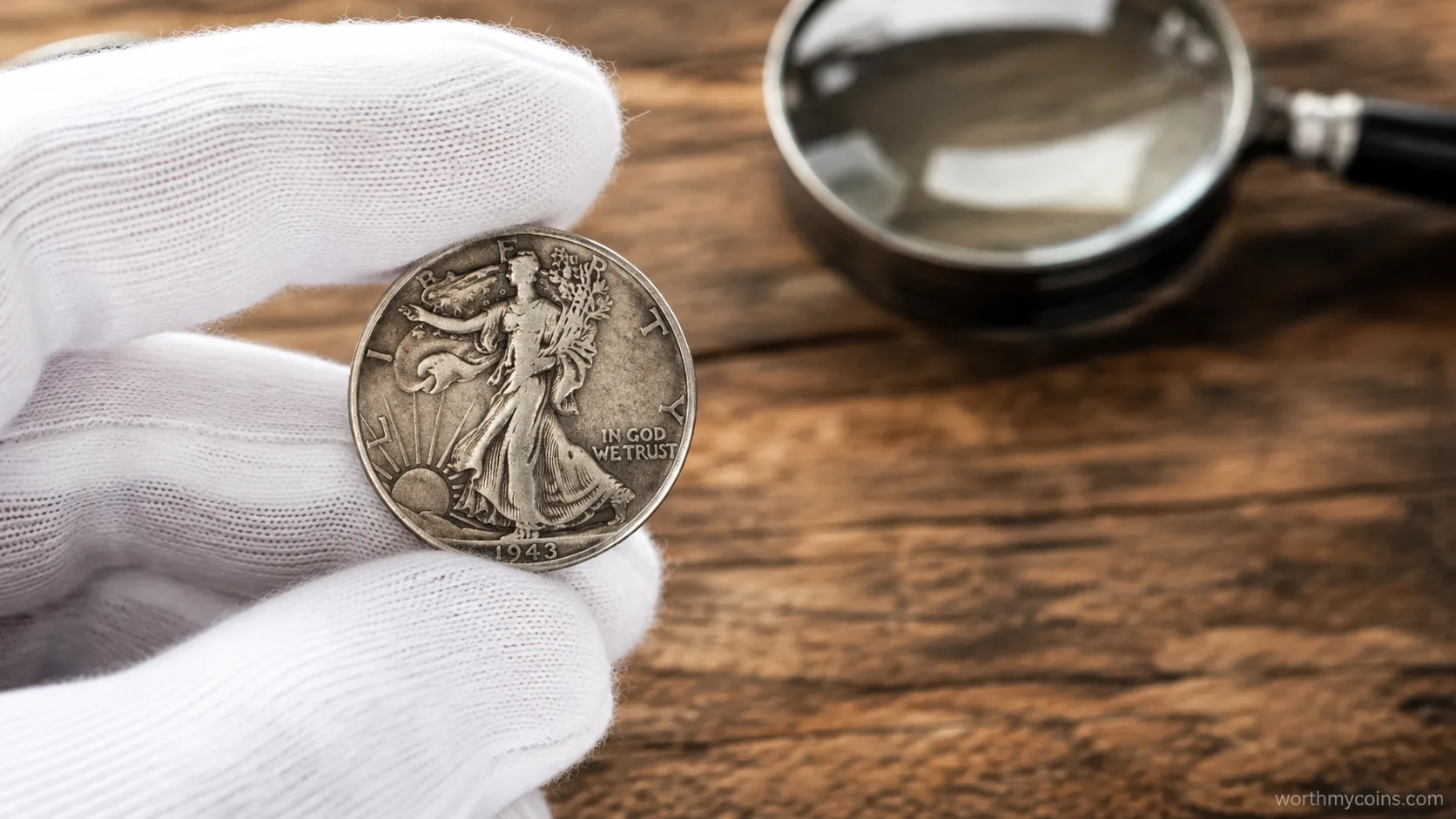
Some U.S. coins matter because they are important key dates, others because they represent major changes in American coinage, and a few have become famous for extraordinary rarity or historical significance. A serious collector does not need to own all of them, but knowing the major coins below provides a strong foundation for understanding U.S. numismatics.
Quick Answer
The U.S. coins every serious collector should recognize include landmark issues such as the 1793 Chain Cent, 1794 Flowing Hair Dollar, 1804 Draped Bust Dollar, 1909-S VDB Lincoln Cent, 1916-D Mercury Dime, 1932-D and 1932-S Washington Quarters, 1913 Liberty Nickel, 1893-S Morgan Dollar, and 1933 Saint-Gaudens Double Eagle.
These coins are important for different reasons. Some are early federal issues, some are classic key dates, some are famous rarities, and others illustrate important developments in American coin design and collecting.
1. 1793 Chain Cent
The 1793 Chain Cent deserves to be near the top of any list of historically important U.S. coins. It was the first regular-issue one-cent coin produced by the United States Mint and was among the first federal coins struck for circulation. The Philadelphia Mint delivered its first cents on March 1, 1793.
The coin features Liberty with flowing hair on the obverse and a chain of 15 links on the reverse. The chain represented the states in the Union at the time, but the design was poorly received and was quickly replaced by a wreath reverse.
For collectors, the 1793 Chain Cent is important not simply because it is old, but because it represents the beginning of federal circulating copper coinage.
Collectors interested in the earliest copper issues can continue their research with Flying Eagle Cent Value Guide: 1856–1858 Values, Varieties and Rare Errors, which provides useful context for the early cent designs that followed.
2. 1794 Flowing Hair Dollar
The 1794 Flowing Hair Dollar represents one of the most important milestones in American silver coinage. Production of the nation’s first silver dollar began in October 1794, with 1,758 pieces delivered that month.
The coin was designed by Robert Scot and carries a portrait of Liberty on the obverse with an eagle on the reverse. Early U.S. dollars were intended to serve as a major monetary denomination and help establish the credibility of the new federal coinage system.
The 1794 dollar is also an excellent example of why early U.S. coins require careful study. Strike quality, planchet characteristics, die varieties, and condition can make substantial differences between individual specimens.
Collectors exploring early U.S. coinage can broaden their understanding with Top 10 Half Cent Coins Every Early U.S. Coin Collector Should Know, which examines another important group of America’s earliest federal copper issues.
3. 1804 Draped Bust Dollar
Few American coins have a more complicated history than the 1804 Draped Bust Dollar. The first point every collector should understand is that the famous “1804” dollars were not actually struck in 1804.
The Class I examples were produced around 1834 and 1835 for diplomatic Proof Sets. The Mint used the 1804 date because officials understood it to represent the final year of the Draped Bust dollar series.
The surviving 1804 dollars are divided into different classes, including Class I originals and later restrikes. Their unusual origin, extremely limited number, and long history of ownership have made the 1804 dollar one of the best-known rarities in American numismatics.
A serious collector should know the 1804 dollar not just as a famous rarity, but as an example of how the history behind a coin can be more complicated than its date suggests.
4. 1909-S VDB Lincoln Cent
The 1909-S VDB is one of the most recognizable key-date Lincoln cents. It was produced during the first year of the Lincoln cent, and the reverse carries Victor David Brenner’s initials, VDB, at the bottom.
For a closer look at this famous first-year issue, 1909-S VDB Lincoln Wheat Penny Value Guide: Why This Rare Cent Is So Important to Collectors covers the characteristics that make the coin such an important Lincoln cent for collectors.
The initials became controversial soon after release, and the Mint removed them from subsequent dies. Only 484,000 1909-S cents were issued with the VDB initials, making the issue especially desirable to collectors.
The 1909-S VDB is worth studying because it demonstrates several fundamentals of collecting at once: date and mintmark identification, design changes, historical context, and the effect of limited production on collector demand.
Collectors building their knowledge of the broader series can also consult Lincoln Wheat Penny Value Guide (1909–1958): Prices, Errors & Rare Coins to study the dates, varieties, errors, and condition factors that shape Lincoln Wheat Penny collecting.
5. 1916-D Mercury Dime
The 1916-D Mercury Dime is one of the classic key dates of 20th-century U.S. coinage. Its original mintage was only 264,000 pieces, the lowest mintage of the Mercury dime series.
Its importance goes beyond the mintage figure. The coin is scarce across grades and has been heavily collected for generations. It is also one of the U.S. coins for which authentication is particularly important because counterfeiters have added D mintmarks to Philadelphia 1916 dimes.
For anyone studying key dates, the 1916-D is an excellent lesson in why the mintmark can be just as important as the date.
Collectors wanting a more detailed examination of this famous key date can turn to 1916-D Mercury Dime Value Guide: Rare Key Date, Errors, Mint Marks & Current Value, which focuses on the identification and collecting factors that make the issue especially important.
6. 1913 Liberty Head Nickel
The 1913 Liberty Head Nickel is among the most famous American coin rarities. Only five examples are known, and the circumstances surrounding their creation remain uncertain.
The Liberty Head design had officially been replaced by the Buffalo Nickel in 1913, which makes the existence of five 1913 Liberty Nickels especially unusual. Their history includes some of the most famous collectors and dealers in American numismatics.
The coin is a useful reminder that rarity can come from circumstances surrounding production rather than simply from an officially published low mintage.
Collectors who want to examine this extraordinary rarity in greater detail can use 1913 Liberty Head Nickel Value Guide: Why This Rare Coin Is Worth Millions to explore the coin’s unusual history and the characteristics that make the five known examples so famous.
7. 1893-S Morgan Dollar
The 1893-S Morgan Dollar is one of the major key dates in the Morgan Dollar series. It is particularly important to collectors because of its scarcity and the long-standing demand for genuine examples. PCGS identifies the 1893-S as a key-date Morgan and notes that it is among the most heavily targeted issues for counterfeiting and alteration.
A collector examining an 1893-S should pay close attention to authenticity, mintmark characteristics, surfaces, and overall preservation. High-value key dates are precisely the coins where a convincing-looking fake can create serious problems for an inexperienced buyer.
The 1893-S also illustrates why a coin’s date and mintmark must always be considered together.
For a deeper look at this important Morgan Dollar key date, The 1893-S Morgan Dollar That Sold for Over $2 Million: Why It’s the King of Morgan Dollars provides additional information on the issue’s rarity and collector significance.
8. 1932-D and 1932-S Washington Quarters
The Washington Quarter debuted in 1932, and the Denver and San Francisco issues from that first year became the key dates of the series.
The 1932-D had a mintage of 436,800, while the 1932-S had a mintage of 408,000. Both were substantially lower than the 5,404,000 quarters struck at Philadelphia that year.
These two quarters are particularly useful for understanding the difference between mintage and rarity. A low mintage does not automatically tell you how many coins survive today, and condition can create another level of rarity among surviving examples.
The 1932-D is generally considered the more difficult of the two in high grades, while both remain important keys for collectors building a Washington Quarter set.
Collectors focusing specifically on the Denver key can use 1932-D Washington Quarter Value Guide: Rare Key Date, Mint Marks & Current Prices for a closer examination of this important first-year issue.
9. Saint-Gaudens Double Eagles
The Saint-Gaudens $20 gold coin is important even when the date is not rare. Designed by Augustus Saint-Gaudens, the series is widely regarded as one of the great achievements of American coin design.
For collectors, the series demonstrates how artistic quality, historical importance, gold content, mintage, survival, and condition can all influence a coin’s desirability.
The 1933 issue is the extraordinary exception. The Philadelphia Mint struck 445,500 examples, but the coins were never legally released into circulation and most were ordered melted. A small number survived, creating one of the most complicated stories in American numismatics.
One legally monetized 1933 Double Eagle sold for $18,872,250 at Sotheby’s in 2021. That result should be viewed as the auction history of that specific legally owned specimen, not as a normal value for other 1933 Double Eagles.
10. 1937-D Three-Legged Buffalo Nickel
The Buffalo Nickel series contains several important varieties, and the 1937-D Three-Legged Buffalo Nickel is one of the best known.
It is an important variety for collectors because the unusual appearance resulted from a die modification rather than ordinary wear or damage. The variety is included among the recognized key varieties of the Buffalo Nickel series.
This coin teaches an important collecting lesson: unusual details should not automatically be called errors. A genuine variety has to be identified from known characteristics and compared with established numismatic references.
Collectors studying the 1937-D variety can compare the coin’s identifying characteristics with 1937-D 3-Legged Buffalo Nickel Value Guide: How to Identify This Rare Error Coin, which provides a focused reference for recognizing this famous Buffalo Nickel variety.
11. 1914-D Lincoln Cent
The 1914-D Lincoln Cent is another classic key date that serious Lincoln cent collectors should recognize. It is frequently discussed alongside the 1909-S VDB as one of the important early Lincoln cents.
The 1914-D is especially useful as a study coin because Lincoln cents from this era can show substantial differences in condition, color, surfaces, and strike quality. Collectors should evaluate the complete coin rather than relying solely on the date.
Collectors studying this important early Lincoln cent can use 1914-D Lincoln Wheat Penny Value Guide: Key Date, Mint Marks & Current Prices to examine the date and mintmark details that make this issue a major key date.
As with other major key dates, authentication becomes increasingly important as the value and grade of the coin rise.
12. 1921 Saint-Gaudens Double Eagle
The 1921 Saint-Gaudens Double Eagle provides a different lesson from the famous 1933 issue. Its Philadelphia mintage was 528,500, yet surviving high-grade examples are much more difficult to find than the production number alone might suggest. PCGS records the issue as a significant condition rarity, with an MS66 auction record of $1.56 million in 2025.
This is an excellent example of why collectors should not use mintage figures as a substitute for studying surviving populations and condition rarity.
What Makes These Coins Important to Collectors?
The coins on this list are not important for one single reason. They represent several different categories of numismatic significance.
Key Dates
Coins such as the 1909-S VDB Lincoln Cent, 1916-D Mercury Dime, 1893-S Morgan Dollar, and 1932-D Washington Quarter are important because they occupy difficult positions within their respective series.
The U.S. Mint defines a key date as a scarce date needed to complete a collection and generally harder to obtain.
Major Historical Issues
The 1793 Chain Cent and 1794 Flowing Hair Dollar help collectors understand the earliest years of federal coin production. Their importance comes from their place in the development of American coinage as much as from their rarity.
Famous Rarities
The 1804 Draped Bust Dollar and 1913 Liberty Nickel demonstrate how a handful of unusual pieces can become central to American numismatic history.
Important Varieties
The 1937-D Three-Legged Buffalo Nickel shows why serious collectors learn recognized varieties instead of assuming every unusual-looking coin is an error.
How Serious Collectors Study These Coins
Knowing the names of famous coins is only the beginning. A serious collector learns how to identify the characteristics that separate one issue from another.
Start with the date and mintmark, then examine the design, surfaces, strike, and condition. For recognized varieties and errors, compare the coin against established references rather than relying on photographs or claims from social media.
Condition also matters. The U.S. Mint notes that wear is a major factor in determining grade, while scratches, corrosion, and other damage can reduce a coin’s value.
Authentication becomes particularly important with famous key dates. A coin that appears to be a valuable rarity can instead be a counterfeit, an altered mintmark, or a damaged example that only resembles a recognized variety.
Why Mintage Alone Does Not Tell the Whole Story
Mintage tells you how many coins were produced, not how many survive today or how many survive in a particular grade.
The 1932-D and 1932-S Washington Quarters demonstrate this clearly. Both had mintages below one million, but their availability can differ depending on grade and preservation.
The same principle applies to modern and older coins alike. A coin with a large original mintage can become scarce in exceptional condition, while an issue with a small mintage may have more survivors than its production number initially suggests.
Common Mistakes When Studying Famous U.S. Coins
One of the biggest mistakes is assuming that age automatically equals rarity. Many old U.S. coins are collectible without being especially rare.
Another mistake is treating every unusual mark as a mint error. Scratches, dents, corrosion, cleaning, and other post-mint damage are not automatically valuable errors. Genuine errors and varieties should be identified through established numismatic references.
Collectors who want to better understand genuine errors and varieties can refer to Top 10 Rare Coin Errors Worth Money Found in Circulation for examples of recognized mint-made abnormalities that deserve closer examination.
Collectors should also avoid comparing an ordinary circulated coin with a spectacular auction specimen and assuming they should have similar values. Grade, originality, certification, eye appeal, and provenance can make a major difference.
FAQ
What is the most important U.S. coin to know?
There is no single answer. The 1793 Chain Cent, 1794 Flowing Hair Dollar, 1909-S VDB Lincoln Cent, 1916-D Mercury Dime, and other major issues are important for different reasons.
Does a low mintage automatically make a coin rare?
No. Mintage records production, while rarity depends on surviving examples and their condition. A low-mintage coin can have more survivors than expected, while a heavily produced coin can become scarce in very high grades.
Which U.S. coins should beginners learn first?
A good starting point is to learn representative coins from different eras and denominations, such as the 1909-S VDB Lincoln Cent, 1916-D Mercury Dime, 1932-D Washington Quarter, 1893-S Morgan Dollar, and major early U.S. issues.
Should famous rare coins be professionally authenticated?
For expensive key dates and famous rarities, professional authentication is strongly advisable. The 1916-D Mercury Dime, for example, is widely counterfeited through altered mintmarks.
References
- United States Mint — History of U.S. Circulating Coins
- United States Mint — Collecting Basics
- United States Mint — Get Started Collecting Coins
- United States Mint — Coin Term Glossary
- PCGS CoinFacts
- PCGS — 1793 Chain Cent
- PCGS — 1916-D Mercury Dime
- PCGS — Five Known 1913 Liberty Nickels
- PCGS — 1804 Draped Bust Dollar
- PCGS — 1932-D and 1932-S Washington Quarters
- PCGS — 1933 Saint-Gaudens Double Eagle

Narayan Kumar is the Founder and Author of Worth My Coins. She specializes in U.S. coin collecting, with a focus on coin identification, mint errors, grading, rare varieties, and collector education. Her goal is to publish accurate, well-researched, and easy-to-understand guides that help both new and experienced collectors make informed decisions. Every article is created using trusted numismatic references and is written with a commitment to accuracy, transparency, and long-term educational value.