The greatest U.S. coins are not defined by price alone. Some represent turning points in American coinage, some introduced designs that became national icons, and others remain important because of their rarity, craftsmanship, or historical significance. From the first federal silver dollar to the classic designs of the early 20th century, these are the U.S. coins that stand out as essential pieces of American numismatic history.
Quick Answer
A strong collection of the greatest U.S. coins can include the 1794 Flowing Hair Dollar, 1804 Draped Bust Dollar, Morgan Dollar, 1907 Saint-Gaudens Double Eagle, Indian Head Cent, Buffalo Nickel, Mercury Dime, Standing Liberty Quarter, Walking Liberty Half Dollar, and Lincoln Cent.
Not every collector can realistically own the rarest examples. The point is to understand why these coins matter and, where possible, collect representative examples or more accessible issues from the same series.
What Makes a U.S. Coin Great?
A coin earns a place among the greatest U.S. issues for more than one reason. Historical importance, artistic quality, influence on later coinage, rarity, collector demand, and the story behind the issue can all contribute to its significance.
The earliest federal coins are especially important because they document the development of the new nation’s monetary system. Later designs, particularly those produced during the early 20th-century artistic renaissance, demonstrated how much attention could be given to the design and craftsmanship of circulating American coins.
For collectors, this means the “greatest” coins do not have to be the most expensive. A well-preserved example of an important but more accessible series can be a meaningful addition to a collection.
1794 Flowing Hair Dollar
The 1794 Flowing Hair Dollar belongs at the top of almost any list of historically important American coins. It was the first silver dollar struck by the United States Mint, with the first pieces produced on October 15, 1794.
The design shows Liberty with flowing hair on the obverse and an eagle surrounded by a wreath on the reverse. Only 1,758 silver dollars were made in 1794, making surviving examples exceptionally important to collectors and historians.
The finest-known examples have reached extraordinary prices. A PCGS SP66 example sold for $10,016,875 at a Stack’s Bowers auction in 2013, and the same coin later changed hands privately for $12 million in 2022. Those transactions concern exceptional specimens and should not be treated as representative prices for ordinary examples.
For most collectors, the 1794 dollar is more realistically studied as a landmark of American coinage than purchased as a collectible.
1804 Draped Bust Dollar
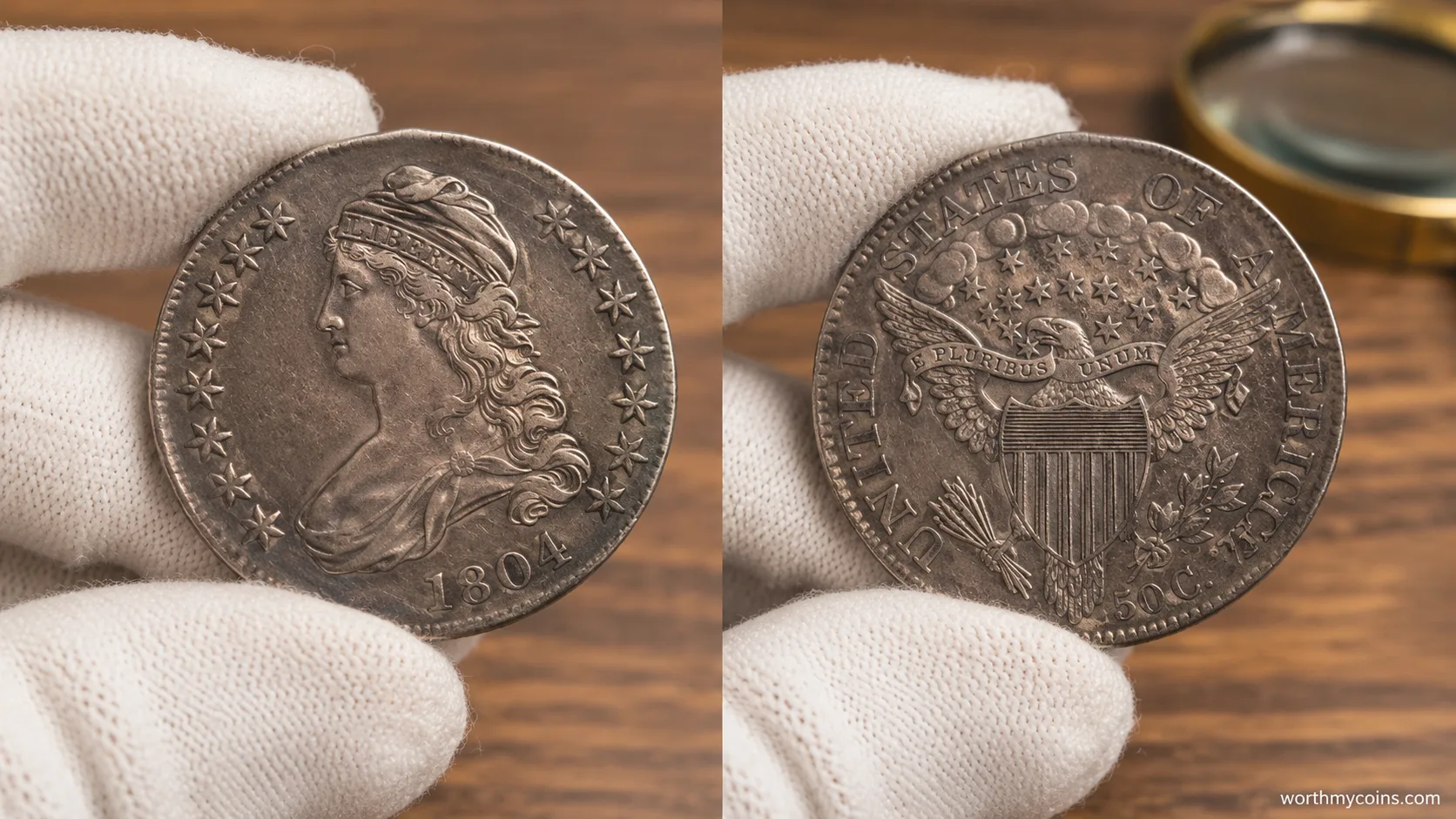
The 1804 dollar is one of the most famous coins in American numismatics, but its history is unusual. Although it carries an 1804 date, the U.S. Mint did not actually strike these dollars in 1804. Some dollars struck earlier were dated 1804, while the famous Class I examples were produced decades later for diplomatic presentation purposes.
The coin features the Draped Bust design, with Liberty on the obverse and a heraldic eagle on the reverse. The 1804 dollar’s combination of rarity, historical story, and extraordinary collector interest has made it one of the best-known American coins.
Its fame illustrates why collectors should never judge a coin simply by its date. Understanding how and when a particular issue was produced can be just as important as the date stamped on the coin.
Morgan Silver Dollar
The Morgan Dollar is one of the most recognizable American coins ever produced. Designed by George T. Morgan, it was struck from 1878 through 1904 and again in 1921.
Collectors who want to explore the series in greater detail can use Morgan Dollar Value Guide: Rare Dates, Mint Errors & Collector Tips to study the dates, mintmarks, errors, and other characteristics that make individual Morgan Dollars especially interesting.
Its obverse features Liberty in profile, while the reverse shows an eagle holding an olive branch and arrows. The design reflects the United States during a period of westward expansion, industrial development, and major changes in the nation’s economy.
Morgan Dollars are also practical for collectors because the series offers a wide range of dates, mintmarks, grades, varieties, and collecting levels. A collector can build a meaningful Morgan Dollar collection without needing to pursue the legendary rarities associated with early U.S. coinage.
1907 Saint-Gaudens Double Eagle
The $20 Saint-Gaudens Double Eagle is widely regarded as one of the masterpieces of American coin design. Sculptor Augustus Saint-Gaudens created the design as part of President Theodore Roosevelt’s effort to improve the artistic quality of U.S. coinage.
The early 20th-century redesign movement produced several enduring classics, and the Saint-Gaudens Double Eagle became one of its defining achievements. The U.S. Mint itself describes the 1907 $20 Double Eagle as one of the most beautiful coins in its history.
Collectors are drawn to the series for both its artistry and its connection to an important period in American numismatic history. The 1907 issues also include different striking characteristics and varieties, making the series especially interesting to advanced collectors.
Indian Head Cent
The Indian Head Cent represents an important transition in American small-denomination coinage. The design was introduced in 1859 and remained in production through 1909.
Collectors interested in building a deeper understanding of this 19th-century series can turn to Indian Head Penny Key Dates: Rare Years and Mint Varieties Collectors Look For for a closer look at the dates and mint varieties that receive the most attention.
Despite its familiar name, the obverse does not depict a Native American person. It portrays Liberty wearing a headdress. The coin’s reverse originally featured a wreath surrounding the denomination, while later issues incorporated additional design changes.
The Indian Head Cent is historically important because it bridges early copper and nickel-based U.S. coinage with the modern era of the Lincoln Cent. The U.S. Mint notes that the Indian Head design appeared from 1859 to 1909, after which Abraham Lincoln became the first president featured on a regular U.S. coin in 1909.
For collectors, the series also offers a broad range of dates and conditions, making it a natural representative of 19th-century American coinage.
Buffalo Nickel
The Buffalo Nickel is one of America’s most distinctive five-cent coins. Produced from 1913 through 1938, it was designed by James Earle Fraser.
For collectors who want to take the next step beyond the basic history of the series, Buffalo Nickel Value Guide: Rare Dates, Mint Errors & Collector Tips provides a useful reference for studying dates, errors, condition, and other factors that can affect collector interest.
The obverse features a Native American portrait, while the reverse depicts an American bison. The design departed from the traditional Liberty-and-eagle approach that had dominated earlier U.S. coinage and helped establish a more distinctly American visual style.
The series is particularly interesting because condition can make identification difficult. Details on the date and reverse lettering can wear heavily on circulated examples, giving collectors plenty of opportunity to learn about strike quality, preservation, and grading.
Mercury Dime
The Mercury Dime, officially known as the Winged Liberty Head Dime, is another landmark of early 20th-century American coin design. It was designed by Adolph A. Weinman and first appeared in 1916.
Collectors who want to examine the series from a value and rarity perspective can continue with Mercury Dime Value Guide: The Rare Coins Every Collector Wants to Find, which provides additional context for identifying the issues that attract strong collector attention.
The coin is easily recognized by Liberty wearing a winged cap on the obverse. The reverse features a fasces flanked by an olive branch and an oak branch.
The Mercury Dime is part of the same remarkable artistic period that produced the Standing Liberty Quarter and Walking Liberty Half Dollar. Weinman also designed the Walking Liberty Half Dollar, making his work particularly influential in American coinage.
The series is popular with both type collectors and specialists who pursue dates, mintmarks, and condition rarities.
Collectors looking for particularly important dates can also consult 1916-D Mercury Dime Value Guide: Rare Key Date, Errors, Mint Marks & Current Value to see why this specific issue receives such close attention from specialists.
Standing Liberty Quarter
The Standing Liberty Quarter was produced from 1916 through 1930 and was designed by Hermon A. MacNeil.
Liberty appears on the obverse stepping through an opening in a wall while holding a shield and olive branch. The reverse depicts an eagle in flight. The design captures the artistic ambitions of early 20th-century U.S. coinage and remains one of the most recognizable quarter designs in American history.
The 1916 issue is particularly important to collectors because of its scarcity relative to later Standing Liberty Quarters. More broadly, the series is valued for its design, historical setting, and the challenge of finding well-preserved examples with strong detail.
Collectors studying the series can also use Standing Liberty Quarter Key Dates: The Rare Issues Collectors Want Most to compare the dates and issues that are especially important when evaluating Standing Liberty Quarters.
Walking Liberty Half Dollar
The Walking Liberty Half Dollar is often considered one of the finest designs ever placed on a circulating U.S. coin. Adolph A. Weinman designed the coin, which was produced from 1916 through 1947.
Collectors who want to explore which examples stand out within this historic half dollar series can continue with Top 10 Walking Liberty Half Dollars Worth Big Money for a closer look at coins that have attracted significant collector interest.
Liberty walks toward the rising sun on the obverse, carrying branches and wrapped in the American flag. The reverse features an eagle perched on a rock with a pine branch.
The design is historically important as well as visually striking. The Walking Liberty Half Dollar was the final circulating U.S. coin to feature Liberty, with 1947 marking the last year Liberty appeared on a circulating American coin before the Franklin Half Dollar introduced Benjamin Franklin in 1948.
The design’s influence extends beyond the original half dollar. It has been revived on modern U.S. Mint products, demonstrating its lasting place in American numismatic art.
Lincoln Cent
The Lincoln Cent is one of the most important coins in American collecting because of its enormous historical and collecting reach.
Collectors who want a broader foundation for studying the series can turn to Lincoln Wheat Penny Value Guide (1909–1958): Prices, Errors & Rare Coins to examine the dates, mintmarks, varieties, errors, and condition factors that shape the collecting landscape.
Introduced in 1909 to commemorate Abraham Lincoln’s 100th birthday, it was the first regular U.S. coin to feature a president. Victor David Brenner designed the Lincoln portrait, which remains one of the longest-running obverse designs in U.S. coinage.
From 1909 through 1958, the reverse displayed two wheat ears, creating the series commonly called the Wheat Cent. Later reverses included the Lincoln Memorial and several designs issued during the 2009 Bicentennial program.
The Lincoln Cent is an excellent example of how a relatively familiar coin can become a major collecting field. Collectors can study dates, mintmarks, varieties, errors, condition, and historical design changes without needing access to extremely rare early federal coins.
How to Build a Collection Around These Coins
Owning every famous coin on this list is unrealistic for most collectors. The better approach is to use the list as a framework for understanding major periods and designs in American coinage.
A collector with a modest budget might begin with an Indian Head Cent, Buffalo Nickel, Mercury Dime, Standing Liberty Quarter, Walking Liberty Half Dollar, or Morgan Dollar. These series provide access to historically important designs at a variety of grades and price levels.
For the great rarities, studying high-quality photographs, auction records, certified examples, and museum collections can still provide valuable experience. Learning how these coins look in different grades also helps collectors recognize why condition can have such a dramatic effect on desirability.
What to Check Before Buying a Classic U.S. Coin
Condition should be one of the first considerations. A rare date with heavy damage is not directly comparable with a carefully preserved, professionally certified example.
Collectors should also examine the date, mintmark, surfaces, design details, and signs of cleaning or alteration. For expensive or particularly rare coins, authentication becomes especially important because valuable classic U.S. coins have attracted counterfeiting and alteration.
It is also useful to compare actual sales of similar coins rather than relying on a single advertised price. Grade, certification, eye appeal, and the exact variety can all affect what a particular coin brings.
Why These Coins Still Matter
These coins collectively show how American coinage developed from the earliest federal issues into the highly artistic designs of the 20th century.
The 1794 Flowing Hair Dollar represents the beginning of federal silver-dollar production. The Morgan Dollar reflects a rapidly industrializing nation, while the Saint-Gaudens Double Eagle demonstrates the artistic ambitions of the early 1900s. The Buffalo Nickel, Mercury Dime, Standing Liberty Quarter, and Walking Liberty Half Dollar show how dramatically American circulating coin designs evolved during that same period.
That combination of history, art, rarity, and collecting opportunity is what makes these coins worthy of a place in the story of American numismatics.
FAQ
What is the most historically important U.S. coin?
The 1794 Flowing Hair Dollar is one of the strongest candidates because it was the first silver dollar struck by the United States Mint. Its early date and extremely limited 1794 production make it an important landmark in federal coinage.
Which classic U.S. coin is best for a new collector?
There is no single best choice, but the Indian Head Cent, Buffalo Nickel, Mercury Dime, Walking Liberty Half Dollar, and Morgan Dollar all provide accessible ways to study important American designs. The right choice depends on budget, collecting interests, and preferred denomination.
Are the most famous U.S. coins also the most valuable?
Not necessarily. Some famous coins are extremely valuable because they are exceptionally rare, but many historically important series contain collectible examples at a wide range of prices. A coin’s individual date, mintmark, grade, rarity, and condition all matter.
Should a collector try to own every coin on this list?
No. A collection does not need to contain every famous rarity to be successful. Studying representative examples from important series can provide a much more practical way to understand American coinage.
References
- United States Mint — History of U.S. Circulating Coins
- United States Mint — Dollar Coins
- United States Mint — The Evolution of Liberty on Coins
- United States Mint — Penny
- United States Mint — Nickel
- United States Mint — Quarter
- United States Mint — Half Dollar
- Professional Coin Grading Service (PCGS) — 1933 Saint-Gaudens Double Eagle
- Professional Coin Grading Service — Four Decades of Marquee PCGS Coins

Narayan Kumar is the Founder and Author of Worth My Coins. She specializes in U.S. coin collecting, with a focus on coin identification, mint errors, grading, rare varieties, and collector education. Her goal is to publish accurate, well-researched, and easy-to-understand guides that help both new and experienced collectors make informed decisions. Every article is created using trusted numismatic references and is written with a commitment to accuracy, transparency, and long-term educational value.