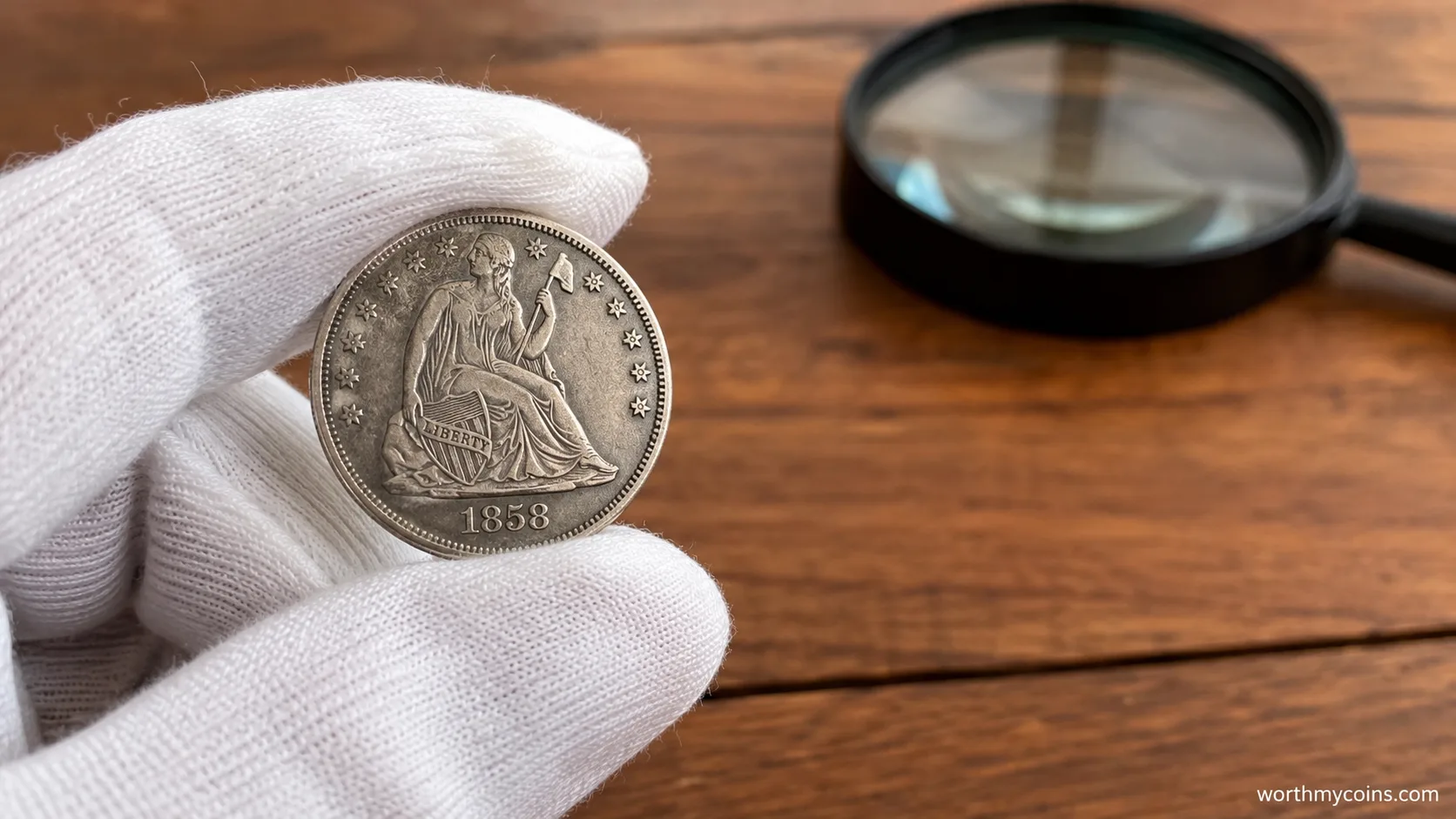
The Shield Nickel was America’s first five-cent coin struck in a copper-nickel alloy, replacing the small silver half dime beginning in 1866. Although the series lasted only until 1883, it presents collectors with a fascinating mix of low-mintage dates, major die varieties, production challenges, and several genuinely scarce issues. While millions were produced overall, not every Shield Nickel is equally common today. Some dates are surprisingly difficult to locate in higher grades, while others are prized because of significant die varieties or extremely low mintages.
Whether you’re building a complete date set or simply trying to determine whether an old five-cent coin deserves a closer look, understanding the key dates, mint varieties, and value factors can help you make informed collecting decisions.
Quick Answer
Several Shield Nickels stand out as the key dates of the series due to low mintages, rarity in high grades, or important varieties. Among the most desirable are:
| Date | Why Collectors Want It |
|---|---|
| 1866 No Rays | First-year major variety |
| 1867 Rays | One-year design subtype |
| 1867 No Rays | Transitional variety |
| 1868 | Low survival in Mint State |
| 1871 | Lower mintage issue |
| 1872 | Scarce in high grades |
| 1873 Closed 3 | Major date variety |
| 1873 Open 3 | Distinct design variety |
| 1877 | Lowest regular circulation mintage |
| 1878 | Extremely low mintage and series key |
Actual market value depends on grade, originality, strike quality, certification, collector demand, and recent auction results.
Understanding the Shield Nickel Series
Designed by James B. Longacre, the Shield Nickel debuted in 1866 as the United States Mint replaced the silver half dime with a new copper-nickel five-cent coin. The change reflected post-Civil War monetary conditions and introduced a denomination that would continue without interruption into the modern era.
The five-cent denomination continued to evolve after the Shield Nickel series ended. Collectors interested in later issues can also explore Buffalo Nickel Value Guide: Rare Dates, Mint Errors & Collector Tips, which examines another iconic U.S. nickel series with important dates and collectible varieties.
The obverse features a large Union shield symbolizing national strength, while the reverse displays the denomination “5” surrounded by stars. Early 1866 and part of the 1867 production included decorative rays between the stars. These rays complicated die production and caused rapid die failures, prompting the Mint to remove them later in 1867.
As a result, the series includes two major design subtypes:
- Rays (1866–1867)
- No Rays (late 1867–1883)
This design change created one of the most important distinctions for Shield Nickel collectors.
Why Some Shield Nickels Are Worth More Than Others
Age alone does not determine a Shield Nickel’s desirability. Collectors typically evaluate rarity, preservation, originality, strike quality, certification, and current market demand before estimating value.
Important considerations include:
- Original mintage
- Estimated surviving population
- Collector demand
- Overall eye appeal
- Surface preservation
- Strike sharpness
- Certified grade
- Original, problem-free surfaces
- Important die varieties
A heavily worn common date may be worth only a modest premium over face value, while the same date in certified Mint State can become dramatically more desirable because high-grade survivors are much scarcer.
Shield Nickel Key Dates Every Collector Should Know
1866 No Rays
The first Shield Nickel struck by the U.S. Mint remains one of the most historically significant coins of the series.
Although production was substantial, demand remains consistently strong because collectors often seek first-year issues. Many examples entered heavy circulation, making attractive Mint State pieces much scarcer than circulated examples.
Key points:
- First year of issue
- First U.S. copper-nickel five-cent coin
- Popular type coin
- Better in fully original condition
1867 Rays
The 1867 Rays variety represents one of the shortest-lived regular production designs in American coinage.
Because the rays caused excessive die cracking and shortened die life, the Mint abandoned the design during the same year. This gives collectors an important one-year subtype that is essential for complete collections.
Finding sharply struck examples with minimal die deterioration can be challenging.
Collectors look for:
- Distinct rays between stars
- Strong shield details
- Original surfaces
- Limited die erosion
1867 No Rays
Later in 1867, the Mint removed the rays while keeping the basic reverse design intact.
Although more plentiful than the Rays subtype, the No Rays issue remains an important transitional coin illustrating how the Mint responded to production problems.
Many advanced collectors acquire both varieties to complete the design transition.
1868 Shield Nickel
Circulated 1868 Shield Nickels remain obtainable for many collectors, but examples certified in higher Mint State grades become significantly more difficult to locate because relatively few survived with exceptional preservation.
Production quality during the early Shield Nickel years often resulted in weak strikes and heavy die wear, making sharply detailed examples particularly attractive.
Collectors typically pay close attention to:
- Shield lines
- Leaf detail
- Reverse stars
- Luster
- Surface originality
1871 Shield Nickel
The 1871 issue combines a relatively modest mintage with lower overall survival compared to several surrounding dates.
While circulated pieces appear regularly in the marketplace, premium-quality certified coins are considerably tougher.
1872 Shield Nickel
The 1872 issue often surprises newer collectors.
Although not always viewed as the absolute key date of the series, high-grade examples become difficult to locate because relatively few survived with exceptional preservation.
Certified examples frequently command significant premiums over circulated specimens due to their scarcity.
1873 Open 3 and Closed 3 Varieties
One of the best-known date varieties in the series occurred in 1873.
The Mint modified the numeral “3” in the date after concerns that the original design resembled an “8.”
This resulted in two collectible varieties.
Closed 3
The original date style features a tighter lower loop on the numeral.
Collectors identify it by comparing the shape of the “3” with reference images from trusted grading services.
Open 3
The revised date displays a wider opening, making the numeral easier to distinguish.
Most complete Shield Nickel collections include both versions because each represents an official design modification rather than an accidental die variety.
1877 Shield Nickel
The 1877 issue is one of the major keys of the entire series.
The 1877 Shield Nickel had one of the lowest regular business-strike mintages of the series, contributing to its long-standing status as one of the key dates sought by collectors.
Even circulated pieces are difficult to locate compared with most earlier dates.
Collectors considering this coin should be cautious, as valuable key dates are sometimes altered or misrepresented. Purchasing certified examples from reputable grading services provides additional confidence in authenticity.
1878 Shield Nickel
For many collectors, the 1878 issue represents the undisputed key date of the entire regular-issue Shield Nickel series.
Only a very small number were struck for circulation, making genuine examples scarce in every grade.
High-grade certified coins are especially difficult to obtain and often appear only occasionally in major auctions.
Unlike more common dates, even well-worn 1878 Shield Nickels receive considerable collector attention simply because of their rarity within the series.
Did Shield Nickels Have Mint Marks?
One aspect of the Shield Nickel series that often surprises new collectors is the absence of mint marks.
Every regular-issue Shield Nickel was struck at the Philadelphia Mint between 1866 and 1883. Since no branch mints produced circulation-strike Shield Nickels, there are no mint mark varieties to collect within the series.
This makes Shield Nickels different from many later U.S. coin series, where collectors often seek coins from Denver (D), San Francisco (S), Carson City (CC), or New Orleans (O).
While there are no mint mark varieties, the series still offers numerous challenges through scarce dates, major design changes, repunched dates, overdates, and die varieties.
Collectors who enjoy identifying mint-made varieties on five-cent coins may also find Jefferson Nickel Error Guide: Rare Errors, Valuable Varieties & Collector Tips helpful for learning how later nickel series developed their own collectible error and variety issues.
Important Shield Nickel Varieties
Although Shield Nickels are not known for a large number of dramatic mint errors, they include several recognized die varieties that have become favorites among specialists.
1867 Rays and No Rays
This is the most important design variety in the entire series.
The Rays subtype was produced only during the early part of 1867 before the Mint eliminated the rays because they caused excessive die failures. Collectors typically include both versions in complete sets.
1873 Open 3 and Closed 3
The date modification introduced in 1873 created another major collectible variety.
The original “Closed 3” was replaced with an “Open 3” that was easier to distinguish from an “8.” Both are recognized by major grading services and are widely collected.
Repunched Dates (RPDs)
Several Shield Nickel dates are known with repunched date varieties, where the date was punched into the die more than once before hardening.
These are collected primarily by variety specialists and should be identified using established attribution references. Magnification and comparison with published diagnostics are essential, as many minor die anomalies can resemble repunching.
Repunched Digits and Minor Die Varieties
The series also includes various doubled punches, misplaced digits, and die polishing characteristics.
While some are recognized by specialist organizations, not every minor die marker carries a significant premium. Collectors should rely on published references and third-party attribution when evaluating potential varieties.
Common Mistakes Collectors Make
Many beginners overlook important details that can significantly affect a Shield Nickel’s desirability and market value.
Assuming Every Old Nickel Is Rare
Shield Nickels are historically important, but not every example is scarce or valuable. Common dates in heavily circulated condition are generally much easier to find than key issues.
Ignoring Surface Problems
Cleaning, polishing, corrosion, scratches, and environmental damage can substantially reduce collector appeal.
Original surfaces are highly prized, particularly on early nickel coinage.
Overlooking Strike Quality
Shield Nickels are well known for uneven strikes.
Weakly struck shield lines or reverse stars are common and should not automatically be mistaken for wear. Learning the difference between strike weakness and circulation wear is an important skill for collectors.
Buying Raw Key Dates Without Experience
The 1877 and 1878 issues are among the most valuable coins in the series.
Because of their desirability, collectors often prefer examples authenticated and graded by respected third-party grading services to reduce the risk of altered or counterfeit coins.
How to Grade a Shield Nickel
Grade is one of the most important factors affecting collector value.
Good (G)
- Heavy overall wear
- Date remains readable
- Shield outline visible
- Many finer design details are worn away
Fine (F)
- Moderate wear
- More shield detail visible
- Reverse stars remain identifiable
- Date is bold and clear
Extremely Fine (XF)
- Light wear on the highest points
- Most shield lines remain visible
- Strong overall detail
- Attractive original surfaces become increasingly important
About Uncirculated (AU)
- Only slight friction on the highest points
- Most mint luster remains
- Excellent detail throughout the design
Mint State (MS)
- No wear from circulation
- Original mint luster
- Surface preservation, strike quality, eye appeal, and contact marks determine the numerical grade.
Professional grading services provide an independent opinion on authenticity and preservation, helping collectors compare examples more confidently, particularly for scarcer dates and higher-grade coins.
Factors That Influence Shield Nickel Values
No single price applies to every Shield Nickel.
Collectors and dealers typically consider a combination of factors, including:
| Value Factor | Why It Matters |
|---|---|
| Date | Some years are significantly scarcer than others. |
| Variety | Rays, No Rays, Open 3, and Closed 3 are major collectible varieties. |
| Grade | Better-preserved coins generally command stronger premiums. |
| Strike | Sharply struck examples are more desirable. |
| Original Surfaces | Coins free of cleaning or damage are preferred. |
| Certification | Authentication by major grading services can increase buyer confidence. |
| Collector Demand | Popular key dates often maintain stronger market interest. |
| Recent Auction Results | Current market conditions influence realized prices. |
Because market conditions change over time, collectors should compare similarly graded certified examples with recent auction results and current dealer inventories instead of relying on a single published price.
Tips for Buying Shield Nickels
Whether purchasing your first example or completing a date set, a careful approach can help avoid costly mistakes.
Many of the same buying principles also apply to later nickel series. How to Tell If Your Buffalo Nickel Is Valuable: 9 Signs Collectors Look For explains the key characteristics collectors examine before determining whether a nickel deserves closer evaluation.
Consider these best practices:
- Learn the major key dates before buying.
- Compare certified examples whenever possible.
- Examine photographs carefully when purchasing online.
- Watch for signs of cleaning or corrosion.
- Use current auction results to understand market trends.
- Buy from reputable dealers and established auction firms.
- Study grading standards before making significant purchases.
Tips for Selling Shield Nickels
If you own Shield Nickels and are considering selling them, preparation can make a meaningful difference.
Before selling:
- Identify the exact date and variety.
- Avoid cleaning the coin.
- Determine whether professional grading is appropriate.
- Compare recent auction records for similar certified examples.
- Obtain offers from more than one reputable dealer when possible.
Rare dates and high-grade examples often perform best when accurately attributed and professionally authenticated.
Frequently Asked Questions
What is the rarest regular-issue Shield Nickel?
The 1878 Shield Nickel is generally recognized as the key date of the regular circulation-strike series because of its extremely low mintage and limited surviving population.
Collectors who enjoy pursuing difficult five-cent pieces often continue with Buffalo Nickel Key Dates and Values: The Coins Every Collector Should Know, which highlights another nickel series featuring several famous low-mintage and conditionally rare issues.
Why are there both Rays and No Rays Shield Nickels?
The rays were removed during 1867 after the U.S. Mint found that the design contributed to excessive die cracking and shortened die life. As a result, both subtypes were produced that year.
Do Shield Nickels have mint marks?
No. Every regular-issue Shield Nickel was struck at the Philadelphia Mint, so the series does not include mint mark varieties.
Are Shield Nickels made of silver?
No. Shield Nickels were struck in a copper-nickel alloy. They replaced the earlier silver half dime but do not contain silver.
Should I clean an old Shield Nickel?
No. Cleaning can permanently damage the original surfaces and significantly reduce collector value. Most collectors prefer coins with natural, untouched surfaces.
Are all Shield Nickels valuable?
Not necessarily. Value depends on the specific date, variety, grade, originality, eye appeal, certification, collector demand, and recent market activity. Common circulated examples are generally more available than key dates or high-grade survivors.
Conclusion
The Shield Nickel may have been produced for less than two decades, but it remains one of the most rewarding classic U.S. coin series to study and collect.
Collectors who continue exploring the history of the U.S. five-cent denomination often move on to Top 10 Jefferson Nickels Worth Money Every Collector Should Know, which introduces notable key dates and valuable issues from the series that followed America’s early nickel designs.Its combination of Civil War-era history, distinctive design, important transitional varieties, and genuinely scarce key dates offers something for every collector, from beginners assembling a first type set to specialists pursuing advanced die varieties.
Learning to recognize the major dates, understand the Rays and No Rays subtypes, identify the Open 3 and Closed 3 varieties, and accurately assess condition will help you make more informed collecting decisions. Since market value depends on far more than age alone, careful grading, originality, certification, and current auction activity should always be considered before buying or selling.
References
The information in this guide is supported by established numismatic organizations and research resources, including:
- United States Mint
- Professional Coin Grading Service (PCGS)
- Numismatic Guaranty Company (NGC)
- American Numismatic Association (ANA)
- Heritage Auctions Auction Archives
- Stack’s Bowers Galleries Auction Archives
- Newman Numismatic Portal
- A Guide Book of United States Coins (“Red Book”), Whitman Publishing

Narayan Kumar is the Founder and Author of Worth My Coins. She specializes in U.S. coin collecting, with a focus on coin identification, mint errors, grading, rare varieties, and collector education. Her goal is to publish accurate, well-researched, and easy-to-understand guides that help both new and experienced collectors make informed decisions. Every article is created using trusted numismatic references and is written with a commitment to accuracy, transparency, and long-term educational value.