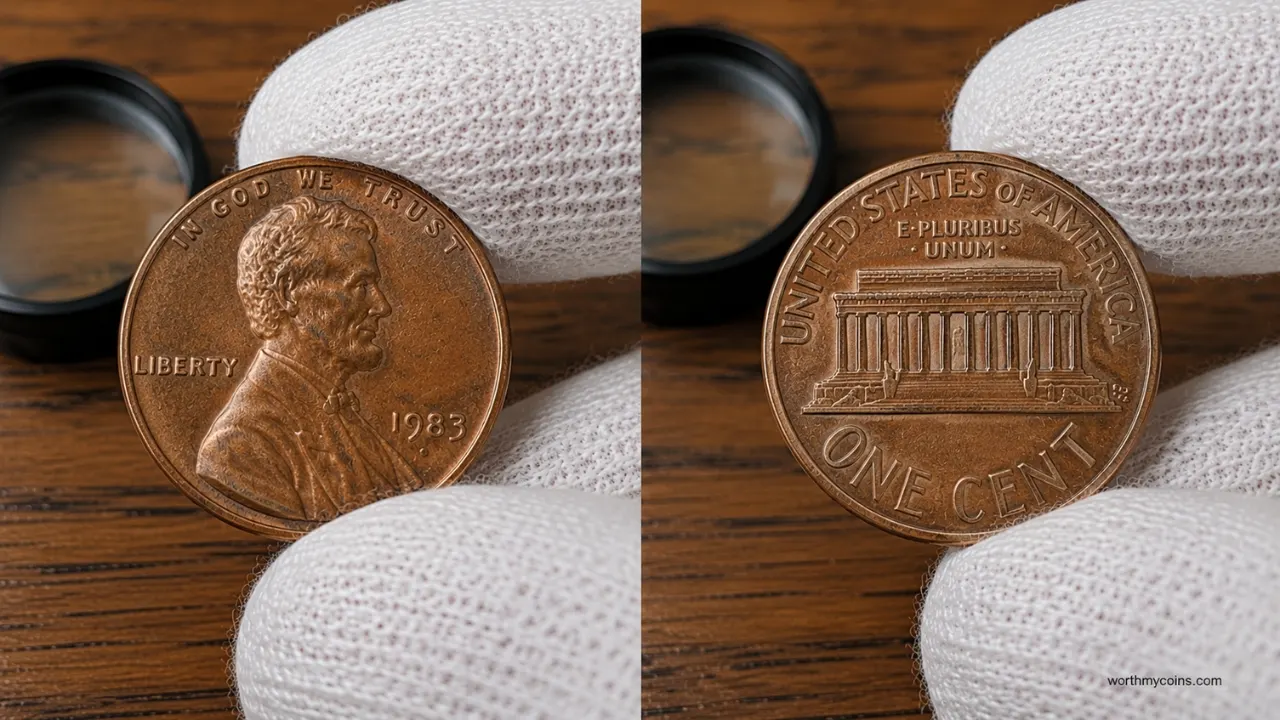
Most Lincoln Memorial pennies are still worth just one cent, but a small number have become favorites among collectors because of rare varieties, mint errors, low-survival high grades, or unusual production characteristics. Since the series was introduced in 1959, billions of these coins have circulated across the United States, making it easy to assume they’re all common. In reality, a careful search can reveal coins that deserve much closer attention.
Whether you’re searching pocket change, sorting through an inherited collection, or building a Lincoln cent set, understanding which Memorial pennies collectors actively seek can help you identify coins that are far more interesting than their face value suggests.
Quick Answer
Most Lincoln Memorial pennies remain common circulation coins. However, certain dates, recognized doubled dies, Close AM and Wide AM varieties, important proof issues, and exceptionally preserved certified examples are highly collectible. Their market value depends on authenticity, grade, rarity, eye appeal, certification, and current collector demand rather than age alone.
Collectors who want to understand the complete history of the Lincoln cent series should also read our Lincoln Wheat Penny Value Guide (1909–1958), where we explain the origins of the series, grading basics, and many of the key principles that continue to apply to later Lincoln cents.
What Is a Lincoln Memorial Penny?
The Lincoln Memorial penny replaced the famous Wheat reverse in 1959, marking the 150th anniversary of Abraham Lincoln’s birth.
Victor David Brenner’s portrait of Lincoln remained on the obverse, while the reverse changed to feature the Lincoln Memorial, designed by Frank Gasparro.
The series continued until 2008, after which the U.S. Mint introduced the Lincoln Bicentennial reverse designs in 2009 before adopting the Union Shield design in 2010.
Although billions were produced, only a relatively small number of Memorial cents possess the characteristics collectors actively seek today.
What Makes a Lincoln Memorial Penny Valuable?
While rarity is an important factor, collector demand also influences long-term desirability. Some Memorial cents remain highly sought after because they complete popular date-and-mint sets, while others are prized for recognized die varieties or exceptional certified preservation. Evaluating both rarity and demand provides a more accurate understanding of why certain coins attract greater collector interest.
Collectors don’t judge a Memorial cent by its date alone.
Collectors evaluate several important factors together when deciding whether a Lincoln Memorial cent deserves closer examination.
| Factor | Why It Matters |
|---|---|
| Date | Certain years include important varieties or lower surviving populations. |
| Mint Mark | Some Philadelphia, Denver, and San Francisco issues are more desirable than others. |
| Variety | Recognized doubled dies and AM varieties often attract significant collector interest. |
| Grade | High-grade certified coins are much scarcer than circulated examples. |
| Original Surfaces | Untouched coins generally appeal more to collectors. |
| Certification | Professional grading provides confidence in authenticity and condition. |
Understanding these characteristics makes it easier to distinguish genuinely collectible Lincoln Memorial cents from ordinary circulation finds.
Top 15 Lincoln Memorial Pennies Worth Money
1. 1972 Doubled Die Obverse Cent
The 1972 Doubled Die Obverse is one of the best-known Lincoln Memorial cent varieties.
Strong doubling appears on several inscriptions, including LIBERTY, IN GOD WE TRUST, and the date. Because the doubling is visible without extreme magnification on many examples, it remains one of the most popular doubled die varieties among collectors.
Collectors should remember that genuine doubled dies differ from machine doubling, which is much more common and generally does not carry the same collector appeal.
2. 1992 Close AM Cent
The 1992 Close AM variety is another highly recognized Lincoln Memorial cent.
On this variety, the letters A and M in AMERICA are unusually close together compared with the normal circulation design for that year.
Because the variety was discovered after entering circulation, authenticated examples continue to receive strong collector interest.
Proper identification requires careful comparison with trusted reference photographs because normal circulation strikes can appear similar to genuine varieties at first glance.
Why Collectors Love Variety Coins
Many of the most desirable Lincoln Memorial cents are valuable because of recognized die varieties rather than extremely low mintages.
Unlike damage that occurs after a coin leaves the Mint, true die varieties originate during the die-making process and can be verified through established numismatic references.
Learning to distinguish genuine varieties from post-mint damage is one of the most valuable skills a collector can develop.
Readers interested in another famous Lincoln cent rarity should also read our 1909-S VDB Lincoln Wheat Penny Value Guide, where we explain why first-year key dates remain among the most desirable coins in American numismatics.
3. 1995 Doubled Die Obverse Cent
The 1995 Doubled Die Obverse is one of the most widely collected modern Lincoln cent varieties.
Unlike some doubled dies that require magnification, many genuine examples display noticeable doubling on LIBERTY and other obverse lettering, making them accessible to beginning collectors.
Because millions of 1995 cents remain in circulation, many collectors still examine pocket change hoping to find this well-known variety.
4. 1998 Wide AM Cent
The 1998 Wide AM variety is another coin that collectors frequently search for.
Its distinguishing feature is the noticeably wider spacing between the letters A and M in AMERICA on the reverse. Although subtle at first glance, the difference becomes much easier to recognize after comparing authenticated examples.
In the next section, we’ll continue with the remaining Lincoln Memorial pennies on the list, including famous doubled dies, Wide AM varieties, important proof issues, grading considerations, and practical tips for identifying coins that collectors still actively hunt today.
5. 1999 Wide AM Cent
The 1999 Wide AM variety is considered one of the most desirable Memorial cent discoveries from the late 1990s.
Normally, circulation-strike 1999 cents were produced with the Close AM reverse. A small number, however, were accidentally struck using a proof-style reverse with noticeably wider spacing between the letters A and M in AMERICA.
Because relatively few authenticated examples have been confirmed, collectors continue searching bank rolls and pocket change for this popular variety.
6. 1983 Doubled Die Reverse Cent
The 1983 Doubled Die Reverse (DDR) is another important Lincoln Memorial variety.
Unlike the famous 1972 doubled die that appears on the obverse, this variety shows doubling on parts of the reverse design, including lettering associated with the Lincoln Memorial.
Collectors often confuse true doubled dies with machine doubling, so authentication is recommended whenever significant doubling is suspected.
7. 1984 Doubled Ear Cent
Among Lincoln Memorial cents, few varieties are easier for beginners to remember than the 1984 Doubled Ear.
The doubling appears around Lincoln’s ear, creating what looks like an extra earlobe under magnification. Because the variety is both distinctive and well documented, it remains one of the most searched-for modern Lincoln cents.
Readers interested in understanding how genuine mint-made varieties differ from ordinary damage should also read our How to Tell If Your Buffalo Nickel Is Valuable: 9 Signs Collectors Look For, where we explain how collectors evaluate authenticity, preservation, and rarity before determining whether a coin deserves closer attention.
8. 1992-D Close AM Cent
The 1992-D Close AM is even scarcer than many collectors expect.
Like the Philadelphia version, this variety resulted from the use of the wrong reverse design. The unusually close spacing between the A and M in AMERICA is the primary identifying feature.
Because normal 1992-D cents are extremely common, collectors should compare any suspected example with reliable reference photographs before assuming they’ve discovered the variety. Professional authentication is recommended for any promising coin.
9. 1990-S No S Proof Cent
One of the rarest Lincoln Memorial proof varieties is the 1990-S No S Proof Cent.
Proof cents struck at the San Francisco Mint should display an S mint mark. On a very small number of proof coins, the mint mark was omitted because the proof die lacked the “S” punch.
Since these coins were issued only in proof sets, any example found outside its original packaging deserves careful examination by a professional grading service.
10. High-Grade Early Memorial Cents (1959–1964)
Not every valuable Memorial cent is an error or variety.
Early Memorial cents from the first years of the series can become surprisingly desirable when preserved in exceptional Mint State grades with full original red color.
Although millions were struck, very few survive with flawless surfaces after decades of handling, making certified gem examples much more difficult to locate than circulated coins.
Why Grade Matters More Than Many Collectors Realize
Two identical Lincoln Memorial cents can have dramatically different collector appeal simply because of their condition.
Professional grading considers:
| Grading Factor | Why It Matters |
|---|---|
| Wear | Less wear generally increases desirability. |
| Original Red Color | Full original mint color is preferred. |
| Strike Quality | Sharply struck details improve eye appeal. |
| Surface Preservation | Fewer contact marks usually increase collector demand. |
| Certification | Authenticated grades provide greater confidence for buyers. |
Many Memorial cents become especially desirable only when they achieve high certified Mint State grades, even if the date itself is relatively common.
Common Mistakes New Collectors Make
Many valuable Memorial cents are overlooked because beginners focus only on the date.
Some common mistakes include:
- Ignoring the spacing of the A and M on the reverse.
- Confusing machine doubling with genuine doubled dies.
- Cleaning coins before having them evaluated.
- Assuming every old penny is valuable.
- Believing online asking prices instead of reviewing certified auction results.
Collectors who understand how varieties, grading, and authenticity work are far more likely to recognize genuinely collectible Lincoln Memorial cents.
In the final section, we’ll cover the remaining five coins in the list, answer the most frequently asked questions, provide buying and selling tips, and finish with trusted numismatic references.
11. 2000 Wide AM Cent
The 2000 Wide AM is the third major circulation-strike Wide AM variety that collectors actively search for.
Like the 1998 and 1999 varieties, this coin was struck using a reverse design intended for proof coins. The wider spacing between the letters A and M in AMERICA is the easiest identifying feature.
Because these coins entered circulation unnoticed, Collectors continue searching bank rolls and circulation finds in hopes of discovering an authentic example. Authentication is recommended for any suspected discovery.
12. 1960 Small Date Cent
The 1960 Small Date is one of the earliest and most recognized date varieties in the Lincoln Memorial series.
Both Philadelphia and Denver issues exist with different date styles, and collectors often compare the shape of the numerals to distinguish Small Date from Large Date varieties. Although many examples are common, high-grade certified coins remain desirable for registry collectors.
13. 1970-S Small Date Cent
Another important date variety is the 1970-S Small Date.
Collectors distinguish it from the more common Large Date by carefully examining the shape and alignment of the numerals in the date. Because the differences can be subtle, comparing the coin with trusted reference images is recommended before drawing conclusions.
14. 1969-S Doubled Die Obverse Cent
The 1969-S Doubled Die Obverse is one of the most famous Lincoln cent varieties ever produced.
Strong doubling appears on the obverse lettering and date, making genuine examples highly desirable. Since counterfeit and altered coins have appeared over the years, professional authentication is considered essential before buying or selling a suspected example.
15. Certified Full Red Memorial Cents
The final entry isn’t a single date but a category that many collectors, especially beginners, often overlook.
Lincoln Memorial cents that retain their original Full Red (RD) color in exceptionally high Mint State grades are often much scarcer than circulated examples. Registry-set collectors actively pursue these coins because pristine survivors become increasingly difficult to locate as the years pass.
A common date in average condition may have little premium, while the same date certified in a top Mint State grade with original red surfaces can attract far greater collector demand.
Tips for Identifying Valuable Lincoln Memorial Pennies
If you believe you’ve found an important variety, avoid making conclusions from a single photograph or online listing. Compare your coin with images published by recognized numismatic references and consider professional authentication for varieties that appear to match documented diagnostics.
Before assuming you’ve found a valuable coin, work through this simple checklist:
- Verify the date and mint mark.
- Look for recognized doubled dies or AM varieties.
- Compare the coin with reliable reference photographs.
- Avoid cleaning the coin.
- Examine the color and surface preservation.
- Consider professional grading if the coin appears to be an important variety or exceptionally well preserved.
Following this checklist can help you identify coins that deserve further research while avoiding common mistakes that lead collectors to overestimate ordinary cents.
Frequently Asked Questions
Are all Lincoln Memorial pennies worth more than face value?
No. The vast majority remain common circulation coins. Only specific varieties, proof errors, scarce issues, and exceptionally preserved certified examples typically command strong collector interest.
What is the easiest valuable Memorial cent to recognize?
Many collectors begin by searching for the 1972 Doubled Die Obverse because the doubling is often visible without specialized equipment. The 1995 Doubled Die Obverse is another popular variety for beginners.
What are Close AM and Wide AM varieties?
These varieties refer to the spacing between the letters A and M in AMERICA on the reverse. Certain years accidentally received the wrong reverse design, creating collectible varieties that specialists actively search for.
Should I clean an old penny before having it evaluated?
No. Cleaning can permanently alter a coin’s surfaces and often reduces collector appeal. Even if a coin appears dirty, it is generally better to leave it in its original condition until it can be evaluated.
Is professional grading worth it?
Professional grading is often worthwhile if a coin appears to be:
- A recognized doubled die
- A Close AM or Wide AM variety
- A proof error
- An exceptionally high-grade Mint State example
- A coin with potentially significant collector demand
Conclusion
The Lincoln Memorial series proves that valuable coins aren’t limited to the earliest years of the Lincoln cent. From famous doubled dies and Close AM varieties to elusive Wide AM reverses and rare proof errors, many Memorial cents continue to reward collectors who know what to look for.
Rather than focusing only on a penny’s age, examine its date, mint mark, variety, surface preservation, and overall condition before estimating its collector appeal. A careful inspection backed by reliable references and professional authentication, when appropriate, offers the best chance of identifying a truly collectible Lincoln Memorial cent.
References
The information in this guide is based on recognized numismatic resources, including:
- United States Mint
- Professional Coin Grading Service (PCGS)
- Numismatic Guaranty Company (NGC)
- American Numismatic Association (ANA)
- Heritage Auctions
- Stack’s Bowers Galleries
- Newman Numismatic Portal
- APMEX Learning Center (Lincoln cent varieties)

Narayan Kumar is the Founder and Author of Worth My Coins. She specializes in U.S. coin collecting, with a focus on coin identification, mint errors, grading, rare varieties, and collector education. Her goal is to publish accurate, well-researched, and easy-to-understand guides that help both new and experienced collectors make informed decisions. Every article is created using trusted numismatic references and is written with a commitment to accuracy, transparency, and long-term educational value.