The Barber Dime series has remained one of the cornerstones of classic U.S. coin collecting for more than a century. Struck between 1892 and 1916, these silver dimes are admired for their elegant design, historical significance, and the challenge of finding well-preserved examples. While many Barber Dimes carry value simply because of their silver content and age, a select group stands out as true collector favorites thanks to their rarity and long-established demand.
Whether you’re sorting through an inherited collection or building a Barber Dime set from scratch, understanding which dates deserve special attention can help you make smarter collecting decisions. This guide highlights ten Barber Dimes that continue to attract serious interest from collectors in 2026.
Quick Answer
The most desirable Barber Dimes typically combine low mintages, limited surviving populations, strong collector demand, and high-grade preservation. While every Barber Dime has historical appeal, only a handful consistently rank among the key dates that collectors actively pursue.
Collectors interested in learning about another iconic U.S. dime series should also read our Mercury Dime Value Guide: The Rare Coins Every Collector Wants to Find, where we explain the key dates, grading standards, and collecting strategies for one of America’s most popular silver dime series.
What Makes a Barber Dime Valuable?
Not every Barber Dime commands the same level of collector interest.
Experienced collectors evaluate several factors together before deciding whether a Barber Dime deserves closer examination.
| Factor | Why It Matters |
|---|---|
| Date | Certain years had much lower mintages or fewer surviving examples. |
| Mint Mark | Coins from specific mints are considerably scarcer. |
| Condition | Well-preserved Barber Dimes are much harder to find today. |
| Original Surfaces | Collectors strongly prefer coins that have not been cleaned. |
| Certification | Professional grading increases confidence in authenticity and grade. |
| Collector Demand | Popular key dates remain highly sought after year after year. |
Rather than relying on age alone, collectors evaluate the combination of these characteristics when estimating a Barber Dime’s collector appeal.
Top 10 Barber Dimes Worth Money
1. 1894-S Barber Dime
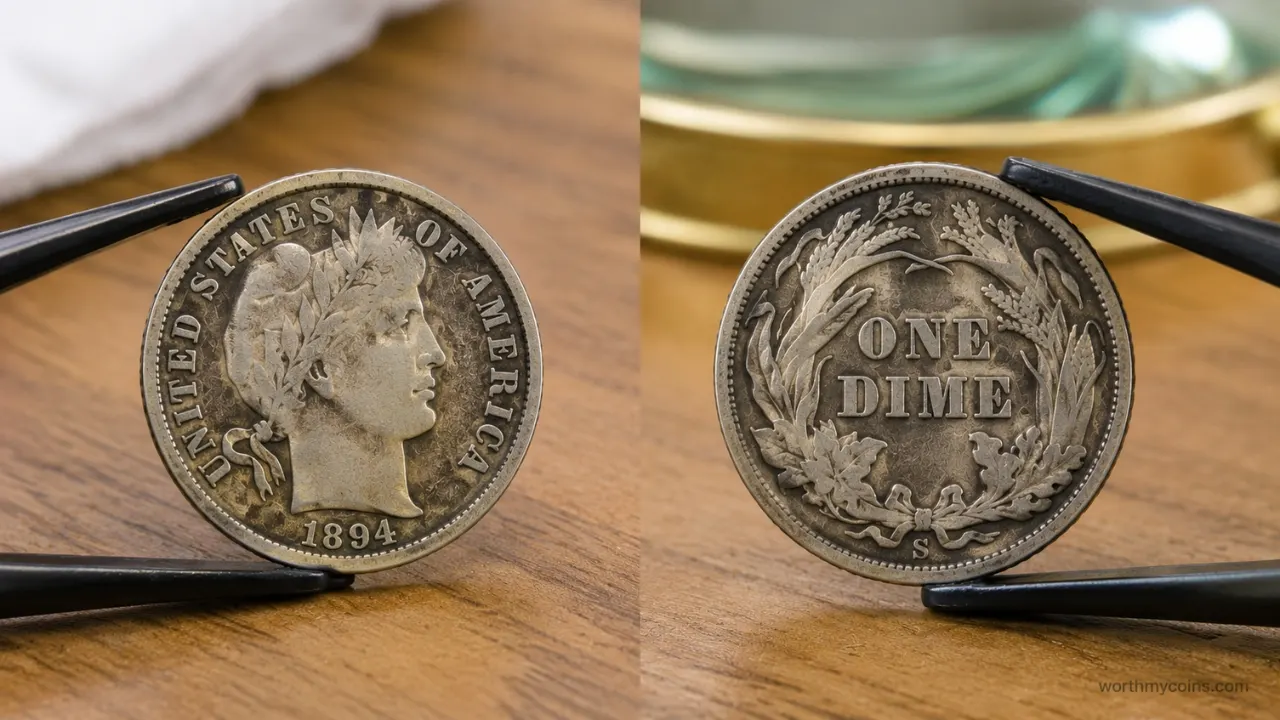
The 1894-S Barber Dime is widely regarded as the most famous and elusive coin in the entire Barber Dime series.
Only 24 pieces were struck, and fewer than a dozen are believed to survive today. Because of its extraordinary rarity, it is considered one of the greatest treasures in American numismatics.
Most collectors will never encounter one in person, but it remains the benchmark against which every other Barber Dime is measured.
2. 1895-O Barber Dime
The 1895-O is another legendary key date.
Although more coins were produced than the famous 1894-S, surviving examples in attractive condition remain exceptionally scarce. Many entered circulation immediately after release, leaving relatively few coins with strong remaining detail.
Assembling a complete Barber Dime collection without this issue is nearly impossible, making it one of the first dates advanced collectors search for.
Why Key Dates Matter
Every major U.S. coin series includes a handful of issues that are significantly more difficult to acquire than the rest.
These are commonly known as key dates.
Key dates usually become important because they combine:
- Low mintages
- Heavy circulation
- Limited surviving populations
- Long-term collector demand
Even heavily circulated examples of true key dates often receive considerable attention because collectors need them to complete date-and-mint collections.
3. 1896-O Barber Dime
The 1896-O is another important New Orleans issue.
Although it is not as famous as the 1894-S or 1895-O, collectors recognize it as one of the tougher Barber Dimes to locate in higher grades. Coins with original surfaces and strong eye appeal are especially desirable.
4. 1901-S Barber Dime
The 1901-S continues to rank among the better-known semi-key dates of the series.
Collectors often spend years searching for problem-free examples b ecause many surviving coins experienced heavy circulation before being saved.
Condition becomes especially important for this issue, as sharply preserved examples are much scarcer than worn specimens.
Readers interested in another famous key-date U.S. dime should also read our 1916-D Mercury Dime Value Guide: Rare Key Date, Errors, Mint Marks & Current Value, where we explain how rarity, authentication, and grading influence one of the most sought-after dimes ever produced.
5. 1903-S Barber Dime
The 1903-S remains another favorite among Barber Dime specialists.
Although examples can occasionally be found in circulated grades, attractive original coins become increasingly difficult to locate as condition improves.
Collectors evaluating this issue typically pay close attention to:
- Original surfaces
- Strike quality
- Remaining detail
- Eye appeal
- Professional certification
These characteristics often have a greater impact on collector demand than age alone.
Why Certification Is Important
Professional certification can also make it easier to compare similar Barber Dimes by providing a standardized assessment of authenticity and condition. This consistency helps buyers and sellers evaluate key dates using a common grading standard.
Many Barber Dimes are now well over a century old.
Because key-date Barber Dimes are widely collected, professional authentication has become especially important for scarcer issues.
Professional grading services provide several important benefits for collectors, including:
- Confirming authenticity
- Assigning a standardized grade
- Detecting cleaning or alterations
- Improving buyer confidence
- Making market comparisons easier
Certified examples generally provide greater peace of mind for both buyers and sellers, particularly when purchasing scarce Barber Dimes.
6. 1905-O Barber Dime
The 1905-O Barber Dime is another New Orleans issue that receives steady attention from collectors.
While circulated examples appear on the market from time to time, coins with sharp details and original surfaces become increasingly scarce in higher grades. As with many Barber Dimes, preservation plays a much larger role than age alone.
Collectors often compare multiple certified examples before deciding which coin best fits their collection.
7. 1913-S Barber Dime
The 1913-S is one of the later issues in the Barber Dime series, yet it remains a challenging coin to locate in premium condition.
Many surviving examples saw years of circulation before collectors recognized their importance, making Mint State coins considerably scarcer than worn examples.
When evaluating this date, specialists often examine:
- Strike quality
- Surface preservation
- Original luster
- Eye appeal
- Certification
A well-preserved example is far more desirable than one with heavy wear or evidence of cleaning.
8. 1915-S Barber Dime
The 1915-S Barber Dime represents one of the better semi-key issues from the final years of the series.
Although examples can still be found, attractive coins with natural surfaces and strong detail are much harder to acquire.
Experienced collectors generally avoid cleaned specimens and instead look for coins that retain their original appearance, even if they show honest circulation wear.
Why Original Surfaces Matter
Many Barber Dimes have survived for well over a century.
Unfortunately, some were polished or cleaned in an attempt to improve their appearance.
Professional graders generally look for:
| Surface Characteristic | Why It Matters |
|---|---|
| Original Color | Indicates the coin has not been improperly altered. |
| Natural Toning | Often preferred by collectors when genuine. |
| Cleaning Marks | Can reduce collector appeal. |
| Contact Marks | Fewer marks generally improve eye appeal. |
| Overall Eye Appeal | Strong visual quality often increases desirability. |
Original surfaces are one reason certified Barber Dimes often receive stronger collector interest than cleaned examples.
9. 1916 Barber Dime
The 1916 Barber Dime marks the final year of the series before the introduction of the Mercury Dime.
Although not the rarest Barber Dime, its historical importance makes it an essential addition for many collectors who enjoy completing both the Barber and Mercury Dime series.
Because this issue represents the end of an era, certified high-grade examples remain especially attractive.
Readers interested in the coin that replaced the Barber Dime should also read our 1942/41 Mercury Dime Value Guide: Rare Overdate Error, Mint Marks & Current Prices, which explains one of the most famous Mercury Dime varieties recognized by collectors today.
10. 1892 Barber Dime
The 1892 Barber Dime deserves recognition as the first regular issue of the series.
Although it is generally more available than several key dates discussed above, first-year issues continue to hold lasting appeal among collectors because of their historical significance.
Many collectors enjoy pairing the first-year 1892 issue with the final-year 1916 coin as a way of representing the complete lifespan of the Barber Dime series.
How Condition Changes Collector Demand
Even within the same date and mint mark, two Barber Dimes can attract very different levels of collector interest.
Professional grading considers several important factors:
| Grading Factor | Why Collectors Care |
|---|---|
| Amount of Wear | Less wear usually increases desirability. |
| Strike Quality | Sharper details are preferred. |
| Surface Preservation | Original surfaces generally receive stronger interest. |
| Eye Appeal | Attractive coins often command stronger demand. |
| Certification | Authentication provides confidence for buyers and sellers. |
This explains why certified Mint State Barber Dimes often attract much stronger collector interest than heavily circulated examples of the same date and mint mark.
Common Mistakes New Collectors Make
Many beginning collectors unintentionally make mistakes when evaluating Barber Dimes, particularly when assessing rarity and condition.
Some of the most common include:
Cleaning the Coin
Cleaning can permanently alter a coin’s original surfaces and often reduces collector interest.
Assuming Every Barber Dime Is Extremely Rare
Although every Barber Dime has collectible value, rarity varies considerably depending on the date, mint mark, and condition.
Ignoring Professional Certification
Key dates are sometimes altered or misidentified. Certification provides an independent assessment of authenticity and grade.
Judging Value Only by Online Listings
Experienced collectors place greater weight on documented auction records and certified sales because they reflect completed market transactions rather than seller expectations.
Collectors who enjoy studying the complete Mercury Dime series should also read our Most Valuable Mercury Dimes Worth Money: 15 Rare Coins Every Collector Should Know, which highlights many of the key dates and important varieties that continue to attract collector demand.
Frequently Asked Questions
Are all Barber Dimes valuable?
Every Barber Dime has collectible appeal because the series was struck between 1892 and 1916 and contains 90% silver. However, not every date is considered rare. Coins with key dates, scarce mint marks, original surfaces, and strong grades are generally the most desirable to collectors.
Which Barber Dime is the rarest?
The 1894-S Barber Dime is widely regarded as the rarest regular Barber Dime. Only 24 pieces were struck, and fewer than a dozen examples are believed to survive today, making it one of the greatest rarities in U.S. numismatics.
Where is the mint mark on a Barber Dime?
On Barber Dimes, the mint mark appears on the reverse beneath the wreath, directly below the denomination ONE DIME. Coins struck in Philadelphia do not carry a mint mark, while Denver (D), New Orleans (O), and San Francisco (S) issues do.
Should I clean a Barber Dime?
No.
Cleaning can permanently alter a coin’s original surfaces and reduce collector demand. Even lightly cleaned coins often sell for less than comparable examples with natural surfaces.
Does professional grading matter?
Yes.
Professional grading is especially valuable for Barber Dimes because many important dates have significant value differences based on condition. Certification also confirms authenticity and gives buyers greater confidence when purchasing key dates.
Can circulated Barber Dimes still be valuable?
Absolutely.
Many key-date Barber Dimes remain highly collectible even with moderate circulation wear. Although Mint State examples are generally more desirable, rarity and collector demand often outweigh condition alone for the scarcest issues.
Tips for Buying and Selling Barber Dimes
When evaluating a higher-value Barber Dime, compare multiple certified examples whenever possible. Small differences in preservation, eye appeal, and originality can significantly influence long-term collector interest.
Whether you’re adding a Barber Dime to your collection or preparing to sell one, a careful approach can help you make informed decisions.
Consider these best practices:
- Buy certified key dates whenever possible.
- Compare recent auction results rather than relying on asking prices.
- Avoid cleaned or altered coins.
- Purchase from reputable coin dealers or established auction firms.
- Store valuable coins in protective holders to preserve their original surfaces.
Collectors interested in exploring additional classic U.S. silver dimes should also read our Most Valuable Mercury Dimes Worth Money: 15 Rare Coins Every Collector Should Know, where we cover other famous key dates and collector favorites from the series that succeeded the Barber Dime.
Conclusion
Barber Dimes remain among the most respected classic U.S. coins because they combine history, artistry, and genuine collecting challenges. While every Barber Dime represents an important piece of American coinage, certain dates have earned legendary status because of their scarcity, survival rates, and lasting collector demand.
If you discover a Barber Dime, don’t judge it solely by its age. Instead, examine the date, mint mark, condition, originality, and overall eye appeal. These factors work together to determine whether a coin is simply an interesting collectible or a key-date rarity that deserves professional authentication.
Whether you’re searching an inherited collection or expanding a long-term set, learning how collectors evaluate important Barber Dimes can help you make more informed collecting decisions.
References
The information in this guide is based on recognized numismatic references and industry resources, including:
- Newman Numismatic Portal
- United States Mint
- Professional Coin Grading Service (PCGS)
- Numismatic Guaranty Company (NGC)
- American Numismatic Association (ANA)
- Heritage Auctions
- Stack’s Bowers Galleries

Narayan Kumar is the Founder and Author of Worth My Coins. She specializes in U.S. coin collecting, with a focus on coin identification, mint errors, grading, rare varieties, and collector education. Her goal is to publish accurate, well-researched, and easy-to-understand guides that help both new and experienced collectors make informed decisions. Every article is created using trusted numismatic references and is written with a commitment to accuracy, transparency, and long-term educational value.