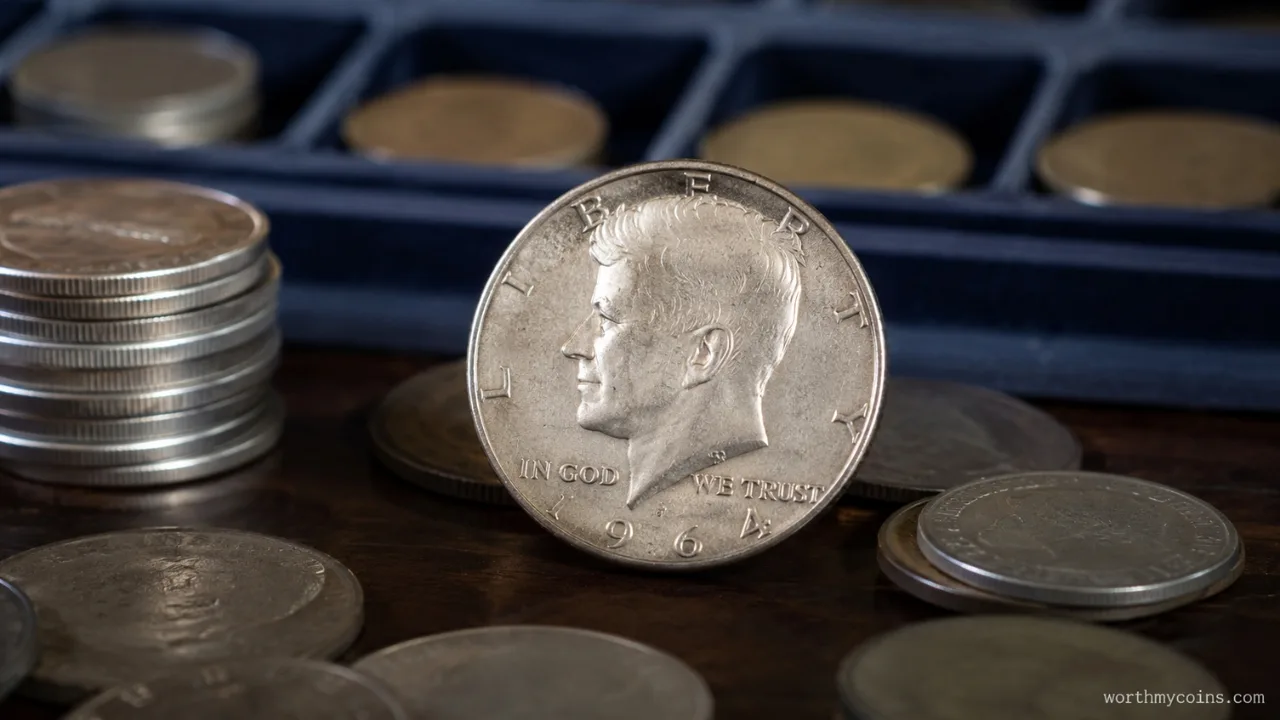
The Kennedy Half Dollar has remained one of America’s most recognizable coins since its debut in 1964. Created to honor President John F. Kennedy shortly after his assassination, the coin quickly became both a circulating denomination and a cherished collectible. Today, collectors search Kennedy Half Dollars for silver content, key dates, mint errors, and high-grade examples that may carry premiums above face value.
If you’re trying to determine the value of a Kennedy Half Dollar, it’s important to understand that not every coin is rare or valuable. While millions have been produced over the decades, certain silver issues, lower-mintage collector editions, and verified mint varieties are significantly more desirable than common circulation strikes. A coin’s value ultimately depends on its date, mint mark, silver content, condition, originality, authentication, and current collector demand.
Whether you recently found a Kennedy Half Dollar or already have one in your collection, learning how to identify it correctly is the best place to start. This guide covers the key dates, mint marks, silver issues, grading basics, and the factors collectors consider when evaluating these coins.
The History Behind the Kennedy Half Dollar
Following the assassination of President John F. Kennedy on November 22, 1963, the United States moved quickly to commemorate the nation’s 35th president with a new circulating coin. Congress approved replacing the Franklin Half Dollar, and the first Kennedy Half Dollars entered circulation in 1964.
The obverse features a portrait of President Kennedy designed by Chief Engraver Gilroy Roberts, while the reverse displays the Presidential Seal created by Assistant Engraver Frank Gasparro. The design has remained largely unchanged, making the series one of the longest-running modern U.S. coin designs.
The first year of issue attracted tremendous public interest. Many Americans saved the new coins as keepsakes, resulting in relatively few entering everyday circulation. This collector demand continues today, especially for early silver issues and well-preserved examples.
Kennedy Half Dollar Specifications
| Specification | Details |
|---|---|
| Designer (Obverse) | Gilroy Roberts |
| Designer (Reverse) | Frank Gasparro |
| First Year Issued | 1964 |
| Denomination | Half Dollar |
| Country | United States |
| Diameter | 30.61 mm |
| Weight (1964 Silver) | 12.50 grams |
| Composition (1964) | 90% Silver, 10% Copper |
| Composition (1965–1970) | 40% Silver, clad outer layers bonded to a silver-copper core |
| Composition (1971–Present Circulation) | Copper-Nickel Clad |
| Edge | Reeded |
One of the most important factors when identifying a Kennedy Half Dollar is determining whether it contains silver. Only certain years were struck for circulation with silver, while most later circulation coins use a copper-nickel clad composition.
How to Identify a Kennedy Half Dollar
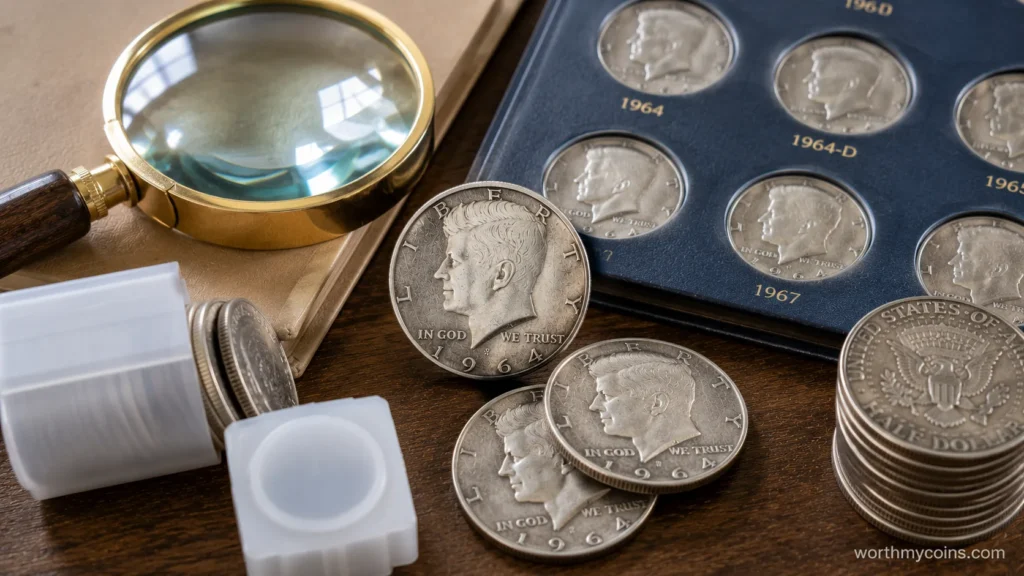
Before researching value, confirm the coin’s date, mint mark, edge composition, and overall condition. These details provide the foundation for accurate identification.
Correct identification begins by examining several key characteristics.
Obverse Design
The front of the coin features a left-facing portrait of President John F. Kennedy. “LIBERTY” appears around the upper rim, while the date is positioned below the portrait. The national motto “IN GOD WE TRUST” is split across the neck truncation.
Reverse Design
Most Kennedy Half Dollars feature the Presidential Coat of Arms with a heraldic eagle holding arrows and an olive branch. Around the rim are the inscriptions “UNITED STATES OF AMERICA” and “HALF DOLLAR.”
Beginning in 1975 and continuing through 1976, special Bicentennial Kennedy Half Dollars display a reverse designed by Seth G. Huntington featuring Independence Hall to commemorate the 200th anniversary of American independence.
Edge Examination
Checking the edge is a quick way to estimate whether a coin contains silver.
- Solid silver-colored edge generally indicates a silver issue.
- A visible copper stripe usually indicates a modern copper-nickel clad coin.
While this simple observation is useful, always confirm the date before making conclusions about composition.
Kennedy Half Dollar Mint Marks
Mint marks help identify where a coin was produced and may influence collector demand.
On most Kennedy Half Dollars, the mint mark appears on the obverse above the date (beginning in 1968). Earlier issues have different mint mark placements depending on the year.
| Mint | Mint Mark | Notes |
| Philadelphia | None (1964–1979), P (1980 onward) | Largest producer |
| Denver | D | Regular circulation issues |
| San Francisco | S | Primarily Proof and Special Mint Set issues after 1964 |
| West Point | W | Limited commemorative and collector releases |
Although mint marks are important, they should always be considered together with the date, strike type, and condition when evaluating collectibility.
Understanding Silver Kennedy Half Dollars
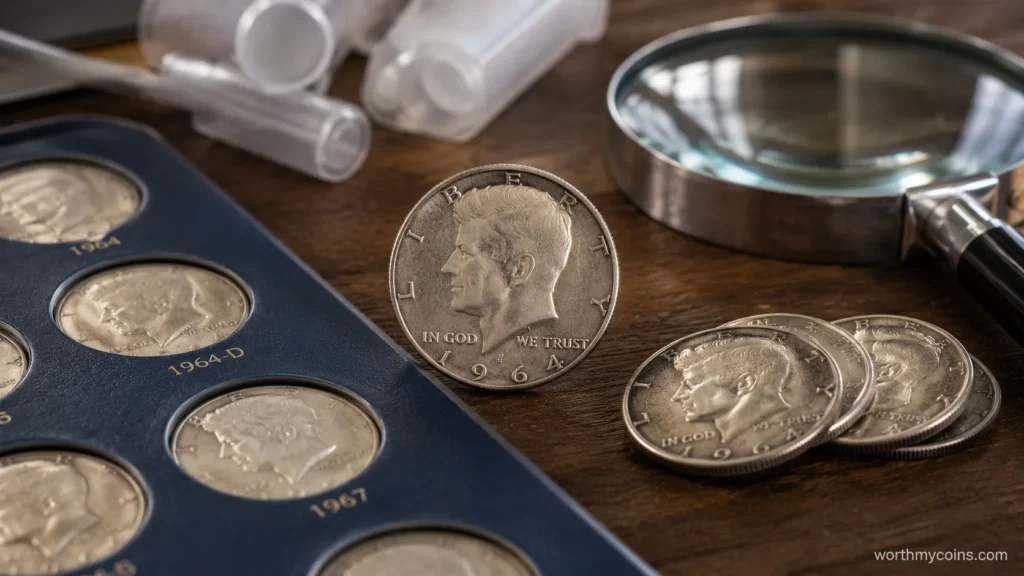
Silver content is one of the biggest reasons collectors seek Kennedy Half Dollars.
1964 Issues
Every regular-issue Kennedy Half Dollar struck in 1964 contains 90% silver. These coins remain popular because they were the only business-strike Kennedy Half Dollars produced with this silver composition.
1965–1970 Issues
From 1965 through 1970, the United States reduced the silver content to 40%. These coins still contain silver but differ significantly from the 1964 composition.
The 1970-D Kennedy Half Dollar was issued only in Mint Sets and did not enter general circulation, making it an important date for many collectors.
1971 and Later
Beginning in 1971, standard circulation Kennedy Half Dollars were produced using copper-nickel clad composition with no silver content.
However, certain collector editions and special proof sets issued in later years were struck in silver. These should not be confused with regular circulation coins.
What Determines Kennedy Half Dollar Value?
Many factors influence the collectible value of a Kennedy Half Dollar beyond its face value.
Date and Issue Type
Some years were produced in larger numbers than others. In addition, circulation strikes, proof coins, Mint Set issues, and commemorative releases can have different levels of collector demand.
Silver Content
Coins containing 90% or 40% silver generally carry intrinsic bullion value in addition to any collector premium. Since precious metal prices fluctuate, silver content can influence the minimum market value of these coins.
Condition
Condition remains one of the most important pricing factors. Coins showing minimal wear, strong luster, and few contact marks are generally more desirable than heavily circulated examples.
Original Surfaces
Collectors prefer coins that retain original mint surfaces. Cleaning, polishing, or chemical treatments can permanently reduce collector appeal and may lower market value.
Authentication
If you believe you’ve found a better date, an unusual variety, or a valuable silver issue, professional authentication is one of the safest ways to confirm that the coin is genuine before buying or selling it.
These same collecting principles apply across many classic U.S. coin series. The Lincoln Wheat Penny Value Guide (1909–1958): Prices, Errors & Rare Coins explains how rarity, mint marks, and condition influence collector value beyond half dollars.
Kennedy Half Dollar Grading Overview
Professional grading provides a standardized way to evaluate a coin’s condition.
| Grade | Description |
| Good (G) | Heavy wear with major design visible |
| Very Good (VG) | Moderate wear with stronger remaining detail |
| Fine (F) | Moderate circulation wear with clear design |
| Very Fine (VF) | Light to moderate wear on high points |
| Extremely Fine (XF) | Slight wear while retaining sharp detail |
| About Uncirculated (AU) | Nearly full detail with only slight friction |
| Mint State (MS) | No circulation wear; graded from MS60 to MS70 |
In addition to wear, professional graders evaluate strike quality, luster, eye appeal, contact marks, and overall surface preservation. Even small differences in grade can have a meaningful impact on collector demand, particularly for silver issues and modern coins in exceptional Mint State condition.
Verified Kennedy Half Dollar Errors and Notable Varieties
Kennedy Half Dollars are collected not only by date and mint mark but also for a number of recognized mint errors and die varieties. It’s important to remember that genuine mint errors occur during the production process. Damage that happens after a coin leaves the Mint—such as scratches, holes, filing, or polishing—is generally not considered collectible as a mint error.
Below are several well-known Kennedy Half Dollar varieties recognized by major numismatic references.
| Variety | Description | Notes |
|---|---|---|
| 1964 Accented Hair Proof | Early proof variety with stronger hair detail above Kennedy’s ear | Popular among proof collectors |
| 1964 Doubled Die Obverse | Die doubling visible on selected design elements | Authentication recommended |
| 1974-D Doubled Die Obverse | Recognized doubled die variety | Premium depends on grade and attribution |
| No FG Varieties | Missing or weak designer initials “FG” on the reverse due to die wear or polishing | Found on certain dates |
| Off-Center Strikes | Coin struck away from the center | Value depends on degree of off-center strike |
| Broadstrikes | Coin struck without the retaining collar | Popular modern mint error |
Collectors interested in famous U.S. Mint errors may also enjoy the 1943 Bronze Lincoln Wheat Penny Value Guide, which covers one of the best-known accidental rarities in American coin collecting.
Every suspected error coin should be compared with photographs and descriptions published by trusted organizations or attributed by recognized experts before assuming it is rare.
Hidden Gems in the Kennedy Half Dollar Series
While many Kennedy Half Dollars are common, several issues receive special attention from collectors because of their historical significance, limited availability, or unique production.
1964 Silver Issues
The first-year Kennedy Half Dollar remains one of the most collected coins in the series. Both business strikes and proof versions attract steady collector interest because they were struck in 90% silver.
1970-D Kennedy Half Dollar
The 1970-D issue was produced only for Mint Sets and was not released into general circulation. As a result, many collectors consider it one of the key modern circulation-era dates.
Limited-production coins have long attracted collectors. The 1909-S VDB Lincoln Wheat Penny Value Guide explains why another low-mintage U.S. coin remains one of the hobby’s most desirable key dates.
Bicentennial Half Dollars
The dual-dated 1776–1976 Kennedy Half Dollar features a special reverse depicting Independence Hall. Although millions were produced, silver collector versions and exceptional Mint State examples remain popular.
Modern Silver Proof Issues
The United States Mint has continued producing silver proof Kennedy Half Dollars for collectors in selected proof sets. These coins should not be confused with standard circulation issues struck for everyday commerce.
Factors That Can Increase Collector Interest
Not every Kennedy Half Dollar with silver content or an unusual appearance is especially valuable. Experienced collectors typically evaluate several characteristics together.
Eye Appeal
Coins with original mint luster, attractive toning, and minimal distractions are often more desirable than examples with dull or damaged surfaces.
Strike Quality
Sharp details in Kennedy’s hair, facial features, and the eagle’s feathers on earlier reverse designs often indicate a stronger strike.
Certified Grade
Professional certification by respected grading companies can increase buyer confidence, especially for key dates, important varieties, and high-grade examples.
Market Demand
Collector demand changes over time. Coins that are heavily sought after today may experience different levels of interest in the future depending on market trends and available supply.
Rather than relying on outdated price guides, many collectors compare recent auction records and certified sales when researching current market activity.
Tips for Collecting Kennedy Half Dollars
Kennedy Half Dollars are an excellent series for both beginners and experienced collectors because they offer affordable entry points alongside challenging key issues.
A few practical tips include:
- Learn which years contain silver before purchasing.
- Study mint marks carefully.
- Handle coins only by their edges.
- Store coins in archival-quality holders designed for long-term preservation.
- Purchase valuable examples from reputable dealers.
- Compare certified examples when buying higher-value coins.
- Keep records of dates, grades, and certifications in your collection.
Some collectors assemble complete date-and-mint collections, while others specialize in silver issues, proof coins, Bicentennial varieties, or certified high-grade examples.
Many collectors who enjoy modern half dollars also build collections of classic U.S. series. The Buffalo Nickel Value Guide: Rare Dates, Mint Errors & Collector Tips is another excellent resource for identifying key dates and important varieties.
Common Mistakes New Collectors Should Avoid
Learning from common mistakes can help protect both your collection and your budget.
Cleaning Coins
Cleaning is one of the most damaging mistakes a collector can make. Even gentle polishing can remove original surfaces and reduce collector appeal.
Assuming Every Kennedy Half Dollar Is Silver
Only certain years and collector issues contain silver. Many coins dated 1971 and later that entered circulation are copper-nickel clad.
Ignoring Condition
Two coins from the same year and mint can have very different collector demand depending on their grade and originality.
Overlooking Mint Marks
Mint marks provide important information about where a coin was struck and may affect collectibility.
Believing Unverified Online Claims
Social media posts sometimes suggest that every Kennedy Half Dollar is worth hundreds or thousands of dollars. Always verify rarity and market information using trusted numismatic references.
The questions below answer several of the topics collectors most frequently ask when identifying and valuing Kennedy Half Dollars.
Frequently Asked Questions
Are all 1964 Kennedy Half Dollars silver?
Yes. Regular-issue 1964 Kennedy Half Dollars were struck in a composition of 90% silver and 10% copper.
Which Kennedy Half Dollars contain 40% silver?
Regular circulation issues dated 1965 through 1970 contain 40% silver. Certain later collector editions were also struck in silver, but standard circulation coins produced from 1971 onward are copper-nickel clad.
Where is the mint mark located?
For most Kennedy Half Dollars struck from 1968 onward, the mint mark appears on the obverse above the date.
Is the 1970-D Kennedy Half Dollar rare?
The 1970-D is considered an important issue because it was produced only for Mint Sets and was not released into general circulation.
Should I clean my Kennedy Half Dollar?
No. Cleaning usually reduces collector appeal and may lower a coin’s market value.
What is the “Accented Hair” variety?
The 1964 Accented Hair Proof is an early proof variety featuring stronger hair detail above President Kennedy’s ear. It is one of the best-known varieties in the series.
Should I have my coin professionally graded?
Professional grading may be worthwhile for key dates, unusual varieties, valuable silver issues, or coins believed to be in exceptionally high grades.
How can I tell if my Kennedy Half Dollar is valuable?
Start by identifying the date, mint mark, composition, condition, and whether the coin is a recognized variety or error. For potentially valuable examples, authentication and grading can provide additional confidence.
Conclusion
The Kennedy Half Dollar remains one of the most collected modern U.S. coins because it combines historical significance, beautiful design, and an accessible collecting experience. Whether you’re interested in silver issues, proof coins, key dates, or verified mint varieties, understanding how to identify and evaluate each coin is essential.
Every Kennedy Half Dollar deserves to be evaluated on its own merits. By examining the date, mint mark, silver content, condition, originality, and certification, you’ll be better prepared to recognize collectible examples and make informed collecting decisions. With careful research and trusted references, you can build a rewarding collection while avoiding many of the common mistakes that affect new collectors.
References
- United States Mint
- Professional Coin Grading Service (PCGS)
- Numismatic Guaranty Company (NGC)
- American Numismatic Association (ANA)
- Heritage Auctions
- Stack’s Bowers Galleries
- Newman Numismatic Portal
- A Guide Book of United States Coins (The Official Red Book)

Narayan Kumar is the Founder and Author of Worth My Coins. She specializes in U.S. coin collecting, with a focus on coin identification, mint errors, grading, rare varieties, and collector education. Her goal is to publish accurate, well-researched, and easy-to-understand guides that help both new and experienced collectors make informed decisions. Every article is created using trusted numismatic references and is written with a commitment to accuracy, transparency, and long-term educational value.