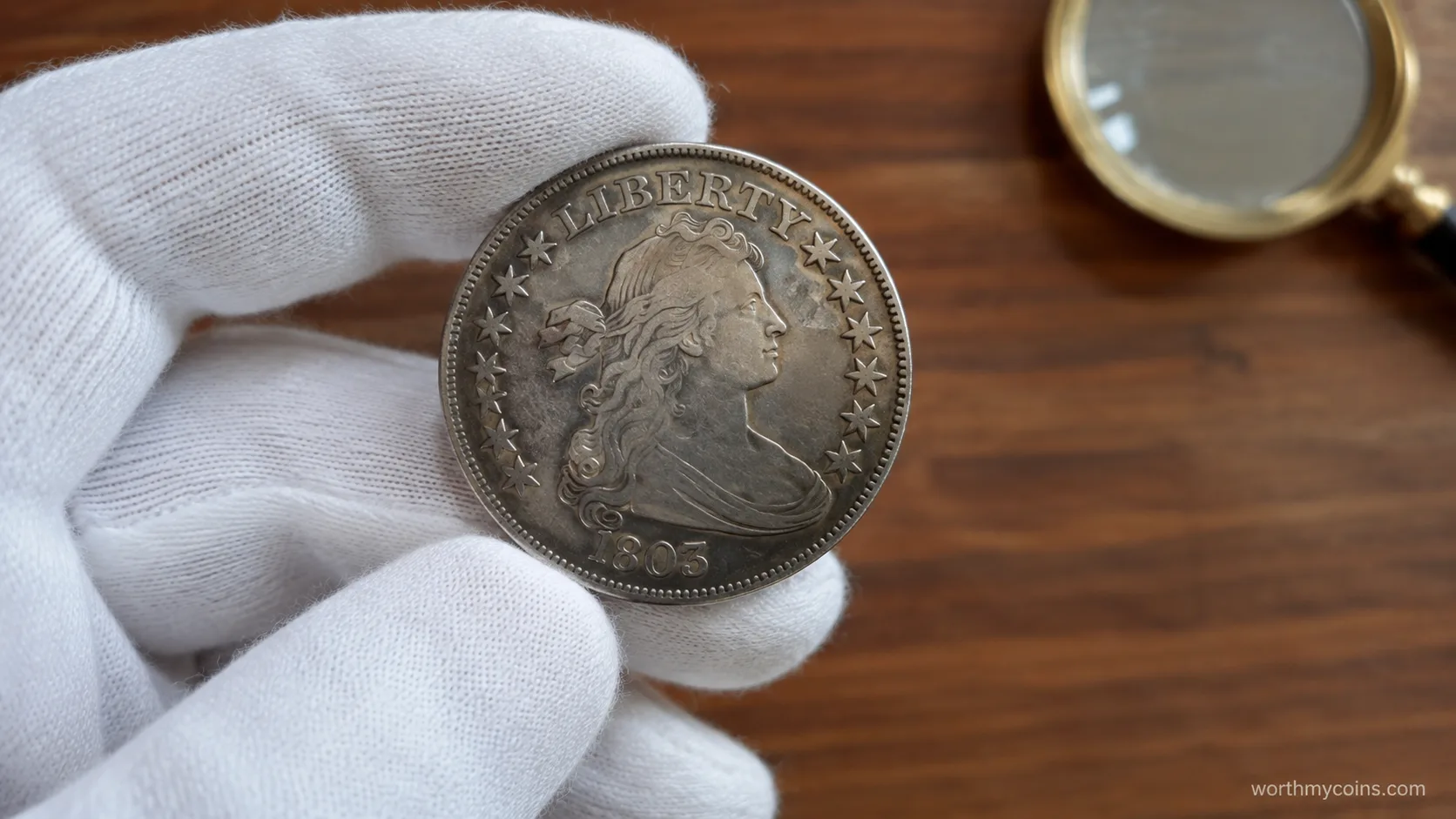
Few American silver coins have a history as fascinating as the Trade Dollar. Created specifically for international commerce during the late nineteenth century, these large silver coins traveled far beyond U.S. borders and became an important part of trade with Asia. Today, they are among the most collected classic U.S. silver dollars because of their rich history, distinctive design, and several genuinely scarce dates and mint marks.
Whether you inherited a Trade Dollar or are considering adding one to your collection, understanding key dates, mint marks, rarity, and grading is essential. While every genuine Trade Dollar has historical significance, only certain dates, mint locations, and proof issues are recognized as key collectibles because of their rarity and surviving populations. This guide explains the most important Trade Dollar dates, how to identify them, and the factors collectors use when evaluating their desirability.
Quick Answer
Trade Dollars were struck from 1873 through 1885, although regular circulation strikes ended after 1878. The most valuable examples generally include:
| Coin | Why It’s Important |
|---|---|
| 1873-CC | First Carson City issue with comparatively limited production |
| 1874-CC | Scarce Carson City issue with strong collector demand |
| 1875-CC | Popular key Carson City date |
| 1876-CC | Difficult in higher grades |
| 1877-CC | Lowest-mintage Carson City circulation strike |
| 1878-CC | Final Carson City circulation issue |
| 1884 Proof | Extremely rare proof-only issue |
| 1885 Proof | One of the rarest regular U.S. coin issues |
Actual value depends on authenticity, grade, certification, eye appeal, originality, and current market demand.
What Is a U.S. Trade Dollar?
The Trade Dollar was authorized under the Coinage Act of 1873 to improve American silver exports to China and other Asian markets. At the time, Mexican silver dollars dominated international trade, so the United States introduced a heavier silver coin designed to compete overseas.
Each Trade Dollar contains:
- Composition: 90% silver, 10% copper
- Weight: 27.22 grams
- Diameter: 38.1 mm
- Edge: Reeded
The coin features Liberty seated on bales of merchandise extending an olive branch toward the Pacific Ocean, symbolizing American trade. The reverse displays a powerful eagle holding arrows and an olive branch.
Collectors interested in how the Trade Dollar fits into the broader history of American silver dollars may also enjoy Morgan Dollar Value Guide: Rare Dates, Mint Errors & Collector Tips, which explains another iconic U.S. silver dollar series, including its important dates, mint marks, and collecting considerations.
Although intended primarily for foreign commerce, many eventually circulated domestically before Congress revoked their legal tender status in 1876 for amounts above five dollars.
Understanding Trade Dollar Mint Marks
Trade Dollars were produced at four United States Mint facilities.
| Mint | Mint Mark | Years Used |
|---|---|---|
| Philadelphia | No mint mark | 1873–1885 |
| Carson City | CC | 1873–1878 |
| San Francisco | S | 1873–1878 |
| Philadelphia Proof Coinage | None | 1873–1885 |
The mint mark appears on the reverse below the eagle and above the “D” and “O” in “DOLLAR.”
When identifying a Trade Dollar, examine both the date and mint mark together. Many dates are relatively available from one mint but significantly scarcer from another, making the complete date-and-mint combination far more important than the date alone.
Understanding how mint marks affect scarcity across different silver dollar series can also be helpful. 1921 Morgan Silver Dollar Value Guide: Rare Mint Marks, Errors & Current Prices explores how mint locations influence collector demand and availability for another popular classic U.S. dollar.
Why Some Trade Dollars Are Worth Much More Than Others
Not every Trade Dollar is equally scarce. Collectors evaluate several characteristics when determining desirability.
Limited Mintages
Certain Carson City issues were struck in much smaller numbers than Philadelphia and San Francisco coins.
Survival Rates
Many Trade Dollars exported overseas were heavily circulated, damaged, melted, or later cleaned, leaving relatively few attractive survivors.
Proof-Only Years
After business strikes ended in 1878, only proof Trade Dollars were produced during 1879–1885. Among those, the 1884 and 1885 issues are famous numismatic rarities with extremely limited surviving populations.
Original Surfaces
Collectors pay substantial premiums for coins that retain original surfaces without harsh cleaning or polishing.
Certified Grades
Professionally graded coins from recognized third-party grading services generally inspire greater buyer confidence, particularly for expensive Trade Dollars.
The Most Valuable Trade Dollar Key Dates
1873-CC Trade Dollar
The first Carson City Trade Dollar is among the series’ most historically important issues.
Early Carson City coinage has long attracted collectors because of its association with Nevada’s Comstock Lode and the history of western silver mining.Even lower-grade examples are highly collectible, while certified Mint State coins become considerably more difficult to locate.
1874-CC Trade Dollar
The 1874-CC continues the popularity of the Carson City series.
Although obtainable in circulated grades, examples with strong original luster and minimal wear become increasingly scarce. High-grade certified specimens are especially sought after by advanced collectors.
1875-CC Trade Dollar
Another important Carson City issue, the 1875-CC remains a cornerstone for complete Trade Dollar collections.
Many surviving examples saw heavy commercial use, making attractive, problem-free coins much harder to locate than raw mintage figures might suggest.
1876-CC Trade Dollar
By 1876, Trade Dollar production at Carson City had declined.
Collectors frequently encounter circulated examples, but sharply struck Mint State pieces with original surfaces are considerably scarcer.
1877-CC Trade Dollar
Among Carson City circulation strikes, the 1877-CC is especially significant because it has the lowest mintage of the Carson City Trade Dollar series.
Its combination of historical appeal, collector demand, and relative scarcity consistently places it among the most desirable circulation issues.
1878-CC Trade Dollar
The final Carson City Trade Dollar marks the end of regular Trade Dollar production at that mint.
Because it represents the last year of Carson City Trade Dollar coinage, collector demand remains consistently strong.
1884 Proof Trade Dollar
The 1884 Proof is one of the legendary rarities of American numismatics.
Only a very limited number were produced, and very few examples are believed to survive today.
Nearly every known specimen has been carefully documented and is closely followed whenever one appears at public auction.
1885 Proof Trade Dollar
The 1885 Proof stands among the rarest regular United States coin issues.
Like the 1884 Proof, its rarity is extraordinary. Examples are almost always certified, extensively researched, and sold through major numismatic auction firms.
Important Philadelphia and San Francisco Trade Dollar Dates
While Carson City issues often receive the most attention, several Philadelphia and San Francisco Trade Dollars are also important to collectors. Their value depends heavily on preservation, originality, and certification rather than simply mintage.
1873 Trade Dollar (Philadelphia)
The first year of the series is historically significant because it introduced the Trade Dollar to American coinage. Collectors often seek attractive examples with strong detail and original surfaces. As with many first-year issues, demand remains steady across most grades.
1873-S Trade Dollar
San Francisco struck the majority of Trade Dollars intended for export because of its proximity to Pacific trade routes. Many examples spent decades in overseas circulation, making problem-free, lightly worn coins more desirable than heavily used pieces.
1874-S Through 1878-S
San Francisco continued producing large numbers of Trade Dollars for export. Although these dates are generally more available than Carson City issues, finding examples with original mint luster, minimal contact marks, and no evidence of cleaning becomes much more challenging in higher Mint State grades.
Collectors should remember that availability differs dramatically by grade. A date that is common in circulated condition may become genuinely scarce in certified Mint State.
Proof-Only Trade Dollars (1879–1885)
Regular business-strike production ended after 1878, but the Philadelphia Mint continued producing Proof Trade Dollars for collectors.
These Proof issues feature carefully prepared planchets, specially polished dies, and multiple strikes that produce sharply detailed designs and reflective fields.
The proof-only years include:
| Year | Notes |
|---|---|
| 1879 Proof | Collector-only issue |
| 1880 Proof | Limited collector production |
| 1881 Proof | Scarce and highly collectible |
| 1882 Proof | Popular among advanced collectors |
| 1883 Proof | Final generally available proof issue |
| 1884 Proof | Major rarity with very few known examples |
| 1885 Proof | One of the rarest regular U.S. coin issues |
Although all proof-only Trade Dollars are desirable, the 1884 and 1885 Proofs stand in a class of their own because of their extraordinary rarity and extensive documentation in numismatic literature.
How to Identify a Genuine Trade Dollar
Trade Dollars are among the most frequently counterfeited classic U.S. coins. Anyone purchasing an expensive example should know the basic identifying characteristics.
Check the Weight
A genuine Trade Dollar should weigh approximately 27.22 grams. Small differences may occur because of normal circulation wear, but significant deviations deserve closer examination.
Verify the Diameter
Authentic coins measure approximately 38.1 millimeters in diameter.
Examine the Edge
Every genuine Trade Dollar has a reeded edge. Missing reeds, unusual seams, or casting marks may indicate a counterfeit.
Study the Design Details
Look carefully at:
- Liberty’s facial features
- The folds of Liberty’s gown
- The eagle’s feathers
- Lettering sharpness
- Date numerals
- Mint mark style
- Denticles around the rim
Because deceptive counterfeits and altered mint marks exist, visual inspection alone is not always sufficient for valuable Trade Dollars. Coins believed to be key dates or proof issues are generally best authenticated by a recognized third-party grading service before purchase or sale.
Collectors who are learning to distinguish genuine mint-made characteristics from damage or alterations may also find Top 10 Rare Coin Errors Worth Money Found in Circulation useful for understanding how authentic mint errors differ from post-mint problems.
Look for Original Surfaces
Original coins typically display natural silver coloration that develops over decades. Bright polishing, artificial toning, or hairline scratches from cleaning can significantly reduce collector value.
Understanding Trade Dollar Grades
Professional grading plays a major role in determining market value.
Good (G)
Major design elements remain visible, although extensive wear is present.
Fine (F)
Most lettering is clear, with moderate design detail remaining.
Very Fine (VF)
Liberty’s major features and the eagle’s feathers show stronger definition while moderate wear is visible across the highest points.
Extremely Fine (XF)
Only light wear appears on the highest portions of the design. Much of the original detail remains intact.
About Uncirculated (AU)
Minimal wear is visible, and traces of original mint luster often remain.
Mint State (MS)
A Mint State Trade Dollar shows no circulation wear. Higher Mint State grades are judged by strike quality, luster, surface preservation, eye appeal, and the number of contact marks.
For valuable Trade Dollars, third-party grading and authentication provide confidence for both buyers and sellers.
What Factors Affect Trade Dollar Value?
No single price applies to every Trade Dollar. Instead, collectors evaluate several characteristics together.
Date and Mint Mark
Certain Carson City issues and the proof-only 1884 and 1885 coins are significantly scarcer than more available dates.
Grade
Higher-grade examples generally command stronger premiums because comparatively few survive with minimal wear, original surfaces, and strong eye appeal.
Original Surfaces
Coins that retain natural toning and have not been cleaned are usually more desirable than polished or altered examples.
Strike Quality
Sharper strikes often reveal stronger details in Liberty’s gown, the eagle’s feathers, and other intricate design elements.
Eye Appeal
Collectors often pay more for attractive coins with balanced toning, minimal distractions, and pleasing overall appearance.
Certification
Coins authenticated and graded by respected third-party grading services are generally easier to buy and sell, particularly for higher-value examples.
Common Mistakes New Collectors Make
Assuming Every Trade Dollar Is Extremely Rare
Although the series is popular, not every date is a rarity. Some circulation issues remain relatively available compared with the famous Carson City coins and proof-only rarities.
Buying Uncertified Expensive Coins
Because Trade Dollars are among the most frequently counterfeited classic U.S. coins, purchasing uncertified high-value examples carries additional risk.
Ignoring Cleaning
Harsh cleaning can significantly reduce collector demand even when the coin is otherwise scarce.
Focusing Only on the Date
The same date may vary dramatically in value depending on grade, originality, strike quality, and overall eye appeal.
Overlooking Counterfeit Mint Marks
Some altered coins have fake “CC” mint marks added to increase their apparent rarity. Authentication is especially important for Carson City issues.
Tips for Buying Trade Dollars
- Purchase from established coin dealers with strong reputations.
- Review certification information carefully before making major purchases.
- Compare multiple examples rather than buying the first available coin.
- Learn the characteristics of genuine surfaces and original toning.
- Study auction archives to understand how condition affects market performance.
- Keep detailed records for your collection, including certification numbers when applicable.
When possible, compare certified examples of the same date and grade before making a purchase. Differences in strike quality, original surfaces, toning, and eye appeal can significantly influence collector demand even when the assigned grade is identical.
Tips for Selling a Trade Dollar
If you believe you own a valuable Trade Dollar:
- Avoid cleaning or polishing it.
- Store it in a protective holder.
- Consider professional authentication and grading before offering it for sale.
- Compare recent auction appearances of similar certified examples.
- Obtain offers from reputable dealers if considering a private sale.
If the coin has already been certified, keep the holder intact and avoid any attempts to improve its appearance. Collectors generally place greater confidence in coins that remain in their original certified holders.
Frequently Asked Questions
### What is the rarest Trade Dollar?
Among regular U.S. coin issues, the 1885 Proof Trade Dollar is widely recognized as one of the rarest. The 1884 Proof is similarly famous, with only a tiny number of documented examples known to collectors.
### Which Trade Dollar mint mark is the most valuable?
There is no single mint mark that guarantees the highest value. However, Carson City (“CC”) Trade Dollars are among the most sought-after circulation strikes because of their historical importance and relative scarcity. The rare proof-only Philadelphia issues of 1884 and 1885 are even more elusive.
### Are all Carson City Trade Dollars valuable?
Carson City Trade Dollars are generally in strong collector demand, but value varies considerably based on date, grade, originality, certification, and overall eye appeal.
### Why are Trade Dollars frequently counterfeited?
Their popularity, silver content, and the substantial premiums commanded by certain dates—especially Carson City issues and the 1884–1885 Proofs—have made them common targets for counterfeiters and altered coins.
### Should I have my Trade Dollar professionally graded?
If the coin appears genuine and may have meaningful collector value, professional authentication and grading can help confirm authenticity, establish condition, and improve confidence for future buyers.
Conclusion
Trade Dollars represent one of the most fascinating chapters in American numismatic history. Originally created to strengthen U.S. trade in Asian markets, they have become prized collectibles admired for their history, artistry, and connection to the nation’s expanding global commerce during the late nineteenth century.
While every genuine Trade Dollar is historically significant, key Carson City issues and the rare proof-only dates remain the primary focus for advanced collectors because of their scarcity and long-established collector demand.Carson City dates consistently attract strong collector interest, and the legendary 1884 and 1885 Proofs remain among the greatest rarities in U.S. coinage. Yet rarity alone does not determine value. Grade, originality, eye appeal, certification, and authenticity all play critical roles in today’s market.
Whether you are beginning a Trade Dollar collection or evaluating a family heirloom, understanding key dates, mint marks, grading, and authentication will help you make more informed collecting decisions and better appreciate why these remarkable silver dollars remain among the most studied classic U.S. coin series.
References
The information presented in this guide is supported by established numismatic research and reference sources, including:
- United States Mint
- Professional Coin Grading Service (PCGS)
- Numismatic Guaranty Company (NGC)
- American Numismatic Association (ANA)
- Heritage Auctions Auction Archives
- Stack’s Bowers Galleries Auction Archives
- Newman Numismatic Portal
- A Guide Book of United States Coins (“Red Book”) by Jeff Garrett (Editor) and the late R.S. Yeoman

Narayan Kumar is the Founder and Author of Worth My Coins. She specializes in U.S. coin collecting, with a focus on coin identification, mint errors, grading, rare varieties, and collector education. Her goal is to publish accurate, well-researched, and easy-to-understand guides that help both new and experienced collectors make informed decisions. Every article is created using trusted numismatic references and is written with a commitment to accuracy, transparency, and long-term educational value.