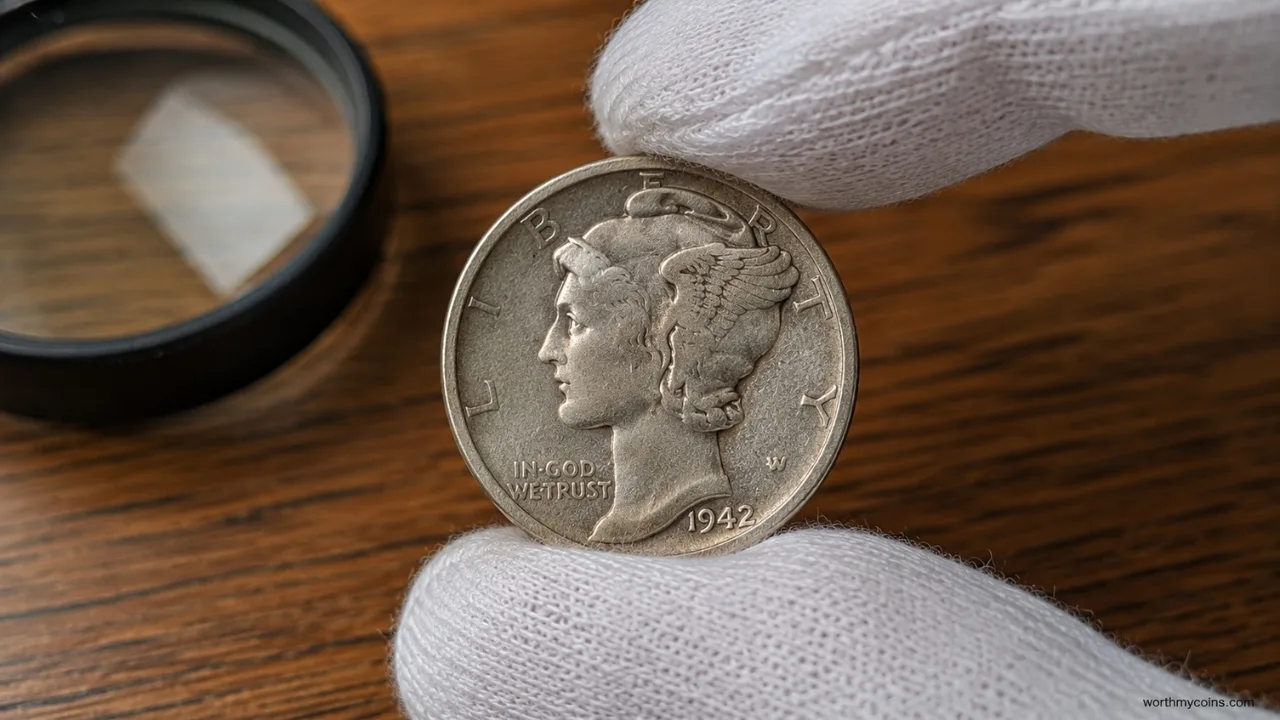
The 1942/41 Mercury Dime is one of the most famous error coins ever produced by the United States Mint. Unlike ordinary Mercury Dimes that entered circulation by the millions, this variety resulted from an unusual die preparation mistake that created an unmistakable overdate. Today, it remains one of the key collectible varieties in the series and is highly sought after by both advanced numismatists and collectors building complete Mercury Dime sets.
If you think you’ve found a 1942/41 Mercury Dime, it’s important to understand exactly what makes this coin special. Many worn or damaged coins are mistakenly identified as the overdate variety, while genuine examples display distinctive diagnostics that can be verified with careful examination.
Quick Answer
The 1942/41 Mercury Dime is a recognized overdate variety created when a die bearing the 1941 date was repunched with a 1942 date. Genuine examples were produced at both the Philadelphia Mint (no mint mark) and the Denver Mint (1942/41-D), although both are considered scarce and highly collectible. Actual market value depends on authenticity, grade, eye appeal, certification, and current collector demand rather than the date alone.
Readers who want to learn more about the Mercury Dime series should also read our Mercury Dime Value Guide: The Rare Coins Every Collector Wants to Find, where we explain the complete series, important key dates, and collecting strategies for beginners.
Because the 1942/41 Mercury Dime is one of the best-known Mercury Dime varieties, many ordinary 1942 dimes are mistakenly identified as the overdate. Before assuming a coin is genuine, compare its diagnostics with authenticated examples or consider professional authentication.
What Is the 1942/41 Mercury Dime?
A 1942/41 Mercury Dime is an overdate variety—a type of minting variety that occurs when one date is impressed over another on a working die.
In this case, dies originally carrying the 1941 date were repunched with the 1942 date during die preparation. Portions of the earlier date remained visible, creating a distinctive overlapping appearance beneath the final digits.
This happened before any coins were struck, meaning every coin produced from the affected die carries the same overdate characteristics. It is not considered post-mint damage or an alteration made after the coin left the Mint.
Why Did the Overdate Happen?
During the early 20th century, working dies were prepared through multiple manufacturing steps. If a die required correction or additional hubbing, traces of an earlier impression could occasionally remain.
The 1942/41 Mercury Dime is believed to have resulted from one of these die preparation errors. Rather than destroying the die immediately, it entered production and struck a limited number of coins before being retired.
Because only a small number of dies were affected, genuine overdate coins are far less common than regular 1942 Mercury Dimes.
Where Were These Coins Minted?
Collectors recognize two major overdate varieties.
| Variety | Mint Mark | Notes |
|---|---|---|
| 1942/41 | No mint mark | Struck at the Philadelphia Mint |
| 1942/41-D | D | Struck at the Denver Mint |
Both varieties are collectible, although availability differs between them, and certified examples are especially popular among specialists in Mercury Dime varieties.
How to Identify a Genuine 1942/41 Mercury Dime
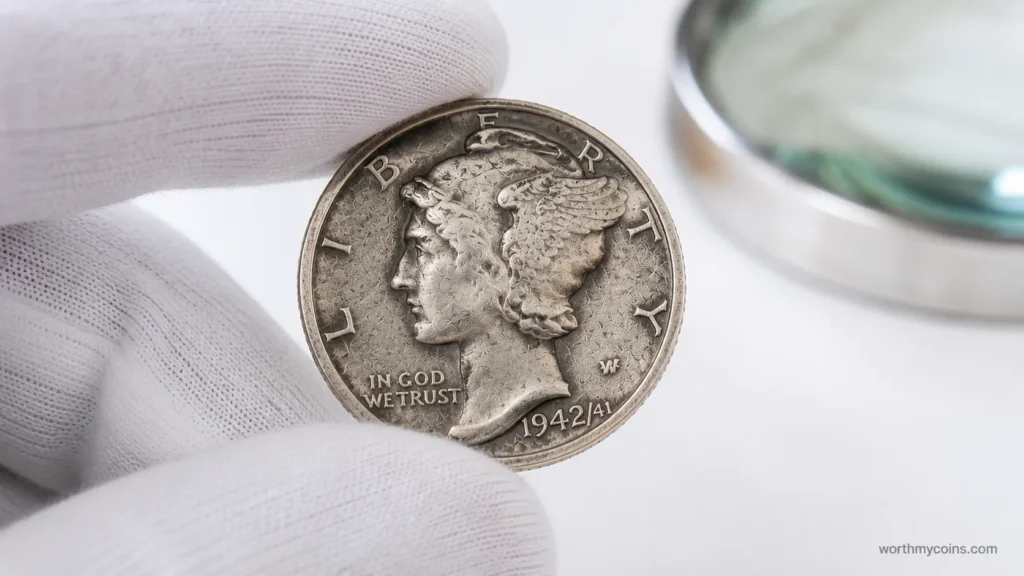
Correct identification is the most important step before estimating a coin’s rarity or market value.
Examine the Date Carefully
The strongest evidence appears within the date itself.
On genuine coins, remnants of the underlying 1941 remain visible beneath the final 1942 date. Depending on the coin’s condition, collectors may notice traces around the “2” and “1” that create the characteristic overlapping appearance.
The details should appear naturally integrated into the strike—not scratched, engraved, or artificially added.
Check the Mint Mark
The mint mark appears on the reverse, to the left of the fasces near the bottom of the coin.
- No mint mark indicates Philadelphia.
- A D indicates the Denver overdate variety.
Because the overdate—not the mint mark—is the defining characteristic, collectors should carefully examine both sides of the coin before drawing any conclusions.
Study the Design Details
The Mercury Dime was designed by Adolph A. Weinman and features Liberty wearing a winged cap on the obverse. The reverse displays a fasces and olive branch symbolizing strength and peace.
Collectors should compare suspected overdates with authenticated examples from trusted grading services rather than relying solely on photographs found online.
Specifications
| Feature | Details |
|---|---|
| Country | United States |
| Denomination | 10 Cents |
| Composition | 90% Silver, 10% Copper |
| Weight | 2.50 grams |
| Diameter | 17.9 mm |
| Edge | Reeded |
| Designer | Adolph A. Weinman |
| Major Varieties | 1942/41 and 1942/41-D |
Common Misidentifications
One of the biggest mistakes beginners make is assuming that any worn 1942 Mercury Dime showing unusual numbers is the famous overdate.
In reality, circulation wear, scratches, corrosion, and die deterioration can create misleading shapes around the date. A genuine overdate displays specific characteristics that remain visible in predictable locations.
Likewise, ordinary 1942 Mercury Dimes without the recognized overdate diagnostics are far more common and should not be confused with the collectible variety.
Readers interested in another legendary Mercury Dime should also read our 1916-D Mercury Dime Value Guide: Rare Key Date, Errors, Mint Marks & Current Value, which explains why the series’ famous key-date issue remains one of the most desirable U.S. coins.
Why Collectors Value This Variety
The 1942/41 Mercury Dime combines several qualities that collectors appreciate:
- It is a recognized U.S. Mint overdate variety.
- It belongs to the popular Mercury Dime series.
- It has been widely studied and cataloged by major grading services.
- Certified examples are actively collected by variety specialists.
- It represents one of the best-known die varieties among 20th-century U.S. silver coins.
Collectors who enjoy learning about other classic silver coin series may also find our Morgan Dollar Value Guide: Rare Dates, Mint Errors & Collector Tips helpful for understanding how rarity, condition, and collector demand influence long-term value.
What Determines the Value of a 1942/41 Mercury Dime?
Unlike common Mercury Dimes, the 1942/41 overdate cannot be valued by date alone. Two genuine examples may differ dramatically in price depending on several important factors.
Collectors and professional dealers typically evaluate several factors that influence both rarity and market value, including:
- Authenticity
- Philadelphia or Denver variety
- Overall grade
- Strike quality
- Surface preservation
- Original mint luster
- Eye appeal
- Professional certification
- Current collector demand
- Recent certified auction results
For these reasons, no single price applies to every 1942/41 Mercury Dime. Certified examples with attractive original surfaces generally receive the strongest collector interest.
Understanding Current Market Prices
The phrase “current prices” can be misleading because the coin market changes over time.
Rather than relying on one fixed number, experienced collectors compare:
- Recent certified auction results
- Population reports
- Current collector demand
- Comparable grades
- Whether the coin has a Full Bands (FB) designation
Completed auction sales generally provide a more reliable picture of current market demand than unsold asking prices because they reflect actual transactions between buyers and sellers.
High-grade certified examples have realized substantial prices at major auctions, while circulated pieces trade at much lower levels depending on condition and originality.
Why Professional Grading Matters
Because the 1942/41 Mercury Dime is one of the most famous U.S. Mint overdate varieties, professional grading is strongly recommended before buying or selling an expensive example.
Certification provides several important benefits:
- Confirms authenticity
- Verifies the overdate attribution
- Assigns an independent grade
- Identifies the Full Bands designation when applicable
- Improves buyer confidence
Most experienced collectors prefer certified examples because independent authentication significantly reduces the risk of purchasing altered or counterfeit coins.
Full Bands (FB): Why Collectors Care
On Mercury Dimes, the horizontal bands around the fasces on the reverse are an important grading characteristic.
When these bands remain fully separated and sharply struck, a coin may qualify for the Full Bands (FB) designation.
This designation does not indicate an error. Instead, it reflects exceptional strike quality.
For the 1942/41 overdate, certified Full Bands examples are considerably scarcer than ordinary Mint State coins and are especially desirable among advanced collectors.
Genuine Coins vs. Counterfeits
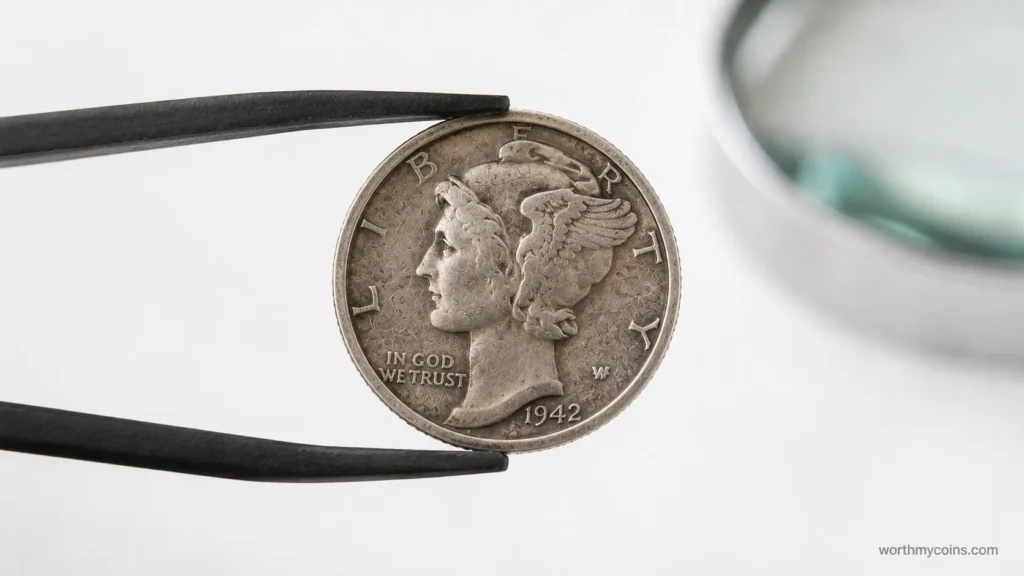
Because the overdate is widely known, counterfeit and altered examples regularly appear in the marketplace.
Some altered coins have:
- Artificially modified dates
- Engraved digits
- Added tooling around the numerals
- Surface alterations intended to imitate the overdate
Fortunately, genuine examples display several well-documented diagnostics.
Collectors often examine:
- The overlapping date
- Characteristic notching on the “4”
- Visible traces of the underlying “1”
- Additional doubling around portions of the lettering
- Known die markers documented by professional grading services
PCGS also documents multiple diagnostic features that help distinguish authentic overdates from altered pieces.
Buying Tips
If you’re planning to purchase a 1942/41 Mercury Dime, consider these practical recommendations.
- Buy certified examples whenever possible.
- Compare multiple certified coins before making a decision.
- Purchase from established coin dealers or respected auction firms.
- Be cautious of unusually inexpensive examples.
- Learn the recognized diagnostics before buying raw coins.
Taking time to compare authenticated examples from multiple reputable sources often leads to a more informed purchase.
Readers interested in another famous overdate-era rarity should also read our 1916-D Mercury Dime Value Guide: Rare Key Date, Errors, Mint Marks & Current Value, which explains why the series’ lowest-mintage regular issue remains one of the most desirable American silver coins.
Practical Buying Checklist
Before purchasing a 1942/41 Mercury Dime, take a moment to check the following:
- The overdate matches the recognized diagnostics documented by major grading services.
- The coin has been authenticated by a respected third-party grading service whenever possible.
- The certification number can be verified through the grading service.
- The seller has a solid reputation within the numismatic community.
- Recent certified auction results support the asking price.
Taking a few extra minutes to verify these details can help reduce the risk of purchasing an altered, counterfeit, or misidentified coin.
Selling Tips
Owners considering selling a genuine 1942/41 Mercury Dime should first determine whether the coin has been professionally authenticated.
Certified coins generally attract stronger offers because buyers know the variety and grade have already been verified.
Before accepting an offer:
- Compare several recent certified sales.
- Consider multiple dealers or auction houses.
- Avoid cleaning the coin.
- Keep certification holders intact.
- Document the grade and certification number.
Collectors often achieve better results when they understand the coin’s rarity and market position before negotiating.
Readers interested in learning more about classic U.S. silver coins may also enjoy our Morgan Dollar Value Guide, which explains how rarity, certification, and collector demand influence another iconic American coin series.
Frequently Asked Questions
Is the 1942/41 Mercury Dime an actual U.S. Mint error?
Yes. The 1942/41 Mercury Dime is a recognized overdate variety created during the die-making process at the United States Mint. Both the Philadelphia (1942/1) and Denver (1942/1-D) overdates are listed by major grading services and are among the best-known Mercury Dime varieties.
Which is rarer: the Philadelphia or Denver overdate?
Both are considered scarce and highly collectible. Each was produced from only a limited number of dies, making them much less common than regular 1942 Mercury Dimes. Their availability and market demand can vary depending on grade and certification.
How can I tell if my coin is a genuine overdate?
The most reliable way is to compare the date with authenticated examples from PCGS or NGC and, if the coin appears genuine, submit it for professional authentication.
Collectors look for:
- Visible remnants of the underlying 1941 date.
- Correct shape and placement of the overlapping numerals.
- Known die diagnostics documented by major grading services.
- Original surfaces without evidence of tooling or alteration.
Because altered dates are common, certification is strongly recommended before assigning significant value.
Does every 1942 Mercury Dime have the overdate?
No.
The overwhelming majority of 1942 Mercury Dimes are normal issues. Only coins struck from the specific overdate dies display the recognized 1942/41 characteristics.
Should I clean a 1942/41 Mercury Dime?
No.
Cleaning can permanently damage a collectible coin’s surfaces and often reduces its desirability among collectors. Even lightly cleaned examples may receive lower market offers than coins with original, untouched surfaces.
Does certification increase value?
Certification itself does not make a coin rarer, but it provides confidence regarding authenticity and grade. Since the 1942/41 Mercury Dime is one of the most frequently counterfeited Mercury Dime varieties, certified examples generally attract stronger buyer interest.
Conclusion
The 1942/41 Mercury Dime remains one of the most celebrated error varieties in American coin collecting. Its distinctive overdate, historical significance, and long-standing popularity have secured its place among the key collectible Mercury Dimes.
Whether you own the Philadelphia or Denver variety, the most important factors are authenticity, preservation, and professional grading. A genuine example with original surfaces and certified attribution will always attract more attention than an uncertified coin with uncertain diagnostics.
Collectors who understand how to identify the overdate, recognize common alterations, and compare certified examples are far better prepared to make informed buying and selling decisions.
Readers interested in one of the most important U.S. coin series should also read our Lincoln Wheat Penny Value Guide (1909–1958), where we explain key dates, grading, mint marks, and the factors that influence collector value across the entire series.
References
The information in this guide is based on recognized numismatic references and industry resources, including:
- United States Mint —
- Professional Coin Grading Service (PCGS) CoinFacts —
- Numismatic Guaranty Company (NGC) Coin Explorer —
- American Numismatic Association (ANA) —
- Heritage Auctions —
- Stack’s Bowers Galleries —
- Newman Numismatic Portal —

Narayan Kumar is the Founder and Author of Worth My Coins. She specializes in U.S. coin collecting, with a focus on coin identification, mint errors, grading, rare varieties, and collector education. Her goal is to publish accurate, well-researched, and easy-to-understand guides that help both new and experienced collectors make informed decisions. Every article is created using trusted numismatic references and is written with a commitment to accuracy, transparency, and long-term educational value.