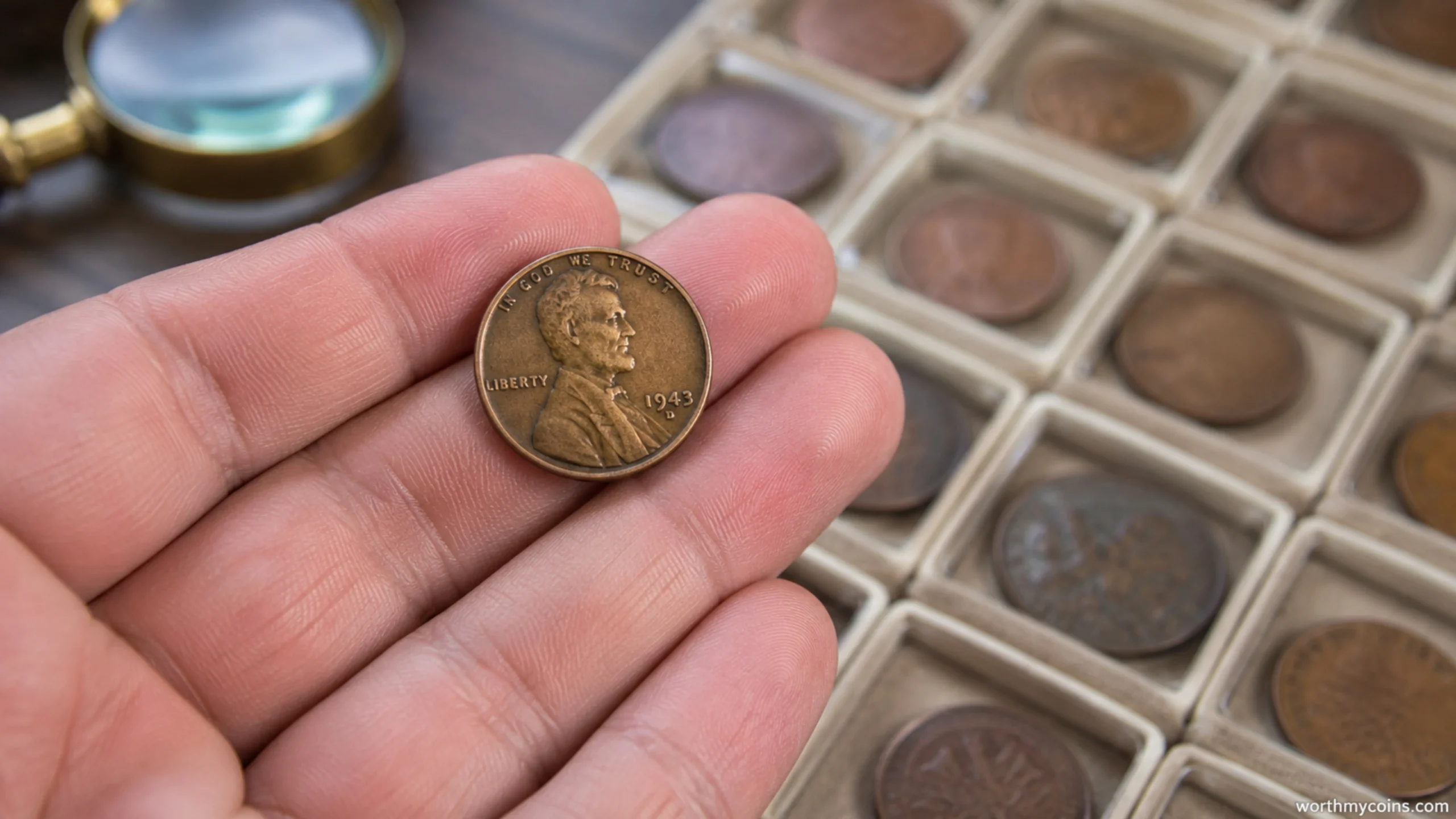
The 1943-D Bronze Lincoln Wheat Penny is one of the most famous error coins ever produced in the United States. Its incredible rarity, fascinating wartime history, and record-breaking auction appearances have made it a dream coin for collectors around the world.
If you’ve heard stories about a 1943 penny being worth hundreds of thousands of dollars, there’s an important detail many people miss. Nearly every genuine 1943 Lincoln cent was intentionally struck on a zinc-coated steel planchet because copper was needed for the World War II effort. The extraordinarily rare bronze examples were created by accident when a small number of leftover bronze planchets from 1942 were mistakenly fed into the coin presses.
Among these accidental pieces, the 1943-D Bronze Lincoln Wheat Penny stands in a class of its own. Only one authentic example from the Denver Mint has been confirmed, making it one of the rarest regular-issue U.S. coins ever discovered. Its rarity explains why a certified specimen has realized hundreds of thousands of dollars at auction, including a widely reported sale of approximately $840,000.
Whether you’re new to coin collecting or an experienced numismatist, understanding why this coin is so valuable requires looking beyond the headline price. Here’s what makes the 1943-D Bronze Lincoln Wheat Penny so extraordinary.
Historical Background
In 1943, the United States was fully engaged in World War II. Copper became an essential strategic metal used in military equipment, communications, shell casings, and other wartime production. To conserve copper, the U.S. Mint temporarily changed the composition of the Lincoln cent.
Instead of the traditional bronze alloy used through 1942, 1943 Lincoln cents were struck on steel planchets coated with zinc. These silver-colored cents are commonly known as “steel pennies.”
However, minting operations are never completely free from human or mechanical error. A few bronze planchets remaining from 1942 apparently stayed in the presses or hoppers before production switched entirely to steel. Those leftover blanks were accidentally struck with 1943 dies.
This mistake occurred at all three operating mints, but with dramatically different survival rates.
Other famous wartime mint errors have also become legendary among collectors. Our Washington Quarter Errors Guide explains how manufacturing mistakes across different U.S. coin series can create highly collectible coins.
Philadelphia produced several authenticated bronze cents.
San Francisco also produced a small number.
Denver, however, is believed to have produced only a single confirmed genuine bronze example, making the 1943-D issue exceptionally important in American numismatics.
Coin Specifications
| Specification | Details |
|---|---|
| Coin | Lincoln Wheat Cent |
| Year | 1943 |
| Mint | Denver |
| Mint Mark | D |
| Intended Composition | Zinc-coated steel |
| Error Composition | Bronze (leftover 1942 planchet) |
| Diameter | 19.05 mm |
| Weight | Approximately 3.11 grams (bronze planchet) |
| Edge | Plain |
| Designer | Victor David Brenner |
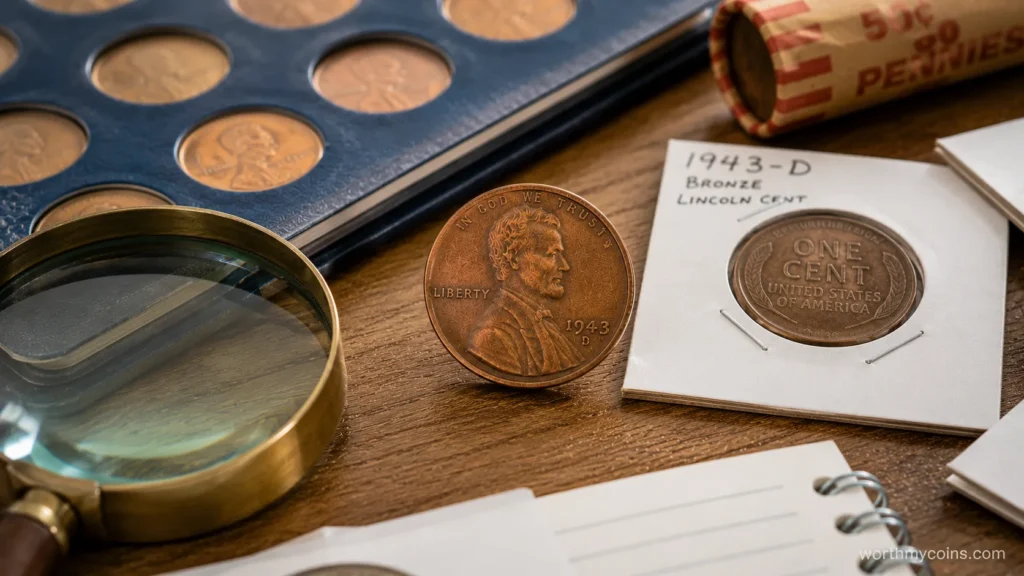
The bronze composition is one of the most important identifying characteristics. A genuine bronze error weighs significantly more than the standard 1943 steel cent.
Why the 1943-D Bronze Penny Is So Rare
Many famous U.S. coins are rare because collectors saved very few examples. The 1943-D Bronze Lincoln cent is different.
Its rarity comes from a production accident.
The Denver Mint was expected to strike only steel cents in 1943. If just one leftover bronze blank entered production before the equipment was fully converted, it would create a unique error coin.
Today, experts recognize only one authentic example from Denver. That level of rarity is almost unheard of among regular circulation coinage.
Unlike many valuable coins that exist in dozens or even hundreds of specimens, the confirmed population of the 1943-D bronze issue has remained effectively unique.
How to Identify a Genuine 1943-D Bronze Lincoln Wheat Penny
| Check | Genuine Bronze Error | Common Steel Cent |
|---|---|---|
| Color | Brown to reddish-brown | Gray or silver |
| Magnet Test | Not magnetic | Strongly magnetic |
| Weight | About 3.11 grams | About 2.70 grams |
| Authentication | Essential | Usually unnecessary |
| Composition | Bronze | Zinc-coated steel |
Every year, thousands of people believe they have found a valuable bronze 1943 penny. Almost all turn out to be altered coins or common steel cents with changed surfaces.
Here are the key identification points.
| Feature | Genuine Bronze Example | Common Steel Cent |
|---|---|---|
| Color | Brown to reddish-brown | Gray or silver |
| Weight | About 3.11 grams | About 2.70 grams |
| Magnet Test | Not magnetic | Strongly magnetic |
| Composition | Bronze alloy | Zinc-coated steel |
| Authentication | Required | Usually unnecessary |
A magnet provides a quick first check because a genuine bronze cent should not stick to it. Even so, this alone cannot prove authenticity. Weight, appearance, and professional authentication must also be considered before concluding that a 1943-D bronze cent is genuine.
Some counterfeit coins are made by copper-plating steel cents, while others are altered from 1948 pennies by modifying the date to resemble 1943. Professional authentication is essential before assuming a coin is genuine.
Understanding the Mint Mark
The “D” mint mark indicates the coin was struck at the Denver Mint.
Although the Denver mint mark is an important identifier, it does not make an ordinary 1943 steel cent rare. The coin’s metal composition and professional authentication are what distinguish the famous bronze error from common circulation issues.
During 1943, Lincoln cents were produced at three U.S. Mint facilities:
| Mint | Mint Mark | Typical 1943 Composition |
|---|---|---|
| Philadelphia | None | Zinc-coated steel |
| Denver | D | Zinc-coated steel |
| San Francisco | S | Zinc-coated steel |
The presence of a “D” mint mark alone does not make a coin valuable. Millions of ordinary 1943-D steel cents were produced and remain widely available today.
Only the accidental bronze striking creates the extraordinary rarity.
Why Did One Sell for Around $840,000?
Auction prices are driven by several factors working together.
The 1943-D Bronze Lincoln Wheat Penny combines nearly every characteristic collectors seek:
- Extreme rarity
- Historical importance
- Strong collector demand
- National recognition
- Excellent authentication
- High-grade preservation
- Outstanding provenance
Because only one confirmed Denver specimen is known, elite collectors compete whenever it becomes available. This level of competition has resulted in auction prices reaching approximately $840,000 in public sales.
It is important to understand that this figure applies to the authenticated unique Denver bronze cent—not ordinary 1943 pennies.
What Determines the Value of a 1943-D Bronze Lincoln Wheat Penny?
Even among rare coins, value is never determined by one factor alone.
Authenticity
Without authentication by a respected grading service, a coin claiming to be a bronze 1943-D cent has essentially no accepted market value.
Condition
Coins with less wear generally command stronger prices.
Collectors carefully evaluate:
- Original surfaces
- Luster
- Strike quality
- Marks
- Environmental damage
- Cleaning
Provenance
A documented ownership history can increase collector confidence and desirability.
Market Demand
Rare coin prices fluctuate with collector demand, economic conditions, and auction competition.
Coin Grading Overview
Professional grading provides a standardized assessment of preservation.
Common grading categories include:
| Grade | General Description |
|---|---|
| Good (G) | Heavy wear with major details visible |
| Fine (F) | Moderate wear but clear design |
| Extremely Fine (XF) | Light wear with strong detail |
| About Uncirculated (AU) | Slight wear on highest points |
| Mint State (MS) | No circulation wear |
For a coin as significant as the 1943-D Bronze Lincoln cent, professional certification is considered essential.
Certification also documents the coin’s authenticity and condition, making it easier for future buyers, auction houses, and collectors to evaluate the piece with confidence.
Professional grading is equally important for other rare U.S. coins. Our Morgan Dollar Value Guide explains how rarity, condition, and authentication work together to influence collector value.
Verified Error Varieties
The famous bronze planchet error should not be confused with other 1943 cent varieties.
| Variety | Verified Status | Notes |
|---|---|---|
| 1943 Bronze Cent | Verified | Struck on leftover bronze planchet |
| 1943 Steel Cent | Normal issue | Standard wartime composition |
| Copper-plated Steel Counterfeits | Common | Artificially altered after minting |
| Altered 1948 Cents | Common Fake | Date modified to resemble 1943 |
Collectors should remain cautious when evaluating online listings claiming to offer a “rare copper 1943 penny.”
Legitimate examples are exceptionally rare, so listings offering multiple “1943 copper pennies” at low prices should be treated with extreme caution. Counterfeits and altered coins are far more common than genuine bronze errors.
Common Counterfeits
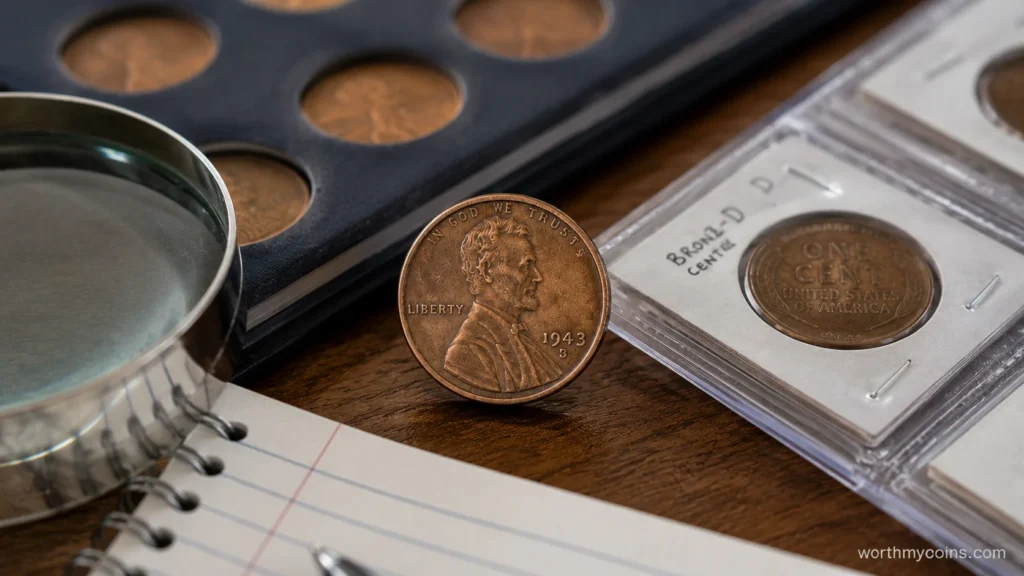
The popularity of this coin has inspired numerous counterfeits.
Some of the most common include:
Altered Dates
Fraudsters sometimes reshape the “8” in a 1948 cent into a “3.”
Copper-Plated Steel Cents
A standard steel penny may be plated with copper to imitate the appearance of bronze.
Cast Replicas
Some fake coins are made from molds rather than genuine Mint strikes.
Professional authentication usually detects these alterations quickly through microscopic examination, weight, composition analysis, and die characteristics.
Authentication also plays a major role when evaluating classic five-cent coins. Our Buffalo Nickel Value Guide explores genuine mint errors, key dates, and the warning signs collectors should know before buying.
How to Test a Suspected 1943 Bronze Lincoln Penny Safely
If you believe you’ve found a bronze-colored 1943 penny, follow these steps:
- Do not clean the coin.
- Check whether it is magnetic.
- Weigh it using a precise digital scale.
- Compare the date carefully under magnification.
- Seek professional authentication before attempting to sell it.
Cleaning or polishing can permanently reduce collector value and may complicate expert evaluation.
Collecting Tips
If your goal is to build a meaningful Lincoln cent collection, don’t focus exclusively on million-dollar headlines.
Instead:
- Learn the history behind each issue.
- Buy certified coins when purchasing expensive pieces.
- Study genuine examples before shopping.
- Keep accurate records of purchases.
- Store coins in archival-quality holders.
- Purchase from reputable dealers or established auction firms.
If you’re building a complete Lincoln cent collection, our Lincoln Wheat Penny Value Guide (1909–1958): Prices, Errors & Rare Coins is a helpful next step for understanding key dates, mint marks, and other important varieties.
The more genuine examples you study, the easier it becomes to recognize coins that are truly worth a closer look.
Common Mistakes Beginners Make
Many new collectors unknowingly make avoidable errors.
Assuming Every 1943 Penny Is Valuable
Most 1943 cents are common steel issues.
Trusting Internet Myths
Social media often exaggerates coin values without discussing authentication or condition.
Cleaning Coins
Cleaning almost always reduces collectible value.
Ignoring Authentication
For high-value coins, certification provides confidence for both buyers and sellers.
Believing Color Alone
A brown-colored 1943 cent is not automatically bronze. Artificial coloring and plating are common.
Why This Coin Matters to Numismatic History
The 1943-D Bronze Lincoln Wheat Penny represents much more than an expensive collectible.
It captures a unique moment in American history when wartime demands changed the nation’s coinage. It also demonstrates how small production mistakes can become legendary rarities decades later.
Its story continues to educate collectors about minting technology, authentication, historical research, and the importance of preserving original coins.
Few U.S. coins combine historical significance, rarity, and collector fascination as completely as this remarkable Lincoln cent.
Conclusion
The 1943-D Bronze Lincoln Wheat Penny remains one of the rarest and most respected U.S. coins ever produced. With only one confirmed Denver example known, it continues to represent one of the greatest accidental minting errors in American coin history.
Although the reported $840,000 sale attracts most of the attention, the coin’s true importance comes from its rarity, historical background, and verified authenticity. If you ever come across a bronze-colored 1943-D cent, avoid cleaning it and have it professionally examined before making any assumptions.
Stories like this are a reminder that understanding how coins were made is just as important as knowing what they might be worth. Careful research and patience remain every collector’s greatest advantage.
If you enjoy learning about America’s most valuable coins, our Mercury Dime Value Guide is another helpful resource covering rare dates, mint errors, and the factors that make certain dimes especially desirable to collectors.
Frequently Asked Questions
Is every 1943 copper-colored penny valuable?
No. Many are altered steel cents, plated coins, or modified 1948 pennies. Professional authentication is necessary to determine whether a coin is a genuine bronze error.
How many genuine 1943-D Bronze Lincoln Wheat Pennies exist?
Based on current numismatic research and accepted expert consensus, only one authentic example from the Denver Mint has been confirmed.
Why were most 1943 pennies made of steel?
Copper was needed for wartime production during World War II, so the U.S. Mint temporarily switched Lincoln cent production to zinc-coated steel.
Can a magnet identify a genuine bronze penny?
A genuine bronze cent should not be magnetic. However, this test alone cannot confirm authenticity because counterfeit coins may also fail the magnet test.
Why do counterfeit 1943 bronze pennies exist?
Because authentic examples are extraordinarily valuable, counterfeiters often alter steel cents, modify 1948 pennies, or apply copper plating to imitate genuine bronze errors. Professional authentication is the safest way to distinguish authentic coins from fakes.
Should I clean a rare-looking penny before selling it?
No. Cleaning can permanently damage a coin’s surfaces and reduce its collector value. Leave the coin in its original condition and consult a professional grading service.
Can I find a genuine 1943-D bronze penny in circulation today?
The possibility is extremely remote because only one confirmed example from the Denver Mint is known. Even so, collectors occasionally examine unusual 1943 cents because previously unknown discoveries, while highly unlikely, cannot be ruled out without proper authentication.
References
This guide is based on published U.S. Mint information, recognized third-party grading standards, auction records, and established numismatic references. Because of the rarity of the 1943-D Bronze Lincoln Wheat Penny, professional authentication is essential before making assumptions about authenticity or value.
- United States Mint
- Professional Coin Grading Service (PCGS)
- Numismatic Guaranty Company (NGC)
- American Numismatic Association (ANA)
- Heritage Auctions
- Stack’s Bowers Galleries
- Newman Numismatic Portal

Narayan Kumar is the Founder and Author of Worth My Coins. She specializes in U.S. coin collecting, with a focus on coin identification, mint errors, grading, rare varieties, and collector education. Her goal is to publish accurate, well-researched, and easy-to-understand guides that help both new and experienced collectors make informed decisions. Every article is created using trusted numismatic references and is written with a commitment to accuracy, transparency, and long-term educational value.