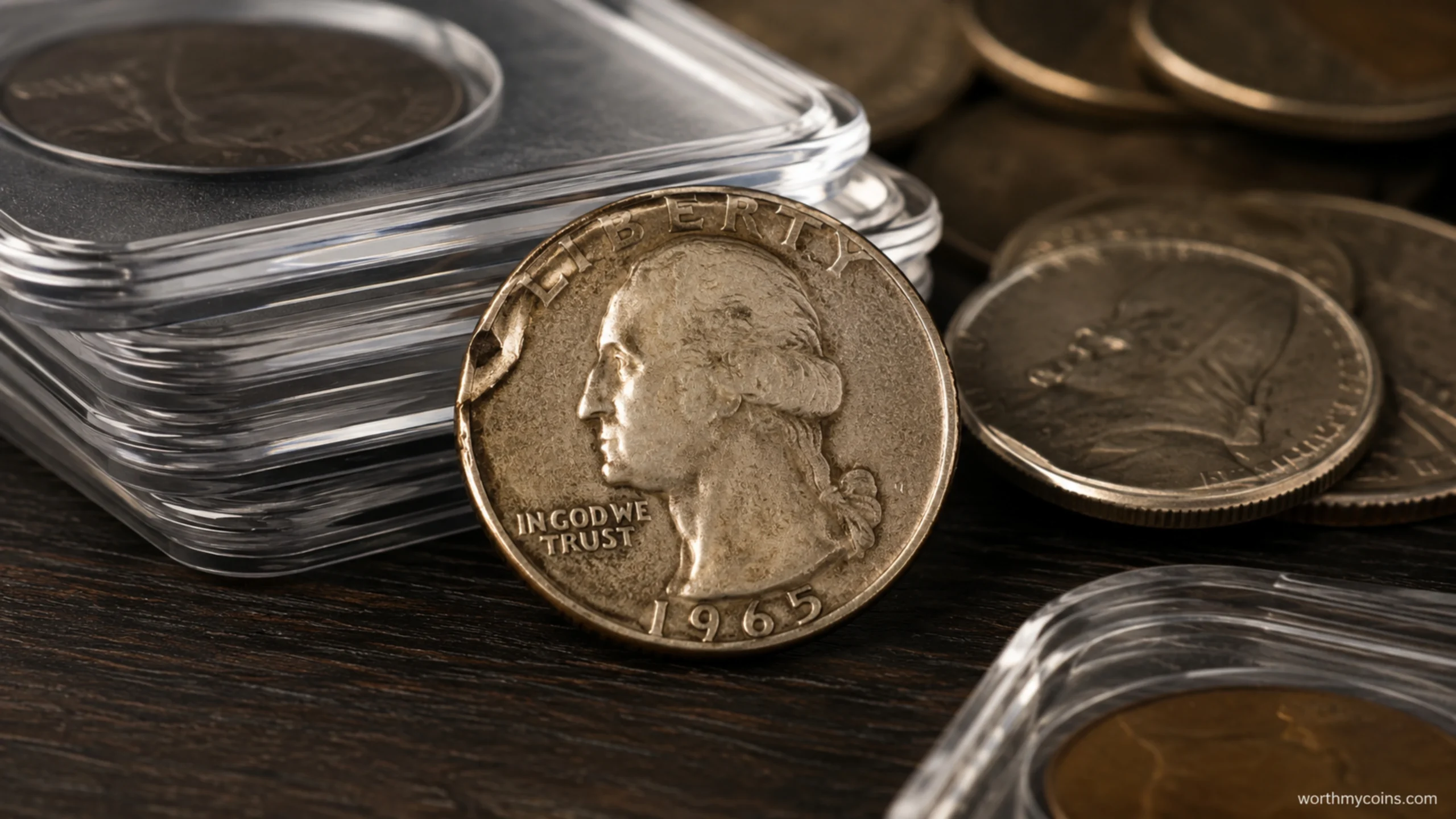
Washington quarters have been a cornerstone of American coinage since 1932, making them one of the most widely collected U.S. coin series. While millions of quarters were produced for everyday commerce, a small number left the mint with genuine manufacturing mistakes that have become highly sought after by collectors. These error coins are different from post-mint damage because they were created during the striking process and are recognized by professional grading services.
Whether you’re checking pocket change, sorting through an inherited collection, or searching bank rolls, knowing what genuine Washington quarter errors look like can save you a lot of guesswork. Some are easy to recognize, while others take a closer inspection. This guide covers the most important verified errors, how to identify them, and why some attract much stronger collector interest than others.
If you’re also interested in valuable circulation finds beyond mint errors, our Top 25 Modern Quarters Worth Money guide highlights other quarters that collectors actively search for.
Washington Quarter Specifications
| Feature | Details |
|---|---|
| First Year of Issue | 1932 |
| Designer | John Flanagan |
| Purpose | Commemorated the 200th anniversary of George Washington’s birth |
| Diameter | 24.3 mm |
| Weight (1932–1964) | 6.25 grams |
| Composition (1932–1964) | 90% silver, 10% copper |
| Composition (1965–Present) | Copper-nickel clad over a pure copper core |
| Edge | Reeded |
| Face Value | 25 Cents |
A Brief History of the Washington Quarter
The Washington quarter replaced the Standing Liberty quarter in 1932 as part of the celebration honoring George Washington’s 200th birthday. Although originally intended as a one-year commemorative issue, the design proved so popular that it became the permanent quarter-dollar design.
John Flanagan’s portrait of George Washington appeared on the obverse for decades with only minor modifications. Beginning in 1999, the reverse design changed to feature the 50 State Quarters Program, followed by the District of Columbia and U.S. Territories series, the America the Beautiful Quarters Program, and more recently the American Women Quarters Program.
Because the Washington quarter has been struck continuously for more than 90 years across multiple U.S. Mint facilities, it offers collectors an enormous variety of dates, mint marks, design changes, and genuine mint errors.
Understanding Mint Errors vs. Damage
One of the biggest challenges for new collectors is distinguishing a legitimate mint error from ordinary damage that occurred after the coin entered circulation.
A genuine mint error occurs during one of the production stages, including planchet preparation, die creation, striking, or handling inside the mint. These errors are part of the coin’s manufacturing history and are often authenticated by third-party grading services.
By contrast, post-mint damage happens after the coin leaves the mint. Scratches, dents, grinding, environmental corrosion, heat damage, and intentional alterations generally do not increase collectible value.
Learning this distinction is essential because many damaged quarters are mistakenly advertised online as rare errors.
One of the safest ways to confirm an unusual coin is to compare it with photographs of certified examples from respected grading services before assuming it is a mint error. Many forms of post-mint damage can appear convincing at first glance but differ in subtle ways from genuine mint-produced errors.
Learning to separate genuine mint errors from ordinary damage is an important skill that applies across many U.S. coin series. Collectors can also compare similar characteristics in our Buffalo Nickel Value Guide, which explains how mint errors and condition influence collectible value.
Washington Quarter Mint Marks
Remember that a mint mark identifies where a coin was struck, not whether it is an error. Genuine mint errors can occur at any U.S. Mint facility, so collectors should always evaluate the coin itself rather than relying on the mint mark alone.
Washington quarters have been struck at several United States Mint facilities. The mint mark helps identify where a coin was produced and can be an important factor when researching certain varieties and errors.
| Mint Mark | Mint Facility |
|---|---|
| No Mint Mark | Philadelphia (before 1980 on circulating quarters) |
| D | Denver |
| S | San Francisco |
| W | West Point (special circulating and collector issues beginning in 2019 for circulation strikes) |
Most modern mint marks appear on the obverse of the coin, to the right of Washington’s ribbon beneath the date. Earlier issues placed the mint mark on the reverse.
While mint marks identify the production facility, they do not automatically make a coin valuable. Collectors should evaluate the date, condition, rarity, and presence of verified errors together.
How to Identify a Genuine Washington Quarter Error
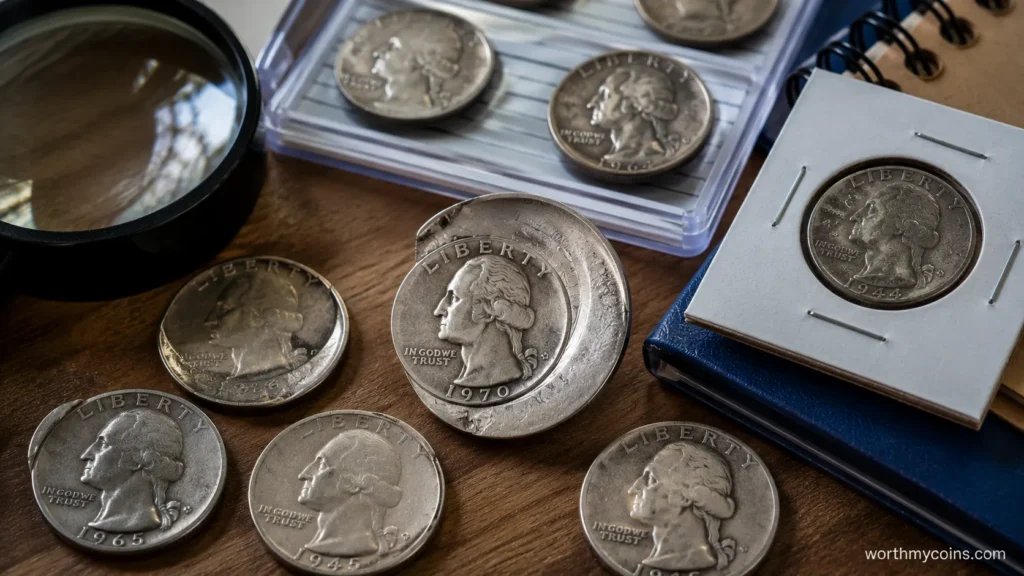
Before assuming a quarter is rare, examine it carefully under good lighting.
Look for these characteristics:
| Feature | What to Look For |
|---|---|
| Date | Verify the year matches known varieties |
| Mint Mark | Check for unusual placement, doubling, or repunched characteristics on older issues |
| Lettering | Examine for doubling or missing design elements |
| Edge | Look for missing clad layers or striking abnormalities |
| Surface | Distinguish genuine mint-made features from scratches or damage |
| Weight | Compare with official Mint specifications if an error is suspected |
If your coin’s weight differs noticeably from the official specification, weigh it multiple times using a calibrated digital scale accurate to at least 0.01 gram. Dirt, residue, or an inaccurate scale can produce misleading results.
A quality magnifying loupe (5x to 10x), digital scale accurate to 0.01 gram, and proper lighting are valuable tools for identifying potential mint errors.
Most Valuable Verified Washington Quarter Errors
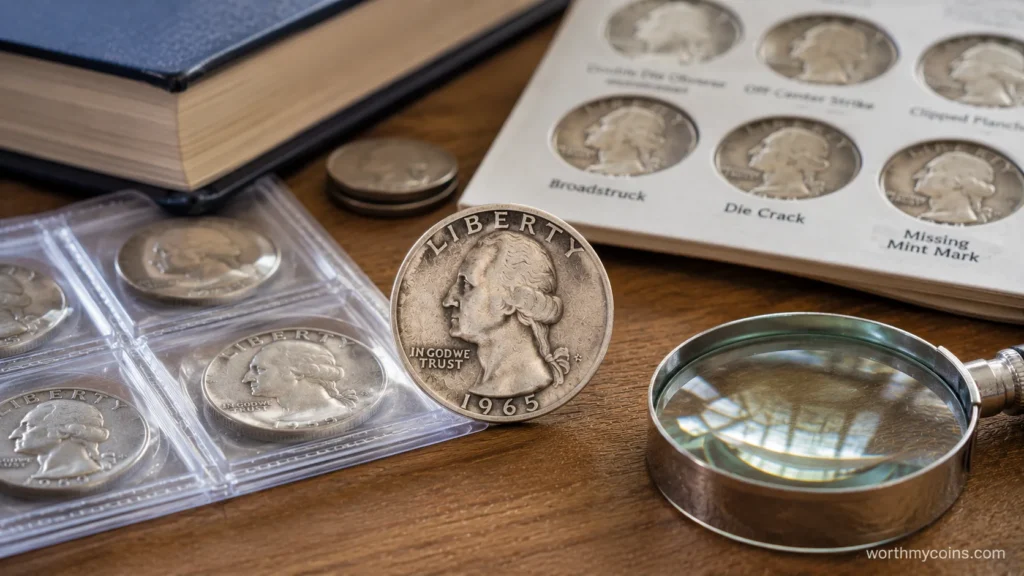
Doubled Die Errors
Among the most respected varieties in U.S. coin collecting are doubled die errors. These occur during the creation of the working die rather than during the striking process. As a result, every coin struck from that die displays the same doubling.
True doubled dies show distinct separation between letters, numbers, or design elements. They should not be confused with machine doubling, which results from slight movement during striking and usually carries little or no collector premium.
Collectors often inspect:
- The date
- “LIBERTY”
- “IN GOD WE TRUST”
- Washington’s profile
- Reverse lettering and details
Some Washington quarters have recognized doubled die varieties listed by major attribution services. Because many forms of doubling can look similar, authentication is recommended before assigning significant value.
Off-Center Strikes
Off-center strikes occur when the blank planchet is not properly centered between the dies during striking.
Depending on how far the coin is misaligned, part of the design may be missing while the remaining details appear normal.
Collectors generally prefer examples that:
- Clearly display the date.
- Show a dramatic but identifiable off-center strike.
- Retain strong detail on the remaining design.
The desirability of an off-center quarter depends on the percentage of the design missing, overall eye appeal, and preservation.
Broadstrike Errors
A broadstrike occurs when the retaining collar fails to hold the planchet during striking.
Without the collar, the metal expands beyond its normal diameter, producing a coin that appears wider than usual while lacking the standard reeded edge.
Broadstruck Washington quarters often display:
- A larger-than-normal diameter
- Missing or incomplete reeded edge
- Full design with expanded outer areas
These errors are easily recognized and remain popular with collectors because they clearly demonstrate a minting malfunction.
Clipped Planchet Errors
Clipped planchets are created before striking when the blanking press overlaps a previously punched area of the metal strip.
The result is a coin missing a curved, straight, or irregular section along its edge.
Common types include:
- Curved clips
- Straight clips
- Ragged clips
Authentic clipped planchets often exhibit the “Blakesley Effect,” a weakness in the rim opposite the clip caused by reduced striking pressure. This characteristic helps specialists distinguish genuine mint clips from later damage.
Die Crack Errors
Coining dies gradually wear under the tremendous pressure used to strike millions of coins.
As they age, small fractures may develop within the die. These cracks transfer as raised lines onto every coin struck afterward.
Minor die cracks are relatively common on many U.S. coins, while larger or more dramatic examples can attract greater collector interest.
Collectors should remember that raised lines generally indicate a die crack, whereas incuse scratches usually result from post-mint damage.
Die Breaks and Cuds
A die break occurs when part of the die fractures and breaks away.
When this missing section reaches the edge of the die, the resulting raised blob of metal on the finished coin is commonly called a cud.
Genuine cud errors are identifiable because they:
- Are raised above the coin’s surface
- Interrupt the rim
- Replace missing design elements rather than damaging them
Large cuds are among the more visually impressive die-state errors and are actively collected within many U.S. coin series.
Retained Die Breaks
In some cases, a cracked portion of the die remains partially attached instead of breaking away completely.
These retained die breaks produce raised, irregular areas that are often surrounded by visible die cracks.
They represent an intermediate stage between a simple die crack and a full cud, providing collectors with an interesting look at how minting dies deteriorate over time.
Filled Die Errors
Filled die errors, sometimes called grease-filled dies, occur when grease, metal particles, or debris temporarily clog recessed areas of the die.
When this happens, portions of the design may fail to strike fully.
Common indicators include:
- Missing letters
- Weak numbers
- Incomplete hair details
- Soft or absent design features
Unlike worn coins, filled die errors typically affect only specific recessed portions of the design while leaving the surrounding details relatively sharp.
Missing Clad Layer Errors
Beginning in 1965, circulating Washington quarters were produced using a clad composition consisting of outer copper-nickel layers bonded to a pure copper core. If one of the outer layers is missing before striking, the finished coin will have a noticeably different appearance.
A genuine missing clad layer error may display:
- A copper-colored surface on one side
- Reduced weight compared to the standard specification
- Weaker design details because less metal is available for the strike
Collectors should be cautious, as environmental damage, chemical exposure, or deliberate alterations can create a similar appearance. Professional authentication is recommended for any suspected missing clad layer error.
Struck-Through Errors
A struck-through error occurs when a foreign object is caught between the die and the planchet during striking. The object prevents part of the design from being fully impressed into the coin.
Depending on what caused the obstruction, struck-through errors may appear as:
- Smooth recessed areas
- Missing portions of lettering
- Irregular indentations
- Impressions left by cloth, wire, grease, or other debris
These errors are popular because each example is unique. Their desirability depends on how dramatic the obstruction is and whether the error is clearly identifiable.
Wrong Planchet Errors
One of the most fascinating Washington quarter errors occurs when a quarter design is struck on a planchet intended for another denomination or another coin series.
Examples certified by major grading services have included quarters struck on planchets intended for:
- Dimes
- Nickel planchets
- Foreign coin blanks in limited documented cases
Wrong planchet errors are uncommon and require professional authentication. Specialists verify them by examining the coin’s weight, diameter, thickness, metal composition, and striking characteristics.
Wrong planchet errors are among the most fascinating mistakes found on U.S. coins. If you’re interested in seeing how similar mint-production mistakes appear on early U.S. cents, our Lincoln Wheat Penny Value Guide (1909–1958) covers several well-known collectible examples.
Double Strikes
A double strike occurs when a coin receives more than one strike from the dies.
Depending on how the coin moves between strikes, the second impression may be:
- Slightly offset
- Dramatically shifted
- Rotated
- Partially overlapping
Well-defined double-struck Washington quarters are among the most visually striking mint errors and are especially desirable when both strikes remain clearly visible.
Partial Collar Errors
The retaining collar forms the reeded edge and controls the final diameter of the coin. If the collar fails to engage correctly during striking, only part of the coin receives the normal edge.
This produces what collectors often call a “railroad rim,” where part of the edge appears unusually high or distorted while the remainder looks normal.
Partial collar errors are readily identifiable and are recognized by major grading services as legitimate mint errors.
Die Adjustment Strikes
Before normal production begins, mint employees occasionally make adjustment strikes to ensure the dies are properly aligned and delivering the correct pressure.
These test strikes are intentionally weak and often show incomplete details across much of the coin.
Although genuine die adjustment strikes exist, they are considerably less common than ordinary weak strikes caused by worn dies or insufficient striking pressure. Authentication is especially important because many weakly struck coins are not adjustment strikes.
What Determines the Value of a Washington Quarter Error?
Unlike ordinary circulation coins, there is no universal price guide that applies to every Washington quarter error. Several factors determine how collectors value an individual piece.
Type of Error
Some mint errors occur more frequently than others. Dramatic and easily recognized errors—such as major off-center strikes, wrong planchets, or significant double strikes—typically attract greater collector interest than minor die cracks or small grease-filled die errors.
Coin Grade
Condition plays a major role in value. An uncirculated error with original mint luster is generally more desirable than the same error on a heavily worn coin.
Professional grading services evaluate factors including:
- Surface preservation
- Strike quality
- Luster
- Wear
- Eye appeal
Authentication
If you think you’ve found a significant error coin, professional authentication is one of the best ways to confirm that the error is genuine before buying, selling, or estimating its value.
Professional attribution is particularly important for:
If you believe you’ve found a significant mint error, avoid cleaning or attempting to “improve” its appearance before submission. Original surfaces are important during authentication and grading.
- Wrong planchet errors
- Doubled dies
- Missing clad layer errors
- Double strikes
- Rare die varieties
Authentication is especially important for famous rarities. For example, the legendary 1943 Bronze Lincoln Wheat Penny remains one of the best-known authenticated U.S. mint errors because of its exceptional rarity.
Collector Demand
Some error types enjoy strong long-term popularity because they are dramatic, educational, and easy to recognize.
Demand can also vary depending on:
- The date
- Mint mark
- Error size
- Overall rarity
- Market trends
Rather than focusing solely on price, collectors often value error coins for their uniqueness and the insight they provide into the minting process.
Many collectors expand from quarter errors into other classic U.S. series. The Morgan Dollar Value Guide explores another highly collectible series where rare dates, mint errors, and condition can dramatically affect value.
Coin Grading Overview
Grading is one of the most important aspects of determining a coin’s desirability. The Sheldon Scale, ranging from Poor (P-1) to Mint State (MS-70), is the standard grading system used for U.S. coins.
| Grade Range | General Description |
|---|---|
| P-1 to G-4 | Heavy wear with major details visible |
| VG-8 to F-12 | Moderate wear with stronger design features |
| VF-20 to XF-45 | Light to moderate wear with good detail |
| AU-50 to AU-58 | Slight wear with most mint luster remaining |
| MS-60 to MS-70 | No circulation wear; condition varies based on surface quality and eye appeal |
For error coins, grading and error attribution work together. A dramatic mint error in high Mint State condition may be especially desirable because both the preservation and the manufacturing mistake contribute to collector appeal.
Tips for Identifying and Collecting Washington Quarter Errors
If you’re interested in building an error coin collection, patience and careful study are often more valuable than luck.
Some practical tips include:
- Learn how genuine mint errors occur before making purchases.
- Compare suspected errors with authenticated examples from reputable grading services.
- Use proper lighting and magnification when examining coins.
- Weigh unusual coins with a precision digital scale.
- Store coins in archival-quality holders to prevent damage.
- Keep records of where and when each coin was obtained.
- Consider professional authentication for unusual or potentially valuable finds.
Many collectors enjoy searching bank rolls, inherited collections, estate sales, and dealer inventory for overlooked error coins.
Common Mistakes New Collectors Make
Many beginners mistakenly believe any unusual-looking quarter is rare. In reality, most damaged coins have little or no collector premium.
Common mistakes include:
- Confusing machine doubling with a true doubled die
- Mistaking scratches for die cracks
- Assuming discoloration indicates a missing clad layer
- Believing any off-center appearance is a mint error
- Cleaning coins before having them examined
- Purchasing expensive “errors” without authentication
Taking time to learn the minting process helps collectors avoid costly mistakes and make better buying decisions.
Frequently Asked Questions
Are all Washington quarter errors valuable?
No. Many minor mint errors carry only modest premiums, while dramatic or rare authenticated errors may be much more desirable. Value depends on the specific error, condition, rarity, and collector demand.
Can I find Washington quarter errors in circulation?
Yes. Although uncommon, genuine mint errors still occasionally appear in circulation, coin rolls, and inherited collections.
Should I clean an error coin?
No. Cleaning can permanently damage a coin’s surface and reduce its collector appeal. It is generally best to leave coins in their original condition.
How can I tell if my quarter has a real mint error?
Study known error types, compare your coin with authenticated examples, and consider submitting unusual pieces to a reputable third-party grading service for evaluation.
Does every doubled coin have a doubled die?
No. Many coins displaying doubling actually show machine doubling, which is created during striking and is generally less collectible than a true doubled die.
Can circulated Washington quarter errors still be valuable?
Yes. Many genuine mint errors are discovered after years of circulation. While wear may reduce collector value compared with an uncirculated example, authenticated errors can still be desirable depending on the error type, rarity, and overall eye appeal.
Should I weigh every unusual-looking quarter?
Not necessarily. Weight is most useful when you suspect errors involving planchets, missing clad layers, or wrong-planchet strikes. For other error types, careful visual examination is often the first step.
As your knowledge grows, exploring other collectible U.S. coin series can help you better understand rarity, grading, and long-term collector demand. Our Mercury Dime Value Guide is another excellent resource for discovering historic coins that remain popular with collectors today.
Conclusion
Washington quarter errors remain one of the most interesting areas of U.S. coin collecting because every genuine mint error tells part of the coin’s production story. From doubled dies and clipped planchets to off-center strikes and wrong planchet errors, each type offers a closer look at how coins are made and why some mistakes become highly collectible.
The best approach is to focus on careful identification instead of chasing every unusual-looking coin. Learning how genuine mint errors differ from post-mint damage and checking trusted references will help you avoid common mistakes while making better collecting decisions.
Whether you’re searching pocket change or building a dedicated error collection, patience and attention to detail will always be your greatest advantages. Even though truly significant errors are uncommon, knowing what to look for makes the search far more rewarding.
References
All identification guidance in this article is based on published United States Mint information, recognized third-party grading standards, and established numismatic references. Because every mint error is unique, professional authentication remains the most reliable method of confirming rarity and attribution.
- United States Mint
- Professional Coin Grading Service (PCGS)
- Numismatic Guaranty Company (NGC)
- American Numismatic Association (ANA)
- Heritage Auctions
- Stack’s Bowers Galleries
- Newman Numismatic Portal
- A Guide Book of United States Coins (The Official Red Book) – Whitman Publishing

Narayan Kumar is the Founder and Author of Worth My Coins. She specializes in U.S. coin collecting, with a focus on coin identification, mint errors, grading, rare varieties, and collector education. Her goal is to publish accurate, well-researched, and easy-to-understand guides that help both new and experienced collectors make informed decisions. Every article is created using trusted numismatic references and is written with a commitment to accuracy, transparency, and long-term educational value.