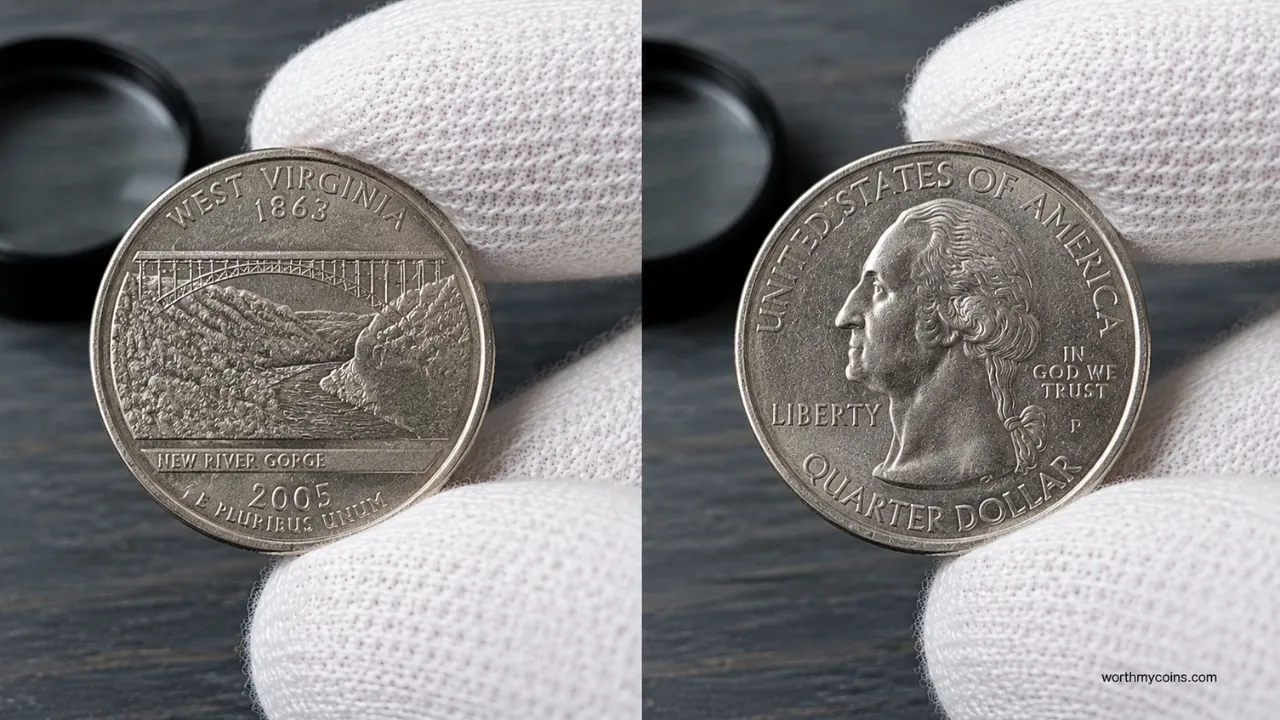
The State Quarters Program introduced millions of Americans to coin collecting. Released between 1999 and 2008, these quarters featured unique designs honoring each U.S. state and quickly became one of the most successful coin programs in history. Because so many people saved them, many collectors assume every State Quarter is common.
In reality, a small number of State Quarters stand out because of recognized mint errors, scarce varieties, unusual production issues, or exceptional preservation. While most examples remain worth face value, some deserve a much closer look.
Quick Answer
Most State Quarters found in circulation are common. However, certain issues have become collectible because of mint errors, variety status, condition rarity, or strong collector demand. Coins with certified high grades or recognized mint-made errors are generally the most desirable.
As with most collectible coins, no single factor guarantees desirability. Collectors usually evaluate rarity, condition, authenticity, and long-term demand together before determining whether a coin deserves closer examination.
What Makes a State Quarter Valuable?
A State Quarter usually becomes collectible because of one or more of the following factors:
| Factor | Why It Matters |
|---|---|
| Mint Error | Genuine mint-made errors attract collector interest. |
| Variety | Recognized varieties are often more desirable. |
| Grade | High-grade examples are scarcer. |
| Mint Mark | Some issues are harder to locate in premium condition. |
| Eye Appeal | Original surfaces and strong luster matter. |
| Certification | Authentication increases buyer confidence. |
Many State Quarters that appear ordinary at first glance can become much more interesting once collectors evaluate rarity, condition, varieties, and overall preservation together.
Collectors who enjoy searching modern circulating coinage may also want to explore Top 25 Modern Quarters Worth Money: Rare Coins Every Collector Should Know, which highlights additional quarter varieties, condition rarities, and collector favorites beyond the State Quarters series.
Top 10 State Quarters Worth Money
1. 2004-D Wisconsin Extra Leaf High
The Wisconsin State Quarter is one of the most famous coins from the entire program.
Collectors discovered a variety showing an extra leaf on the corn stalk design. The additional leaf appears in a different position than intended, creating what became known as the Extra Leaf High variety.
Because the variety is widely recognized and actively collected, authenticated examples continue to attract strong interest.
2. 2004-D Wisconsin Extra Leaf Low
The second Wisconsin variety is known as the Extra Leaf Low.
Like the High Leaf variety, it features an additional leaf on the corn stalk, but the position differs noticeably. Specialists generally classify both varieties separately.
These coins remain among the most searched-for State Quarter varieties in circulation.
3. 2005-P Minnesota Doubled Die Quarter
The Minnesota State Quarter is known for several doubled die varieties.
Some examples display extra tree details that appear to the right of the original design elements. Multiple die varieties have been identified by specialists, making this one of the most studied State Quarter issues.
Because numerous varieties exist, proper attribution is important before assuming a coin is a recognized collectible.
4. 1999-P Delaware Quarter Spitting Horse Variety
The Delaware quarter was the first coin released in the State Quarters Program.
A die crack extending from the horse’s mouth created what collectors commonly call the Spitting Horse variety.
Although not every Delaware quarter shows this feature, authenticated examples remain popular among collectors who specialize in modern varieties.
Why Mint Errors Matter
Collectors interested in error coins should also review Washington Quarter Error Guide: Rare Mint Errors Every Collector Should Know, which covers several of the production mistakes that continue to attract strong collector interest.
Most collectible State Quarters are not desirable simply because of their age.
Instead, many gain collector interest because they display genuine mint-made characteristics that differ from ordinary production.
Collectors generally look for:
- Doubled dies
- Die cracks
- Off-center strikes
- Struck-through errors
- Clipped planchets
- Die chips
- Missing clad layers
Understanding the difference between a genuine mint-made error and post-mint damage is one of the most important skills a collector can develop.
5. 2005 Kansas “In God We Rust” Quarter
The Kansas State Quarter became famous because of a grease-filled die error.
On affected coins, part of the word TRUST failed to strike properly, causing the inscription IN GOD WE TRUST to appear as IN GOD WE RUST.
Because the missing letter occurred during production, collectors recognize these examples as legitimate mint errors rather than circulation damage.
6. 2000-P South Carolina Off-Center Strike
Off-center State Quarters can be found from many years and states, but dramatic examples are considerably scarcer than normal strikes.
When a planchet is improperly positioned during striking, part of the design may be missing while the date remains visible.
Collectors generally place the highest value on dramatic off-center strikes that still show enough design detail to identify the coin.
Off-center strikes remain one of the most recognizable mint errors in modern coinage. Additional examples can be found in Washington Quarter Error Guide: Rare Mint Errors Every Collector Should Know.
How to Identify Potentially Valuable State Quarters
Many of the same diagnostics used for State Quarters can also help identify collectible modern quarter varieties. See Most Valuable Washington Quarter Errors Every Collector Should Know for additional examples worth studying.
Before assuming a quarter is rare, carefully examine:
- The date
- Mint mark
- Edge condition
- Lettering quality
- Signs of doubling
- Unusual design features
- Strike quality
A magnifying glass or coin loupe can help reveal details that are difficult to see with the naked eye.
7. 2001-P New York State Quarter With Missing Clad Layer
One of the more unusual errors collectors occasionally encounter involves a missing clad layer.
Modern U.S. quarters are struck on a clad planchet consisting of outer nickel layers bonded to a copper core. If one of the outer layers is missing before striking, the coin may appear lighter in color and weigh less than a normal quarter.
Because environmental damage and post-mint alteration can sometimes create a similar appearance, collectors should verify suspected missing-clad-layer coins through careful examination or professional authentication.
8. 1999 Georgia State Quarter Struck on an Experimental Planchet
The State Quarters Program coincided with the U.S. Mint’s testing of alternative metallic compositions.
A small number of State Quarters have been discovered struck on experimental planchets intended for use in other denominations. These coins are extremely unusual and have generated considerable interest among specialists.
Identifying a genuine experimental planchet requires expert authentication because appearance alone is not enough to confirm the error.
9. 2003-P Maine State Quarter Double Strike Error
Double-struck quarters are among the most visually impressive mint errors.
These occur when a coin receives more than one strike while remaining inside the coining press. Depending on the amount of movement between strikes, portions of the design may appear duplicated or misaligned.
State Quarters with dramatic double-strike errors are generally much scarcer than ordinary circulation pieces and often receive strong collector attention.
10. 2008-D Alaska State Quarter Major Off-Center Strike
The Alaska State Quarter marked one of the final releases in the State Quarters Program.
While ordinary examples remain common, dramatic off-center strike errors are considerably scarcer. Collectors generally prefer examples where the date remains visible because identification becomes easier.
The combination of a popular design and a dramatic mint error makes these pieces especially interesting to error-coin collectors.
Why Condition Matters More Than Many Collectors Realize
Not every valuable State Quarter is an error coin.
In fact, some quarters become desirable simply because they survive in exceptional condition.
Professional grading services evaluate:
| Grading Factor | Why It Matters |
|---|---|
| Wear | Less wear increases collector appeal. |
| Strike Quality | Sharper details are preferred. |
| Surface Preservation | Fewer marks improve eye appeal. |
| Original Luster | Strong luster is desirable. |
| Eye Appeal | Attractive coins often attract more demand. |
Many State Quarters were saved by the public, but truly superb certified examples remain much scarcer than many people expect.
Because large numbers of State Quarters were saved, many collectors assume high-grade examples are easy to find. In reality, coins with exceptional strike quality, original luster, minimal marks, and top certified grades can be far scarcer than ordinary uncirculated examples.
This concept is not unique to State Quarters. The 1932-D Washington Quarter Value Guide: Rare Key Date, Mint Marks & Current Prices shows how condition and scarcity can significantly influence collector demand.
What Is Condition Rarity?
Condition rarity occurs when a coin is relatively common overall but genuinely scarce in top grades.
For example:
- Millions of a particular State Quarter may exist.
- Thousands may survive uncirculated.
- Only a small number may achieve the highest certified grades.
Because advanced collectors often compete for the finest-known examples, Condition rarity can become just as important as mintage figures when collectors compete for the finest certified examples.
Common Mistakes People Make
Many collectors searching through old quarter collections make similar mistakes.
Assuming Every State Quarter Is Valuable
Most State Quarters remain common and worth face value.
The presence of a state design alone does not make a coin rare.
Confusing Damage With Mint Errors
Scratches, dents, corrosion, and machine damage are often mistaken for valuable mint errors.
Collectors should focus on characteristics known to originate during the minting process.
Ignoring Condition
Even a recognized variety may attract less interest if it is heavily worn, damaged, or cleaned.
Trusting Viral Claims
Many online videos and social media posts exaggerate values for ordinary State Quarters.
Collectors should rely on documented rarity and verified market data rather than viral claims. Resources such as Top 25 Modern Quarters Worth Money: Rare Coins Every Collector Should Know provide a more realistic look at desirable modern quarter issues.
Actual market value depends on authentication, condition, rarity, and collector demand rather than sensational headlines.
Should You Have a State Quarter Professionally Graded?
Professional grading may be worthwhile if your quarter appears to have:
- A recognized variety
- A major mint error
- Exceptional preservation
- Strong eye appeal
- Characteristics suggesting significant collector demand
Certification can help verify authenticity, document the coin’s condition, and provide buyers and sellers with greater confidence.
Frequently Asked Questions
Are State Quarters still found in circulation?
Yes.
Although the State Quarters Program ended in 2008, millions of these coins remain in circulation today. Many collectors continue searching bank rolls, pocket change, and inherited collections for interesting varieties and mint errors.
Which State Quarter is considered the most famous?
The 2004-D Wisconsin Extra Leaf varieties are among the most famous State Quarter collectibles. Both the Extra Leaf High and Extra Leaf Low varieties remain popular because they are well-documented and widely recognized by collectors.
Are all State Quarter errors valuable?
No.
Many unusual-looking coins are actually damaged after leaving the Mint. Genuine mint errors are created during production and generally require verification before being considered collectible.
How can I tell if my State Quarter is valuable?
Start by checking:
- Date
- Mint mark
- Condition
- Signs of a recognized variety
- Evidence of a genuine mint error
- Certification status
Collectors typically evaluate all of these factors together rather than relying on any single characteristic when estimating collector appeal.
Should I clean a State Quarter?
No.
Cleaning can permanently alter the coin’s surface and often reduces collector interest. Even common coins are generally preferred with original surfaces rather than cleaned or polished ones.
Are State Quarters a good series for beginners?
Absolutely.
The State Quarters Program remains one of the best entry points into coin collecting because the coins are affordable, widely available, historically interesting, and include numerous collectible varieties and errors.
Tips for Buying and Selling Valuable State Quarters
Before buying or selling a quarter variety, it helps to understand how other collectible quarter issues are evaluated. See Top 25 Modern Quarters Worth Money: Rare Coins Every Collector Should Know for additional context on rarity and collector demand.
Whether you’re purchasing a certified variety or selling a coin you’ve discovered in circulation, following a few basic guidelines can help.
When Buying
- Purchase authenticated varieties whenever possible.
- Study recognized errors before making a purchase.
- Compare multiple examples before deciding.
- Buy from reputable dealers or established auction companies.
When evaluating a recognized variety or mint error, compare the coin with documented reference examples whenever possible. Proper attribution is important because many ordinary coins can appear unusual without representing a collectible variety.
When Selling
- Avoid cleaning the coin.
- Take clear photographs.
- Compare recent auction results rather than asking prices.
- Consider certification for significant varieties or major errors.
Collectors who take time to understand grading, rarity, and authentication generally make better long-term decisions.
Key Lessons to Remember
If you’re searching through State Quarters, keep these points in mind:
- Most State Quarters are common.
- Genuine mint errors are usually more desirable than ordinary circulation pieces.
- Condition can dramatically influence collector demand.
- Authentication is important for unusual varieties.
- Viral value claims are often exaggerated.
- Understanding rarity, condition, and authentication is usually more valuable than luck alone.
Many collectors discover that the real excitement comes not from finding a rare coin immediately, but from learning how to recognize one when it appears.
Conclusion
The State Quarters Program created one of the most popular coin-collecting movements in American history. While most examples remain worth face value, a handful stand out because of recognized varieties, genuine mint errors, condition rarity, and strong collector demand.
Coins such as the Wisconsin Extra Leaf varieties, Minnesota doubled dies, Kansas “In God We Rust” error, and other documented mint mistakes demonstrate that valuable collectibles can still be hidden in everyday collections.
Before assuming a quarter is rare, take time to examine the date, mint mark, condition, and any unusual characteristics. Understanding these factors will help you separate truly collectible coins from ordinary circulation finds and make more informed decisions as your collection grows.
References
The information in this guide is based on trusted numismatic resources, including:
- United States Mint
- Professional Coin Grading Service (PCGS)
- Numismatic Guaranty Company (NGC)
- American Numismatic Association (ANA)
- Heritage Auctions
- Stack’s Bowers Galleries
- Newman Numismatic Portal
- Error-Ref.com
- APMEX Learning Center
These organizations provide valuable information on coin identification, grading standards, mint errors, and collector market trends.

Narayan Kumar is the Founder and Author of Worth My Coins. She specializes in U.S. coin collecting, with a focus on coin identification, mint errors, grading, rare varieties, and collector education. Her goal is to publish accurate, well-researched, and easy-to-understand guides that help both new and experienced collectors make informed decisions. Every article is created using trusted numismatic references and is written with a commitment to accuracy, transparency, and long-term educational value.