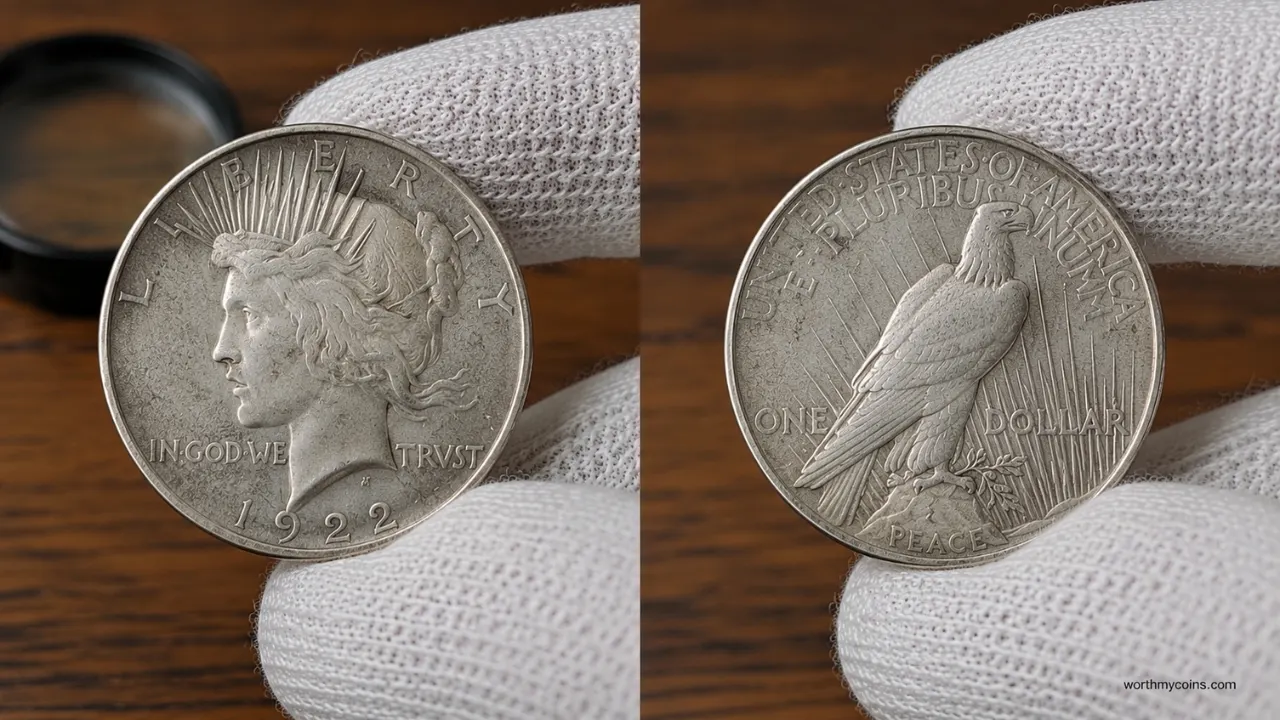
The Peace Silver Dollar is one of the most iconic coins in American history. Introduced in 1921 to commemorate the return of peace following World War I, the series combines artistic beauty with strong collector demand. While many Peace Dollars remain affordable, a handful have become legendary because of their rarity, exceptional condition, or remarkable auction performance.
Whether you inherited a collection or recently discovered an old silver dollar, understanding what makes certain Peace Dollars valuable can help you recognize coins that deserve closer attention. In this guide, we’ll explore ten of the most desirable Peace Dollars and explain why collectors continue to pursue them.
Quick Answer
The most valuable Peace Silver Dollars typically combine low mintages, scarce survival rates, exceptional Mint State preservation, recognized varieties, or outstanding eye appeal. Rather than having one fixed value, each coin’s market price depends on its grade, authenticity, certification, collector demand, and recent auction results.
Collectors interested in another famous U.S. silver dollar series should also read our Morgan Dollar Value Guide: Rare Dates, Mint Errors & Collector Tips, where we explain the history, key dates, and collecting strategies for one of America’s most popular silver dollar collections.
Why Peace Dollars Are So Popular
The Peace Dollar represents the final circulating silver dollar struck for commerce in the United States before the modern Eisenhower Dollar appeared decades later.
Designed by Anthony de Francisci, the coin features:
- Lady Liberty wearing a radiant crown on the obverse
- A perched bald eagle holding an olive branch on the reverse
- The word PEACE, making it unique among U.S. silver dollars
Collectors appreciate the series because it combines historical importance with several key dates and condition rarities.
What Makes a Peace Dollar Valuable?
No single factor determines whether a Peace Dollar commands a premium.
Instead, collectors evaluate several characteristics together before estimating a Peace Dollar’s collector appeal.
| Factor | Why It Matters |
|---|---|
| Date | Some years are significantly scarcer. |
| Mint Mark | Certain mints produced fewer collectible coins. |
| Grade | Higher-grade coins are much harder to find. |
| Strike Quality | Fully struck examples are often more desirable. |
| Eye Appeal | Original luster and attractive toning increase demand. |
| Certification | Third-party grading confirms authenticity and condition. |
These characteristics explain why two Peace Dollars from the same date can attract very different levels of collector demand.
Top 10 Peace Silver Dollars Worth Money
1. 1921 Peace Dollar (High Relief)
The 1921 High Relief Peace Dollar is one of the most famous coins in the series.
Produced only during the first year of issue, it features a dramatic high-relief design that required greater striking pressure than later coins. Because the design proved impractical for mass production, the Mint adopted a lower-relief version beginning in 1922.
Today, the 1921 issue remains one of the most desirable Peace Dollars, particularly in well-preserved certified grades.
2. 1928 Peace Dollar
The 1928 Philadelphia Peace Dollar is widely recognized as the key-date business strike of the series.
Its relatively low mintage compared with other Peace Dollars has made it a cornerstone of complete collections. Collectors assembling a full date-and-mint set often consider this coin one of the most challenging regular issues to acquire.
3. 1934-S Peace Dollar
The 1934-S is another highly sought-after issue.
Although many examples entered circulation, sharply preserved Mint State coins are considerably scarcer today. Strong collector demand has kept this issue among the most desirable dates in the series.
Why Auction Records Matter
Completed auction sales generally provide a more reliable indication of current collector demand than online asking prices because they reflect actual market transactions. Comparing multiple recent auction results also provides a broader picture than relying on a single record-setting sale.
When collectors discuss coins that have “sold for record prices,” they are referring to documented public auction results rather than asking prices on online marketplaces.
Auction records provide valuable insight because they reflect completed transactions between buyers and sellers rather than unsold asking prices.
However, it’s important to remember that record-setting examples usually possess exceptional characteristics, including:
- Outstanding preservation
- Professional certification
- Original surfaces
- Exceptional eye appeal
- Scarcity in the assigned grade
One record-setting sale should never be interpreted as the value of every coin from the same date.
Collectors interested in another famous early silver dollar should also read our 1921 Morgan Silver Dollar Value Guide: Rare Mint Marks, Errors & Current Prices, where we explain how rarity, grading, and collector demand influence another historically important silver dollar series.
4. 1935-S Peace Dollar
The 1935-S is one of the final issues of the original Peace Dollar series and remains popular with collectors.
Although it is not as scarce as some earlier key dates, attractive certified Mint State examples continue to receive significant collector attention because relatively few survive with exceptional surface preservation and original mint luster.
5. 1927-D Peace Dollar
The 1927-D Peace Dollar is a date that often draws attention from collectors because well-preserved examples are considerably scarcer than circulated coins.
Although it is not the lowest-mintage issue in the series, finding coins with sharp strikes, original mint luster, and minimal contact marks becomes increasingly difficult in higher Mint State grades. As a result, certified examples in superior condition have achieved impressive auction results over the years.
6. 1924-S Peace Dollar
The 1924-S is another key issue that advanced Peace Dollar collectors watch closely.
San Francisco Peace Dollars are known for producing many coins with weaker strikes than their Philadelphia counterparts. Coins that combine a strong strike with attractive surfaces are noticeably scarcer and often receive greater collector interest.
Rather than judging this issue by mintage alone, specialists also consider strike quality and the number of certified high-grade survivors.
7. 1927-S Peace Dollar
The 1927-S Peace Dollar is appreciated for both its historical significance and its relative scarcity in higher grades.
Many surviving examples entered circulation, leaving comparatively few with full mint luster and minimal wear. Collectors assembling premium-quality Peace Dollar sets frequently compete for attractive certified examples.
8. 1934-D Peace Dollar
Although often overshadowed by the famous 1934-S, the 1934-D remains one of the better dates in the series.
Collectors value it because attractive Mint State examples are much less common than circulated pieces. High-grade certified coins continue to perform well whenever they appear at major auctions, particularly those with exceptional eye appeal.
Why High-Grade Coins Sell for Record Prices
When people read headlines about Peace Dollars selling for extraordinary amounts, the record-setting coin is almost always an exceptional example.
Several characteristics separate these coins from ordinary specimens:
| Factor | Why It Matters |
|---|---|
| Mint State Grade | Higher certified grades are significantly scarcer. |
| Original Luster | Natural, untouched surfaces increase desirability. |
| Strike Quality | Sharply struck details are preferred. |
| Eye Appeal | Attractive toning and clean surfaces improve demand. |
| Certification | PCGS or NGC certification increases buyer confidence. |
Because relatively few Peace Dollars survive in superb condition, competition among advanced collectors can push auction prices dramatically higher.
9. 1928-S Peace Dollar
The 1928-S is another San Francisco issue that deserves attention.
Although more available than the Philadelphia key date, premium-quality examples remain difficult to locate. Collectors often seek coins with strong strikes, attractive luster, and minimal abrasions, qualities that become increasingly uncommon in higher grades.
Collectors who enjoy comparing different classic U.S. silver dollar series should also read our 1921 Morgan Silver Dollar Value Guide: Rare Mint Marks, Errors & Current Prices, where we explain how grading, mint marks, and collector demand influence another legendary silver dollar.
10. 1926-S Peace Dollar
The 1926-S Peace Dollar completes this list because of its continuing popularity among collectors pursuing complete date-and-mint collections.
While circulated examples are obtainable, coins with exceptional preservation, original surfaces, strong eye appeal, and certified Mint State grades are much scarcer.
Common Mistakes Collectors Make
Many beginners mistakenly assume every Peace Dollar is worth a fortune simply because it contains silver.
Some of the most common mistakes include:
Cleaning the Coin
Cleaning removes original surfaces and often lowers collector appeal. Even lightly cleaned coins may sell for less than comparable examples with natural surfaces.
Focusing Only on Mintage
A lower mintage does not always mean the highest value. Survival rates, condition rarity, and collector demand often have an even greater impact.
Believing Every Auction Price Applies to Every Coin
Record auction results usually involve exceptional certified examples with outstanding preservation. Most circulated coins do not command the same premiums.
Ignoring Professional Authentication
Certification from PCGS or NGC helps confirm authenticity and provides an independent assessment of grade, making significant Peace Dollars easier for both buyers and sellers to evaluate with confidence.
Collectors interested in another historic U.S. dollar series should also read our Susan B. Anthony Dollar Value Guide: Rare Finds That Continue to Surprise Collectors, which explains how rarity, condition, and collector demand influence values for a very different generation of American dollar coins.
Frequently Asked Questions
Which Peace Silver Dollar is considered the rarest?
Among regular circulation issues, the 1928 Philadelphia Peace Dollar is widely recognized as the key-date business strike because it has the lowest regular-issue mintage in the series. The 1921 High Relief is also one of the most desirable coins because it was struck only during the first year using the original high-relief design.
Why do some Peace Dollars sell for record prices?
Record-setting auction prices are typically achieved by coins that combine several important characteristics:
- Rare date or mint mark
- Exceptional Mint State grade
- Original mint luster
- Strong strike
- Outstanding eye appeal
- Professional certification
Most auction records involve certified examples that are among the finest known for their date and mint, not average circulated coins.
Should I clean a Peace Silver Dollar?
No.
Cleaning can permanently alter the coin’s original surfaces and significantly reduce collector interest. Even lightly cleaned coins often sell for less than comparable examples with natural surfaces.
How can I tell if my Peace Dollar is valuable?
Start by examining:
- Date
- Mint mark
- Overall condition
- Original surfaces
- Strike quality
- Certification status
If your coin appears to be a better date or is in unusually high grade, professional authentication can help determine its authenticity and market appeal.
Are all Peace Dollars made of silver?
Yes. Original circulation-strike Peace Dollars minted from 1921 through 1935 were struck in 90% silver and 10% copper. Modern collector issues introduced beginning in 2021 use a different composition.
Should I have my Peace Dollar professionally graded?
Professional grading is often worthwhile if your coin is:
- A 1921 High Relief
- A 1928 Philadelphia issue
- A 1934-S
- A high-grade Mint State example
- An unusually attractive or potentially rare variety
Certification from respected grading services such as PCGS or NGC helps verify authenticity and gives buyers greater confidence.
Tips for Buying and Selling Peace Silver Dollars
When comparing certified Peace Dollars, remember that small differences in strike quality, surface preservation, original luster, and eye appeal can influence long-term collector demand even when two coins share the same date and grade.
Whether you’re purchasing your first Peace Dollar or selling an inherited collection, a careful approach can make a significant difference.
Keep these best practices in mind:
- Buy certified key dates whenever possible.
- Compare recent auction results instead of asking prices.
- Purchase from reputable dealers and established auction houses.
- Avoid cleaned or damaged coins unless they’re clearly identified.
- Store collectible coins in protective holders to preserve their surfaces.
- Study grading standards before making major purchases.
Collectors who enjoy comparing America’s two classic silver dollar series should also read our Morgan Dollar Value Guide: Rare Dates, Mint Errors & Collector Tips, where we explain how key dates, mint marks, and grading influence values throughout the Morgan Dollar series.
Conclusion
The Peace Silver Dollar series may be relatively short, but it contains some of the most admired and historically significant coins in American numismatics. From the impressive 1921 High Relief to the famous 1928 key date and elusive 1934-S, these coins continue to attract collectors because of their artistry, history, and rarity.
Although headlines often highlight spectacular auction prices, those sales almost always involve exceptional certified examples with outstanding preservation and eye appeal. Most Peace Dollars should be evaluated individually based on their date, mint mark, condition, originality, and collector demand rather than assuming every silver dollar is a rare treasure.
Whether you’re building a complete Peace Dollar collection or evaluating an inherited coin, understanding the factors that influence collector demand can help you make more informed collecting decisions while appreciating one of America’s most iconic silver dollar series.
References
This guide is based on information from trusted numismatic organizations and industry references, including:
- APMEX Learning Center (Peace Dollar Key Dates & Varieties)
- United States Mint
- Professional Coin Grading Service (PCGS)
- Numismatic Guaranty Company (NGC)
- American Numismatic Association (ANA)
- Heritage Auctions
- Stack’s Bowers Galleries
- Newman Numismatic Portal

Narayan Kumar is the Founder and Author of Worth My Coins. She specializes in U.S. coin collecting, with a focus on coin identification, mint errors, grading, rare varieties, and collector education. Her goal is to publish accurate, well-researched, and easy-to-understand guides that help both new and experienced collectors make informed decisions. Every article is created using trusted numismatic references and is written with a commitment to accuracy, transparency, and long-term educational value.