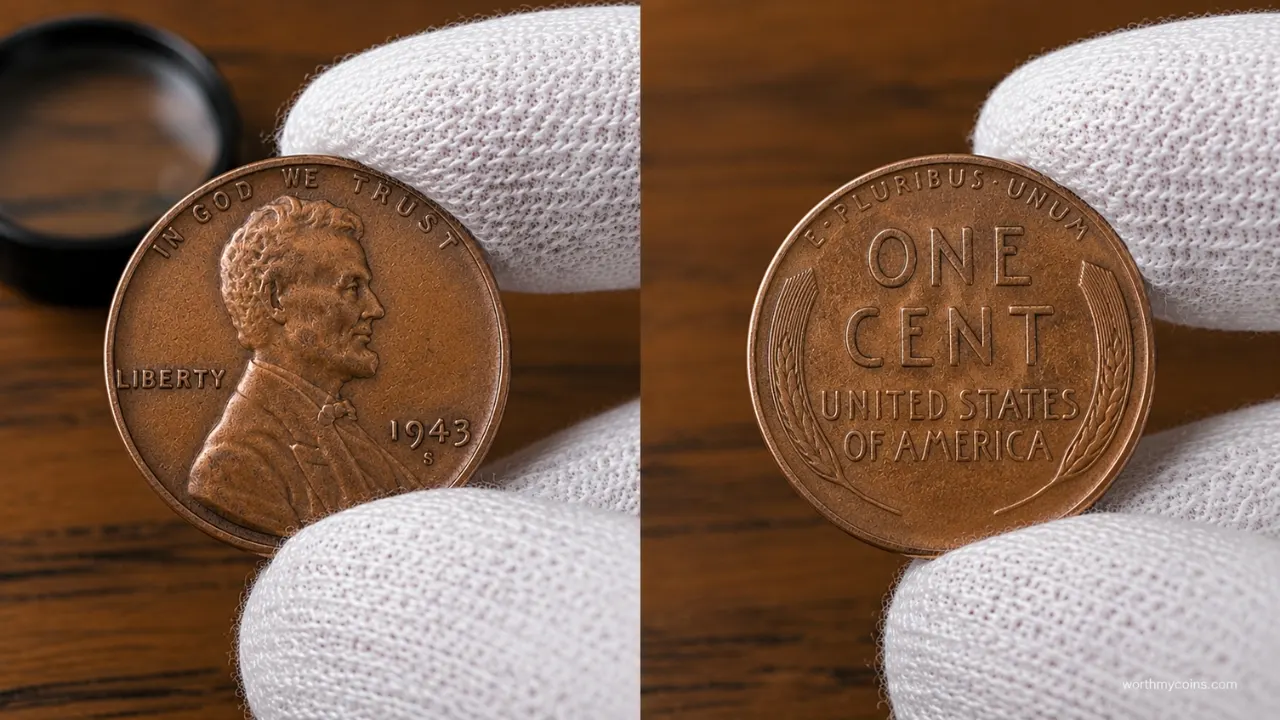
Lincoln Wheat Pennies are among the most collected U.S. coins ever produced, and for good reason. While millions were struck between 1909 and 1958, a handful of dates, mint marks, and famous varieties have become legendary among collectors. Some are prized because of their extremely low mintages, while others are famous for dramatic mint errors or unique historical circumstances.
If you’ve been saving old pennies or recently inherited a coin collection, this guide will introduce you to ten Lincoln Wheat Pennies that every collector should know before spending or selling them.
Quick Answer
Not every Lincoln Wheat Penny is rare, but certain dates, mint marks, and recognized varieties are highly collectible. Coins such as the 1909-S VDB, 1943 bronze cent, and 1955 Doubled Die are considered some of the most important Wheat Pennies because of their rarity, historical significance, and long-standing collector demand.
Readers who want a complete overview of the series should also read our Lincoln Wheat Penny Value Guide (1909–1958): Prices, Errors & Rare Coins, where we explain the history of the series, grading standards, key dates, and collecting strategies in much greater detail.
Quick Identification Checklist
Before assuming a Lincoln Wheat Penny is valuable, check these details first:
- Verify the date.
- Look for the mint mark below the date.
- Compare the coin with photographs from trusted numismatic references.
- Avoid cleaning the coin.
- Consider professional authentication if it appears to match a recognized key date or major variety.
These simple steps help collectors identify coins that deserve closer examination before buying or selling.
What Makes a Lincoln Wheat Penny Valuable?
Collectors rarely judge a Lincoln Wheat Penny by its age alone. Instead, they evaluate the date, mint mark, variety, condition, originality, certification, and current collector demand together before deciding whether a coin deserves closer attention.
| Factor | Why It Matters |
|---|---|
| Date | Some years had much lower surviving populations than others. |
| Mint Mark | Philadelphia, Denver, and San Francisco issues vary in rarity. |
| Variety | Certain die varieties are among the most famous U.S. coin errors. |
| Grade | Better-preserved coins generally attract stronger collector demand. |
| Certification | Professionally authenticated coins provide buyers with greater confidence. |
No single characteristic determines value. Collectors evaluate the date, mint mark, variety, condition, originality, certification, and current collector demand together before estimating a coin’s desirability.
The Top 10 Lincoln Wheat Pennies Every Collector Should Check
1. 1909-S VDB Lincoln Wheat Penny
The 1909-S VDB is widely regarded as the king of regular-issue Lincoln Wheat Pennies.
It was struck during the first year of the Lincoln cent series and features designer Victor David Brenner’s initials (VDB) on the reverse. Public criticism over the prominent initials led the Mint to remove them shortly after production began, resulting in a very limited number of San Francisco examples.
Because of its low mintage and historical importance, it remains one of the first coins collectors hope to add when building a complete Wheat Penny collection.
For collectors who want to examine this famous first-year issue in greater detail, our 1909-S VDB Lincoln Wheat Penny Value Guide: Why This Rare Cent Is So Important to Collectors covers the key identification and collecting details behind this important date.
2. 1943 Bronze Lincoln Wheat Penny
Most 1943 Lincoln cents were struck using zinc-coated steel because copper was needed for the World War II effort.
However, a very small number of bronze planchets from 1942 were accidentally left in the presses and struck with the 1943 date. These accidental transitional errors are among the rarest and most valuable coins in American numismatics.
Because of their fame, they are also heavily counterfeited. Many altered coins have appeared over the years, making professional authentication essential before assuming a coin is genuine.
Because authentication is such an important part of identifying this rarity, collectors can also consult our 1943 Bronze Lincoln Wheat Penny Value Guide: Identification, Rarity & Collector’s Guide for a closer look at the characteristics used to evaluate suspected examples.
3. 1943-D Bronze Lincoln Wheat Penny
Even rarer than the Philadelphia bronze issue is the 1943-D Bronze Lincoln Wheat Penny struck at the Denver Mint.
Only a tiny number of genuine examples are known, making this one of the most celebrated transitional error coins in U.S. coin collecting.
Its rarity is so extraordinary that each newly confirmed example attracts significant attention from collectors and major auction houses.
Authentication by a respected third-party grading service is considered essential because altered steel cents and counterfeit pieces frequently appear in the marketplace.
4. 1955 Doubled Die Lincoln Penny
The 1955 Doubled Die Lincoln Penny is arguably the most famous error coin ever produced by the U.S. Mint.
Strong doubling is clearly visible on the date, the word LIBERTY, and the motto IN GOD WE TRUST, making it recognizable even to many beginning collectors.
Unlike minor forms of machine doubling, this dramatic doubled die variety resulted from the die creation process itself and is recognized by all major grading services.
Collectors examining a suspected example should compare the actual doubling carefully with recognized diagnostics. Our 1955 Doubled Die Lincoln Penny Value Guide: How to Identify This Famous Error Coin provides a more detailed look at how genuine examples are identified.
5. 1914-D Lincoln Wheat Penny
The 1914-D Lincoln Wheat Penny is one of the most important key dates in the entire Wheat Cent series. Although it isn’t as famous as the 1909-S VDB, genuine examples are especially important to collectors building a complete date-and-mint set, with higher-grade pieces presenting an even greater challenge.
Many circulated examples were heavily used before collectors recognized their scarcity. As a result, attractive original pieces are much harder to locate today.
Because counterfeit mint marks occasionally appear on common Philadelphia coins, authentication is recommended before purchasing or selling a suspected 1914-D.
Because several famous Lincoln Wheat Pennies are frequently counterfeited or altered, collectors should verify important dates and mint marks carefully before assuming a coin is genuine.
6. 1931-S Lincoln Wheat Penny
The 1931-S is another classic key date that collectors watch for.
It was struck during the Great Depression, when demand for new coins was relatively low. Its limited production helped make the 1931-S one of the better-known key dates in the series.
Unlike some famous error coins, the 1931-S owes its popularity primarily to limited production and decades of collector demand rather than a dramatic mint mistake.
7. 1922 “No D” Lincoln Wheat Penny
One of the most interesting coins in the Lincoln Wheat Penny series is the 1922 No D.
Since Denver was the only mint producing Lincoln cents in 1922, every genuine coin from that year should normally display a D mint mark. However, die deterioration and filled dies created a small number of coins where the mint mark is weak or missing.
Collectors should know that several different “No D” varieties exist, and not every weak mint mark represents the highly desirable variety. Authentication is especially important because altered coins are sometimes offered as genuine examples.
8. 1944 Steel Lincoln Wheat Penny
Most 1944 Lincoln Wheat Pennies returned to the traditional bronze composition after the steel cents of 1943.
However, a very small number were mistakenly struck on leftover steel planchets from the previous year. These transitional errors are among the rarest Lincoln cents ever produced.
Because genuine examples are extraordinarily rare, collectors should be cautious of altered coins that have been plated or modified to imitate the appearance of steel.
Professional authentication is considered essential before assuming a 1944 steel cent is genuine.
9. 1958 Doubled Die Obverse Lincoln Penny
Although the Wheat Penny series ended in 1958, one of its rarest varieties comes from the final year.
The 1958 Doubled Die Obverse is much scarcer than the better-known 1955 Doubled Die. Strong doubling can be seen on the obverse inscriptions, making it one of the most significant Lincoln cent varieties recognized by collectors.
Because very few genuine examples are known, it remains one of the most desirable die varieties in the entire series.
10. 1909-S Lincoln Wheat Penny (No VDB)
While it often receives less attention than the famous VDB variety, the 1909-S without VDB is also an important key date.
After Victor David Brenner’s initials were removed from the reverse, the San Francisco Mint continued producing Lincoln cents without the initials. These coins remain much scarcer than most other Wheat Pennies and are considered essential for collectors assembling a complete set.
Its historical connection to the first year of the Lincoln cent series continues to make it one of the most respected regular issues among numismatists.
Why Grade Matters
Even among these famous Lincoln Wheat Pennies, condition can dramatically influence collector demand.
Professional grading services evaluate a coin’s wear, strike quality, surface preservation, originality, eye appeal, and overall condition before assigning a grade.
| Grading Factor | Why It Matters |
|---|---|
| Wear | Less circulation wear generally increases desirability. |
| Strike Quality | Sharply struck details are preferred. |
| Surface Preservation | Original, undamaged surfaces are highly valued. |
| Color | Copper coins may receive Brown (BN), Red-Brown (RB), or Red (RD) designations. |
| Eye Appeal | Attractive natural appearance often improves marketability. |
For copper coins, original color is particularly important. Certified Red examples are generally much scarcer than Brown examples of the same date and grade.
Common Mistakes Collectors Make
Many beginners accidentally overlook valuable Wheat Pennies or misidentify common ones.
Some of the most frequent mistakes include:
- Assuming every old Wheat Penny is rare.
- Cleaning coins before having them evaluated.
- Ignoring the mint mark.
- Confusing machine doubling with genuine doubled dies.
- Trusting social media price claims instead of certified auction records.
- Buying expensive key dates without professional authentication.
Frequently Asked Questions
Are all Lincoln Wheat Pennies valuable?
No. While every Lincoln Wheat Penny has historical appeal, most common-date circulated examples are affordable. Coins become significantly more desirable when they have a key date, scarce mint mark, recognized variety, exceptional preservation, or professional certification.
Which Lincoln Wheat Penny is considered the most important?
Most collectors consider the 1909-S VDB Lincoln Wheat Penny the key date of the series because of its very low mintage and historical importance as part of the first year of Lincoln cent production.
Should I clean an old Wheat Penny?
No.
Cleaning almost always reduces collector appeal because it can permanently alter the coin’s original surfaces, making it less desirable to many collectors. Even if a coin appears dirty or toned, experienced collectors generally prefer natural surfaces over polished or chemically cleaned examples.
How can I tell if my Wheat Penny is rare?
Start by checking:
- The date
- The mint mark
- Overall condition
- Whether it matches a recognized variety
- Signs of original surfaces
If your coin appears to match a famous key date or error variety, professional authentication is recommended before buying or selling it.
Does professional grading increase value?
Grading itself does not automatically make a coin more valuable. However, certification by respected grading services confirms authenticity, assigns a recognized grade, and often increases buyer confidence when selling important coins.
Where is the mint mark on a Lincoln Wheat Penny?
On Lincoln Wheat Pennies, the mint mark appears below the date on the obverse.
- No mint mark = Philadelphia
- D = Denver
- S = San Francisco
Checking the mint mark is one of the first steps in identifying potentially valuable Wheat Pennies.
Before Paying a Premium
Before paying extra for any Lincoln Wheat Penny, consider the following:
- Confirm the date and mint mark.
- Compare the coin with certified examples.
- Review recent auction results instead of asking prices.
- Watch for altered mint marks and counterfeit key dates.
- Seek professional authentication when purchasing expensive coins.
Following these steps helps reduce the risk of paying premium prices for altered or misidentified coins.
Tips Before Buying or Selling
If you believe you’ve found one of these important Lincoln Wheat Pennies:
- Never clean the coin.
- Compare it with authenticated examples.
- Verify the date and mint mark carefully.
- Consider professional grading for key dates or famous varieties.
- Compare recent certified auction results instead of relying only on asking prices.
If the coin appears to be a 1943-D bronze cent, take extra care before assigning a value to it. Our The 1943-D Bronze Lincoln Wheat Penny That Sold for $840,000: History, Rarity & Value Explained provides additional context on this exceptionally rare Lincoln cent and the importance of authentication.
Conclusion
Lincoln Wheat Pennies continue to be one of the most rewarding U.S. coin series to collect because they combine history, rarity, and fascinating minting stories. While millions of Wheat Pennies remain common, the ten coins covered in this guide represent some of the most desirable issues every collector should recognize.
Remember that rarity is determined by much more than age. The date, mint mark, recognized variety, condition, originality, authentication, and collector demand all contribute to a Lincoln Wheat Penny’s appeal. Learning these fundamentals can help you make better decisions whether you’re searching through pocket change, evaluating an inherited collection, or building a Lincoln cent collection.
References
The information in this guide is based on recognized numismatic references and industry resources, including:
- APMEX Knowledge Center (Lincoln Wheat Penny key dates and varieties)
- United States Mint
- Professional Coin Grading Service (PCGS)
- Numismatic Guaranty Company (NGC)
- American Numismatic Association (ANA)
- Heritage Auctions
- Stack’s Bowers Galleries
- Newman Numismatic Portal

Narayan Kumar is the Founder and Author of Worth My Coins. She specializes in U.S. coin collecting, with a focus on coin identification, mint errors, grading, rare varieties, and collector education. Her goal is to publish accurate, well-researched, and easy-to-understand guides that help both new and experienced collectors make informed decisions. Every article is created using trusted numismatic references and is written with a commitment to accuracy, transparency, and long-term educational value.