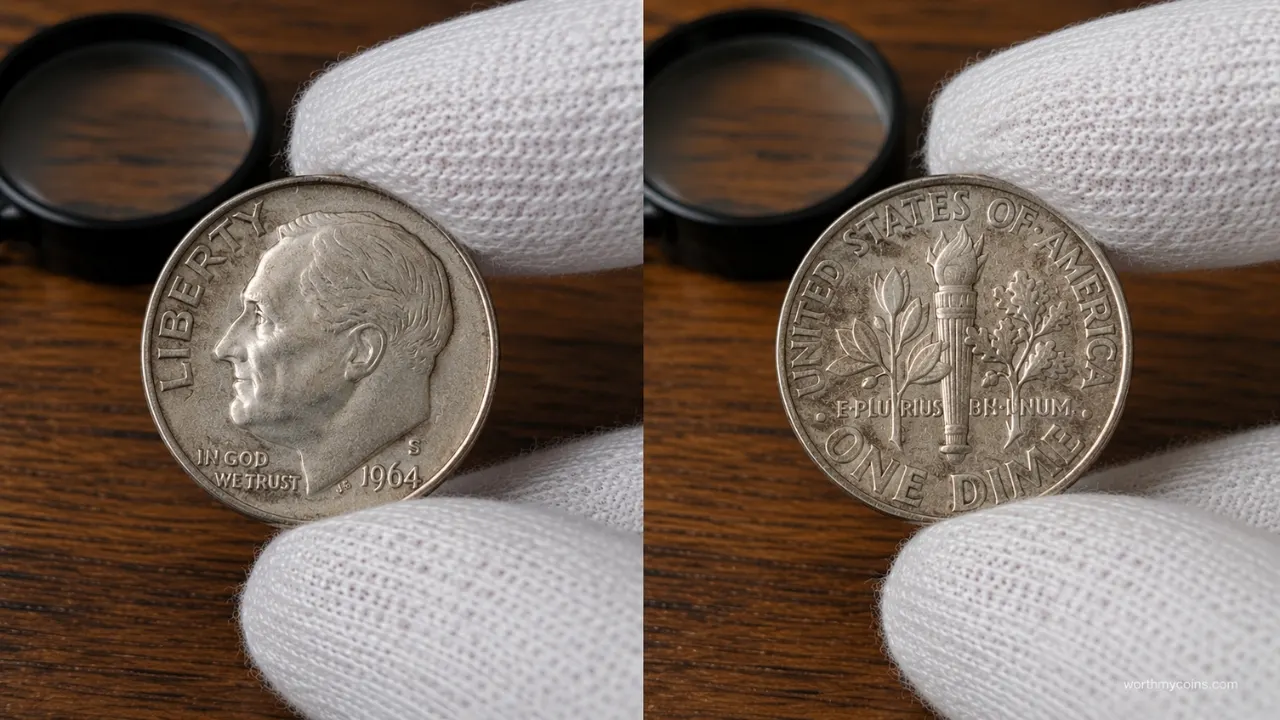
Roosevelt Dimes have been part of everyday American pocket change since 1946, which makes them easy to overlook. Most are only worth their face value, but a small number stand out because of low mintages, important mint errors, high-grade rarity, or silver content. Learning how to recognize these coins can help collectors avoid spending a potentially valuable dime.
Many collectors begin by checking dates and mint marks before examining condition or possible mint errors. This simple habit makes it much easier to identify coins that deserve additional research.
Whether you’re searching through a coin jar or building a complete Roosevelt Dime collection, understanding which dates and varieties matter most is the first step toward making smarter collecting decisions.
Quick Answer
While the majority of Roosevelt Dimes are common, certain dates, mint marks, proof issues, silver compositions, certified high-grade coins, and recognized mint errors are significantly more desirable. Their value depends on rarity, condition, eye appeal, certification, and current collector demand rather than age alone.
Readers who are interested in the earlier silver dime series should also read our Mercury Dime Value Guide: The Rare Coins Every Collector Wants to Find, where we explain the key dates, grading standards, and history of one of America’s most popular collectible dime series.
Why Some Roosevelt Dimes Are Worth More Than Others
Not every Roosevelt Dime has the same collector appeal.
Several important factors determine whether a coin deserves closer attention.
| Value Factor | Why It Matters |
|---|---|
| Date | Certain years are much scarcer than others. |
| Mint Mark | Some mints produced lower surviving populations. |
| Composition | Early Roosevelt Dimes contain 90% silver. |
| Condition | Better-preserved coins are generally more desirable. |
| Mint Errors | Genuine mint-made errors often command strong collector interest. |
| Certification | Professional grading increases buyer confidence. |
Instead of focusing on a single characteristic, experienced collectors evaluate the date, mint mark, composition, condition, certification, eye appeal, and current collector demand together before estimating a coin’s desirability.
Silver Roosevelt Dimes vs. Clad Roosevelt Dimes
One of the easiest ways to separate common coins from more collectible ones is by understanding the composition.
1946–1964 Roosevelt Dimes
All Roosevelt Dimes struck from 1946 through 1964 were produced using 90% silver and 10% copper.
These coins are popular with both coin collectors and precious metal investors because they contain silver in addition to their numismatic value.
1965 and Later Roosevelt Dimes
Beginning in 1965, the U.S. Mint switched to a copper-nickel clad composition for regular circulation dimes.
Although most clad Roosevelt Dimes remain common, certain key dates, recognized mint errors, proof issues, and exceptionally high-grade certified examples continue to attract strong collector interest.
Quick Silver Dime Check
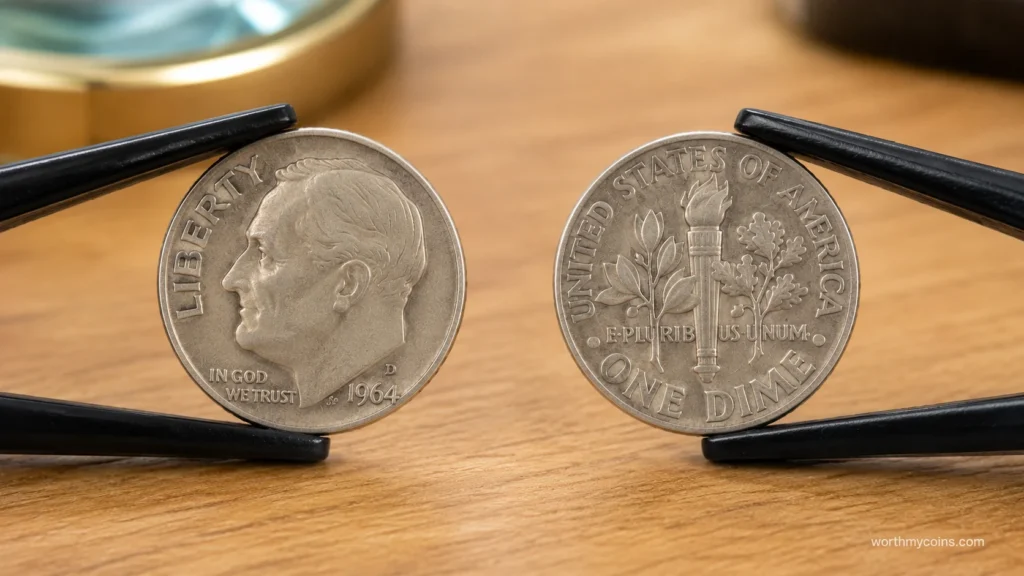
If you’re sorting through pocket change or inherited coins, start with these simple checks:
- Check the date first. Roosevelt Dimes dated 1946 through 1964 were struck in 90% silver.
- Look at the edge. A solid silver-colored edge usually indicates a silver coin, while a visible copper stripe typically indicates a clad coin.
- Don’t assume every older dime is rare. Silver content, condition, mint mark, certification, and collector demand all influence desirability.
These quick steps help collectors separate ordinary circulation coins from pieces that deserve closer examination.
The 15 Roosevelt Dimes Every Collector Should Know
The following Roosevelt Dimes are among the best-known coins and varieties in the series because of their rarity, collector demand, historical importance, silver content, or recognized mint errors.
1. 1949-S Roosevelt Dime
The 1949-S is one of the better-known early San Francisco issues.
Although many circulated examples remain available, sharply preserved Mint State coins become much more difficult to locate, making them especially attractive to advanced collectors.
2. 1950-S Roosevelt Dime
The 1950-S is another early San Francisco issue that receives considerable attention from collectors assembling complete Roosevelt Dime sets.
Original luster, strong strike quality, and clean surfaces are particularly important for this date.
3. 1951-S Roosevelt Dime
Many surviving examples circulated heavily before collectors began saving them.
As a result, coins with outstanding preservation often command much stronger collector interest than ordinary circulated pieces.
4. 1955 Roosevelt Dime
The Philadelphia issue from 1955 is widely collected, especially in higher certified grades where pristine examples become increasingly scarce.
Condition plays a much larger role than age alone.
5. 1964 Roosevelt Dime
The 1964 issue represents the final year of regular 90% silver Roosevelt Dime production.
Because it marks the end of the silver era for circulating dimes, it remains one of the most recognized dates in the entire series.
Collectors interested in learning about one of the most famous key-date silver dimes should also read our 1916-D Mercury Dime Value Guide: Rare Key Date, Errors, Mint Marks & Current Value, which explains how rarity, authentication, and grading influence collector demand.
6. 1968-S Proof Roosevelt Dime
Proof Roosevelt Dimes struck at the San Francisco Mint were produced specifically for collectors rather than general circulation.
When evaluating proof coins, collectors examine:
- Mirror-like fields
- Frosted devices
- Surface preservation
- Eye appeal
- Original packaging (when applicable)
Proof coins with exceptional preservation are generally more desirable than examples showing handling or environmental damage.
What Makes One Roosevelt Dime More Valuable Than Another?
Even two Roosevelt Dimes from the same year can differ dramatically in collector value.
Professionals evaluate several characteristics before determining desirability:
- Mint mark
- Strike quality
- Original surfaces
- Remaining mint luster
- Wear
- Eye appeal
- Certification
- Collector demand
Rather than relying on age alone, collectors consider authenticity, condition, originality, certification, and overall market demand before assigning additional collector value.
In the next section, we’ll continue with the remaining Roosevelt Dimes every collector should know, explore the most important mint errors, explain how grading affects value, and discuss common mistakes beginners make when evaluating these popular U.S. coins.
7. 1982 No-P Roosevelt Dime
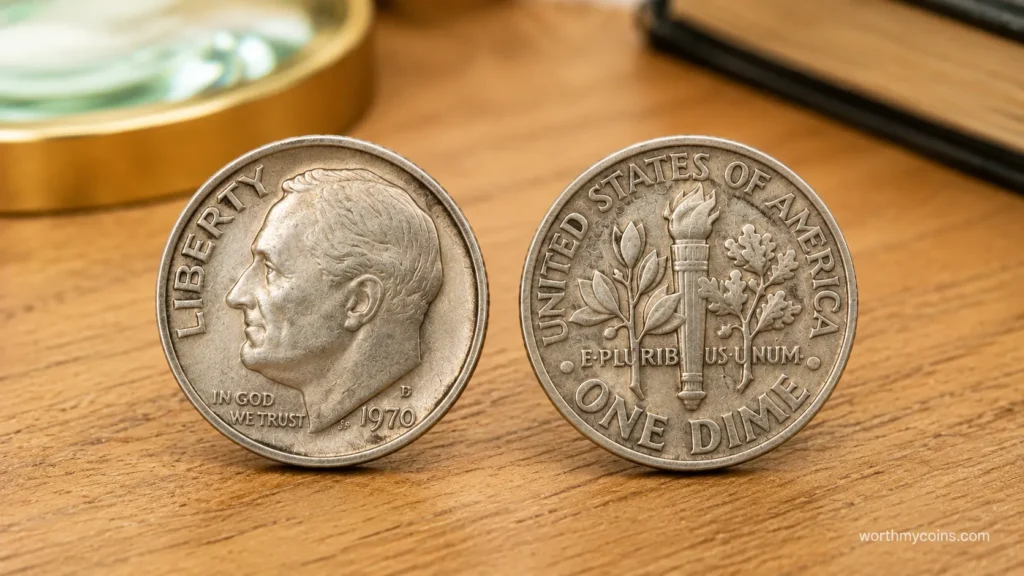
The 1982 No-P Roosevelt Dime is one of the most famous modern U.S. mint errors.
Normally, Philadelphia dimes struck after 1980 carry a “P” mint mark. However, a small number of 1982 Philadelphia dimes were accidentally released without it because one obverse die was prepared without the mint mark.
Collectors carefully verify these coins because ordinary circulation wear or damage cannot remove a mint mark—it must have been missing when the coin was struck. This error remains one of the most desirable Roosevelt Dime varieties.
8. 1996-W Roosevelt Dime
The 1996-W Roosevelt Dime was produced at the West Point Mint to celebrate the 50th anniversary of the Roosevelt Dime series.
Unlike regular circulation dimes, it was included only in special Mint Sets, giving it the lowest regular-issue mintage of the series at 1,457,000 coins. Because of its limited distribution, it has become one of the key modern Roosevelt Dimes every collector should recognize.
9. 1963 Doubled Die Reverse
The 1963 Doubled Die Reverse is a recognized variety that shows noticeable doubling on portions of the reverse lettering, particularly around “ONE DIME.”
Collectors should compare suspected examples with photographs from trusted numismatic references, since machine doubling and circulation damage are often mistaken for true doubled dies.
10. 1964-D Doubled Die Reverse
Another well-known variety is the 1964-D Doubled Die Reverse.
Doubling is most noticeable on the reverse inscriptions and is considerably scarcer than many minor Roosevelt Dime varieties. Authentication is recommended before assigning additional value to any suspected example.
Readers interested in another famous doubled-die silver dime should also read our 1942/41 Mercury Dime Value Guide: Rare Overdate Error, Mint Marks & Current Prices, where we explain how one of the best-known U.S. dime varieties was created and why collectors actively seek authenticated examples.
11. High-Grade Full Bands Roosevelt Dimes
Not every valuable Roosevelt Dime is rare because of its date.
Many collectors compete for coins certified with the Full Bands (FB) designation. This indicates exceptionally sharp strike detail across the horizontal bands of the torch on the reverse.
A common-date Roosevelt Dime with Full Bands in an elite Mint State grade may be considerably scarcer than lower-grade examples of a traditionally better-known date. PCGS and NGC both recognize Full Bands, though their exact attribution standards differ slightly.
12. Silver Proof Roosevelt Dimes
Collectors also pursue silver proof Roosevelt Dimes produced specifically for collector sets.
Beginning in 1992, the U.S. Mint resumed issuing silver proof Roosevelt Dimes for annual Silver Proof Sets. These coins were not intended for circulation and are collected for their mirror-like finish and precious metal content.
13. Missing Mint Mark Proof Errors
Some of the rarest Roosevelt Dimes known involve proof coins accidentally struck without the “S” mint mark.
These errors are extraordinarily rare and have been authenticated only in very small numbers. Because of their rarity and the existence of counterfeits, professional certification is essential before assuming a proof coin is a genuine missing-mint-mark variety.
14. Off-Metal and Wrong Planchet Errors
Although uncommon, a small number of Roosevelt Dimes have been discovered struck on the wrong metal planchets.
These mint errors occur when a blank intended for another denomination is accidentally fed into the coining press. Authentic examples are unusual and should always be verified by a recognized grading service before being represented as genuine mint errors.
15. Exceptional Mint State Registry Coins
Some Roosevelt Dimes become valuable simply because they survive in extraordinarily high certified grades.
Registry collectors often compete for the finest-known examples of otherwise common dates. In these cases, originality, luster, strike quality, and surface preservation become far more important than mintage alone.
Common Mistakes New Collectors Make
Many beginners overlook valuable Roosevelt Dimes because they focus only on age.
Some of the most common mistakes include:
- Assuming every silver Roosevelt Dime is equally scarce.
- Ignoring the mint mark.
- Confusing damage with genuine mint errors.
- Cleaning coins before evaluation.
- Trusting online asking prices instead of documented auction records.
- Overlooking the importance of professional certification.
Before assigning a premium to any Roosevelt Dime, compare it with reliable references and, for potentially significant finds, consider professional authentication.
In the final section, we’ll answer the most common collector questions, discuss buying and selling tips, provide trusted references, and summarize what makes a Roosevelt Dime truly worth searching for.
Frequently Asked Questions
Are all Roosevelt Dimes worth more than face value?
No. Most clad Roosevelt Dimes produced for circulation are common and usually worth only face value unless they feature a recognized mint error, an important variety, an exceptionally high certified grade, or another characteristic that attracts collector interest. Silver Roosevelt Dimes struck from 1946 through 1964 are generally more desirable because of both their silver content and numismatic appeal.
Which Roosevelt Dime is considered the rarest?
Several Roosevelt Dimes are considered key issues for different reasons. The 1982 No-P mint error, the 1996-W collector issue, and proof coins missing the “S” mint mark are among the best-known modern rarities. Their desirability depends on authenticity, condition, certification, and current collector demand rather than a single factor.
How can I tell if my Roosevelt Dime is silver?
Regular Roosevelt Dimes dated 1946 through 1964 were struck in 90% silver. Beginning in 1965, regular circulation coins changed to a copper-nickel clad composition. Modern silver Roosevelt Dimes are generally found only in certain collector proof sets issued by the U.S. Mint.
What does “Full Bands” mean?
The Full Bands (FB) designation refers to exceptionally sharp strike details across the horizontal bands on the torch found on the reverse of a Roosevelt Dime. Collectors often pay significant premiums for certified Full Bands examples because they are much scarcer than ordinary Mint State coins.
Should I clean my Roosevelt Dime?
No.
Cleaning can permanently alter a coin’s original surfaces, often reducing both its collector appeal and its marketability to experienced buyers.
Is professional grading worth it?
Professional grading may be worthwhile if your Roosevelt Dime appears to have:
- A recognized mint error
- A key date
- An important variety
- Exceptional Mint State preservation
- Full Bands details
- Strong eye appeal
Certification also confirms authenticity and provides an independent assessment of the coin’s condition.
Before You Buy or Sell
Before making any buying or selling decision, consider the following:
- Verify the date and mint mark carefully.
- Compare the coin with photographs from trusted numismatic references.
- Review recent certified auction results instead of online asking prices.
- Leave potentially valuable coins uncleaned.
- Consider professional authentication for key dates, important varieties, major mint errors, or unusually well-preserved examples.
These basic steps can help collectors avoid many of the mistakes commonly seen in the marketplace.
Buying and Selling Tips
Whether you’re buying or selling Roosevelt Dimes, a careful approach can help you avoid common mistakes.
Before purchasing a coin:
- Buy certified key dates whenever possible.
- Compare recent auction results rather than asking prices.
- Purchase from established coin dealers or respected auction firms.
- Verify important varieties before paying a premium.
If you’re selling a Roosevelt Dime:
- Do not clean the coin.
- Keep any original Mint packaging if applicable.
- Consider professional grading for potentially valuable examples.
- Compare multiple offers before accepting a sale.
Following these steps helps ensure you make informed decisions based on the coin’s actual collectible characteristics rather than internet hype.
How to Build a Roosevelt Dime Collection
Many collectors begin by assembling a complete date-and-mint collection before moving on to more advanced goals.
Popular collecting approaches include:
- Complete silver Roosevelt Dime sets (1946–1964)
- Complete date-and-mint collections
- Full Bands registry sets
- Major mint-error collections
- Proof-only collections
Each approach offers different challenges, allowing beginners and advanced collectors alike to build collections that match their interests and budgets.
Conclusion
Roosevelt Dimes may be one of the most familiar coins in American pocket change, but they also include some of the most interesting modern collectibles. While many examples remain common, certain dates, mint errors, silver issues, and high-grade certified coins continue to attract strong collector attention.
The key to identifying a valuable Roosevelt Dime is looking beyond the date alone. Mint marks, silver composition, condition, recognized varieties, and professional certification all play an important role in determining collector demand. Taking the time to study these factors can help you recognize coins that deserve a closer look while avoiding many of the misconceptions surrounding this long-running U.S. coin series.
Readers who would like to continue exploring classic U.S. dimes should also read our Mercury Dime Value Guide: The Rare Coins Every Collector Wants to Find, which explains the predecessor to the Roosevelt Dime series and highlights many of the key dates, grading concepts, and collecting strategies that remain relevant today.
References
The information in this guide is based on trusted numismatic references, including:
- United States Mint
- Professional Coin Grading Service (PCGS)
- Numismatic Guaranty Company (NGC)
- American Numismatic Association (ANA)
- Heritage Auctions
- Stack’s Bowers Galleries
- Newman Numismatic Portal
- APMEX Learning Center (Roosevelt Dime key dates and varieties)

Narayan Kumar is the Founder and Author of Worth My Coins. She specializes in U.S. coin collecting, with a focus on coin identification, mint errors, grading, rare varieties, and collector education. Her goal is to publish accurate, well-researched, and easy-to-understand guides that help both new and experienced collectors make informed decisions. Every article is created using trusted numismatic references and is written with a commitment to accuracy, transparency, and long-term educational value.