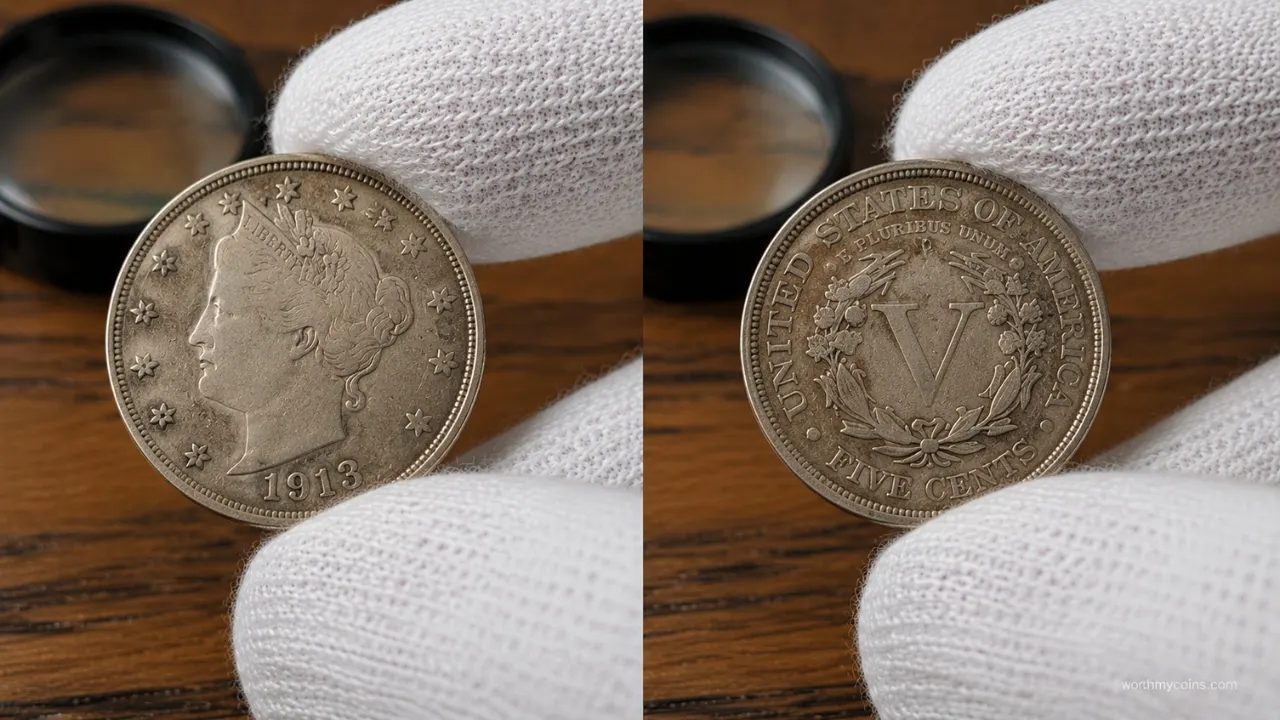
Few American coins have achieved the legendary status of the 1913 Liberty Head Nickel. Even people with little interest in coin collecting have likely heard stories about this mysterious five-cent coin selling for millions of dollars. Unlike many rare coins that survive in the thousands, only five genuine examples of the 1913 Liberty Head Nickel are known today.
Its rarity, unusual history, and remarkable auction appearances have made it one of the most famous coins ever produced by the United States Mint. For collectors, it represents far more than a valuable nickel—it is one of the greatest treasures in American numismatics.
Quick Answer
The 1913 Liberty Head Nickel is one of the rarest U.S. coins ever known. Only five authentic specimens are recognized today, making it extraordinarily desirable among museums, advanced collectors, and major auction houses. Rather than having a fixed value, each coin’s market price depends on its condition, provenance, certification, collector demand, and recent auction results.
Readers who want to learn more about collectible U.S. nickels should also read our Buffalo Nickel Value Guide: Rare Dates, Mint Errors & Collector Tips, where we explain key dates, rarity, grading, and collecting strategies across one of America’s most popular nickel series.
Why Is the 1913 Liberty Head Nickel So Famous?
The Liberty Head Nickel series officially ended in 1912 when the Buffalo Nickel replaced it in 1913.
However, five Liberty Head Nickels bearing the date 1913 somehow came into existence despite there being no official authorization for regular production. Their exact origin has been debated for more than a century, although historians generally believe the coins were struck under unusual circumstances at the Philadelphia Mint before the Buffalo Nickel entered full production.
Regardless of how they were created, these five coins have become some of the most studied and documented pieces in American numismatic history.
How Many 1913 Liberty Head Nickels Exist?
Today, only five genuine specimens are known.
Each example has been carefully documented and traced through decades of ownership, exhibitions, and public auctions. Because every specimen has its own history and pedigree, collectors often refer to the coins by the names of famous owners rather than by grade alone.
This remarkable provenance makes authentication straightforward for genuine examples while making newly “discovered” pieces extremely unlikely.
Specifications
| Feature | Details |
|---|---|
| Country | United States |
| Denomination | Five Cents |
| Date | 1913 |
| Mint | Philadelphia |
| Mint Mark | None |
| Composition | 75% Copper, 25% Nickel |
| Weight | 5.00 grams |
| Diameter | 21.2 mm |
| Edge | Plain |
| Designer | Charles E. Barber |
| Known Genuine Examples | Five |
Quick Identification Checklist
Before assuming you’ve found a genuine 1913 Liberty Head Nickel, verify these basics:
- Date reads 1913.
- Liberty Head (Barber) design appears on the obverse.
- Large Roman numeral “V” appears on the reverse.
- No Buffalo Nickel design is present.
- Weight, dimensions, and design match official U.S. Mint specifications.
- If authenticity is uncertain, seek professional authentication before buying or selling.
This simple checklist helps eliminate many common reproductions and altered coins before a more detailed evaluation.
Why Does It Command Such Extraordinary Prices?
Many coins are rare, but very few combine rarity with worldwide recognition.
The 1913 Liberty Head Nickel is unique because it brings together several qualities that collectors value most:
- Only five authentic examples are known.
- It has one of the most fascinating stories in American coin collecting.
- Every genuine specimen has been extensively documented.
- The coin has appeared in several record-setting public auctions.
- It is widely recognized even outside the numismatic community.
Rather than assigning a universal value, specialists evaluate each specimen individually based on its preservation, documented provenance, certification, collector demand, and the results of recent public auction sales.
How to Identify a Genuine 1913 Liberty Head Nickel
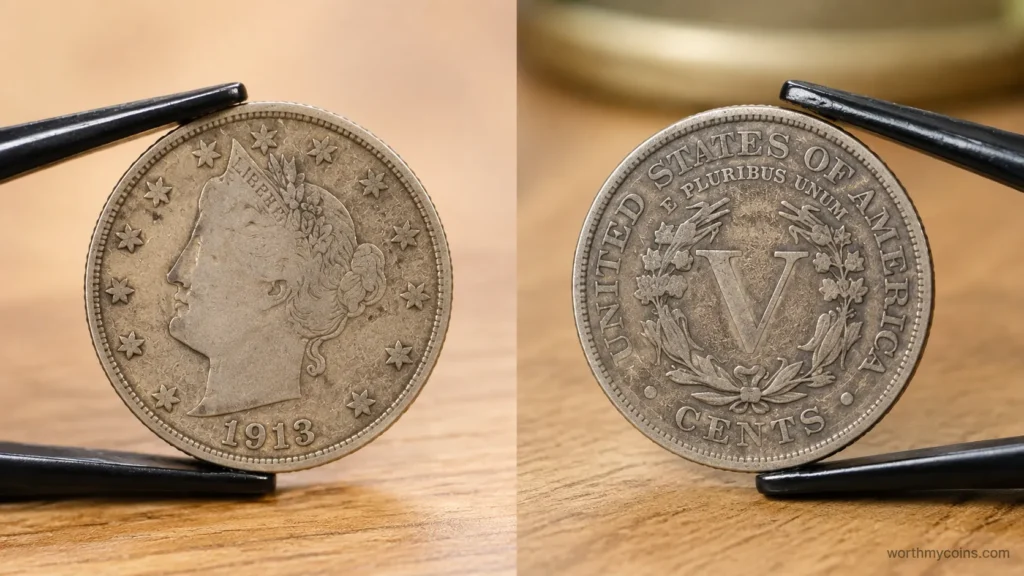
Because of its extraordinary rarity, nearly every “1913 Liberty Head Nickel” offered in circulation, flea markets, estate sales, or online marketplaces is a replica, fantasy piece, altered coin, or souvenir reproduction rather than one of the five documented genuine specimens.
Collectors should begin by checking these basic characteristics.
Obverse
The front of the coin features:
- A left-facing portrait of Liberty
- A coronet inscribed with LIBERTY
- Thirteen stars surrounding the portrait
- The date 1913
Reverse
The reverse displays:
- A large Roman numeral V
- A wreath surrounding the denomination
- “UNITED STATES OF AMERICA”
- “CENTS”
Unlike later Buffalo Nickels introduced in 1913, the Liberty Head design follows the classic style used throughout the series beginning in 1883.
Can You Still Find One in Circulation?
Realistically, no. Every genuine 1913 Liberty Head Nickel has been documented and studied for decades, making the discovery of an unknown authentic specimen extraordinarily unlikely. While collectors still encounter replica coins, fantasy pieces, souvenir reproductions, altered nickels, and educational copies, these should never be mistaken for one of the five documented genuine specimens.
However, collectors still encounter:
- Replica coins
- Souvenir reproductions
- Fantasy pieces
- Altered nickels
- Novelty copies made for educational purposes
These items may be interesting collectibles in their own right, but they should never be confused with one of the five genuine 1913 Liberty Head Nickels.
Readers interested in learning how collectors distinguish genuinely valuable nickels from common examples should also read our How to Tell If Your Buffalo Nickel Is Valuable: 9 Signs Collectors Look For, which explains the key factors professionals examine when evaluating collectible U.S. nickels.
Why Authentication Is Essential
Few U.S. coins have been copied as often as the 1913 Liberty Head Nickel.
For that reason, authentication is not simply recommended—it’s essential.
Professional grading services evaluate several characteristics that help confirm authenticity and identify known genuine specimens:
- Weight and dimensions
- Metal composition
- Die characteristics
- Surface quality
- Provenance
- Historical documentation
Because all five genuine examples are already known, authentication usually confirms whether a coin is a reproduction rather than identifying a newly discovered specimen.
Because every genuine specimen has a documented ownership history, collectors should be especially cautious of extraordinary discovery claims that are not supported by recognized grading services or historical documentation.
In the next section, we’ll explore the famous five specimens, discuss how provenance influences collector interest, explain why this coin has sold for millions at major auctions, and look at the factors experts use when evaluating one of America’s greatest numismatic treasures.
The Five Known Specimens
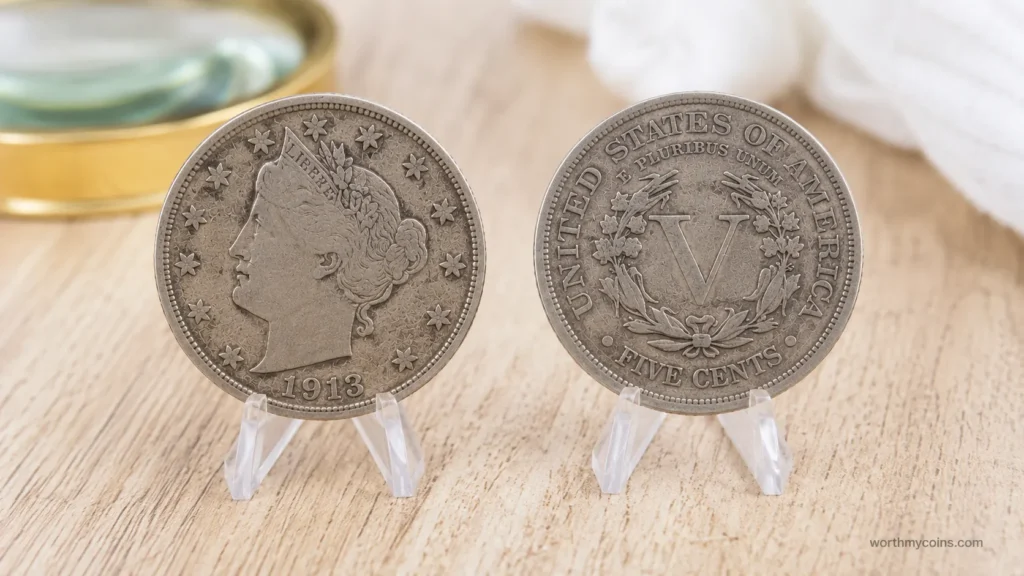
One of the most fascinating aspects of the 1913 Liberty Head Nickel is that every genuine coin is individually known to the numismatic community.
Rather than being identified only by grade, these five coins are commonly referred to by the names of prominent collectors or institutions that once owned them.
Among the best-known examples are:
- Eliasberg Specimen
- Olsen Specimen
- Walton Specimen
- McDermott Specimen
- Norweb Specimen
Each coin has its own documented ownership history, often called its provenance. This continuous record of ownership helps establish authenticity and adds to the coin’s historical importance.
Why Provenance Matters
For many collectible coins, provenance is helpful.
For the 1913 Liberty Head Nickel, it is absolutely essential.
Since only five genuine examples exist, experts already know where each specimen has been, who has owned it, and when it has appeared at auction or public exhibitions.
A strong provenance helps:
- Confirm authenticity
- Trace ownership history
- Increase buyer confidence
- Preserve historical significance
- Support long-term collector value
Coins with well-documented histories are often more attractive to advanced collectors than similar pieces lacking detailed records.
Why Has This Coin Sold for Millions?
People often assume the coin is valuable simply because it’s old.
In reality, its extraordinary market appeal comes from several factors working together.
| Value Factor | Why It Matters |
|---|---|
| Only Five Known | One of the rarest U.S. coins ever documented. |
| Historical Significance | Represents one of the greatest mysteries in American numismatics. |
| Provenance | Every genuine specimen has a remarkable ownership history. |
| Collector Demand | Elite collectors actively compete whenever one becomes available. |
| Auction History | Major auction appearances receive worldwide attention. |
Because public sales are extremely rare, each auction attracts significant interest from collectors, museums, and investors alike.
Rather than having a standard market price, each specimen is valued individually based on its condition, provenance, certification, and current demand.
Could Someone Still Discover Another Genuine Example?
This question is asked frequently.
While it is impossible to prove that another specimen could never exist, numismatic experts generally consider the possibility extremely unlikely.
Every known genuine coin has been carefully studied for decades.
Any newly discovered example would require extraordinary evidence, including:
- Professional authentication
- Die analysis
- Metallurgical examination
- Historical documentation
- Provenance research
Without this level of verification, claims of finding a genuine sixth specimen are almost certainly treated as reproductions or altered coins.
Common Reproductions and Replica Coins
Because of the coin’s fame, many replica versions have been produced.
Collectors regularly encounter:
- Souvenir copies
- Museum replicas
- Fantasy strikes
- Gold-plated reproductions
- Novelty collectibles
These pieces are often clearly marked as replicas, although some older copies may not be.
Owning a replica can still be enjoyable for educational or display purposes, but replicas have a very different collector market and should never be represented as genuine 1913 Liberty Head Nickels.
Common Mistakes Beginners Make
Assuming Every 1913 Nickel Is Valuable
Not every nickel dated 1913 is a Liberty Head Nickel.
The vast majority of 1913 nickels are Buffalo Nickels, which are genuine collectible coins but far more common than the legendary Liberty Head issue.
Readers interested in understanding the first year of the Buffalo Nickel series should also read our Buffalo Nickel Key Dates and Values: The Coins Every Collector Should Know, where we explain which dates and mint marks deserve the closest attention.
Buying Uncertified Examples
Because authentic examples are extraordinarily valuable, reputable collectors purchase only professionally authenticated specimens.
An uncertified “1913 Liberty Head Nickel” offered at a bargain price should immediately raise suspicion.
Believing Every Online Story
Internet articles and social media videos sometimes suggest that ordinary Liberty Nickels or Buffalo Nickels are worth millions.
In reality, the multi-million-dollar prices apply only to the five documented 1913 Liberty Head Nickels—not to ordinary Liberty Head Nickels from other years.
Lessons for Modern Collectors
Even if owning a genuine 1913 Liberty Head Nickel isn’t realistic for most collectors, the coin still offers valuable lessons.
It demonstrates why rarity alone isn’t enough.
Collectors also consider:
- Historical importance
- Provenance
- Authentication
- Certification
- Long-term collector demand
- Condition
These same principles apply when evaluating many other collectible U.S. coins.
Readers who enjoy learning about rare mint-made varieties should also read our Jefferson Nickel Error Guide: Rare Errors, Valuable Varieties & Collector Tips, which explains how genuine mint errors are identified and authenticated.
Should You Have an Old Liberty Nickel Authenticated?
If you own a Liberty Head Nickel from another year—not 1913—professional authentication may still be worthwhile if the coin appears to be in exceptional condition or shows unusual characteristics.
Certification can:
- Verify authenticity
- Confirm the grade
- Improve buyer confidence
- Make resale easier
- Protect the coin for long-term storage
In the final section, we’ll answer the most frequently asked questions about the 1913 Liberty Head Nickel, explain why it remains one of America’s greatest numismatic icons, and provide trusted references for collectors who want to continue researching this extraordinary coin.
Buying and Selling Tips
If you ever have the opportunity to evaluate a Liberty Head Nickel that appears unusual, keep these guidelines in mind:
- Never clean the coin.
- Compare it with authenticated reference images.
- Verify the date and design carefully.
- Seek professional authentication before making any buying or selling decisions.
- Purchase rare coins only from reputable dealers or established auction firms.
These practices help protect both collectors and the long-term integrity of the numismatic marketplace.
Readers interested in one of the most famous rare Buffalo Nickels should also read our 1937-D 3-Legged Buffalo Nickel Value Guide: How to Identify This Rare Error Coin, where we explain how one of America’s best-known mint-error nickels became a favorite among collectors.
Practical Buying Checklist
If you’re considering purchasing a 1913 Liberty Head Nickel, keep these best practices in mind:
- Buy only professionally authenticated examples.
- Verify the certification number with the grading service.
- Review recent completed auction results rather than asking prices.
- Purchase through established dealers or major auction firms.
- Be cautious of private sales claiming a newly discovered specimen without extensive documentation.
These steps can significantly reduce the risk of purchasing an altered or replica coin.
Conclusion
The 1913 Liberty Head Nickel occupies a unique place in American coin collecting. With only five known genuine examples, it is more than just a rare coin—it is a piece of numismatic history that has fascinated collectors for generations.
Its combination of mystery, documented provenance, historical significance, and exceptional rarity has made it one of the most desirable coins ever produced by the United States Mint. Although few collectors will ever own one, studying this legendary nickel provides valuable insight into how rarity, authentication, provenance, and collector demand work together to influence the world’s most valuable coins.
Whether you’re just beginning your coin-collecting journey or expanding an advanced collection, understanding the story behind the 1913 Liberty Head Nickel offers a deeper appreciation for the history and craftsmanship of classic U.S. coinage.
Frequently Asked Questions
How many genuine 1913 Liberty Head Nickels exist?
According to the consensus of leading numismatic experts and major grading services, only five genuine specimens are known today. Each has been carefully documented through decades of ownership, exhibitions, and public auction appearances.
Why is the 1913 Liberty Head Nickel so valuable?
Its extraordinary value comes from several factors working together:
- Only five authentic examples exist.
- It has a unique and mysterious history.
- Every specimen has a well-documented provenance.
- It is one of the most famous coins in American numismatics.
- Major collectors and museums actively seek opportunities to own one.
Because of these characteristics, the coin has become one of the most recognizable rarities ever produced by the United States Mint.
Has a 1913 Liberty Head Nickel really sold for millions?
Yes.
Several of the five known specimens have sold for multi-million-dollar prices through major auction houses. However, there is no fixed value because each coin differs in condition, provenance, certification, eye appeal, and the competitive bidding environment at the time of sale.
Could I find one in circulation today?
The chances are considered extraordinarily remote.
Since all five genuine examples have been documented for decades, experts believe that any newly discovered specimen would require overwhelming evidence before being accepted as authentic.
Are replica 1913 Liberty Head Nickels collectible?
Many replicas, museum copies, and novelty reproductions have been produced over the years.
While some collectors enjoy owning these replicas for educational or display purposes, they should never be confused with one of the five genuine coins. Replica pieces generally have historical or novelty value rather than the extraordinary collector value associated with authentic specimens.
Should I buy an uncertified 1913 Liberty Head Nickel?
Extreme caution is recommended.
Because authentic examples are among the rarest U.S. coins, reputable collectors generally purchase only professionally authenticated specimens certified by respected grading services. An uncertified example offered at an unusually low price is almost certainly not genuine.
References
The information in this guide is based on recognized numismatic references and industry resources, including:
- United States Mint
- Professional Coin Grading Service (PCGS) CoinFacts
- Numismatic Guaranty Company (NGC)
- American Numismatic Association (ANA)
- Heritage Auctions
- Stack’s Bowers Galleries
- Newman Numismatic Portal

Narayan Kumar is the Founder and Author of Worth My Coins. She specializes in U.S. coin collecting, with a focus on coin identification, mint errors, grading, rare varieties, and collector education. Her goal is to publish accurate, well-researched, and easy-to-understand guides that help both new and experienced collectors make informed decisions. Every article is created using trusted numismatic references and is written with a commitment to accuracy, transparency, and long-term educational value.