Few Lincoln Wheat Pennies are as respected by collectors as the 1914-D. Although it doesn’t receive as much public attention as the famous 1909-S VDB cent, experienced numismatists know that the 1914-D is one of the toughest regular-issue coins needed to complete a Lincoln Wheat Penny collection. Finding one in any condition is exciting, but identifying an authentic example is even more important because this date is frequently counterfeited.
In this guide, you’ll learn why the 1914-D is considered a key date, how to identify genuine examples, what affects its value, and what collectors should know before buying or selling one.
Quick Answer
The 1914-D Lincoln Wheat Penny is one of the key dates in the Lincoln Wheat Cent series. Its relatively low mintage, heavy circulation, and decades of collector demand have made genuine examples highly desirable. The coin’s value depends on authenticity, grade, color designation (Brown, Red-Brown, or Red), eye appeal, certification, and current market demand rather than the date alone.
Readers who want a complete overview of the series should also read our Lincoln Wheat Penny Value Guide (1909–1958): Prices, Errors & Rare Coins, where we explain the history of the series, important dates, grading standards, and collecting strategies for beginners.
Why the 1914-D Lincoln Wheat Penny Is So Important
The Lincoln Wheat Cent debuted in 1909 and quickly became one of the most widely collected U.S. coin series. Within only a few years, several dates emerged as particularly difficult to obtain.
Among them, the 1914-D stands out because relatively few coins were struck at the Denver Mint, and many entered circulation immediately. Since collectors at the time did not widely save rolls of new cents, comparatively few high-quality examples survived.
Today, the 1914-D is recognized as one of the essential key dates for anyone attempting to assemble a complete Lincoln Wheat Penny collection.
How to Identify a Genuine 1914-D Lincoln Wheat Penny
Before estimating value, confirm that your coin matches the correct specifications.
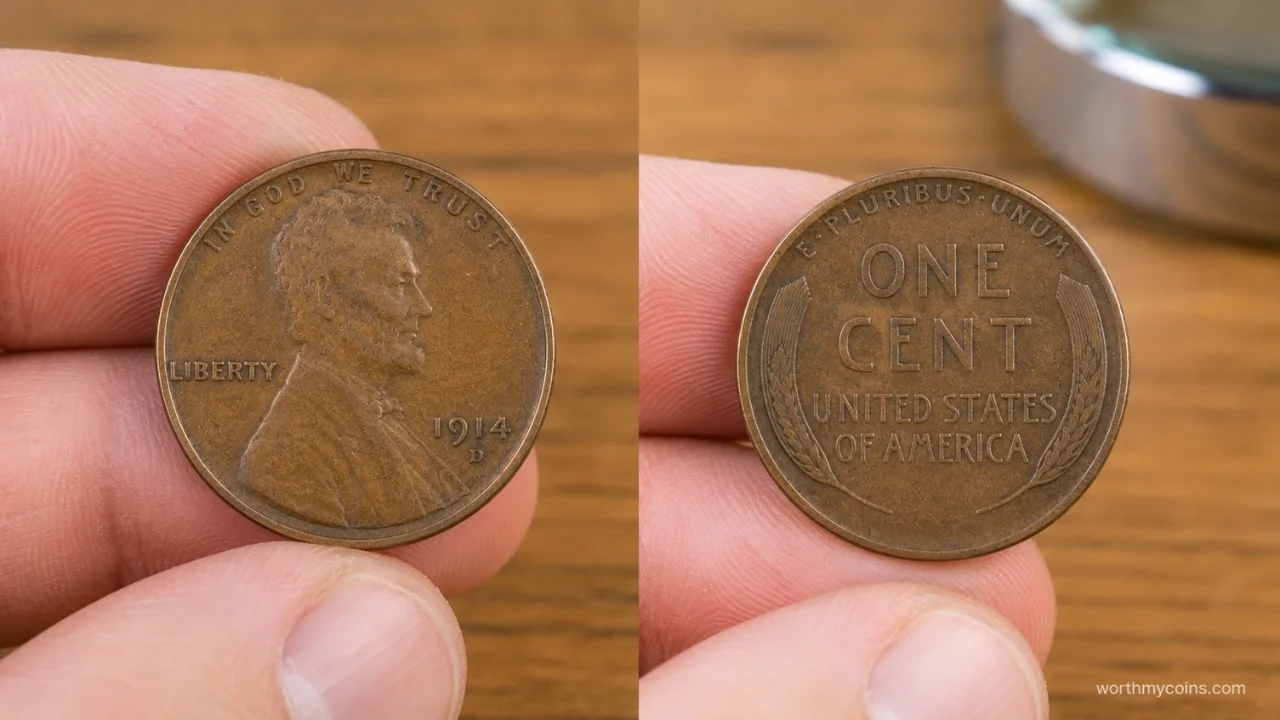
Obverse
The front of the coin should display:
- Abraham Lincoln’s portrait
- The date 1914
- “LIBERTY”
- “IN GOD WE TRUST”
A small “D” mint mark appears directly beneath the date.
Because counterfeiters sometimes add a fake “D” mint mark to a common 1914 Philadelphia cent, collectors should examine this area carefully.
Reverse
The reverse features:
- ONE CENT
- UNITED STATES OF AMERICA
- E PLURIBUS UNUM
- Two wheat ears surrounding the denomination
The reverse design remained in use until the Wheat Cent series ended in 1958.
Specifications
| Feature | Details |
|---|---|
| Denomination | One Cent |
| Year | 1914 |
| Mint | Denver (D) |
| Designer | Victor David Brenner |
| Composition | 95% Copper, 5% Tin and Zinc (or Zinc, depending on planchet composition used during the period) |
| Weight | 3.11 grams |
| Diameter | 19.05 mm |
| Edge | Plain |
| Mintage | 1,193,000 |
Why the 1914-D Is Considered a Key Date
The term “key date” refers to a coin that is significantly more difficult to obtain than most others in the same series.
The 1914-D earned that reputation because of several factors:
- Relatively low original mintage.
- Heavy circulation shortly after release.
- Few Mint State examples survived.
- Strong collector demand for complete Lincoln Wheat Penny sets.
- Frequent counterfeiting due to its popularity.
Unlike many modern coins that become valuable because of dramatic mint errors, the 1914-D is prized primarily because of its scarcity in the marketplace and its importance within the Lincoln Wheat Cent series.
Readers interested in another legendary early Lincoln cent should also read our 1909-S VDB Lincoln Wheat Penny Value Guide: Why This Rare Cent Is So Important to Collectors, which explains how another famous key date became one of the most recognizable U.S. coins among collectors.
Understanding the Mint Mark
One of the first things collectors inspect is the mint mark.
The 1914 Lincoln cent was struck at two different mints:
| Mint | Mint Mark | Notes |
|---|---|---|
| Philadelphia | No Mint Mark | Common compared with the Denver issue. |
| Denver | D | Key-date coin with much stronger collector demand. |
Because the difference between a common Philadelphia coin and a genuine Denver example can be substantial, altered mint marks are frequently encountered.
Professional authentication is strongly recommended whenever a coin appears to be a 1914-D, especially if it shows little wear or exceptional preservation.
Why Authentication Matters
The 1914-D is among the most commonly altered Lincoln Wheat Pennies.
Some counterfeiters add a false “D” mint mark to a genuine 1914 Philadelphia cent, while others modify the mint mark itself. To the untrained eye, these alterations can appear convincing.
For that reason, experienced collectors generally recommend purchasing certified examples from respected grading services such as PCGS or NGC, particularly when investing in higher-grade coins.
In the next section, we’ll examine how grading, color designations, rarity, and current collector demand influence the 1914-D Lincoln Wheat Penny, along with common mistakes beginners should avoid and practical buying and selling tips.
How Grading Affects the 1914-D Lincoln Wheat Penny
When collectors evaluate a 1914-D Lincoln Wheat Penny, the grade often has just as much influence on desirability as the date itself.
Because most examples circulated for many years, well-preserved coins are considerably scarcer than heavily worn pieces. Professional grading services examine the entire coin rather than focusing on a single feature.
Some of the key grading factors include:
| Grading Factor | Why It Matters |
|---|---|
| Amount of Wear | Less wear generally means greater collector appeal. |
| Strike Quality | Sharply struck details are preferred. |
| Surface Preservation | Fewer marks, scratches, and damage improve desirability. |
| Original Luster | Remaining mint luster is important on Mint State examples. |
| Eye Appeal | Attractive color and natural surfaces can increase demand. |
| Certification | Independent grading helps verify authenticity and condition. |
Collectors comparing two genuine 1914-D cents will often find that differences in preservation have a major impact on market demand.
Understanding Brown, Red-Brown, and Red Designations
For Lincoln Wheat Pennies, color is an important part of professional grading.
Third-party grading services typically use three color designations:
Brown (BN)
Brown coins have lost most or all of their original mint red color through natural oxidation. These are the most commonly encountered examples.
Red-Brown (RB)
Red-Brown coins retain a noticeable amount of their original mint color while also showing natural brown toning. These are generally scarcer than fully brown examples.
Red (RD)
Red-designated coins retain nearly all of their original mint color. Because so few 1914-D cents survived in this condition, fully Red examples are especially desirable among advanced collectors.
Collectors often compare coins with similar numerical grades but different color designations because color can significantly influence collector demand.
What Determines a 1914-D Lincoln Wheat Penny’s Value?
No single price applies to every example.
Instead, collectors evaluate several characteristics together before estimating market value.
These include:
- Authenticity
- Grade
- Color designation
- Original surfaces
- Eye appeal
- Certification
- Collector demand
- Recent auction results
Rather than relying on asking prices posted online, experienced collectors compare certified auction records for coins with similar grades and color designations.
Common Mistakes Beginners Make
The popularity of the 1914-D has also led to several common misconceptions.
Assuming Every 1914 Penny Is Rare
Many beginners see the date “1914” and assume the coin is automatically valuable.
However, the 1914 Philadelphia issue without a mint mark is much more common than the Denver issue.
Always check carefully for the mint mark before making any conclusions.
Buying Uncertified Coins Without Careful Inspection
Because altered mint marks exist, uncertified examples require extra caution.
Collectors should compare suspicious coins with authenticated examples whenever possible.
Cleaning the Coin
Cleaning almost always reduces collector appeal.
Even if a coin appears dull or dark, preserving its original surfaces is generally the better choice.
Believing Online Price Claims
It’s common to see dramatic headlines claiming that every 1914-D Lincoln Wheat Penny is worth a fortune.
In reality, values vary widely depending on grade, originality, certification, eye appeal, and recent auction activity.
Buying Tips
If you’re planning to purchase a 1914-D Lincoln Wheat Penny, keep these practical recommendations in mind:
- Buy certified examples whenever possible.
- Purchase from reputable dealers or established auction firms.
- Compare multiple certified coins before making a decision.
- Examine the mint mark carefully.
- Avoid cleaned or repaired coins unless clearly identified.
Patience often results in finding a higher-quality example at a fair market price.
Readers interested in another famous rarity from the Lincoln Wheat series should also read our 1943 Bronze Lincoln Wheat Penny Value Guide: Identification, Rarity & Collector’s Guide, which explains one of the most celebrated error coins in American numismatics.
Selling Tips
If you already own a genuine 1914-D Lincoln Wheat Penny, take time to evaluate all available selling options before accepting an offer.
Potential selling venues include:
- Reputable coin dealers
- Major numismatic auction houses
- Certified coin marketplaces
- Coin shows
- Established online auction platforms
Certified examples generally attract greater buyer confidence because both authenticity and grade have already been independently verified.
Before selling, compare recent certified auction results rather than relying solely on retail asking prices or social media estimates.
In the final section, we’ll answer the most common questions about the 1914-D Lincoln Wheat Penny, provide trusted numismatic references, and summarize why this coin remains one of the most important key dates in the entire Lincoln Wheat Cent series.
Frequently Asked Questions
Is the 1914-D Lincoln Wheat Penny really a key date?
Yes. The 1914-D is widely recognized by collectors as one of the key dates in the Lincoln Wheat Penny series. Its relatively low mintage, heavy circulation, and limited number of surviving high-grade examples have made it one of the most desirable regular-issue Wheat Cents.
Where is the “D” mint mark located?
The “D” mint mark is located on the obverse directly beneath the date 1914. Because altered mint marks are common on this issue, collectors should examine this area carefully or have the coin authenticated by a professional grading service.
Why is the 1914-D often counterfeited?
The coin’s popularity and collector demand have encouraged counterfeiters to add a fake “D” mint mark to common 1914 Philadelphia cents. This is one of the reasons authentication by services such as PCGS or NGC is strongly recommended before buying or selling an expensive example.
Should I clean my 1914-D Lincoln Wheat Penny?
No.
Cleaning can permanently damage the coin’s original surfaces and reduce its desirability. Even naturally toned or circulated examples are generally preferred over coins that have been polished or chemically cleaned.
Are all 1914-D Lincoln Wheat Pennies valuable?
Every genuine 1914-D Lincoln Wheat Penny is collectible because it is a recognized key date. However, market value varies considerably depending on:
- Grade
- Color designation (Brown, Red-Brown, or Red)
- Surface preservation
- Eye appeal
- Certification
- Current collector demand
Should I have my coin professionally graded?
Professional grading is often worth considering if your coin appears to be a genuine 1914-D Lincoln Wheat Penny.
Certification helps:
- Confirm authenticity
- Detect altered mint marks
- Assign an independent grade
- Identify the proper color designation
- Increase buyer confidence during resale
For an important key date like the 1914-D, certified examples are generally preferred by collectors.
Buying and Selling Advice
Whether you’re adding a 1914-D Lincoln Wheat Penny to your collection or preparing to sell one, taking a careful approach can make a significant difference.
If buying:
- Purchase certified examples whenever possible.
- Compare multiple coins of similar grades before making a decision.
- Buy from reputable dealers or established auction firms.
- Be cautious of prices that seem unusually low.
If selling:
- Avoid cleaning the coin.
- Keep certification paperwork if available.
- Compare recent certified auction results.
- Consider multiple offers before accepting a sale.
Following these steps can help you make more informed buying or selling decisions while reducing the risk of purchasing or overlooking an altered coin.
Readers interested in building a stronger understanding of classic U.S. coin series should also read our Lincoln Wheat Penny Value Guide (1909–1958): Prices, Errors & Rare Coins, which provides a comprehensive overview of the entire series, important key dates, grading standards, and collecting strategies.
Conclusion
The 1914-D Lincoln Wheat Penny has earned its reputation as one of the most important key dates in American coin collecting. Its relatively low mintage, extensive circulation, and decades of steady collector demand continue to make it an essential coin for anyone building a complete Lincoln Wheat Cent collection.
While many older pennies are common, the 1914-D stands apart because genuine examples are much harder to find—especially in higher grades with original surfaces. Before estimating value, collectors should verify the mint mark, evaluate the coin’s condition, and consider professional authentication if there is any doubt about its authenticity.
Whether you’re searching through an inherited collection or expanding your own, understanding what makes the 1914-D special is the first step toward making confident collecting decisions.
References
The information in this guide is based on recognized numismatic references and industry resources, including:
- United States Mint
- Professional Coin Grading Service (PCGS) CoinFacts
- Numismatic Guaranty Company (NGC) Coin Explorer
- American Numismatic Association (ANA)
- Heritage Auctions
- Stack’s Bowers Galleries
- Newman Numismatic Portal

Narayan Kumar is the Founder and Author of Worth My Coins. She specializes in U.S. coin collecting, with a focus on coin identification, mint errors, grading, rare varieties, and collector education. Her goal is to publish accurate, well-researched, and easy-to-understand guides that help both new and experienced collectors make informed decisions. Every article is created using trusted numismatic references and is written with a commitment to accuracy, transparency, and long-term educational value.