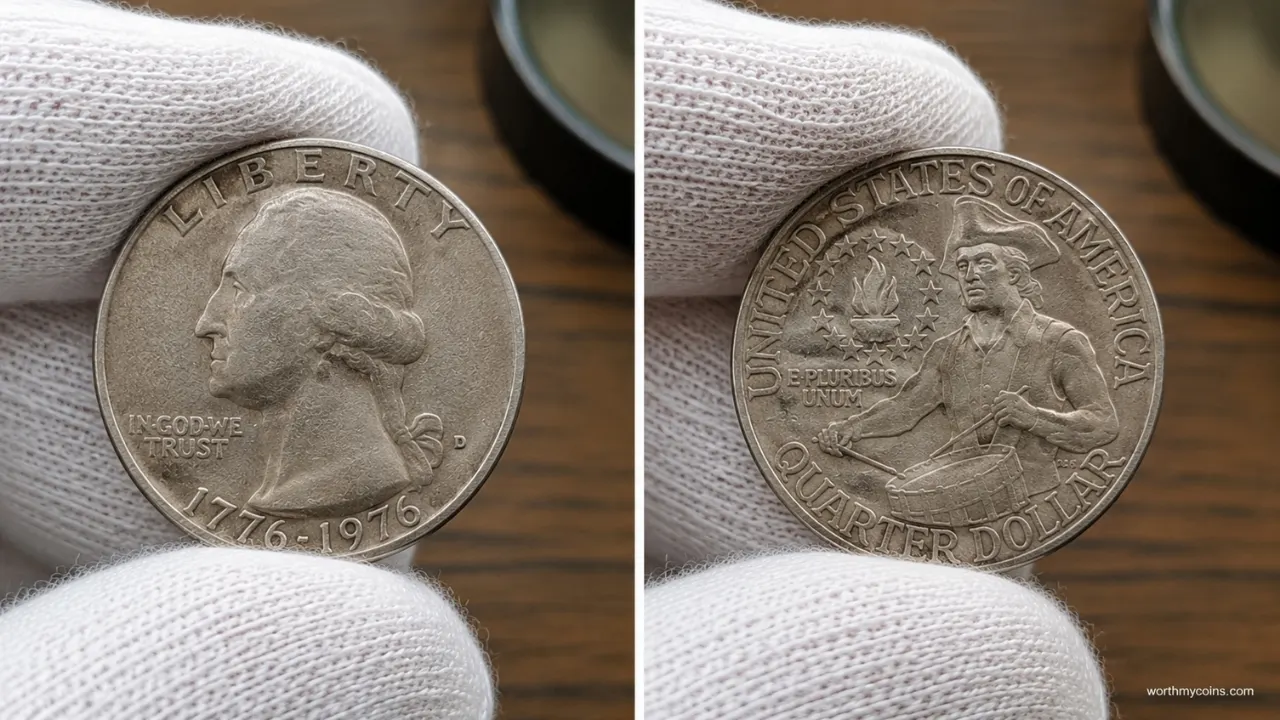
The 1976 Bicentennial Quarter is one of the most recognizable U.S. coins ever made. Its unique Colonial drummer reverse and dual date 1776–1976 make it stand out from every other Washington quarter. Because millions remain in circulation, many people wonder whether the one in their pocket change could actually be worth more than 25 cents.
The truth is that most Bicentennial Quarters are common, but some are significantly more collectible because of their composition, mint mark, condition, or genuine mint errors. Understanding those differences can help you identify coins that deserve a closer look.
Quick Answer
Most 1976 Bicentennial Quarters found in circulation are worth only face value or a modest premium depending on condition. However, certain certified high-grade coins, 40% silver collector issues, and genuine mint-error examples can attract much stronger collector interest. The coin’s value depends on its mint mark, composition, grade, rarity, eye appeal, certification, and recent market demand.
Readers who want to learn about other collectible modern quarters should also read our Top 25 Modern Quarters Worth Money: Rare Coins Every Collector Should Know, where we cover many of the most sought-after Washington quarters for today’s collectors.
Because Bicentennial Quarters are widely collected, many ordinary examples are mistakenly believed to be rare or valuable. Before assuming a coin is worth more than face value, verify its mint mark, composition, condition, and any suspected mint errors. Professional authentication may be worthwhile for unusual-looking examples.
Why Was the 1976 Bicentennial Quarter Created?
The Bicentennial Quarter was issued to celebrate the 200th anniversary of American independence. Instead of the standard eagle reverse used on regular Washington quarters, this commemorative issue features a Colonial drummer designed by Jack L. Ahr.
Although these coins display the dual date 1776–1976, they were produced during both 1975 and 1976 because the U.S. Mint suspended production of quarters dated 1975 for the Bicentennial celebration.
Today, the Bicentennial Quarter remains one of the most collected modern U.S. coins because of its historical significance and distinctive design.
How to Identify a 1976 Bicentennial Quarter
Before estimating value, make sure you’re looking at the correct coin.
Obverse
The front features:
- Portrait of George Washington
- Dual date 1776–1976
- “LIBERTY”
- “IN GOD WE TRUST”
Reverse
The reverse shows:
- Colonial drummer
- Victory torch
- Thirteen stars
- “UNITED STATES OF AMERICA”
- “QUARTER DOLLAR”
Unlike standard Washington quarters, this reverse was created specifically for the Bicentennial issue.
Specifications
| Feature | Details |
|---|---|
| Denomination | Quarter Dollar |
| Years Issued | 1975–1976 (dated 1776–1976) |
| Composition | Copper-Nickel Clad or 40% Silver (collector issues) |
| Diameter | 24.3 mm |
| Weight | 5.67 g (Clad) / 5.75 g (40% Silver) |
| Edge | Reeded |
| Designer (Obverse) | John Flanagan |
| Reverse Designer | Jack L. Ahr |
Understanding the Mint Marks
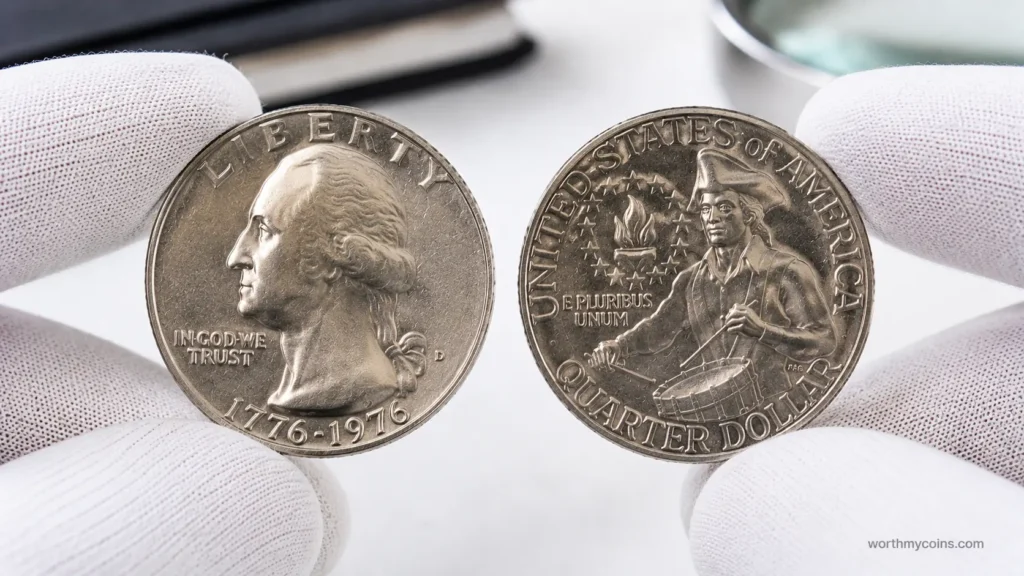
One of the first characteristics collectors examine is the mint mark.
No Mint Mark
Coins without a mint mark were struck at the Philadelphia Mint.
These are the most commonly encountered examples in circulation.
D Mint Mark
A D indicates production at the Denver Mint.
Many Denver coins also circulated heavily, although well-preserved examples can be more desirable.
S Mint Mark
An S identifies coins struck at the San Francisco Mint.
Most San Francisco Bicentennial Quarters were produced specifically for collector sets and include both clad proof coins and special 40% silver versions.
Because not every “S” coin is silver, collectors should verify the composition before assuming additional value.
What Makes Some Bicentennial Quarters More Valuable?
Although hundreds of millions were produced, collectors look for several characteristics that separate ordinary examples from more desirable ones.
These include:
| Value Factor | Why It Matters |
|---|---|
| Mint Mark | Philadelphia, Denver, and San Francisco issues differ. |
| Composition | Some San Francisco coins contain 40% silver. |
| Condition | Better-preserved coins are generally more desirable. |
| Certification | Professionally graded coins inspire greater buyer confidence. |
| Mint Errors | Genuine mint-made errors often attract collector interest. |
It’s the combination of these characteristics—not simply the dual date—that determines whether a Bicentennial Quarter stands out to collectors.
Readers interested in learning more about genuine Washington quarter errors should also read our Washington Quarter Error Guide: Rare Mint Errors Every Collector Should Know, where we explain how authentic mint errors differ from post-mint damage and what collectors look for when evaluating error coins.
Are All 1976 Bicentennial Quarters Valuable?
No.
Because so many Bicentennial Quarters were produced, the majority remain common today. Most circulated examples trade for face value or only a small premium depending on condition.
However, collectors actively seek coins that combine one or more of the following:
- Exceptional preservation
- Original mint luster
- 40% silver composition
- Professional certification
- Verified mint errors
- Strong eye appeal
In the next section, we’ll examine the most important Bicentennial Quarter errors, explain how grading influences collector demand, discuss silver versus clad issues, and explore why some certified examples are far more desirable than others.
Rare Errors That Collectors Watch For
Most Bicentennial Quarters are ordinary circulation coins, but genuine mint errors can attract significantly more collector interest than normal examples. It’s important to remember that a true mint error occurs during the manufacturing process—not after the coin leaves the Mint.
Some of the errors collectors commonly encounter include:
- Off-center strikes
- Struck-through errors
- Clipped planchets
- Die cracks
- Lamination errors
- Broadstrikes
- Filled mint marks (on some coins)
The rarity, visibility, and severity of the error all influence collector demand. Minor imperfections generally have less appeal than dramatic, well-documented mint errors.
Readers who want a deeper understanding of genuine quarter errors should also read our Most Valuable Washington Quarter Errors Every Collector Should Know, where we explain which errors are recognized by collectors and how they differ from ordinary damage.
Silver vs. Clad Bicentennial Quarters
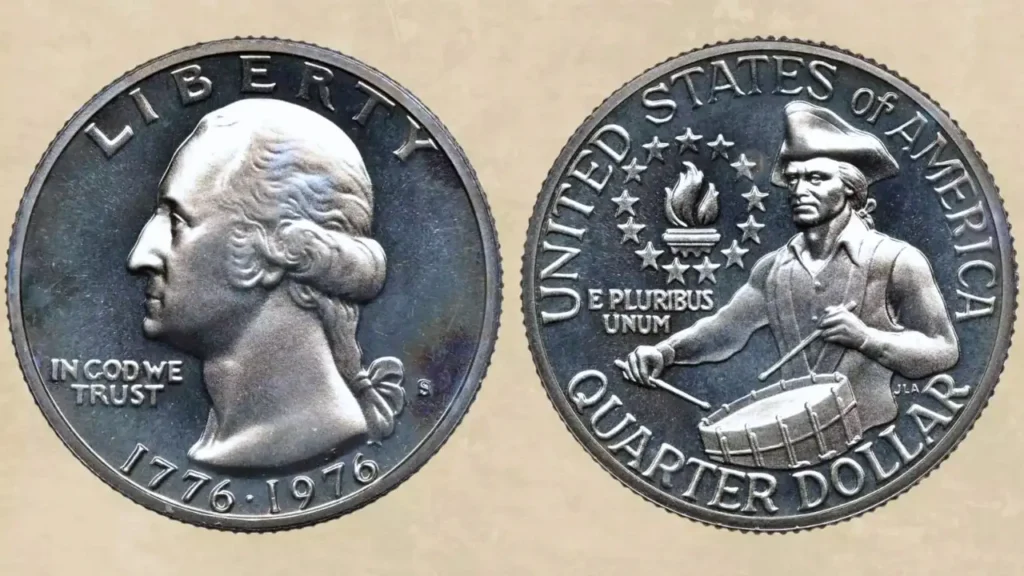
One of the biggest sources of confusion involves the San Francisco issues.
Not every 1976-S Bicentennial Quarter contains silver.
The U.S. Mint produced two different collector versions:
| Type | Composition | Intended For |
|---|---|---|
| Clad Proof | Copper-Nickel Clad | Proof Sets |
| Silver Proof / Silver Uncirculated | 40% Silver | Special Collector Sets |
A quick way to begin checking the composition is to examine the coin’s edge.
- A clad quarter usually shows a visible copper-colored layer.
- A 40% silver quarter has a more uniformly silver-colored edge, although professional verification is recommended if you’re uncertain.
Why Condition Makes Such a Big Difference
Because Bicentennial Quarters were produced in enormous numbers, condition often becomes the factor that separates an ordinary coin from one collectors actively pursue.
Professional grading services evaluate several characteristics that influence both collector appeal and market value:
| Grading Factor | Why It Matters |
|---|---|
| Wear | Less wear usually increases collector appeal. |
| Strike Quality | Sharply struck details are preferred. |
| Original Luster | Mint luster is especially important for uncirculated coins. |
| Surface Preservation | Fewer marks generally improve desirability. |
| Eye Appeal | Attractive, original coins often command stronger demand. |
Most circulated examples remain common, while certified coins in exceptionally high Mint State grades become much scarcer because relatively few survive in pristine condition.
Understanding Value in 2026
There is no single value that applies to every 1976 Bicentennial Quarter.
Instead, collectors consider a combination of factors, including:
- Mint mark
- Clad or silver composition
- Grade
- Certification
- Genuine mint errors
- Eye appeal
- Current collector demand
- Recent auction results
Completed auction sales generally provide a more reliable picture of current collector demand than unsold asking prices because they reflect actual market transactions.
For example, a circulated clad Philadelphia or Denver quarter may have little or no premium over face value, while certified high-grade coins and 40% silver San Francisco examples can command substantially stronger prices depending on grade and market conditions.
Common Mistakes Collectors Make
Many beginners unintentionally overestimate the rarity of Bicentennial Quarters.
Some of the most common mistakes include:
Assuming Every Bicentennial Quarter Is Rare
More than a billion Bicentennial Quarters were produced across multiple mints, so most examples remain common today.
Believing Every “S” Mint Mark Means Silver
An “S” mint mark alone does not guarantee a silver coin. San Francisco struck both clad proof and 40% silver collector issues.
Cleaning the Coin
Cleaning removes original surfaces and often reduces collector appeal. Even lightly cleaned coins may receive lower grades or be considered less desirable by experienced collectors.
Trusting Viral Price Claims
Social media frequently promotes unrealistic values for ordinary Bicentennial Quarters. Reliable pricing should be based on certified grades, recognized references, and documented auction results—not sensational headlines.
Should You Have Your Bicentennial Quarter Professionally Graded?
Professional grading is not necessary for every coin, but it may be worthwhile if your Bicentennial Quarter appears to have:
- An unusual mint error
- Exceptional preservation
- A 40% silver composition
- Strong eye appeal
- Characteristics suggesting it could achieve a high Mint State or Proof grade
Certification from a respected grading service can confirm authenticity, identify genuine mint errors, and provide buyers with greater confidence during resale.
In the final section, we’ll answer the most common questions collectors ask about Bicentennial Quarters, provide trusted references, and summarize the key factors that determine whether a 1976 quarter deserves a place in your collection.
Frequently Asked Questions
Is every 1976 Bicentennial Quarter valuable?
No. Most examples remain common because of their large production numbers. Most Bicentennial Quarters found in circulation are common because over a billion were produced. However, coins with exceptional preservation, 40% silver composition, certified high grades, or genuine mint errors are generally more desirable to collectors.
How can I tell if my Bicentennial Quarter is silver?
Most 40% silver Bicentennial Quarters were struck at the San Francisco Mint for special collector sets. One quick indicator is the coin’s edge—silver examples usually lack the visible copper-colored layer found on clad coins. If you’re unsure, weighing the coin or having it professionally authenticated is the safest approach.
Where is the mint mark located?
The mint mark appears on the obverse, just to the right of George Washington’s ponytail.
- No mint mark = Philadelphia
- D = Denver
- S = San Francisco
Should I clean my Bicentennial Quarter?
No.
Cleaning can permanently damage the coin’s original surfaces and reduce collector interest. Even a common coin is generally more desirable with natural surfaces than one that has been polished or chemically cleaned.
Are Bicentennial Quarter errors rare?
Yes. Genuine mint-made errors are considerably less common than ordinary circulation coins. Collectors distinguish true mint errors from damage that occurred after the coin left the Mint, making authentication important for unusual-looking pieces.
Should I have my Bicentennial Quarter graded?
Professional grading may be worthwhile if your coin appears to have:
- A genuine mint error
- 40% silver composition
- Exceptional Mint State preservation
- Proof surfaces
- Unusual eye appeal
- Potentially significant collector value
Certification helps verify authenticity and provides an independent assessment of the coin’s condition.
Buying and Selling Tips for Collectors
If you’re considering buying or selling a Bicentennial Quarter, keep these best practices in mind:
- Purchase certified examples when investing in high-grade or error coins.
- Compare recent auction results instead of relying on asking prices.
- Buy from reputable dealers or established auction companies.
- Avoid cleaned or damaged coins unless clearly identified and priced accordingly.
- Store collectible examples in protective holders to preserve their condition.
Collectors interested in building a broader understanding of Washington quarters should also read our Top Modern Quarters Worth Money, which covers many of the modern issues that continue to attract collector attention.
Practical Buying Checklist
Before purchasing a 1976 Bicentennial Quarter, take a moment to check the following:
- Confirm the correct mint mark and composition.
- Verify that any claimed mint error matches recognized diagnostics.
- Check the certification number if the coin has been professionally graded.
- Compare recent certified auction results rather than asking prices.
- Buy from reputable dealers or established auction companies whenever possible.
Taking a few extra minutes to verify these details can help reduce the risk of purchasing a cleaned, altered, or misidentified coin.
Conclusion
The 1976 Bicentennial Quarter remains one of the most iconic modern U.S. coins ever produced. While the vast majority of examples are common, certain pieces stand out because of their silver composition, certified condition, or genuine mint errors.
Rather than assuming every Bicentennial Quarter is rare, collectors should evaluate each coin individually by considering its mint mark, composition, condition, authenticity, and overall collector appeal. Taking the time to understand these factors can help you identify coins that deserve further attention while avoiding many of the common misconceptions surrounding this popular commemorative issue.
Whether you’re searching through pocket change or building a serious collection, the Bicentennial Quarter is an excellent coin for learning how rarity, grading, and collector demand work together to influence market value.
References
The information in this guide is based on recognized numismatic references and industry resources, including:
- United States Mint
- Professional Coin Grading Service (PCGS) CoinFacts
- Numismatic Guaranty Company (NGC) Coin Explorer
- American Numismatic Association (ANA)
- Heritage Auctions
- Stack’s Bowers Galleries
- Newman Numismatic Portal

Narayan Kumar is the Founder and Author of Worth My Coins. She specializes in U.S. coin collecting, with a focus on coin identification, mint errors, grading, rare varieties, and collector education. Her goal is to publish accurate, well-researched, and easy-to-understand guides that help both new and experienced collectors make informed decisions. Every article is created using trusted numismatic references and is written with a commitment to accuracy, transparency, and long-term educational value.