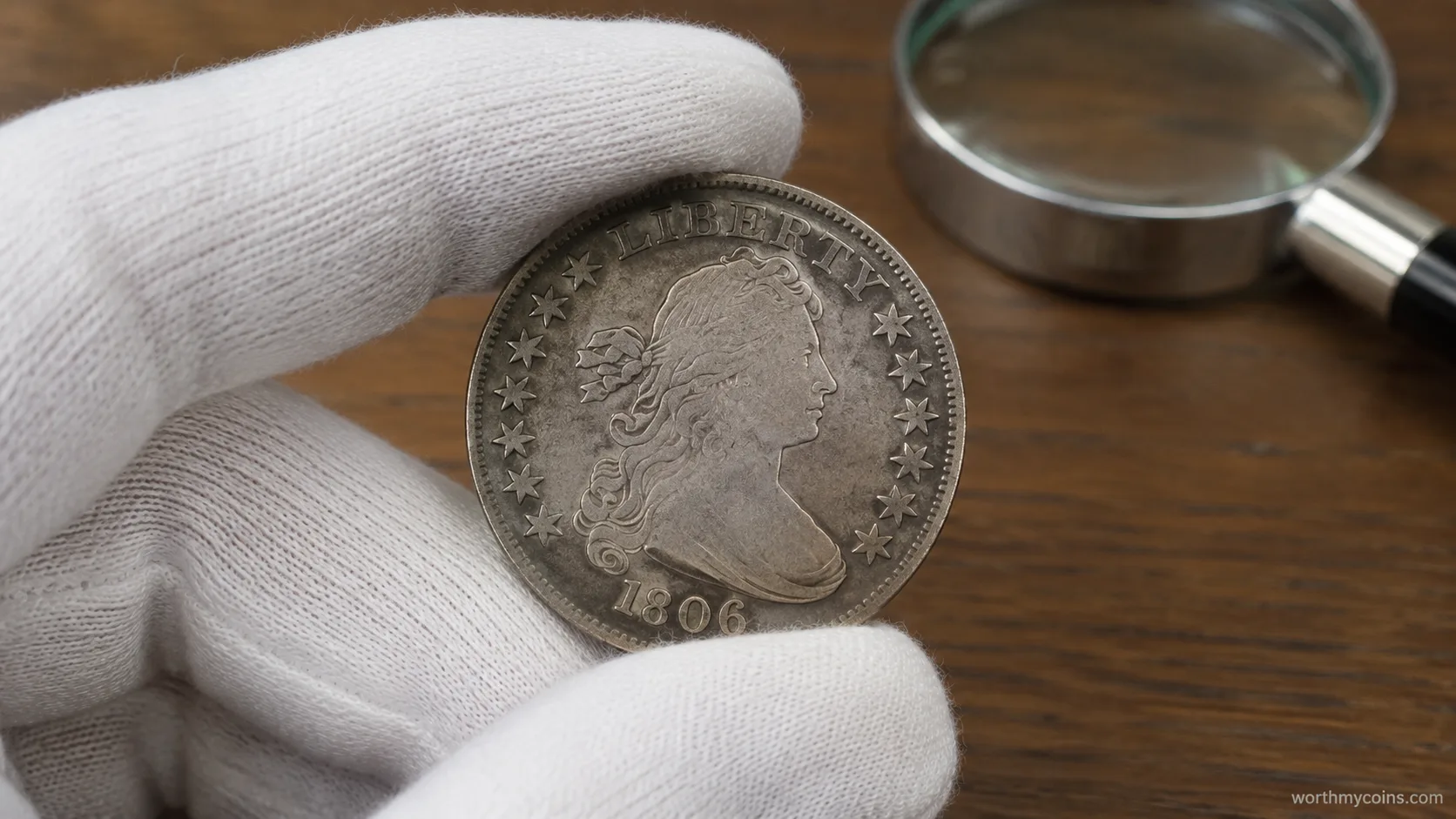
The Most Valuable U.S. Coins Every Collector Should Know
Finding an old U.S. coin often raises one question: could it be worth far more than its face value? While truly rare coins are uncommon, understanding the most valuable U.S. coins helps collectors recognize historically important pieces and know when professional authentication may be worthwhile.
While millions of historic American coins survive today, only a small number have become legendary because of their rarity, historical importance, limited surviving populations, or extraordinary collector demand. Understanding which coins stand at the top of the hobby helps beginners recognize genuinely important pieces while avoiding common misconceptions.
Whether you’re starting a collection, evaluating inherited coins, or simply curious about America’s most famous rarities, this guide explains the U.S. coins that every collector should know, why they are significant, and what makes them so desirable in today’s numismatic market.
Quick Answer
The most valuable U.S. coins are generally those that combine exceptional rarity, historical significance, outstanding preservation, and strong collector demand. Some of the best-known examples include:
| Coin | Years | Why It’s Valuable |
|---|---|---|
| 1794 Flowing Hair Silver Dollar | 1794 | Believed to represent the first U.S. silver dollar struck |
| 1933 Saint-Gaudens Double Eagle | 1933 | Unique legal history and extremely limited ownership |
| 1787 Brasher Doubloon | 1787 | One of America’s earliest privately struck gold coins |
| 1804 Draped Bust Dollar | Dated 1804 (struck later) | Legendary rarity known as the “King of American Coins” |
| 1913 Liberty Head Nickel | 1913 | Only five examples are known |
| 1894-S Barber Dime | 1894 | One of the rarest regular-issue U.S. dimes |
| 1870-S Seated Liberty Dollar | 1870 | Extremely rare with only a handful confirmed |
| 1822 Capped Head Half Eagle | 1822 | Among the rarest classic U.S. gold coins |
| 1796 No Stars Quarter Eagle | 1796 | First-year U.S. quarter eagle design |
| 1861 Paquet Reverse Double Eagle | 1861 | Rare reverse design variety with very limited survivors |
Actual market value depends on authenticity, grade, certification, eye appeal, rarity, provenance, and current collector demand.
What Makes a U.S. Coin Extremely Valuable?
Many new collectors assume that age alone determines value. In reality, rarity and collector demand are often far more important.
If you’re just beginning to study collectible U.S. coinage, Franklin Half Dollar Value Guide: Key Dates, Mint Marks and Rare Varieties provides a practical example of how dates, mint marks, strike quality, and recognized varieties influence collector interest within a single coin series.
Several factors influence whether a coin becomes one of America’s greatest numismatic treasures.
Genuine Rarity
Some coins were struck in very small numbers. Others originally had much larger mintages, but comparatively few authentic examples survive today because they circulated heavily, were melted, recalled, or otherwise lost over time.
For many classic U.S. coins, the number of authentic surviving examples is often more important than the original mintage when determining rarity.
Historical Importance
Coins associated with major moments in American history frequently attract strong collector interest.
Examples include:
- Early federal coinage
- Civil War-era issues
- California Gold Rush coinage
- First-year designs
- Coins representing major design transitions
Condition
Two examples of the same coin may differ dramatically in value because of preservation.
Collectors generally pay significant premiums for coins with:
- Original surfaces
- Strong strike quality
- Minimal wear
- Attractive eye appeal
- Certified high grades
Collector Demand
Some coins remain valuable because generations of collectors have pursued them.
Demand from advanced collectors, museums, and investors can significantly influence auction results for the finest examples.
Why Certification Matters
Many of America’s most valuable coins have been certified by major third-party grading services.
Certification provides:
- Authentication
- Professional grading
- Tamper-evident holders
- Greater confidence for buyers and sellers
Because many of America’s most valuable coins have been extensively counterfeited or altered, professional authentication is strongly recommended before purchasing, selling, or assigning significant value to an example.
The Most Valuable U.S. Coins Every Collector Should Know
1. 1794 Flowing Hair Silver Dollar
The 1794 Flowing Hair Silver Dollar occupies a unique place in American numismatic history.
Collectors interested in other landmark early U.S. silver dollar issues should also read Morgan Dollar Value Guide: Rare Dates, Mint Errors & Collector Tips, which explains how another iconic silver dollar series is identified and what characteristics collectors evaluate when determining rarity and desirability.
Many researchers believe it represents the first silver dollar struck by the United States Mint, making it one of the nation’s most historically important coins.
Why Collectors Prize It
The design features Liberty with flowing hair on the obverse and a small eagle on the reverse.
Only a limited number were struck in 1794, and far fewer survive today.
Exceptional examples have achieved record-setting prices at public auction, reflecting their historical importance rather than age alone.
Identification
- Date: 1794
- Composition: Silver
- Design: Flowing Hair
- Reverse: Small Eagle
Authentication is essential because reproductions, altered coins, and counterfeits exist for this famous issue.
2. 1933 Saint-Gaudens Double Eagle
The 1933 Double Eagle is perhaps the most famous American gold coin ever produced.
Although thousands were struck, nearly all were melted after changes in U.S. gold policy during the Great Depression.
Only a tiny number legally survive.
Why It’s Famous
Its fascinating legal history has made the coin legendary among collectors.
Unlike most rare coins, ownership of surviving examples has involved decades of legal and historical debate.
Identification
- Date: 1933
- Denomination: Twenty Dollars
- Designer: Augustus Saint-Gaudens
Because of its rarity and legal history, every known example has been extensively documented.
3. 1787 Brasher Doubloon
Although not an official United States Mint issue, the Brasher Doubloon is considered one of America’s greatest numismatic treasures.
Goldsmith Ephraim Brasher produced these remarkable gold coins before the federal Mint began regular coinage.
Why It’s Important
The Brasher Doubloon represents America’s earliest efforts toward a national coinage system.
Collectors value it for:
- Historical significance
- Extraordinary rarity
- Early American craftsmanship
Brasher’s distinctive hallmark adds to its appeal.
4. 1804 Draped Bust Dollar
Few coins enjoy the legendary reputation of the 1804 Draped Bust Dollar.
For readers who enjoy America’s earliest half dollar coinage, Top 10 Draped Bust Half Dollars That Made Numismatic History highlights historically significant issues from the same classic design era and explains why they remain important to collectors today.
Interestingly, these coins were not actually struck in 1804 despite the date they bear.
Instead, they were produced years later as diplomatic presentation pieces and eventually became one of the hobby’s greatest rarities.
Why It’s Called the “King of American Coins”
Only a very small number are known.
Collectors have pursued these coins for more than a century because they combine rarity, mystery, and remarkable historical significance.
Identification
- Date: 1804
- Design: Draped Bust
- Reverse: Heraldic Eagle
Each genuine example has been carefully studied and documented.
5. 1913 Liberty Head Nickel
The 1913 Liberty Head Nickel is one of the most famous rarity stories in American coin collecting.
The Liberty Head design officially ended in 1912, making the existence of coins dated 1913 especially remarkable.
Only five authentic examples are known today.
Why It Became Legendary
Its mysterious origin has fascinated collectors for generations.
Every known specimen has an established ownership history, and each regularly attracts worldwide attention whenever offered for sale.
Identification
- Date: 1913
- Liberty Head design
- Five-cent denomination
Any purported discovery should be authenticated immediately by recognized experts.
6. 1894-S Barber Dime
The 1894-S Barber Dime ranks among the greatest rarities in all U.S. silver coinage.
Only a tiny number were struck at the San Francisco Mint, and very few survive today.
Why It’s So Desirable
The combination of an extremely limited mintage and scarce surviving population has made this one of the most sought-after dimes ever produced.
Even heavily circulated authenticated examples command tremendous collector interest.
Identification
- Date: 1894
- Mint Mark: S
- Barber design
Collectors should pay close attention to altered dates and counterfeit mint marks, as this rarity has inspired numerous fakes.
7. 1870-S Seated Liberty Dollar
The 1870-S Seated Liberty Dollar remains one of the greatest mysteries in American numismatics.
Very few authentic examples have been confirmed, and its origin continues to be studied by researchers.
Why It Matters
Its rarity alone would make it famous, but the unanswered questions surrounding its production add another layer of fascination.
Each known specimen has been carefully traced through auction and ownership records.
Identification
- Date: 1870
- Mint Mark: S
- Seated Liberty design
Anyone who believes they have identified an example should seek professional authentication before attempting to buy, sell, or assign value to the coin.
8. 1822 Capped Head Half Eagle
Among classic U.S. gold coins, few are as elusive as the 1822 Capped Head Half Eagle. Although thousands were originally struck, nearly all entered circulation or were later melted. Today, only a handful of genuine examples are confirmed.
Why Collectors Want It
The 1822 Half Eagle represents one of the greatest surviving rarities in early American gold coinage. Because so few examples exist, opportunities to study or purchase one are exceptionally rare.
Identification
- Date: 1822
- Denomination: $5 Gold
- Design: Capped Head
- Composition: Gold
Any coin claimed to be an 1822 Half Eagle should be authenticated by a recognized third-party grading service before any buying or selling decision.
9. 1796 No Stars Quarter Eagle
The 1796 Quarter Eagle is historically important because it represents the first year of the U.S. Quarter Eagle series.
Its distinctive “No Stars” obverse immediately separates it from later issues.
Why It Is Significant
Early federal gold coins were struck in relatively small numbers, and far fewer survive today. As the first Quarter Eagle design, the 1796 issue holds special importance among collectors of early American coinage.
Identification
- Date: 1796
- Denomination: $2.50 Gold
- Obverse: Liberty without stars
- Reverse: Small Eagle
The absence of stars around Liberty is the easiest identifying feature.
10. 1861 Paquet Reverse Double Eagle
The 1861 Paquet Reverse Double Eagle is one of the best-known major design varieties in U.S. gold coinage.
Assistant Engraver Anthony C. Paquet created a revised reverse design featuring noticeably taller and narrower lettering. The design was quickly discontinued, making surviving examples especially desirable.
Why It Matters
Unlike many valuable coins that owe their rarity solely to low survival, the Paquet Reverse Double Eagle is prized for being a distinct and historically important design variety.
Identification
- Date: 1861
- Denomination: $20 Gold
- Reverse: Tall, narrow lettering characteristic of the Paquet design
Collectors rely on recognized reference works and professional authentication to distinguish genuine examples from altered coins.
Comparison Table: America’s Most Famous Valuable Coins
| Coin | Denomination | Historical Significance | Why Collectors Pursue It |
|---|---|---|---|
| 1794 Flowing Hair Dollar | $1 | First U.S. silver dollar design | Historic importance and rarity |
| 1933 Double Eagle | $20 Gold | Linked to U.S. gold recall | Legal history and rarity |
| 1787 Brasher Doubloon | Gold | Pre-federal American coinage | Early American history |
| 1804 Draped Bust Dollar | $1 | Diplomatic presentation issue | Legendary rarity |
| 1913 Liberty Head Nickel | 5¢ | Unauthorized 1913 issue | Only five known |
| 1894-S Barber Dime | 10¢ | Extremely limited production | One of the rarest U.S. dimes |
| 1870-S Seated Dollar | $1 | Mysterious San Francisco issue | Extremely few survivors |
| 1822 Half Eagle | $5 Gold | Early U.S. gold rarity | Very limited surviving population |
| 1796 No Stars Quarter Eagle | $2.50 Gold | First-year Quarter Eagle | Historic first issue |
| 1861 Paquet Reverse Double Eagle | $20 Gold | Major reverse design variety | Rare collectible variety |
How to Identify Potentially Valuable U.S. Coins
Finding an old coin does not automatically mean it is rare. Careful identification is the first step.
Check the Date
Certain years are much scarcer than others. Compare the coin’s date with trusted reference guides rather than assuming every old coin is valuable.
Look for the Mint Mark
Many U.S. coins include a mint mark indicating where they were struck.
Common mint marks include:
- No mint mark – Philadelphia (for many historical issues)
- D – Denver
- S – San Francisco
- O – New Orleans
- CC – Carson City
- C – Charlotte
- D (pre-1861) – Dahlonega
For some series, the mint mark can dramatically affect rarity.
Identify the Correct Design
Different U.S. coin designs were often produced during different periods, so correctly identifying the design is just as important as confirming the date.
For example:
- Flowing Hair
- Draped Bust
- Capped Bust
- Liberty Head
- Barber
- Saint-Gaudens
Knowing the correct design helps avoid misidentification.
Examine the Coin Carefully
Look for:
- Original details
- Signs of alteration
- Added mint marks
- Altered dates
- Damage
- Cleaning
Many valuable coins have been counterfeited or modified.
Understanding Coin Grading
A coin’s condition often has a major impact on its market value.
Professional grading evaluates:
- Amount of wear
- Strike quality
- Surface preservation
- Luster
- Eye appeal
Coins are generally categorized as:
- Good (G)
- Very Good (VG)
- Fine (F)
- Very Fine (VF)
- Extremely Fine (XF)
- About Uncirculated (AU)
- Mint State (MS)
- Proof (PR or PF)
Certified grades assigned by respected third-party grading services provide buyers and sellers with greater confidence in authenticity and condition.
Common Mistakes New Collectors Make
Assuming Every Old Coin Is Rare
Many nineteenth-century coins survive in large numbers. Age alone does not determine value.
Cleaning Coins
Cleaning can permanently alter a coin’s original surface and often reduces collector appeal. Even well-intentioned polishing may lower its desirability.
Ignoring Authentication
High-value U.S. coins are frequently counterfeited. Professional authentication is essential before making important buying or selling decisions.
Overlooking Mint Marks
A small mint mark can significantly affect a coin’s rarity within the same date.
Relying on Viral Social Media Claims
Videos and online posts often exaggerate coin values or promote unsupported rarity claims. Always verify information using trusted numismatic references.
Factors That Influence Market Value
No single price applies to every example of a particular coin.
Collectors and dealers consider several factors, including:
- Authenticity
- Grade
- Rarity
- Certified population
- Eye appeal
- Original surfaces
- Historical importance
- Collector demand
- Provenance, when documented
- Recent auction results for comparable certified examples
Because markets change over time, auction records and current collector demand remain important when evaluating a coin.
Tips for Buying Valuable U.S. Coins
If you’re considering purchasing an expensive coin, keep these best practices in mind:
- Buy authenticated examples whenever possible.
- Learn the key diagnostics of the series you’re collecting.
- Compare recent certified auction sales rather than relying on advertised asking prices.
- Purchase from established coin dealers, respected auction firms, or other reputable numismatic professionals with experience handling certified rare coins.
- Take time to study before making major purchases.
Tips for Selling Valuable Coins
If you believe you’ve found an important coin:
- Do not clean it.
- Store it safely in an appropriate holder.
- If the coin appears to be a significant rarity, consider professional authentication and grading before offering it for sale.
- Compare recent auction records for similar certified examples.
- Obtain opinions from experienced numismatic professionals before accepting an offer.
Following these steps can improve the likelihood of receiving an accurate evaluation based on authenticity, condition, rarity, and current market demand.
Conclusion
America’s most valuable coins tell the story of the nation’s earliest minting efforts, changing currency designs, gold coinage, and historic moments that shaped U.S. numismatics. While legendary rarities such as the 1794 Flowing Hair Silver Dollar, 1804 Draped Bust Dollar, and 1933 Saint-Gaudens Double Eagle remain beyond the reach of most collectors, learning why they are important provides valuable insight into what drives rarity and collector demand.
For beginners, the most important lesson is that value depends on far more than age. Authenticity, rarity, condition, historical significance, and market demand all work together to determine a coin’s desirability. Careful research, professional authentication when appropriate, and a solid understanding of U.S. coinage will help you make informed collecting decisions and appreciate the remarkable history behind these extraordinary pieces.
Frequently Asked Questions
Are the oldest U.S. coins always the most valuable?
No. While many early coins are highly desirable, rarity, condition, historical significance, and collector demand are generally more important than age alone.
Why is the 1913 Liberty Head Nickel so famous?
Only five authentic examples are known, making it one of the rarest and most celebrated coins in American numismatics.
Can circulated coins still be valuable?
Yes. Some famous U.S. rarities remain valuable even with circulation wear because so few authentic examples exist.
Should I clean an old coin before selling it?
No. Cleaning can permanently alter a coin’s original surfaces and may reduce its collector appeal. If you think a coin may be valuable, leave it in its current condition and seek professional advice.
Why does professional certification matter?
Certification helps confirm authenticity, assigns a standardized grade, and gives buyers and sellers greater confidence, especially for valuable or frequently counterfeited coins.
Where can I research valuable U.S. coins?
Trusted sources include the United States Mint, Professional Coin Grading Service (PCGS), Numismatic Guaranty Company (NGC), the American Numismatic Association (ANA), Heritage Auctions, Stack’s Bowers Galleries, and the Newman Numismatic Portal.
References
The information presented in this guide is supported by established numismatic organizations and research resources, including:
- United States Mint
- Professional Coin Grading Service (PCGS)
- Numismatic Guaranty Company (NGC)
- American Numismatic Association (ANA)
- Heritage Auctions Auction Archives
- Stack’s Bowers Galleries Auction Archives
- Newman Numismatic Portal

Narayan Kumar is the Founder and Author of Worth My Coins. She specializes in U.S. coin collecting, with a focus on coin identification, mint errors, grading, rare varieties, and collector education. Her goal is to publish accurate, well-researched, and easy-to-understand guides that help both new and experienced collectors make informed decisions. Every article is created using trusted numismatic references and is written with a commitment to accuracy, transparency, and long-term educational value.