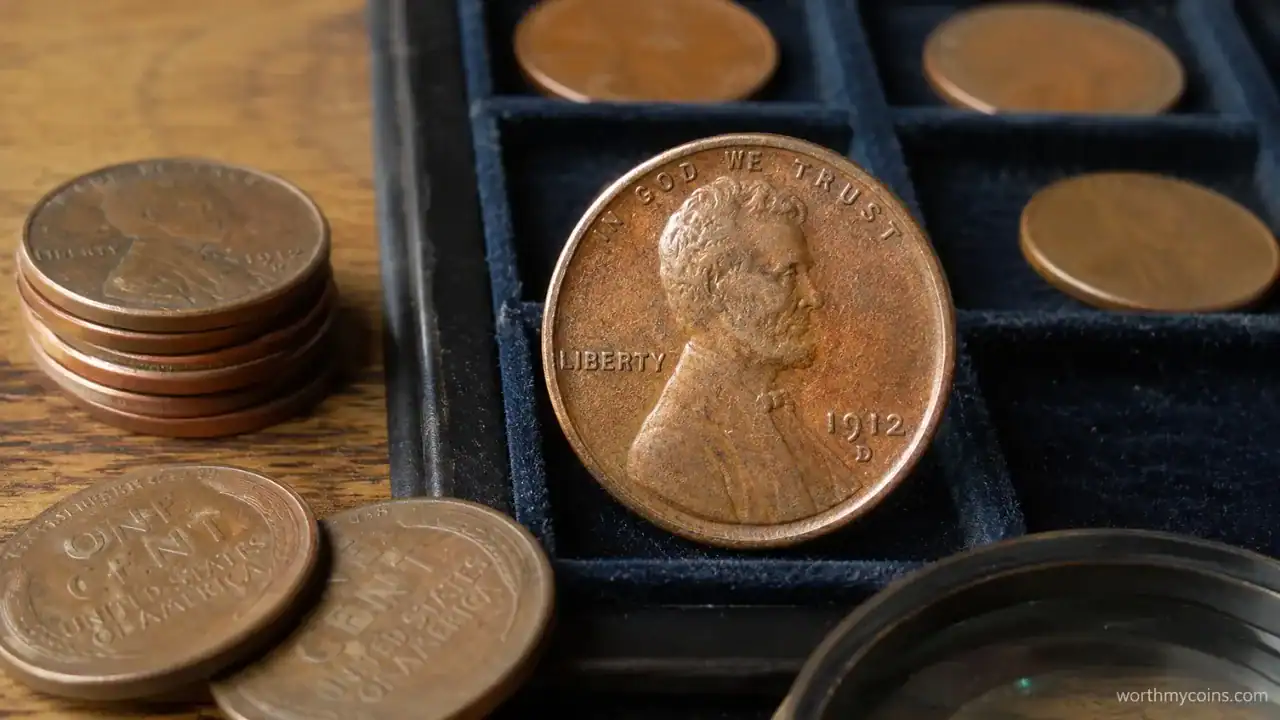
The Lincoln Wheat Penny remains one of the most collected U.S. coins ever produced. Whether you’ve inherited a small jar of old pennies, discovered one while coin roll hunting, or recently started collecting, understanding the Lincoln Wheat Cent is the first step toward recognizing genuinely collectible coins.
Produced from 1909 through 1958, the Wheat Penny represents nearly fifty years of American history. While millions were struck each year, only certain dates, mint marks, varieties, and high-grade examples command significant collector interest. Many people assume every old wheat penny is valuable, but in reality, a coin’s worth depends on several important factors, including rarity, condition, authenticity, and collector demand.
Whether you’re sorting through inherited coins, checking an old piggy bank, or starting a Wheat Penny collection, this guide explains exactly what to look for. You’ll learn how to identify important dates, understand mint marks, spot collectible varieties, and recognize the factors that can make one Lincoln Wheat Penny worth far more than another.
What Is the Lincoln Wheat Penny?
One reason the Lincoln Wheat Penny remains so popular is that it appeals to nearly every type of collector. Beginners enjoy the affordability of common dates, while advanced collectors search for scarce mint marks, famous varieties, and high-grade certified examples.
The Lincoln Wheat Penny, officially called the Lincoln Cent, is a one-cent coin issued by the United States Mint between 1909 and 1958.
It was the first regular U.S. circulating coin to feature an actual historical person rather than the symbolic image of Liberty. The coin honors President Abraham Lincoln and was introduced during the centennial celebration of his birth in 1909.
Its reverse design displays two wheat stalks surrounding the words ONE CENT and UNITED STATES OF AMERICA, giving the coin its popular nickname, “Wheat Penny.”
Today, millions of collectors enjoy building complete Wheat Penny sets because the series combines historical importance, affordability, and the excitement of searching for rare dates and varieties.
If you’re new to coin collecting, Lincoln Memorial Penny Value Guide is another helpful resource for understanding the design that replaced the Wheat Penny in 1959.
History of the Lincoln Wheat Penny
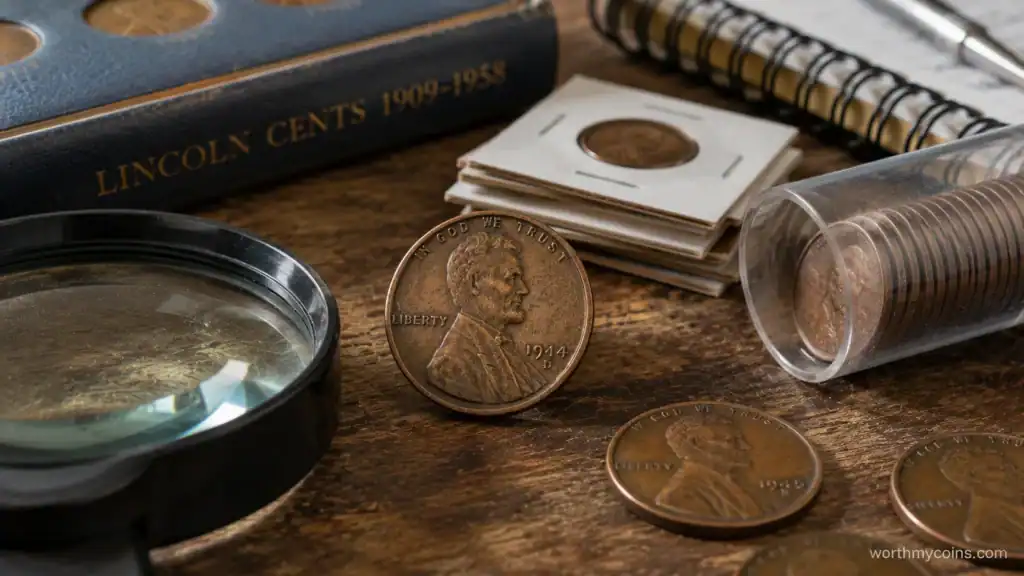
Before 1909, the United States cent featured the Indian Head design. As Abraham Lincoln’s 100th birthday approached, government officials decided to honor the nation’s sixteenth president with a completely redesigned one-cent coin.
President Theodore Roosevelt strongly supported improving the artistic quality of American coinage and encouraged new designs for several denominations. Sculptor Victor David Brenner was selected to create Lincoln’s portrait.
When the first Lincoln Wheat Pennies reached circulation in August 1909, they quickly attracted public attention. For many Americans, it was the first everyday coin to feature a real historical figure instead of the traditional Liberty design, making it feel very different from previous U.S. cents.
However, the first version sparked controversy because Brenner placed his initials, V.D.B., prominently on the reverse. Public criticism led the Mint to remove the initials shortly after production began, creating one of the most famous varieties in American numismatics—the 1909-S VDB Wheat Penny, covered in more detail later in this guide.
The Wheat Penny remained in circulation until 1958 before being replaced by the Lincoln Memorial reverse beginning in 1959.
Why Was the Wheat Penny Introduced?
Several factors contributed to the introduction of the Lincoln Wheat Penny.
First, 1909 marked the 100th anniversary of Abraham Lincoln’s birth, making it an appropriate time to honor one of America’s most respected presidents.
Second, Theodore Roosevelt wanted U.S. coins to feature more artistic designs that reflected national history.
Finally, advances in coin engraving allowed the Mint to produce a more detailed portrait than earlier one-cent coins.
These changes transformed the humble penny into one of the most recognizable coins in American history.
Lincoln Wheat Penny Specifications
| Specification | Details |
|---|---|
| Years Produced | 1909–1958 |
| Country | United States |
| Face Value | One Cent |
| Designer | Victor David Brenner |
| Obverse | Abraham Lincoln |
| Reverse | Two Wheat Ears |
| Composition (1909–1942) | 95% Copper, 5% Tin & Zinc |
| Composition (1943) | Zinc-coated Steel |
| Composition (1944–1946) | Mostly Copper Alloy from Recycled Shell Cases |
| Composition (1947–1958) | 95% Copper, 5% Zinc |
| Diameter | 19.05 mm |
| Weight (Copper) | 3.11 grams |
| Weight (Steel 1943) | 2.70 grams |
| Edge | Plain |
One important exception is the 1943 steel cent, which was produced during World War II to conserve copper for military use. This temporary composition change created one of the most recognizable issues in the Wheat Penny series.
How to Identify a Lincoln Wheat Penny
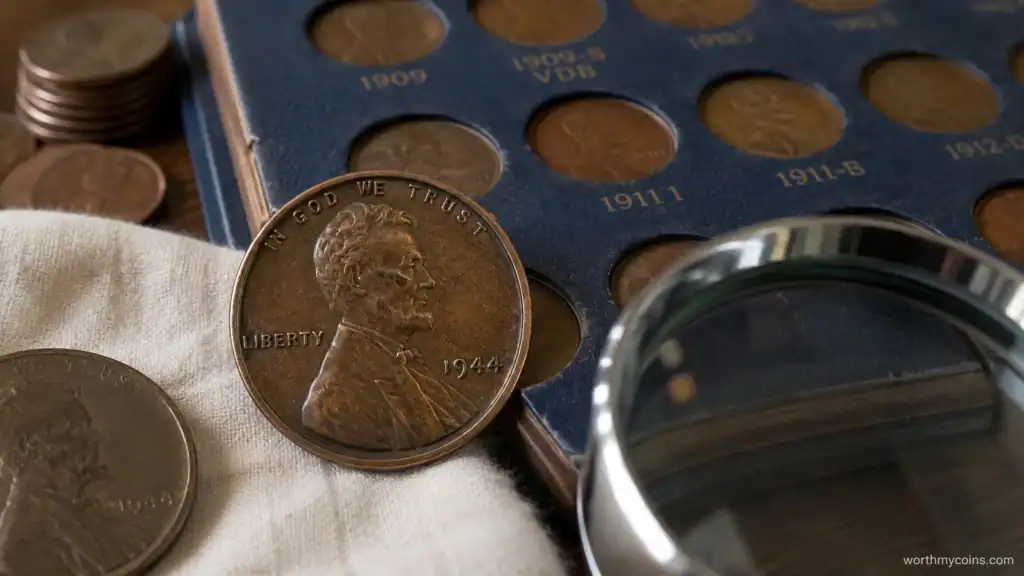
Before checking a coin’s value, first confirm that it actually belongs to the Wheat Penny series. Looking at the reverse design is usually the quickest way to tell, since genuine Wheat Pennies feature two wheat stalks instead of the Lincoln Memorial or Union Shield used on later cents.
Fortunately, identifying a Wheat Penny is relatively simple.
Obverse (Front)
The front displays:
- Portrait of Abraham Lincoln
- LIBERTY
- IN GOD WE TRUST
- Date
- Mint mark (if applicable)
The mint mark appears below the date on coins struck outside Philadelphia.
Reverse (Back)
The reverse includes:
- Two wheat stalks
- ONE CENT
- UNITED STATES OF AMERICA
- E PLURIBUS UNUM
If your coin instead shows the Lincoln Memorial, it was minted in 1959 or later and is not part of the Wheat Penny series.
Understanding Mint Marks
One of the first things collectors examine is the mint mark.
The mint mark identifies where the coin was produced, and certain mint locations struck far fewer coins than others.
Philadelphia (No Mint Mark)
Coins produced in Philadelphia generally have no mint mark during the Wheat Penny years.
Many common Wheat Pennies come from Philadelphia, although several Philadelphia dates remain highly collectible because of their rarity or condition.
Denver (D)
Coins bearing a D were struck at the Denver Mint.
Denver produced many Wheat Pennies throughout the series, including several important collector dates.
San Francisco (S)
Coins with an S mint mark were produced in San Francisco.
Many San Francisco issues had lower mintages than Philadelphia or Denver, making certain dates especially popular among collectors.
Mint Mark Comparison
| Mint | Mint Mark | General Collector Interest |
| Philadelphia | None | Common overall, but several important key dates exist |
| Denver | D | Includes multiple semi-key dates |
| San Francisco | S | Home to several of the series’ most desirable coins |
A mint mark alone does not guarantee rarity. Collectors always evaluate the coin’s date, condition, variety, and authenticity together.
It’s also worth remembering that some of the most valuable Wheat Pennies have no mint mark at all. Always evaluate the complete combination of date, mint mark, condition, and any verified variety before estimating value.
Major Design Features
Although the Lincoln Wheat Penny maintained the same basic appearance for nearly fifty years, small modifications occurred throughout the series.
Some examples include:
Victor David Brenner Initials
The original 1909 design featured Brenner’s initials (VDB) prominently on the reverse.
After public criticism, the Mint removed them from later 1909 production before eventually restoring much smaller initials to the obverse in 1918.
Wartime Steel Cent
The most noticeable design change occurred in 1943 when steel replaced copper due to wartime metal shortages.
These coins appear silver-gray rather than the familiar reddish-brown color.
Return to Copper
Beginning in 1944, copper-alloy cents returned to circulation using recycled wartime materials.
Years of Production
The Wheat Penny series includes every annual issue from:
1909 through 1958
During those five decades, billions of pennies entered circulation.
Despite enormous production numbers, relatively few survive today in pristine Mint State condition because pennies experienced heavy everyday use.
This explains why collectors often pay substantial premiums for well-preserved examples, even when the original mintage was large.
How Collectors Classify Wheat Pennies
Collectors generally divide the series into several categories.
Early Wheat Pennies (1909–1919)
These coins include the famous first-year issues and several lower-mintage dates that remain highly sought after.
Middle Years (1920–1939)
Many coins from this period remain affordable for beginners, although important key dates exist within these decades.
Wartime Issues (1940–1946)
World War II introduced unique composition changes, especially the steel cents of 1943 and the copper-alloy cents that followed.
Late Wheat Pennies (1947–1958)
These are usually the easiest Wheat Pennies to find in circulation, old collections, or coin rolls.
Because common late-date Wheat Pennies remain relatively affordable, they provide an excellent opportunity to learn grading, storage, and basic identification before purchasing more expensive key dates.
What Makes Certain Wheat Pennies Valuable?
Many beginners ask why one Wheat Penny sells for only a few cents while another brings thousands of dollars at auction.
The answer involves several factors working together rather than a single characteristic.
Important considerations include:
- Original mintage
- Number of surviving examples
- Overall condition
- Professional grading
- Mint mark
- Verified error varieties
- Historical significance
- Collector demand
- Authentication
For example, a common date in heavily worn condition may have little collector premium, while the same date preserved in exceptional Mint State condition can be far more desirable.
Likewise, a verified mint error or recognized variety can attract significant attention regardless of the coin’s age.
The next part of this guide explores these factors in much greater detail, including how grading standards, rarity, and certified errors influence market value.
Value Factors
Not every Lincoln Wheat Penny is worth the same amount. While age is one factor, collectors look at several details before determining a coin’s value. Two Wheat Pennies from the same year can have dramatically different values. Small differences in mint mark, preservation, rarity, or a verified variety often separate an ordinary coin from one collectors actively seek.
Date and Mint Mark
The date and mint mark are usually the first things collectors check. Some years had much lower mintages than others, while certain mint locations produced fewer coins. These combinations often attract stronger collector demand.
Condition
Condition plays one of the biggest roles in value. A heavily worn coin is generally worth less than the same coin with sharp details and little circulation wear. Original surfaces and attractive color can also increase collector interest.
Rarity
Some Wheat Pennies are difficult to find because fewer examples survive today. Others are common in circulated grades but become scarce in higher Mint State grades.
Collector Demand
Even when two coins have similar rarity, collector demand can influence market prices. Popular key dates and well-known varieties often receive more attention from buyers.
Authentication
Before assuming a Wheat Penny is rare or valuable, verify that it hasn’t been altered or counterfeited. Authentication by a respected grading service provides confidence for both collectors and potential buyers. Professional authentication helps confirm that a coin is genuine and not an altered or counterfeit example.
Coin Grading Overview
Coin grading measures how well a coin has been preserved since leaving the Mint. Even a common Wheat Penny can become considerably more desirable if it survives with minimal wear and strong original detail. Professional grading services use standardized grading systems that allow collectors and dealers to describe coins consistently.
| Grade | Description |
|---|---|
| Good (G) | Heavy wear with major design visible |
| Very Good (VG) | Moderate wear with more details remaining |
| Fine (F) | Moderate circulation, clear lettering |
| Very Fine (VF) | Light to moderate wear with stronger details |
| Extremely Fine (XF) | Light wear on highest points only |
| About Uncirculated (AU) | Slight wear, nearly Mint State |
| Mint State (MS) | No circulation wear |
Coins graded by professional services such as PCGS or NGC often receive greater buyer confidence because their authenticity and condition have been independently verified.
For valuable coins, professional grading is usually recommended before selling or adding them to a long-term collection.
Key Date Lincoln Wheat Pennies
Certain Wheat Pennies are considered “key dates” because they are significantly more difficult to obtain than most other issues in the series.
Some of the best-known key dates include:
| Date | Mint Mark | Why Collectors Want It |
| 1909 | S VDB | First-year issue with limited production |
| 1909 | S | Low mintage first-year coin |
| 1914 | D | One of the toughest regular issues |
| 1922 | No D | Famous die variety |
| 1931 | S | Low mintage during the Great Depression |
These coins are among the most recognized pieces in the Wheat Penny series. Because of their popularity, they are also commonly counterfeited or altered, making authentication especially important.
Semi-Key Dates
In addition to the major key dates, several semi-key dates are regularly collected because they are less common than average circulation issues.
Examples include:
- 1909 VDB
- 1910-S
- 1911-S
- 1912-S
- 1913-S
- 1915-S
- 1924-D
- 1926-S
- 1932
- 1933-D
These coins may not be as famous as the major key dates, but they can still be challenging to locate in higher grades.
Collectors building complete date-and-mint collections often spend years searching for attractive examples.
Verified Error and Variety Coins
Mint errors and die varieties are among the most exciting parts of collecting Lincoln Wheat Pennies. However, only recognized and verified varieties should be considered collectible.
1909-S VDB
Although technically not a mint error, this is one of the most famous varieties in American coin collecting because of the original VDB initials on the reverse.
1922 No D
This variety occurred when dies intended for the Denver Mint produced coins without a visible mint mark due to excessive die wear.
Only genuine examples are considered collectible, and many altered coins exist.
1943 Bronze Cent
During 1943, cents were supposed to be struck on zinc-coated steel planchets. A very small number were mistakenly struck on leftover bronze planchets.
These are among the rarest Lincoln cents known and require professional authentication.
1944 Steel Cent
In 1944, the Mint returned to copper alloy production, but a few leftover steel planchets were accidentally used.
Like the 1943 bronze cents, these coins are extremely rare and should always be authenticated by a reputable grading service.
1955 Doubled Die Obverse
One of the most famous doubled die varieties in U.S. coin collecting, this coin shows strong doubling on the date and lettering.
Because it is widely recognized, it remains one of the most desirable Lincoln cent varieties.
Verified Variety Guide
| Variety | Type |
| 1909-S VDB | First-year variety |
| 1922 No D | Die variety |
| 1943 Bronze | Wrong planchet error |
| 1944 Steel | Wrong planchet error |
| 1955 Doubled Die Obverse | Doubled die variety |
Whenever you believe you’ve found one of these varieties, avoid cleaning or altering the coin. Even minor damage can reduce collector interest.
Market prices can change over time as collector demand increases or decreases. Because of this, values shown in printed guides may eventually become outdated, making recent auction results one of the most useful references for current pricing.
How Coin Values Are Determined
There is no fixed price for every Lincoln Wheat Penny. Market values change over time based on collector demand and available supply.
Collectors and dealers typically consider:
- Date
- Mint mark
- Grade
- Color (Red, Red-Brown, or Brown for copper cents)
- Rarity
- Authentication
- Recent auction results
- Current collector demand
Most experienced collectors compare recent auction sales and updated pricing resources instead of relying on outdated price lists when estimating a coin’s value.
If no reliable value is available for a specific coin, it’s best to avoid assumptions and seek an opinion from a knowledgeable dealer or grading service.
Authentication Tips
Because several Lincoln Wheat Pennies can be valuable, counterfeit and altered examples appear regularly in the marketplace.
Before purchasing an expensive coin:
- Buy from reputable dealers whenever possible.
- Compare the coin with verified examples.
- Check for signs of altered dates or added mint marks.
- Avoid cleaning the coin.
- Consider professional authentication for key dates or major varieties.
Certified coins from trusted grading services generally provide greater confidence for both buyers and sellers.
Authentication is especially important for famous rarities such as the 1909-S VDB, 1943 Bronze Cent, and 1955 Doubled Die, which are frequently altered or counterfeited.
Color Designations for Copper Wheat Pennies
Copper Wheat Pennies are often categorized by color because original mint color can influence collector demand.
| Designation | Description |
| Red (RD) | Mostly original bright red color remains |
| Red-Brown (RB) | Mix of red and brown surfaces |
| Brown (BN) | Mostly brown due to natural aging |
Color alone does not determine value, but collectors often pay premiums for original red examples in higher Mint State grades.
Collecting Tips for Beginners
Starting a Lincoln Wheat Penny collection doesn’t require a large budget. Many common-date Wheat Pennies are still affordable and provide an excellent introduction to U.S. coin collecting.
If you’re just getting started, consider these tips:
- Learn to identify dates and mint marks before buying.
- Handle coins only by their edges to avoid fingerprints.
- Store coins in holders or albums designed for long-term preservation.
- Research key dates before making expensive purchases.
- Buy from reputable coin dealers whenever possible.
Many collectors begin with a date set and later expand to a complete date-and-mint-mark collection.
How to Store Wheat Pennies
Proper storage helps preserve a coin’s condition and protects its long-term collector value.
Some good storage options include:
- Coin albums
- Cardboard 2×2 holders
- Plastic coin flips made from archival-safe materials
- Hard plastic coin capsules for valuable examples
Store coins in a cool, dry place away from excessive humidity and direct sunlight.
Avoid keeping valuable coins loose in jars, drawers, or pockets, where they can easily become scratched.
Should You Clean a Wheat Penny?
One of the biggest mistakes new collectors make is cleaning old coins.
Cleaning may seem like a good way to improve appearance, but it often damages the original surface. Even light polishing can leave hairline scratches that reduce collector value.
Professional grading services can usually recognize cleaned coins, and many collectors prefer original surfaces over bright, polished ones.
If a coin appears dirty, it’s generally best to leave it untouched until it can be evaluated by an experienced collector or grading service.
Buying Lincoln Wheat Pennies
Whether you’re buying your first Wheat Penny or adding another coin to your collection, taking a little time to research can help you make better decisions.
Before buying:
- Compare multiple sellers.
- Review clear photographs.
- Read the description carefully.
- Verify certification for expensive coins.
- Ask questions if important details are missing.
For higher-value coins, certified examples often provide greater confidence than raw coins.
Selling Lincoln Wheat Pennies
If you decide to sell your collection, several options are available.
Common places include:
- Local coin shops
- Coin shows
- Online marketplaces
- Major auction companies
- Specialized numismatic dealers
Before selling a potentially valuable coin, compare recent auction results and consider professional grading if the coin appears to be a key date or important variety.
Spending a few extra minutes researching your coin’s date, mint mark, grade, and recent sales history can help you avoid selling a potentially valuable Wheat Penny for far less than its market value.
Common Mistakes to Avoid
Many beginners make simple mistakes that can reduce a coin’s appeal or lead to unnecessary expenses.
Some of the most common include:
- Cleaning coins
- Assuming every old penny is rare
- Ignoring mint marks
- Buying expensive coins without authentication
- Storing coins improperly
- Trusting unverified online claims
- Confusing damage with genuine mint errors
Learning these basics early can help you build a stronger collection over time.
Are Lincoln Wheat Pennies a Good Long-Term Collectible?
Lincoln Wheat Pennies have remained popular with collectors for decades because they combine history, affordability, and a wide variety of collectible dates.
While common circulated examples are generally inexpensive, key dates, certified high-grade coins, and recognized varieties continue to attract strong interest within the numismatic community.
Like any collectible, future market performance cannot be guaranteed. Collector demand, rarity, and overall market conditions all influence prices over time.
For many collectors, the historical significance and enjoyment of building a complete set are just as rewarding as any potential financial value.
Quick Identification Checklist
| Feature | What to Look For |
|---|---|
| Date | 1909–1958 |
| Reverse | Two wheat ears |
| Mint Mark | None, D, or S |
| Composition | Mostly copper (except 1943 steel) |
| Edge | Plain |
| Designer | Victor David Brenner |
Using this checklist is a simple way to confirm whether a coin belongs to the Lincoln Wheat Penny series.
If you’re new to collecting, the questions below answer some of the topics people ask most often when they first discover a Lincoln Wheat Penny.
Frequently Asked Questions
Are all Lincoln Wheat Pennies valuable?
No. Most Wheat Pennies are common and worth modest premiums over face value, especially in circulated condition. Factors such as date, mint mark, grade, rarity, and collector demand determine whether a coin is considered valuable.
What is the rarest Lincoln Wheat Penny?
The 1909-S VDB, 1943 Bronze Cent, 1944 Steel Cent, 1922 No D, and 1955 Doubled Die Obverse are among the best-known and most sought-after issues in the series.
How can I tell if my Wheat Penny is valuable?
Start by checking the date, mint mark, and overall condition. Then compare your coin with reliable reference guides or consult a reputable coin dealer or professional grading service if you believe it may be a key date or recognized variety.
Should I clean my Wheat Penny before selling it?
No. Cleaning can permanently damage a coin’s surface and reduce its collector value. Most experienced collectors recommend leaving coins in their original condition.
Where can I sell Lincoln Wheat Pennies?
Collectors commonly sell Wheat Pennies through local coin shops, coin shows, online marketplaces, auction houses, and professional numismatic dealers.
Are Wheat Pennies still found in circulation?
Although uncommon, Wheat Pennies occasionally appear in circulation, coin rolls, estate collections, and old coin jars. Many collectors continue searching bank rolls in hopes of finding older dates.
Conclusion
The Lincoln Wheat Penny is one of the most iconic coins in American numismatic history. Produced from 1909 through 1958, the series offers something for every collector—from affordable common dates to famous rarities and historic mint varieties.
Understanding mint marks, grading standards, authentication, and verified varieties will help you make informed collecting decisions and avoid common beginner mistakes. While only a small percentage of Wheat Pennies are truly rare, every coin tells a story about America’s past and the evolution of its coinage.
Every experienced collector started with a first coin. Learning how to identify Lincoln Wheat Pennies, recognize key dates, and understand what influences value gives you a solid foundation for building a collection with confidence.
With patience, careful research, and a good eye for detail, you’ll be better prepared to recognize interesting coins whenever you come across them.
References
The information in this guide is based on widely recognized numismatic references and educational resources, including:
- United States Mint
- Professional Coin Grading Service (PCGS)
- Numismatic Guaranty Company (NGC)
- American Numismatic Association (ANA)
- Heritage Auctions
- Stack’s Bowers Galleries
- Newman Numismatic Portal
These organizations provide trusted information on U.S. coin history, grading standards, minting practices, and documented auction records.

Narayan Kumar is the Founder and Author of Worth My Coins. She specializes in U.S. coin collecting, with a focus on coin identification, mint errors, grading, rare varieties, and collector education. Her goal is to publish accurate, well-researched, and easy-to-understand guides that help both new and experienced collectors make informed decisions. Every article is created using trusted numismatic references and is written with a commitment to accuracy, transparency, and long-term educational value.