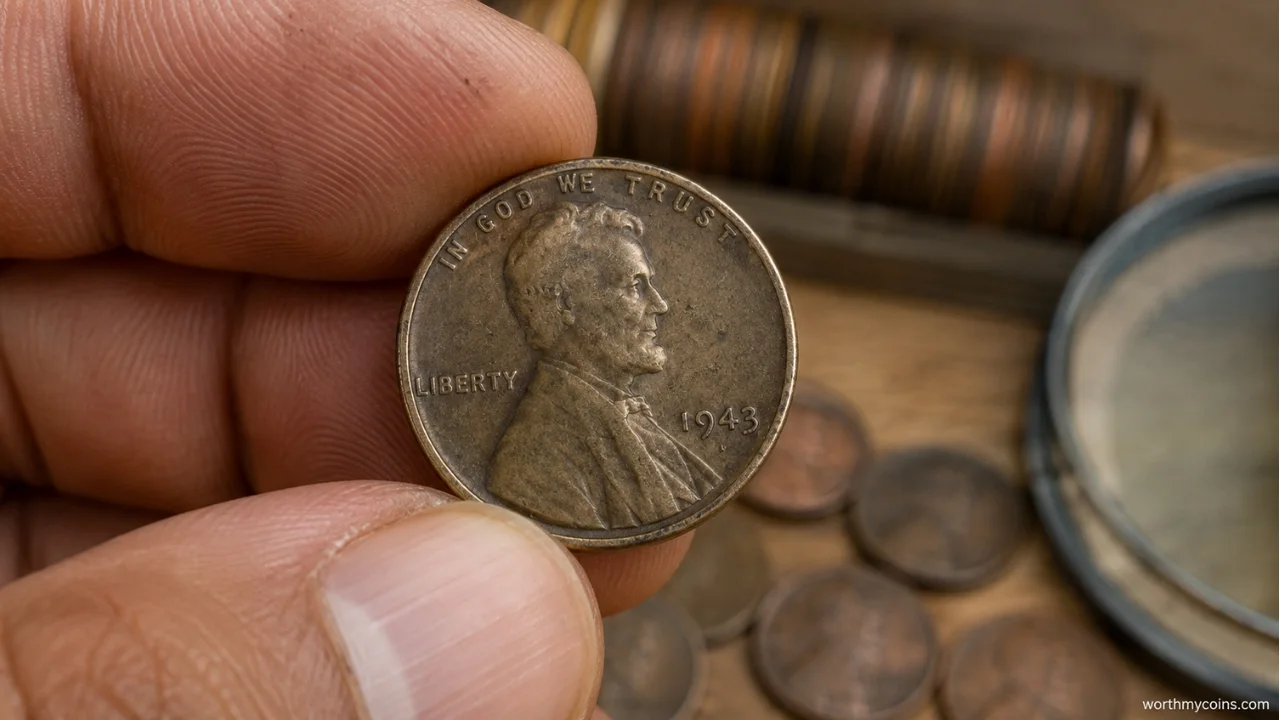
The 1943 Bronze Lincoln Wheat Penny is one of the most famous and valuable error coins in American numismatic history. Unlike the standard 1943 Lincoln cents that were struck in zinc-coated steel due to wartime metal shortages, a very small number were accidentally struck on leftover bronze planchets from 1942. These rare mint errors have become legendary among collectors and continue to attract attention from beginners, investors, and experienced numismatists alike.
Because this famous error coin is frequently counterfeited or altered, proper identification is essential before assuming you’ve found something valuable. This guide explains how to recognize genuine examples, understand why they’re so rare, and learn what experienced collectors look for before assigning value.
Why Was the 1943 Lincoln Penny Made from Steel?
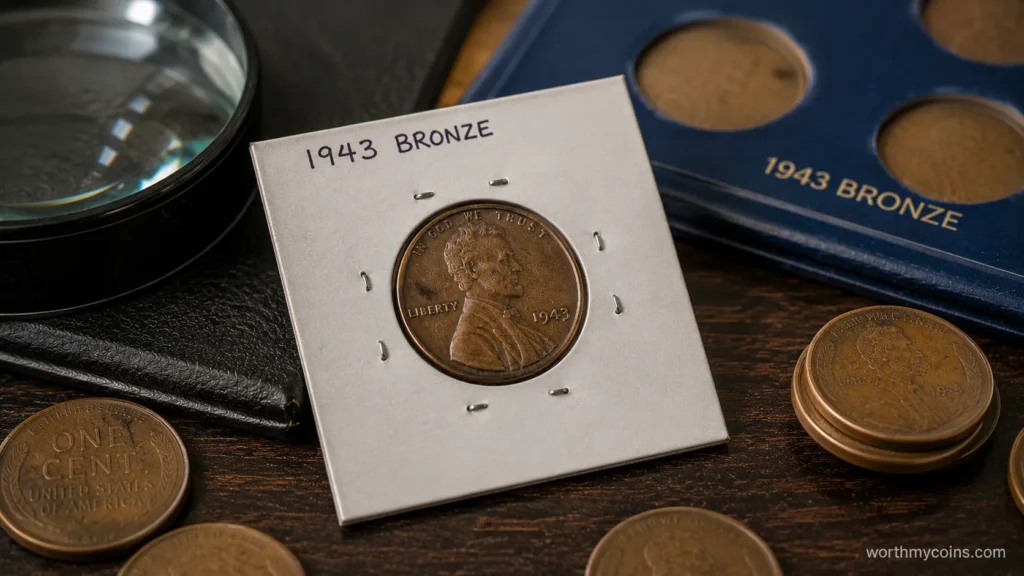
The temporary switch from bronze to steel makes 1943 one of the easiest years to identify at a glance. Because almost every genuine 1943 cent was struck on steel, any bronze-colored example deserves closer inspection.
During World War II, copper became an essential material for military equipment, including ammunition and communications hardware. To conserve copper for the war effort, the United States Mint temporarily changed the composition of the Lincoln cent in 1943.
Instead of the traditional bronze alloy used for earlier Lincoln cents, nearly all 1943 pennies were struck on zinc-coated steel planchets. These silver-colored coins became the standard issue for the year and were produced at all three operating mints:
| Mint | Mint Mark | Normal 1943 Composition |
|---|---|---|
| Philadelphia | None | Zinc-coated steel |
| Denver | D | Zinc-coated steel |
| San Francisco | S | Zinc-coated steel |
However, a few leftover bronze planchets from 1942 apparently remained in the coin presses. These planchets were accidentally fed into the presses, creating one of the most celebrated mint errors in U.S. coin history.
Coin Specifications
The easiest way to distinguish a genuine bronze example from a regular steel cent is by understanding its physical characteristics.
| Specification | Genuine 1943 Bronze Cent |
| Country | United States |
| Series | Lincoln Wheat Cent |
| Year | 1943 |
| Designer | Victor David Brenner |
| Composition | Bronze (95% copper, 5% tin and zinc) |
| Weight | Approximately 3.11 grams |
| Diameter | 19.05 mm |
| Edge | Plain |
| Reverse | Wheat ears |
A normal 1943 steel cent weighs approximately 2.70 grams and is magnetic because of its steel core.
Historical Background
The Lincoln Wheat Cent debuted in 1909 to commemorate the 100th anniversary of Abraham Lincoln’s birth. Designed by Victor David Brenner, it became the first regularly circulating U.S. coin to feature a real historical figure.
The temporary switch to steel in 1943 represented one of the most dramatic composition changes in American coinage. The following year, the Mint returned to a copper-based alloy using recycled shell casings from wartime ammunition.
Since bronze planchets were never meant to be used for regular 1943 production, every authenticated bronze cent exists because of an accidental minting mistake rather than a planned release.
Another famous coin from the same series is the 1909-S VDB Lincoln Wheat Penny, which became highly collectible because of its low mintage and historical significance rather than a mint error.
How to Identify a Genuine 1943 Bronze Lincoln Wheat Penny
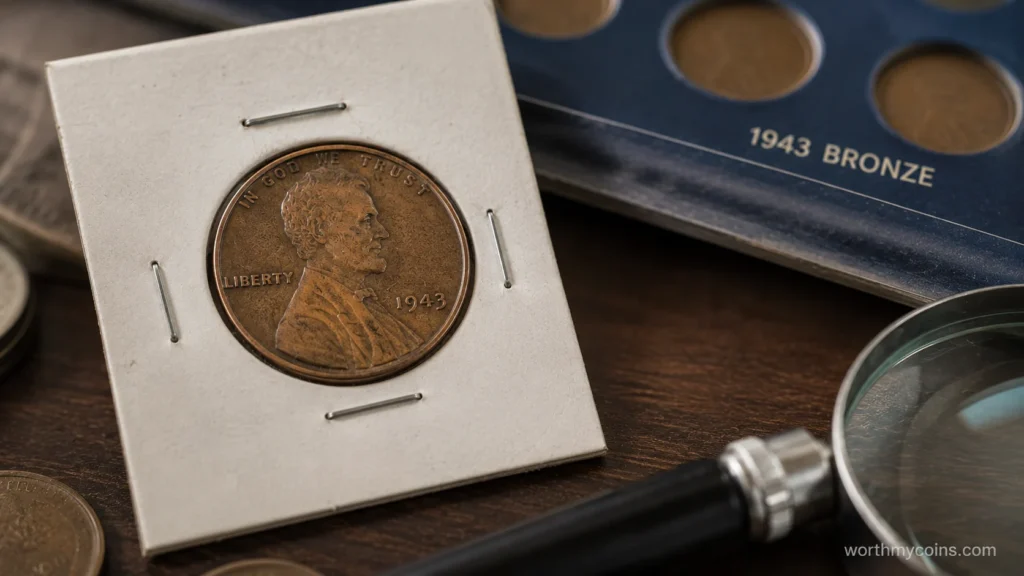
No single test can confirm authenticity on its own. Collectors typically evaluate the coin’s color, weight, magnetic properties, date, and overall appearance together before deciding whether professional authentication is warranted.
Many ordinary 1943 steel cents have been altered, plated, or modified to resemble the rare bronze variety. Others have had dates changed from 1948 cents by altering the number “8” into a “3.”
The following checklist can help identify coins worthy of professional authentication.
| Identification Test | Genuine Bronze Coin | Normal Steel Coin |
| Color | Brown or reddish-brown | Silver-gray |
| Magnet Test | Not magnetic | Strongly magnetic |
| Weight | Around 3.11 g | Around 2.70 g |
| Surface | Natural bronze appearance | Zinc-coated steel |
| Professional Authentication | Essential | Usually unnecessary |
Magnet Test
One of the simplest screening methods is using a magnet.
A genuine bronze cent should not stick to a magnet.
If the coin is strongly magnetic, it is almost certainly a standard steel cent.
However, passing the magnet test alone does not prove authenticity because counterfeit bronze copies and altered coins also fail the magnet test.
Weight Test
A digital scale accurate to at least 0.01 grams is extremely useful.
A genuine bronze example should weigh close to 3.11 grams.
Significant deviations may indicate an altered or counterfeit coin.
Date Examination
Collectors should carefully inspect the shape of the digits under magnification.
Many counterfeit examples originate from altered 1948 Lincoln cents where part of the “8” has been removed to resemble a “3.”
Professional grading services routinely detect these alterations.
Mint Marks
Authentic 1943 bronze cents have been confirmed from all three mints, although each is exceptionally rare.
| Mint | Mint Mark | Relative Availability |
| Philadelphia | None | Extremely rare |
| Denver | D | Extremely rare |
| San Francisco | S | Extremely rare |
The 1943-D Bronze Lincoln cent is generally regarded as one of the rarest Lincoln cent errors ever authenticated.
Regardless of mint mark, every suspected bronze example should be certified by a respected third-party grading service before any value assumptions are made.
Certification is especially important for high-value error coins because even experienced collectors can have difficulty distinguishing genuine examples from convincing alterations.
Why Is the 1943 Bronze Penny So Rare?
Unlike intentional collector editions or limited releases, these coins exist solely because of an accidental production error.
Leftover bronze planchets from 1942 were unintentionally mixed into the production process after the Mint transitioned to steel blanks.
Since quality control quickly identified the issue, only a very small number escaped into circulation.
Although additional examples occasionally surface through old collections or inherited coin accumulations, authenticated specimens remain exceptionally scarce.
Although collectors often ask for an exact price, authenticated 1943 Bronze Lincoln Wheat Pennies are so scarce that each coin is usually valued individually based on its condition, certification, and recent auction activity.
If you’d like to understand how grading, rarity, mint marks, and other factors affect values across the entire series, read our Lincoln Wheat Penny Value Guide (1909–1958): Prices, Errors & Rare Coins.
Factors That Influence Value
There is no fixed market price for every 1943 Bronze Lincoln Wheat Penny.
Several factors determine the value of each authenticated specimen.
Authentication
Certification by reputable grading organizations is the single most important factor.
Without professional authentication, buyers are unlikely to accept extraordinary claims.
Grade
Better-preserved coins command stronger prices than heavily circulated examples.
Collectors evaluate:
- Wear
- Surface preservation
- Original color
- Strike quality
- Eye appeal
Mint Mark
Coins from different mints may attract different levels of collector demand depending on certified population data.
Provenance
Coins with well-documented ownership history or notable auction appearances often generate greater collector interest.
Market Demand
Rare coin values fluctuate with collector demand, auction participation, and overall market conditions.
Because authenticated specimens appear so infrequently, values are established individually through major auctions rather than standard price guides.
For this reason, it is inaccurate to assign a universal value range to every 1943 Bronze Lincoln Wheat Penny.
Coin Grading Overview
Professional grading evaluates both authenticity and condition.
| Grade | General Description |
| Good (G) | Heavy circulation with major wear |
| Fine (F) | Moderate wear but major details visible |
| Extremely Fine (XF) | Light wear on high points |
| About Uncirculated (AU) | Slight friction with nearly full detail |
| Mint State (MS) | No circulation wear |
Even lower-grade authenticated bronze examples can be highly desirable because of their extraordinary rarity.
Verified Error Varieties
The bronze composition itself is the recognized mint error.
No separate major die variety defines the coin’s importance.
| Verified Variety | Description |
| 1943 Bronze Cent | Struck on leftover bronze planchet |
| Philadelphia Bronze | Authenticated examples known |
| Denver Bronze | Authenticated examples known |
| San Francisco Bronze | Authenticated examples known |
Each authenticated example is individually documented and studied by major grading organizations and researchers.
Common Counterfeits
Because of the enormous collector interest surrounding this coin, counterfeits are widespread.
Common deceptive practices include:
- Copper-plating ordinary steel cents
- Altering 1948 dates into 1943
- Creating cast replicas
- Artificially aging replica coins
- Selling novelty reproductions without clear disclosure
Online photos and basic home tests can help rule out ordinary coins, but they cannot confirm authenticity. If a 1943 penny appears unusual, professional authentication is the safest next step.
Collecting Tips
Whether you are searching through inherited collections or purchasing certified examples, following a few best practices can prevent expensive mistakes.
- Buy certified coins whenever possible.
- Learn the differences between steel and bronze compositions.
- Use accurate digital scales.
- Inspect dates carefully under magnification.
- Keep coins in inert holders.
- Avoid cleaning rare coins.
- Compare suspected examples with authenticated reference images.
Common Mistakes Beginners Make
One of the biggest misconceptions is believing every brown-colored 1943 penny is valuable.
Most are either altered steel cents, plated examples, or damaged coins.
Other frequent mistakes include:
- Assuming non-magnetic automatically means genuine.
- Cleaning coins before authentication.
- Trusting online marketplace descriptions without certification.
- Ignoring weight differences.
- Confusing replicas with authentic mint errors.
Professional authentication remains essential before making buying or selling decisions.
Taking a little extra time to verify authenticity before buying, selling, or celebrating a possible discovery can prevent expensive mistakes and unnecessary disappointment.
Conclusion
The 1943 Bronze Lincoln Wheat Penny is one of the most remarkable error coins ever produced by the United States Mint. Its accidental creation during World War II and extreme rarity have made it a favorite among collectors for decades. If you ever come across a bronze-colored 1943 penny, don’t assume it’s valuable right away. Check its weight, test it with a magnet, and consider professional authentication before drawing any conclusions. A little patience and careful research can make all the difference when evaluating a coin like this.
While many collectors dream of finding one in an old collection, genuine examples are extremely scarce, and counterfeits are common. Careful examination, accurate weight measurement, magnet testing, and professional authentication are the safest ways to evaluate any suspected specimen.
Even if you never find one yourself, understanding how the 1943 Bronze Lincoln Wheat Penny was created and how to identify genuine examples can help you recognize one of the rarest and most celebrated U.S. coins if you ever come across it.
Frequently Asked Questions
Is every 1943 penny valuable?
No. Most 1943 pennies are common zinc-coated steel cents produced in large numbers. Only authenticated bronze examples and certain verified errors are considered exceptionally rare.
How can I tell if my 1943 penny is bronze?
Check its color, perform a magnet test, weigh the coin, and have it authenticated by a respected third-party grading service if it appears unusual.
Does a genuine bronze 1943 penny stick to a magnet?
No. Authentic bronze cents are not magnetic. Ordinary 1943 steel cents are magnetic.
Are 1943 bronze pennies found from every mint?
Yes. Authenticated bronze examples are known from Philadelphia, Denver, and San Francisco, although all are extremely rare.
Should I clean my 1943 penny before having it graded?
No. Cleaning can permanently damage the surface and reduce collector appeal. Leave the coin in its original condition for professional evaluation.
References
- United States Mint
- Professional Coin Grading Service (PCGS)
- Numismatic Guaranty Company (NGC)
- American Numismatic Association (ANA)
- Heritage Auctions
- Stack’s Bowers Galleries
- Newman Numismatic Portal

Narayan Kumar is the Founder and Author of Worth My Coins. She specializes in U.S. coin collecting, with a focus on coin identification, mint errors, grading, rare varieties, and collector education. Her goal is to publish accurate, well-researched, and easy-to-understand guides that help both new and experienced collectors make informed decisions. Every article is created using trusted numismatic references and is written with a commitment to accuracy, transparency, and long-term educational value.